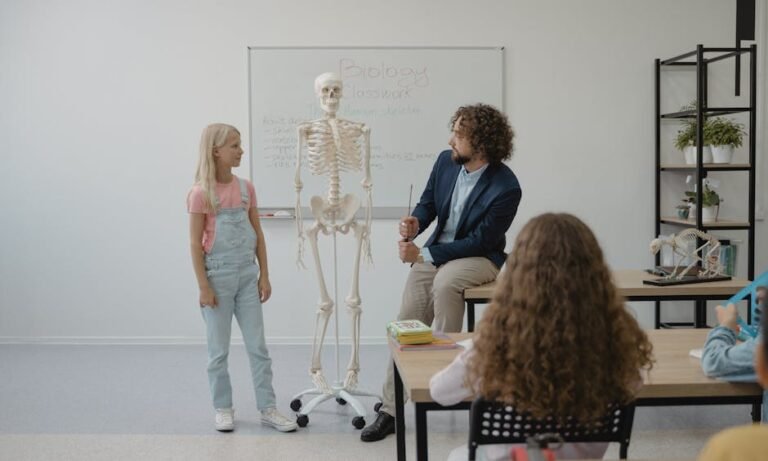
How can students enhance their critical thinking skills
I’m a college student, and I’m starting to realize that just memorizing facts isn’t really preparing me for the real world. I need to be able to analyze information, solve complex problems, and think for myself. My professors keep talking about "critical thinking," but they don’t really tell us how to improve it. I want practical strategies, not just definitions.
Specifically, I’m struggling with identifying biases in arguments, evaluating the credibility of sources (especially online!), and forming well-supported conclusions. I’d like to know how students like me can actively work on these skills, both inside and outside the classroom. Are there specific exercises, reading strategies, or study habits that are particularly effective? Are there good resources online that I should be using?
Also, I’m wondering if critical thinking looks different across different disciplines. Does a history major need to think critically in the same way as an engineering student? Any insights would be greatly appreciated.
Answer
Students can enhance their critical thinking skills through a multifaceted approach that incorporates specific learning strategies, consistent practice, and mindful engagement with information. The development of these skills is not a passive process, but rather an active and deliberate pursuit.
1. Cultivating a Questioning Mindset:
- Encouraging Curiosity: Foster a genuine interest in the world and the desire to understand why things are the way they are. Students should be encouraged to ask "why" and "how" questions about everything they encounter, rather than accepting information at face value.
- Challenging Assumptions: Teach students to identify and question their own underlying assumptions and biases. This involves reflecting on where their beliefs come from and considering alternative perspectives. Prompt them to ask: "What assumptions am I making here? What evidence supports these assumptions? Are there other possible explanations?"
- Practicing Socratic Questioning: Introduce the Socratic method, which involves asking probing questions to stimulate critical thinking and illuminate underlying presumptions. This encourages students to think deeply and clarify their own beliefs through guided inquiry.
2. Developing Analytical Skills:
- Information Gathering & Evaluation: Teach students how to effectively research and gather information from a variety of reliable sources. Emphasize the importance of source credibility, bias detection, and the ability to differentiate between fact and opinion.
- Identifying Arguments & Claims: Train students to dissect arguments, identify the main claims, and analyze the supporting evidence. This includes recognizing logical fallacies (e.g., ad hominem, straw man, false dilemma) and evaluating the strength and relevance of the evidence presented.
- Analyzing Data & Statistics: Equip students with the ability to interpret data presented in various formats (e.g., charts, graphs, tables). This includes understanding statistical concepts like correlation and causation, and being able to identify potential biases in data collection and presentation.
- Comparing & Contrasting: Develop the ability to identify similarities and differences between concepts, ideas, and arguments. Encourage the use of tools like Venn diagrams or comparison charts to visually represent the relationships between different elements.
3. Enhancing Reasoning Skills:
- Inductive Reasoning: Practice drawing general conclusions from specific observations or evidence. Present case studies or scenarios and ask students to identify patterns and formulate hypotheses based on the available information.
- Deductive Reasoning: Train students to apply general principles or rules to specific cases to reach logical conclusions. This involves understanding syllogisms and other forms of deductive argumentation.
- Analogical Reasoning: Foster the ability to identify similarities between seemingly unrelated things and use those similarities to draw inferences. This can be done through analogies, metaphors, and problem-solving exercises.
- Problem-Solving Strategies: Introduce structured problem-solving approaches (e.g., the scientific method, design thinking). These frameworks provide a systematic way to define a problem, generate potential solutions, evaluate the solutions, and implement the best option.
4. Fostering Creative Thinking:
- Brainstorming & Idea Generation: Encourage students to generate a wide range of ideas without initially judging their feasibility. Techniques like brainstorming, mind mapping, and free writing can stimulate creativity and innovation.
- Thinking Outside the Box: Present problems that require unconventional solutions. Encourage students to challenge assumptions and explore alternative perspectives.
- Making Connections: Help students see connections between seemingly unrelated ideas and concepts. This can be done through interdisciplinary projects or by exploring the history and evolution of ideas.
5. Promoting Reflection & Self-Assessment:
- Journaling: Encourage students to keep a reflective journal to document their learning process, analyze their thinking, and identify areas for improvement.
- Peer Review & Feedback: Provide opportunities for students to critique each other’s work and provide constructive feedback. This helps students develop their analytical skills and learn from the perspectives of others.
- Self-Reflection: Encourage students to regularly reflect on their own thinking processes. Ask them to consider: "What were my strengths and weaknesses in this task? What could I have done differently? How can I apply what I learned to future situations?"
6. Integrating Critical Thinking Across the Curriculum:
- Project-Based Learning: Incorporate project-based learning activities that require students to apply critical thinking skills to solve real-world problems.
- Debates & Discussions: Facilitate class discussions and debates on controversial topics, encouraging students to present evidence-based arguments and respectfully challenge opposing viewpoints.
- Case Studies: Use case studies to present complex scenarios that require students to analyze information, identify key issues, and propose solutions.
7. Providing Explicit Instruction and Modeling:
- Teaching Critical Thinking Vocabulary: Explicitly teach students the vocabulary associated with critical thinking, such as "inference," "assumption," "evidence," "argument," and "fallacy."
- Modeling Critical Thinking: Demonstrate critical thinking skills by thinking aloud while solving problems or analyzing information.
- Providing Feedback & Guidance: Provide specific and actionable feedback on students’ critical thinking skills. Help them identify areas where they can improve and provide guidance on how to do so.
By consistently implementing these strategies, educators can empower students to develop strong critical thinking skills that will benefit them in all aspects of their lives. The key is to create a learning environment that values inquiry, encourages intellectual risk-taking, and provides opportunities for students to practice and refine their critical thinking abilities.
This content has been prepared by the Studentanswers editorial team for educational and informational purposes only. We recommend consulting a qualified professional before making any personal decisions.