

Financial Fitness for College Students
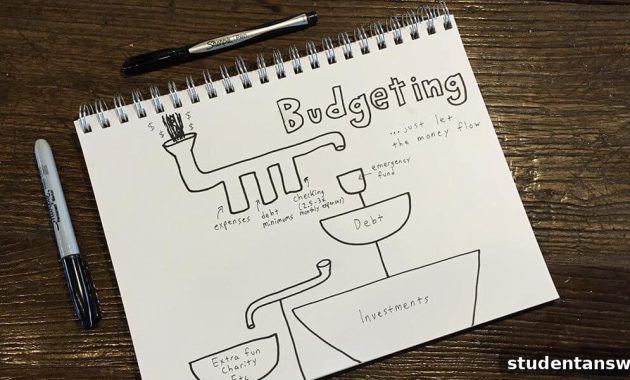
The Ultimate Guide to Budgeting for College Students: Master Your Money
Budgeting, at its core, is a simple concept: manage what comes in and what goes out. The goal is to ensure your income is consistently higher than your expenses. It’s a fundamental skill for financial health.
Many of us got our first taste of resource management playing games like Age of Empires II. You had to balance gathering wood, food, gold, and stone to build your civilization, research new technologies, and ultimately triumph. It was a delicate dance of inputs and outputs.
Of course, in the game, you could always type in a cheat code for a sports car armed with laser cannons to solve your problems. But as you’ve probably realized, real life doesn’t come with cheat codes for instant wealth.
In the real world, effective budgeting is far more critical. Without financial shortcuts, and with the undeniable need to afford essentials like food and housing, developing budgeting competence is non-negotiable. If your ambition is to graduate from college without being buried in debt, you’ll need to move from basic competence to mastery.
This guide will walk you through the essential principles of budgeting, with a specific focus on the unique challenges and opportunities you face as a college student. You’re dealing with fluctuating income, large periodic expenses, and often, limited funds to begin with. Let’s build a system that works for you.
Do You Really Need a Strict “Budget”?
Let’s clarify what “budgeting” should mean for you. Many people imagine a tedious process involving spreadsheets, spending caps for every category, and hours spent meticulously balancing accounts each month. This image is not only intimidating but also highly ineffective for most people.
That old-fashioned method is a form of micromanagement. It’s time-consuming and often leads to burnout. The most financially successful people don’t actually spend their time this way. They focus on building sustainable systems and habits.
As Jeff Yeager notes in his book The Cheapskate Next Door:
“Contrary to what non-cheapskates seem to think, only about 10% of the cheapskates polled said that they have a formal, written household budget. For most of us, a budget seems too much like a diet: a plan that’s always looming over you, bring you down, when what you really need is a lasting lifestyle change that makes the desired behavior effortless.”
This insight is key. Lasting financial success comes from creating smart habits and having well-defined goals, not from micromanaging every penny. This principle applies to studying, fitness, and especially your finances. Your goal should be to create a financial system that runs mostly on autopilot, freeing up your mental energy for more important things.
So, let’s begin by establishing those all-important goals that will guide your financial journey.
Step 1: Define Your Financial Goals
To manage your money effectively, think like a well-run business. Businesses operate on three levels: strategic, tactical, and operational. You can apply this same framework to your personal finances.
- Strategy: This is the big picture. What are your long-term financial goals? Where are you right now? What do you want your money to achieve for you? Your strategy defines your overall direction.
- Tactics: These are the specific systems and methods you’ll use to achieve your strategic goals. This includes how you set up your bank accounts, how you handle debt, and your investment strategy.
- Operations: This is your day-to-day financial activity. It’s all about your daily spending habits and the small decisions that add up over time.
Before you can figure out the “how” (tactics) and the “what” (operations), you need to define the “why” (strategy). You need clear, motivating financial goals.
Your goals must be tailored to your current situation. For a recent graduate with a growing business and no debt, a long-term goal might be to invest a specific amount for early retirement. This goal dictates a certain monthly savings rate and investment strategy.
However, as a college student, your situation is different. Your goals might be more immediate and foundational. For example:
- Goal 1: Earn enough each month to cover all living expenses and build a small emergency fund.
- Goal 2: Graduate with zero student loan debt, or have a clear plan to pay it off within a specific timeframe after graduation.
These goals are concrete, measurable, and relevant to your stage of life. They provide the direction you need to make smart tactical and operational decisions. So, take some time right now to define your financial strategy. What do you want to achieve with your money during and immediately after college? Be both ambitious and realistic.
Step 2: Analyze Your Current Financial Situation
Once you have your goals, you need a clear picture of where you stand right now. A simple way to do this is to assess four key areas:
- Income: How much money do you bring in each month? Is it consistent from a part-time job, or does it fluctuate (freelance work, family support)? List all your sources.
- Expenses: Where does your money go? Separate these into fixed expenses (rent, tuition, phone bill) and variable expenses (food, entertainment, shopping).
- Opportunities: Are there ways you could increase your income? This could be through a raise, finding a better-paying job, or starting a side hustle.
- Threats: What potential large expenses are on the horizon? This could include car repairs, a new computer for school, or a tuition increase.
A critical exercise here is to calculate your “survival number.” This is the absolute bare-minimum amount of money you need to spend each month to live. Add up only your essential expenses:
- Rent/Dorm Fees
- Utilities (electricity, internet)
- Minimum Phone Bill
- Transportation Costs (gas or public transit)
- Basic Groceries
- Minimum Debt Payments
Let’s say your total comes to $700. This is your number. Knowing this figure is incredibly empowering. It tells you the exact amount you need to make to stay afloat, which is the first and most important financial benchmark. It removes financial anxiety by replacing vague fears with a concrete number.
Step 3: Create Your Money Pipeline
With your goals defined and your current situation assessed, it’s time to build a system. Think of your money management as a pipeline. When income flows in at the top, it should automatically be directed to the most important places first before flowing down to less critical areas.
This automated flow removes the need for constant decision-making and relies on a system rather than fallible willpower.
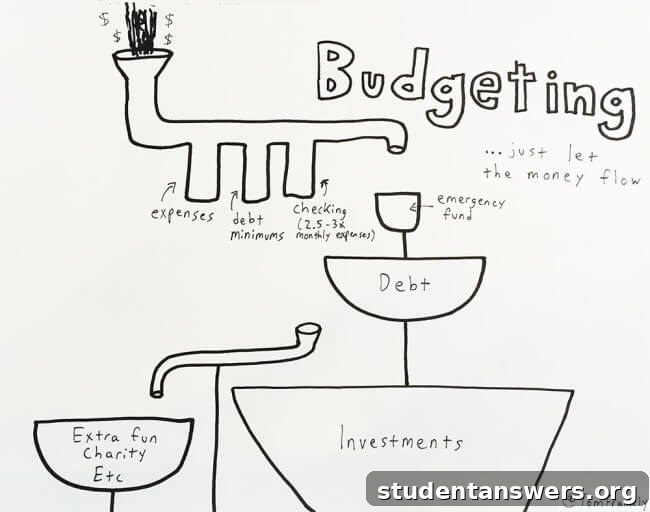
Here’s the order of operations for your money pipeline:
- Monthly Fixed Expenses: First, ensure money is set aside for non-negotiable costs like rent, utilities, and other recurring bills.
- Debt Minimums: Cover the minimum payments on any student loans or credit cards to avoid penalties.
- Checking Account Buffer: Your checking account should hold enough to cover 2-3 times your monthly variable expenses. This provides a cushion and prevents overdrafts.
- Emergency Fund: Build a separate fund with $500 to $1,000 for true emergencies, like a medical bill or unexpected travel. This prevents you from going into debt when life happens.
- Aggressive Debt Payoff: Once the above are filled, direct any extra money toward paying down high-interest debt.
- Investing and Fun: What’s left can be allocated toward long-term investments, and of course, some guilt-free spending on things you enjoy.
This is a conceptual model. In practice, you might pay your rent and aggressively pay down a credit card in the same week. The pipeline is your planning tool for when income arrives, helping you decide how to allocate every dollar with purpose.
Step 4: Put Your Finances on Autopilot
The key to making your pipeline work effortlessly is automation. The more you can automate, the less you have to think about it. Set up automatic payments for nearly all your fixed expenses:
- Rent
- Utilities (Electricity, Gas, Internet)
- Cell Phone Bill
- Subscriptions (Streaming services, software)
You should also automate your savings and investments. Set up a recurring transfer from your checking account to your emergency fund or investment account each month, even if it’s just a small amount. This “pay yourself first” strategy ensures you are always making progress toward your goals.
A Note on Credit Cards
Credit cards can be powerful tools for building your credit score and earning rewards, but they can also be a dangerous trap. Think of a credit card as a sharp tool: used responsibly, it’s very useful; used carelessly, it can cause serious harm.
Credit card companies profit when you carry a balance and pay their high interest rates. Your goal is to use their tool without paying them a dime in interest. Follow these two unbreakable rules:
- Never spend more than you have in the bank. Treat your credit card like a debit card.
- Always pay the entire balance in full every month. Carrying a balance does not help your credit score; it only costs you money. Consistent, on-time, full payments are what build a great score.
A safe strategy for students is to put one or two small, recurring bills (like Spotify or Netflix) on your credit card, set up autopay for the full balance from your checking account, and then put the physical card away. This builds your credit history automatically without tempting you to overspend.
Step 5: Plan for Large, Irregular Expenses
As a student, you face significant expenses that don’t occur monthly. These include tuition, textbooks, student fees, and dorm payments. These can derail your budget if you don’t plan for them.
Identify these semester-based expenses and know exactly how you’ll pay for them. Is it through student loans, scholarships, savings, or family help? If you need to save for them yourself, calculate how much you need to set aside each month. A separate savings account can be a great place to hold these funds so you’re not tempted to spend them.
If you receive extra money from scholarships or loans after covering tuition, treat it like any other income. Run it through your pipeline. Use it to fill your emergency fund, pay down other debt, or save it for next semester’s expenses.
Step 6: Master Your Daily Spending Habits
After your automated systems handle your fixed costs and savings goals, the money left in your checking account is for variable spending. This is where most people struggle. It’s easy to overspend on coffee, takeout, and entertainment without realizing it.
Instead of creating a restrictive budget that you’ll inevitably break, focus on changing the underlying habits. The goal isn’t to deprive yourself of everything you enjoy, but to spend mindfully.
Here are two powerful techniques to curb mindless spending:
- Use Cash: Swiping a card feels abstract. Handing over physical cash makes the expense feel real. Try a cash-only week for variable spending like food and entertainment. You’ll be amazed at how much more conscious you become of where your money is going.
- Track Every Purchase: For one month, write down every single thing you buy in a small notebook or a tracking app. Don’t judge, just record. This simple act of manual tracking interrupts the habit of mindless spending and forces you to acknowledge each financial decision. This awareness is often all it takes to start making better choices.
By focusing on these habits, you can align your daily actions with your long-term goals without feeling restricted or overwhelmed.
Conclusion: Your Path to Financial Freedom
Budgeting as a student doesn’t have to be complicated or stressful. By shifting your focus from tedious micromanagement to building smart systems and healthy habits, you can take control of your finances and set yourself up for a successful future.
To recap, the steps are simple:
- Define clear goals to give your money purpose.
- Analyze your current situation to know your starting point.
- Create a money pipeline to direct your income to what matters most.
- Automate everything possible to make progress effortless.
- Plan for large expenses to avoid financial shocks.
- Master your spending habits through mindfulness and tracking.
By implementing this framework, you’ll not only navigate the financial challenges of college but also build a foundation of financial literacy that will serve you for the rest of your life.