
Master Your Mornings, Conquer Negativity, and Navigate Your Quarter-Life Crisis
Life is a series of questions. Some days, you feel like you have all the answers—waking up early, crushing your to-do list, and feeling unstoppable. On other days, you’re hit with a wave of uncertainty, demotivation, or the nagging feeling that you’re not on the right path. This is a universal experience, especially for those driven to achieve and grow. Today, we’re diving deep into some of the most pressing questions that ambitious individuals face, transforming common struggles into actionable strategies for success and well-being.
We’ll explore how to finally create consistency in your daily routine, know when it’s time to let go of a habit that no longer serves you, and build a shield against the negativity that can derail your progress. We’ll also tackle the so-called “quarter-life crisis” and the complex decision of how to build a personal brand without sacrificing your private life. Get ready to turn confusion into clarity and build a more resilient, productive, and fulfilling life.
How to Build an Unshakeable Morning Routine and Stop Oversleeping
The scenario is painfully familiar: one day you’re up at 5 a.m., hitting the gym, and conquering your day before most people have had their first cup of coffee. The next, you’re waking up in a panic at 10 a.m., your entire schedule thrown into chaos. This inconsistency can be frustrating, making you feel like your productivity is left to chance. The key to breaking this cycle isn’t about willpower alone; it’s about building a system that makes consistency the easiest choice.
Understand Your “Why” and Your “When”
First, consistency starts the night before. Your body and brain thrive on rhythm, governed by what is known as your circadian rhythm—your internal 24-hour clock. The single most effective way to stabilize this clock is to go to bed and wake up at roughly the same time every single day, including weekends. Yes, even on Saturdays. Sleeping in until noon on the weekend makes your Monday morning feel like jet lag because you’ve forcefully shifted your internal clock.
Beyond the biology, you need a powerful psychological driver. Why do you want to wake up early? “Being more productive” is too vague. Get specific. Do you want that quiet time to write your novel, learn a new skill, or simply enjoy a peaceful moment before the world wakes up? Connect your morning routine to a deeply held value or long-term goal. When your alarm goes off, you won’t be thinking about the chore of getting up; you’ll be thinking about the opportunity to work on what truly matters to you.
Design a Frictionless Morning Environment
Make your good intentions easy to follow. If you plan to go to the gym, lay out your workout clothes the night before. If you want to read, put the book and a glass of water on your nightstand. This concept, known as “choice architecture,” removes small points of friction that can derail your plans in a groggy, half-awake state. Another classic but effective trick is to place your alarm clock across the room. This forces you to physically get out of bed to turn it off, breaking the powerful gravitational pull of your warm covers. Once you’re on your feet, you’ve already won half the battle.
When Is It Time to Break a Good Habit? Evolving Your Routines for Growth
We often focus on building good habits, but rarely do we discuss when it’s time to dismantle them. A habit, no matter how effective, is a tool. And like any tool, it can become outdated or ill-suited for a new task. Sticking to a routine out of sheer momentum, even when it no longer serves your current goals, can lead to stagnation.
Conduct a “Habit Audit”
The first sign that a habit needs re-evaluation is a sense of boredom, obligation, or diminishing returns. That morning journaling practice that once brought you clarity might now feel like a chore. That intense workout regimen might be leaving you drained instead of energized as your life gets busier. It’s crucial to periodically conduct a “habit audit.”
Ask yourself: Does this habit still align with my primary goals? Does it energize me or drain me? Is it moving me forward, or am I just going through the motions? This isn’t about judging yourself; it’s about making sure your daily actions are in sync with your future aspirations. Life changes—a new job, a new relationship, a new passion project—and your routines must be flexible enough to adapt.
Evolve, Don’t Abandon
Breaking a habit doesn’t have to mean a complete overhaul. Often, it’s about evolution. If your 60-minute gym session is no longer feasible, don’t just stop exercising. Can you switch to a more efficient 30-minute HIIT workout at home? If daily journaling feels like too much, could you switch to a weekly review? The goal is to replace an obsolete habit with a new, more relevant one. This prevents the “all-or-nothing” mindset, where a single disruption causes your entire system to collapse. Your routines should be a living, breathing part of your life, designed to grow and change right alongside you.
Protect Your Energy: A Guide to Blocking Negativity and Criticism
Putting yourself out there—whether it’s launching a project, sharing your work, or simply stating an opinion—inevitably exposes you to the feedback of others. While constructive criticism is a gift, unsolicited negativity and hateful comments can be incredibly demotivating. Protecting your mental and emotional energy is not a luxury; it’s a prerequisite for long-term success and happiness.
Build Your Internal Filter
The first step is to learn how to differentiate between valuable feedback and useless noise. Constructive criticism is specific, actionable, and intended to help you improve. Negativity is often vague, personal, and aimed at tearing you down. Ask yourself, “Is this comment coming from a place of genuine insight, or is it a reflection of the other person’s own insecurities?”
Developing this internal filter allows you to extract the gold from the garbage. A strong sense of self-worth is your best defense. When you are secure in your mission and your value, external opinions lose their power. Remind yourself that you are the curator of the feedback you accept. You don’t have to let every comment into your headspace. You can choose to look at a negative comment, acknowledge it as someone’s opinion, and then consciously let it go without allowing it to take root.
Curate Your Environment
You can’t control what everyone says, but you can control who you listen to. Surround yourself with a supportive inner circle—mentors, friends, and peers who believe in you and offer encouragement. On a practical level, don’t be afraid to use the “mute,” “block,” or “unfollow” buttons on social media. Your mental peace is more important than maintaining a connection with a source of negativity. View your attention and energy as finite resources. Every moment spent dwelling on a hateful comment is a moment stolen from creating, improving, and moving toward your goals.
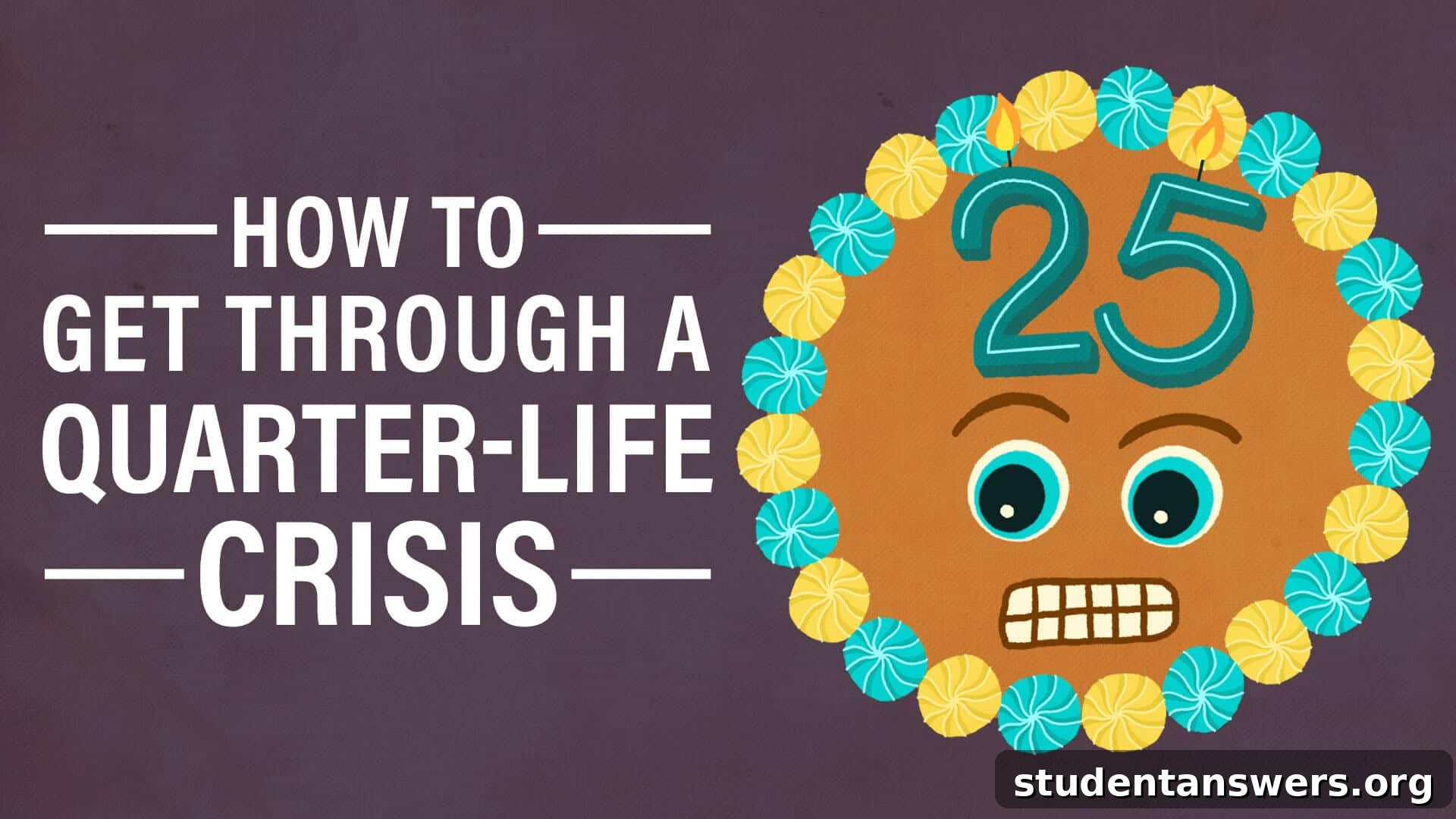
Do High-Achievers Have Quarter-Life Crises? Navigating the Crossroads of Your 20s
The quarter-life crisis is a period of intense soul-searching and stress, typically occurring in one’s mid-20s to early 30s. It’s often characterized by a feeling of being lost, anxious, and uncertain about your career, relationships, and life purpose. A common misconception is that this only happens to people who are struggling. In reality, high-performing individuals are often prime candidates for an even more potent quarter-life crisis.
The Paradox of Achievement
High-achievers spend years following a clear path: get good grades, get into a good college, get a good job. They excel at checking boxes and meeting external expectations. The crisis hits when they’ve checked all the boxes and realize the promised fulfillment isn’t there. The “what’s next?” question becomes terrifying when there’s no longer a clear-cut path to follow.
This is compounded by the pressure to maintain a successful image. They feel they can’t admit their confusion or doubt because they are supposed to be the ones who have it all figured out. This leads to a profound sense of isolation and the feeling that the ladder they’ve been climbing so diligently is leaning against the wrong wall.
How to Navigate the Crossroads
Dealing with a quarter-life crisis requires shifting from an external to an internal locus of control. Instead of asking what you *should* be doing, start asking what you *want* to be doing. Reconnect with your core values. What truly matters to you, beyond titles and salaries? Give yourself permission to explore and experiment without a defined goal. Take a class in something you’re curious about, start a small side project just for fun, or travel to a new place. The goal is not to find the “one right answer” immediately but to gather data about yourself. This phase isn’t a sign of failure; it’s a critical and necessary part of building an authentic and meaningful adult life.
Personal Brand vs. Private Life: Should You Use Your Real Name or a Pseudonym?
In an increasingly digital world, many careers require some form of personal branding. You’re encouraged to share your expertise, build a following, and become a known entity in your field. This raises a crucial question: How much of your “personal” self should be part of this brand? The decision to use your real name versus a pseudonym is about balancing authenticity with privacy.
The Case for Your Real Name
Using your real name is the most direct path to building professional credibility. It links all your accomplishments under a single, authentic identity. It makes networking more straightforward and builds a brand that can grow with you throughout your career, even if you change industries. Authenticity is a powerful connector, and using your real name signals that you stand behind your work and your words. It’s the default choice for consultants, freelancers, and professionals who want to build a reputation tied directly to their personal identity.
The Power of a Pseudonym or Persona
On the other hand, a pseudonym can provide a vital layer of protection and creative freedom. It separates your professional output from your personal life, shielding you and your family from public scrutiny. This is especially important for individuals working in controversial fields or for those who simply value their privacy. A persona can also be a powerful branding tool, allowing you to create a more focused and memorable identity tailored to a specific niche. It gives you the freedom to express opinions or explore topics you might be hesitant to attach to your real name. It also allows for a “clean slate” if you ever decide to pivot or leave that brand behind.
Finding the Right Balance
The choice is not strictly binary. You can also adopt a hybrid approach: use your real name but carefully curate a professional persona. You decide the boundaries of what you share, keeping your intimate personal life separate from your public-facing brand. To make the right decision, ask yourself: What are my long-term career goals? How important is my privacy? Does my industry value transparency or creativity more? There is no single right answer, only the one that best aligns with your goals and your comfort level.
Conclusion: Embracing Growth and Building a Resilient Life
The journey of personal and professional growth is filled with these kinds of challenging questions. The key is not to have all the answers at once, but to remain curious, adaptable, and kind to yourself. Building a consistent routine, evolving your habits, protecting your energy, navigating periods of uncertainty, and defining your public identity are all ongoing processes. By approaching these challenges with intention and strategy, you can move from feeling overwhelmed to feeling empowered, building a life that is not only successful on the outside but also deeply fulfilling on the inside.