

Failed a Test? Here’s Your 5-Step Guide to Bounce Back Stronger
That sinking feeling in your stomach. The walk of shame out of the classroom. Whether you felt completely prepared or knew you were walking into a disaster, the result is the same: you failed a test. The grade on the paper might feel like a final judgment, a permanent stain on your academic record. But let’s get one thing straight right now: it’s not.
Failing an exam is a universal student experience, yet it often feels incredibly isolating. This guide is here to change that. We’re going to talk about how to process this setback, learn from it, and come back even more prepared and resilient than before. This entire process can be distilled into two fundamental truths:
- Failure is not a catastrophic event; it’s a common part of the learning journey that happens to literally everyone.
- The ability to face failure, dissect it for lessons, and try again is one of the most critical skills you can develop for success in college and in life.
The main reason failure feels so monumental is that we live in a culture that worships success and hides the messy process it took to get there. Social media is a highlight reel of achievements, not a documentary of the struggles. No one likes to advertise their missteps, which can leave you feeling like you’re the only one struggling. To break that illusion, I’ll share a few of my own failures.
You Are Not Alone: My Own Story with Failure
I certainly wasn’t a perfect student. While my overall college GPA was good, I vividly remember the sting of failing at least two major exams. One was in a freshman-year physics class where the concepts felt like a foreign language. The other, more concerningly, was in a junior-year computer networking class—a core requirement for my major. I bombed it because I spent more time scrolling the internet during lectures than actually listening.

But those academic stumbles were nothing compared to a failure that happened in my professional life. During my senior year of high school, I landed what I thought was a fantastic part-time job. I had worked several other jobs and always performed well. This time was different. I was let go after just three months. I was fired, and it was entirely my fault. I was a poor listener, too timid to ask clarifying questions which wasted time, and I didn’t respect the autonomy the job offered.
Walking out of that building, I was convinced my life was over. I thought, “Who will ever hire me again?” It felt like an irreversible mark against my name.
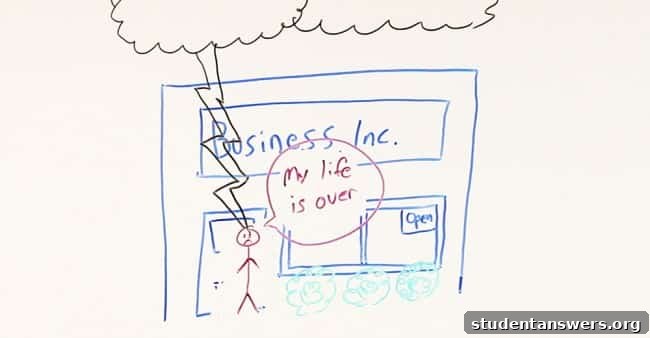
But looking back, that moment was just a blip. Everything turned out fine. I got into college, held other jobs, and even secured a full-time internship. Those painful experiences—failing tests, getting fired—weren’t dead ends. They were painful but necessary learning opportunities. They were low points, or valleys, in the winding path of life.
Life isn’t a smooth, upward-sloping line of constant improvement. It’s a chaotic, messy chart of peaks and valleys, successes and setbacks. Right now, you might be in a valley because of a failed test. But that valley is not your permanent residence. It’s a temporary location, and the next step is almost always upward.
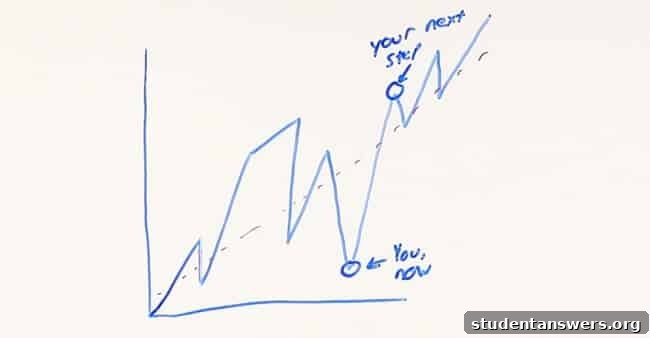
So, how do you climb out of this valley and start ascending toward your next peak? It’s a process, and we can break it down into five actionable steps.
Your 5-Step Action Plan to Recover from a Failed Test
Step 1: Immediate Triage and Damage Control
Before you let yourself spiral, take a moment to assess the situation for anything that requires immediate action. This is the emergency room phase. Is there anything you can do right now to mitigate the damage?
For example, if you missed the test entirely, you need to email your professor immediately. Don’t wait. Explain your situation honestly (you don’t need a wild story about ninjas attacking you). Ask if there is any possibility of a make-up exam or alternative assignment. The worst they can say is no, but a prompt and respectful inquiry shows you care.
If the failed test drops your grade to a dangerously low level, check the syllabus. What percentage of your final grade was this test? Is there an opportunity to drop the lowest test score? Are there extra credit opportunities? Knowing the stakes helps you formulate a plan rather than just panicking.

Step 2: Allow Yourself to Feel, Then Gain Perspective
When failure first hits, your emotions are in overdrive. You might feel shame, anger, anxiety, or disappointment. Trying to ignore these feelings is counterproductive. Your brain needs time to process the emotional impact. So, right after you’ve handled any immediate damage control, give yourself some space.
Vent to a trusted friend. Go for a long walk or a run. Watch a comfort movie. Play a video game for a couple of hours. The goal is to step away from the problem long enough for the emotional storm to pass. When your mind is clouded with intense emotion, you can’t think logically or strategically. Once the initial sting subsides, you can approach the situation with a clearer, more rational mindset, ready to solve the problem instead of just dwelling on it.
Step 3: Conduct a ‘Failure Autopsy’ – Without Blame
Albert Einstein famously said, “Insanity is doing the same thing over and over again and expecting different results.” To avoid repeating this failure, you need to understand precisely why it happened. It’s time to become a detective and analyze the situation objectively. Think of it as a “failure autopsy.” What went wrong?
Be honest with yourself and dig deep into the root causes. Consider these possibilities:
- Preparation Issues: Did you start studying too late? Was your study time filled with distractions? Were your study methods passive (like re-reading notes) instead of active (like practice problems or self-quizzing)?
- Conceptual Misunderstanding: Did you truly understand the foundational concepts, or were you just memorizing facts? Did you skip a topic that ended up being a major part of the exam?
- External Factors: Were you getting enough sleep in the week leading up to the test? Are you dealing with personal stress that’s taking up your mental energy? Is your course load simply too heavy this semester?
- Test-Taking Problems: Did you suffer from test anxiety that made your mind go blank? Did you run out of time? Did you misread the instructions or questions?
Pinpointing the specific cause—or combination of causes—is the most crucial step. You can’t fix a problem if you don’t know what it is.
Step 4: Create a Concrete and Improved Action Plan
Now that you know what went wrong, you can build a smarter plan for the future. This isn’t about just “trying harder.” It’s about trying differently. Your plan should directly address the causes you identified in the previous step.
- If you crammed, your new plan is to schedule shorter, regular study sessions using the principle of spaced repetition.
- If you didn’t understand the concepts, your plan is to attend your professor’s office hours every week to ask clarifying questions.
- If you were unmotivated, your plan could involve finding a study partner to hold you accountable or using a commitment device to block distracting websites during study hours.
- If test anxiety was the issue, your plan might be to visit your university’s academic success center to learn anxiety-management techniques or to do more timed practice tests to simulate the real environment.
Write this plan down. Having a concrete set of next steps transforms your anxiety into focused action. This is how you take back control.
Step 5: Leverage Your Support System and Get Help
Many students feel embarrassed to ask for help, fearing they’ll “look stupid.” This mindset is one of the biggest barriers to academic success. Asking for help isn’t a sign of weakness; it’s a sign of strength and self-awareness. It shows you are committed to learning and are smart enough to use every resource available to you.
You have already failed. The fear of embarrassment should now be secondary to the goal of passing the class. You have a huge network of potential support:
- Your Professor: Go to office hours. Show them your test, explain what you think went wrong, and ask for advice on how to improve. They want you to succeed.
- Teaching Assistants (TAs): TAs often lead review sessions and are an excellent, less intimidating resource for help.
- University Tutoring Centers: Most colleges offer free tutoring services. Using them is one of the smartest things you can do.
- Classmates: Form a study group. Explaining concepts to others is one of the best ways to solidify your own understanding.
Think of it this way: you’re on a sinking ship. If a rescue raft comes by, you don’t worry about how you look climbing aboard. You just get on the raft.
Final Words: Redefining Failure
Many people passively let life happen to them. They allow past failures to define their future potential. Do not be one of those people. A failed test is a data point, not a destiny. It gives you valuable information about what doesn’t work, allowing you to adapt and improve.
In her 2008 commencement speech at Harvard, J.K. Rowling spoke about the power of failure, saying:
“The knowledge that you have emerged wiser and stronger from setbacks means that you are, ever after, secure in your ability to survive.”
Failure is not the end. It is a source of crucial insight. If you don’t like the grade you got, learn from the experience and create a better strategy. If you don’t like the student you were yesterday, take the small, concrete steps in your action plan to become a better one today.