
Mastering Work-Life Balance: A Practical Guide for Remote Workers
Working from home offers incredible freedom, but it can also erase the essential boundaries between your professional and personal life. The commute is gone, the distractions of the office are a distant memory, and your schedule is often your own to command. These are undeniable perks. However, without the physical separation of an office, your living room can quickly become your boardroom, your kitchen your breakroom, and your workday can bleed into your evenings and weekends.
This constant connection can strain your relationships, negatively impact your mental health, and lead to burnout. So, how do you reclaim your personal time and maintain a healthy work-life balance when your home is also your office? How do you “leave work” when it’s just a few steps away?
Drawing from over five years of remote work experience, this comprehensive guide will provide you with actionable strategies and practical tips to ensure that work stays in its designated place, allowing you to fully enjoy the benefits of working from home without sacrificing your well-being.
Craft a Consistent Schedule and Honor It
“A schedule defends from chaos and whim. It is a net for catching days.” – Annie Dillard
In a traditional office setting, your schedule is largely predetermined. You arrive by 9 AM, leave around 5 PM, and the structure is set. This external framework creates a clear start and end to your workday. When you work remotely, you become the architect of your own schedule. This freedom is powerful, but it requires discipline.
Without a self-imposed schedule, you risk either procrastinating or overworking. To prevent your tasks from stretching across all waking hours, it is crucial to create and adhere to a daily work plan. The specific hours don’t matter as much as the consistency. If you’re an early bird, a 6 AM to 2 PM schedule might be perfect for maximizing your productivity. If you’re a night owl, a later start might suit you better. The key is to define your work hours in advance.
Treat your start and end times with the same seriousness as you would a train departure. When it’s your designated “quitting time,” shut down your computer, close your work applications, and transition into your personal life. This discipline is the first and most fundamental step toward establishing a healthy boundary.
Designate a Dedicated Workspace
It can be tempting to work from the comfort of your couch or even your bed, but this practice can be detrimental to your work-life balance. When you mix your relaxation spaces with your workspace, your brain struggles to differentiate between “on” time and “off” time. This can make it difficult to unwind and can lead to a feeling of being perpetually at work.
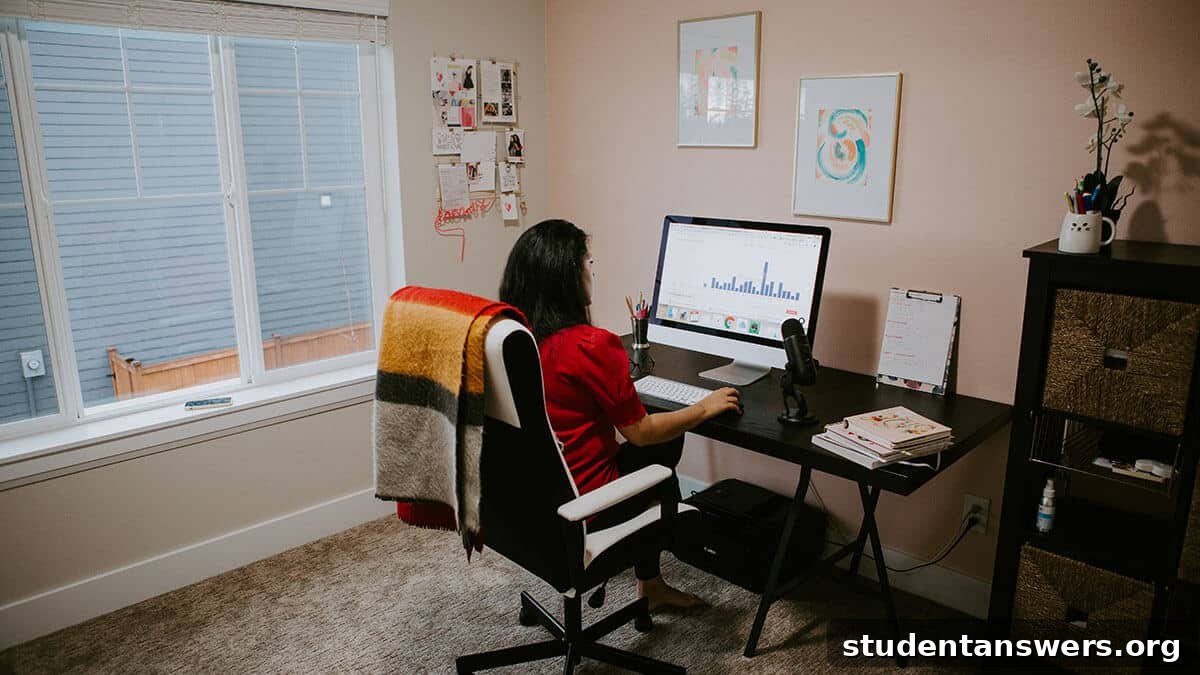
To combat this, create a designated area that is used exclusively for work. This doesn’t need to be a lavish home office. It can be a specific corner of a room, a small desk in your bedroom, or even a particular chair at the dining table. The important thing is to create a psychological association: when you are in this space, you are working. When you leave it, you are not.
Equip this space with everything you need to be productive, such as a comfortable chair, good lighting, and any necessary supplies. This physical separation is a powerful signal to your brain. At the end of the day, physically leaving “the office” helps you transition fully into your personal time, allowing you to relax and recharge more effectively.
Kickstart Your Day with a Morning Ritual
The daily commute, for all its frustrations, served a purpose: it created a buffer between waking up and starting work. When your commute is reduced to a few steps, it’s easy to roll out of bed and immediately dive into emails, blurring the line between your personal morning and your professional day.
Implementing a morning ritual before you start working is essential for setting a positive and productive tone for the day. This routine should be about you, not your job. It helps you wake up your mind and body, ensuring you begin work feeling centered and prepared, rather than rushed and reactive.
A powerful morning ritual can include a few key elements:
- Hydration: Start your day with a large glass of water before you even think about coffee. It rehydrates your body after a night’s sleep.
- Movement: Incorporate some form of exercise, whether it’s a brisk walk, a yoga session, or a quick set of stretches. This gets your blood flowing and boosts your energy levels.
- Nutrition: Fuel your brain and body with a healthy breakfast. Avoid sugary cereals and opt for a balanced meal with protein, healthy fats, and complex carbohydrates.
- Mindfulness or Learning: Spend a few minutes meditating, journaling, or reading something that inspires you. This helps to focus your mind before the demands of work begin.
Create a “Shutdown” Ritual to End Your Workday
“Finish every day and be done with it. You have done what you could; some blunders and absurdities no doubt crept in; forget them as soon as you can.” – Ralph Waldo Emerson
Just as a morning routine helps you start the day, an “end of work” ritual is crucial for signaling its conclusion. The evening commute used to provide this clear separation. Without it, you need to create your own transition from work mode to home mode.
A shutdown ritual is a consistent set of actions you take at the end of your workday to mentally close out your professional responsibilities and prepare for the next day. This prevents work-related thoughts from intruding on your evening.
Your ritual might include:
- Reviewing your accomplishments for the day.
- Creating a concise to-do list for tomorrow, so you don’t have to worry about forgetting important tasks.
- Closing all work-related browser tabs and applications on your computer.
- Tidying up your workspace to ensure a fresh start in the morning.
Consider incorporating a “fake commute.” Once you’ve completed your shutdown ritual, leave your house for a short walk around the block. This simple act of physically leaving and re-entering your home can be remarkably effective in creating a sense of separation.
Unplug Completely: Set Strict Digital Boundaries
Remote work relies on digital communication tools like email and team chat apps. While essential, these tools can also become digital leashes, tying you to your job 24/7. The expectation of constant availability is a primary cause of remote work burnout. To protect your personal time, you must be disciplined about unplugging.
Make it a rule to not check work emails or messages after your designated work hours. Turn off notifications on your phone for work-related apps. Unless your role involves genuine emergencies, most messages can wait until the next business day. This requires not only personal discipline but also clear communication with your team.
From the beginning, it’s vital to set boundaries and manage expectations with your boss and colleagues. Have an open conversation about:
- Standard working hours and expected response times.
- The best way to communicate truly urgent matters outside of those hours.
- Respecting each other’s time off and focus periods.
By establishing these protocols, you help create a healthier company culture where everyone can enjoy a proper work-life balance.
Avoid the Trap of Mixing Work and Leisure
When you’re not under the watchful eye of a manager, it’s easy to let recreational activities creep into your workday. You might have the TV on in the background, scroll through social media, or text with friends. While these seem like harmless micro-breaks, they are detrimental to both your productivity and your ability to relax.
This practice, known as context switching, fractures your focus. Your brain can’t perform two cognitively demanding tasks at once; it can only switch rapidly between them. Each switch comes with a cost, slowing you down and increasing the likelihood of errors. Furthermore, it erodes the boundary between work and play. If you’re partially working and partially relaxing all day, you never get the benefit of deep, focused work or true, restorative rest.
Instead, commit to single-tasking during your work blocks. If you need a break, take a genuine one. Step away from your desk, stretch, or do something completely unrelated to work for 10-15 minutes. Then, return to your task fully focused.
Plan Your Downtime: Have Something to Look Forward To
When “going home” is no longer a reward at the end of the day, motivation to log off on time can wane. It becomes easy to think, “I’ll just finish one more thing.” To counteract this, proactively schedule activities you enjoy for after work. Having something to look forward to creates a compelling reason to stick to your schedule.
These activities don’t have to be elaborate. They can be simple pleasures that help you de-stress and reconnect with your interests outside of work. Consider scheduling things like:
- A hobby, such as painting, playing a musical instrument, or gardening.
- A dedicated session for your favorite video game or TV series.
- Cooking a delicious meal and enjoying it without distractions.
- A regular exercise class or a meet-up with friends.
When you value and protect your leisure time, you’ll be more motivated to work efficiently during the day to ensure you can enjoy it.
Achieving Harmony: Your Path to a Sustainable Remote Career
Navigating the world of remote work requires a conscious effort to build and maintain healthy boundaries. It’s not something that happens automatically. By implementing these strategies—creating structure with schedules and dedicated spaces, using rituals to bookend your day, setting clear digital and personal boundaries, and working efficiently—you can unlock the true potential of remote work.
Work-life balance is not a destination you arrive at once, but an ongoing practice of making intentional choices. By taking control of your environment and your habits, you can build a sustainable and fulfilling remote career that supports, rather than consumes, your life.