

The Ultimate Guide to Taking Breaks: Boost Your Productivity and Health
In our fast-paced world, the pressure to be constantly productive can be overwhelming. We often believe that chaining ourselves to our desks is the only path to success. But what if the secret to working smarter, not just harder, lies in the very thing we try to avoid? What if the key to enhanced focus, creativity, and well-being is simply stepping away? This guide explores the counterintuitive but scientifically-proven power of taking regular breaks.
For years, we’ve discussed study techniques and productivity hacks, and a single, powerful theme consistently emerges: the absolute necessity of rest. Whether you’re battling student burnout, writing a complex research paper, or trying to solve a difficult problem, scheduled downtime isn’t a luxury—it’s a critical component of high performance. This article will dive deep into why taking breaks is so crucial and provide an actionable framework for integrating them into your daily routine, ultimately making you more effective and even healthier.
The Science-Backed Benefits of Taking Breaks
“It does good also to take walks out of doors, that our spirits may be raised and refreshed by the open air and fresh breeze…”
– Seneca, Dialogues
Breaks may seem like empty moments between periods of “real work,” but they are actually powerful tools that work in the background to recharge your mind and body. The benefits are profound and can be broadly categorized into two main areas: physical health and cognitive performance.
The Physical Imperative: Why Your Body Needs to Move

Human beings are not designed to be sedentary. For thousands of years, our ancestors lived active lives, moving constantly to hunt, gather, and explore. Our modern lifestyle, characterized by long hours sitting in front of screens, is a dramatic departure from our biological programming. This disconnect has serious consequences for our health.
When you sit for extended periods, your body essentially starts to shut down. Research from inactivity expert Marc Hamilton highlights the alarming metabolic effects: electrical activity in your leg muscles drops, your calorie-burning rate plummets to about one per minute, and your body’s ability to effectively process insulin declines. Over time, a sedentary lifestyle significantly increases the risk of developing obesity, type 2 diabetes, and cardiovascular issues. It also contributes to poor posture, back pain, and eye strain from staring at screens.
Taking a break is the simplest antidote. By standing up, stretching, or taking a short walk every hour, you reactivate your muscles, get your blood flowing, and counteract the harmful effects of prolonged sitting. It’s a small action with a massive impact on your long-term health and daily energy levels.
The Cognitive Advantage: Unlocking Your Brain’s Full Potential

The benefits of breaks extend far beyond physical health; they are fundamental to how our brains learn, create, and solve problems. You might not consider studying for an exam a “creative” act, but it absolutely relies on creative cognitive processes. Connecting disparate ideas, formulating an argument for an essay, or finding an elegant solution to a math problem all require peak mental performance.
Our brains operate in cycles of high and low alertness, known as ultradian rhythms, which typically last around 90 minutes. When you try to push past this natural cycle, you experience diminishing returns. Your focus wanes, you make more mistakes, and your thinking becomes rigid. This is a state known as “attentional fatigue.”
Taking a break allows your brain to shift from a highly focused state (the “focused mode”) to a more relaxed, wandering state (the “diffuse mode”). This diffuse mode is where subconscious processing happens. It’s during these moments away from a problem that your brain can form new neural connections, leading to “aha!” moments and creative breakthroughs. By stepping away, you give your mind the space it needs to consolidate information and approach challenges from a fresh perspective.
Mastering the Art of the Break: Micro vs. Macro

Not all breaks are created equal. To harness their full power, it’s helpful to understand the two primary types of breaks and how to use them effectively.
Macro Breaks: These are the longer periods of rest we’re all familiar with, such as weekends, holidays, and vacations. Macro breaks are essential for preventing long-term burnout. They provide a complete mental reset, allowing you to pursue hobbies, spend time with loved ones, and fully disconnect from the pressures of work and school. To maximize their benefit, it’s crucial to create a strong boundary. Avoid checking emails or thinking about assignments. True rest requires true disconnection.
Micro Breaks: These are the short, frequent breaks taken throughout your workday. This is where most of us struggle. A micro break could be the 5-minute pause in a 25-minute Pomodoro cycle or a 15-minute walk after 90 minutes of focused work. The goal of a micro break is to combat mental fatigue and restore focus. Unfortunately, we often fill these breaks with counterproductive activities. Mindlessly scrolling through social media, for instance, isn’t a real break. It floods your brain with more information and further erodes your ability to concentrate. A truly effective micro break is a 5-15 minute period away from your primary task and screens, designed to get your body moving and reset your focus.
Overcoming the Most Common Excuses for Skipping Breaks

Even when we know breaks are beneficial, it’s easy to fall back into old habits. Here are the most common mental traps and how to reframe them.
- “I don’t have enough time.” When a deadline is looming, every second feels precious. But this mindset ignores how our energy actually works. Pushing through fatigue leads to low-quality work that often needs to be redone later. A 5-minute break can restore your focus, allowing you to work more efficiently and produce better results in the next 30 minutes. Think of breaks not as lost time, but as an investment in the quality of your remaining work time.
- “Taking breaks disrupts my focus.” It’s true that poorly timed or too-frequent breaks can pull you out of a state of “flow.” The key is to find the right interval for you and the task at hand. For intense, creative work, you might work for 50 minutes and break for 10. For more rote tasks, the 25/5 Pomodoro cycle might be perfect. The goal is to take a break *before* you hit a wall of exhaustion, not after your focus has already shattered.
- “Successful people work nonstop.” This is a pervasive myth fueled by hustle culture. While many high achievers have a strong work ethic, they are often masters of recovery, not just work. They understand that peak performance is a cycle of intense effort followed by strategic rest. Trying to emulate a glamorized, unrealistic version of someone’s work habits is a recipe for burnout, not success. The smartest way to get ahead is to work in a way that is sustainable for your own biology.
Your Actionable Toolkit for Effective Breaks

Knowing you should take breaks is one thing; doing it effectively is another. Here are practical strategies to get the most out of your downtime.
1. Move Your Body. The best breaks involve physical activity. This doesn’t have to mean a full workout. Simply standing up and stretching can make a difference. For an even greater cognitive boost, do something to elevate your heart rate. A few ideas include:
- A brisk walk outside or around your building.
- A set of jumping jacks, push-ups, or bodyweight squats.
- Chair dips (using a sturdy chair!).
- A short dance party to your favorite song.
2. Engage a Different Part of Your Brain. Give your analytical mind a rest by doing something creative or tactile. This helps restore your mental energy by shifting your focus completely. Try activities like:
- Sketching or doodling in a notebook.
- Playing an instrument for a few minutes.
- Solving a Rubik’s cube or a small puzzle.
- Tidying up your workspace.
3. Use Technology Wisely. While mindless scrolling is detrimental, certain apps can help you build a break habit. Pomodoro timers like Pomotodo or Tomato Timer enforce work/break cycles. Reminder apps like Stand Up! can be set to alert you at specific intervals. The key is to use technology as a tool to pull you away from the screen, not as another digital distraction.
How to Make Taking Breaks an Unbreakable Habit
The ultimate goal is to make taking breaks an automatic part of your workflow. The most effective way to do this is by understanding and building a “Habit Loop,” which consists of a cue, a routine, and a reward.
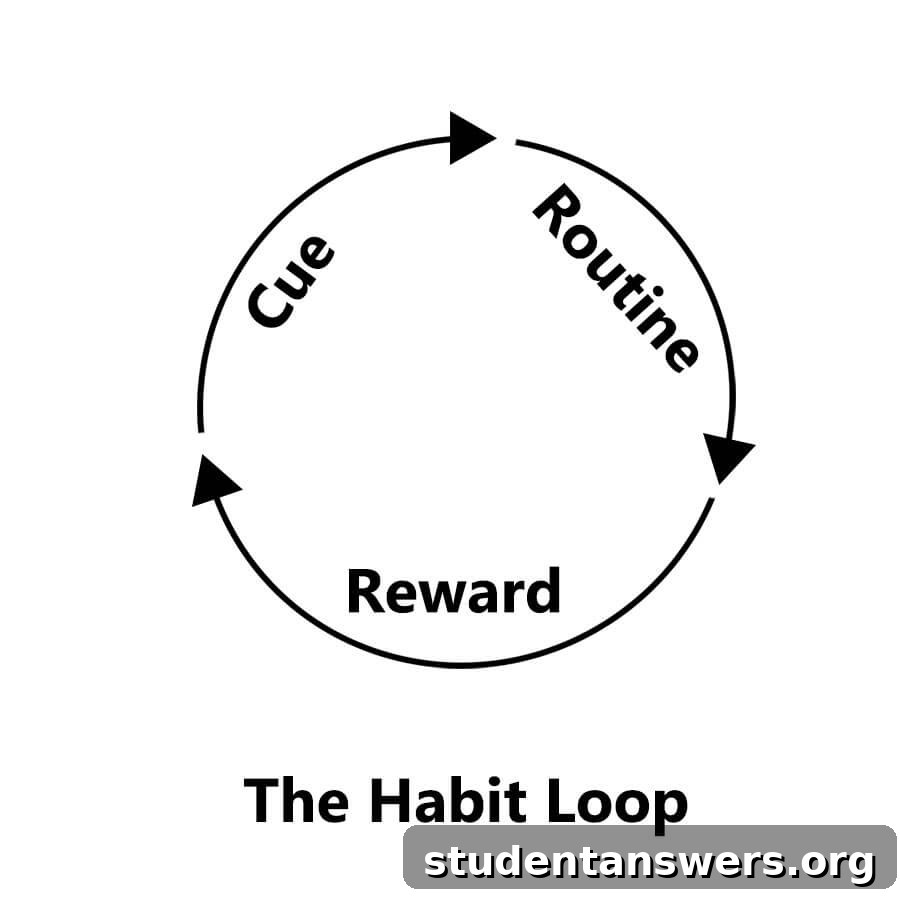
- The Cue: This is the trigger that tells your brain to start the habit. The most reliable cue is a timer. Set an alarm for 25, 50, or 90 minutes. When it goes off, that’s your non-negotiable signal to stand up. The cue must be strong enough to pull you away from your work.
- The Routine: This is the action you take—the break itself. Choose one of the effective break activities listed above. The more consistent your routine, the stronger the habit will become.
- The Reward: This is what reinforces the habit. The long-term reward is better health and higher-quality work, but that can be hard to feel in the moment. Therefore, make your break routine inherently rewarding. Choose an activity you genuinely enjoy. If you look forward to your 5-minute sketching session or walk outside, you’ll be far more likely to stick with it. This creates a positive feedback loop that makes taking breaks something you *want* to do.
Conclusion: Embrace Rest as a Strategy
Taking regular, intentional breaks is not a sign of weakness or laziness; it is one of the most intelligent strategies you can employ for achieving sustained, high-quality performance. It honors your natural biological rhythms, protects your physical health, and unlocks deeper levels of creativity and focus. By shifting your mindset from “I don’t have time to rest” to “I must rest to succeed,” you can transform the way you work, study, and live.
Start small. Today, schedule just one 5-minute break where you get up, stretch, and step away from your screen. You might be amazed at how much clearer and more energized you feel when you return.