

Bridging Your Analog and Digital Notes
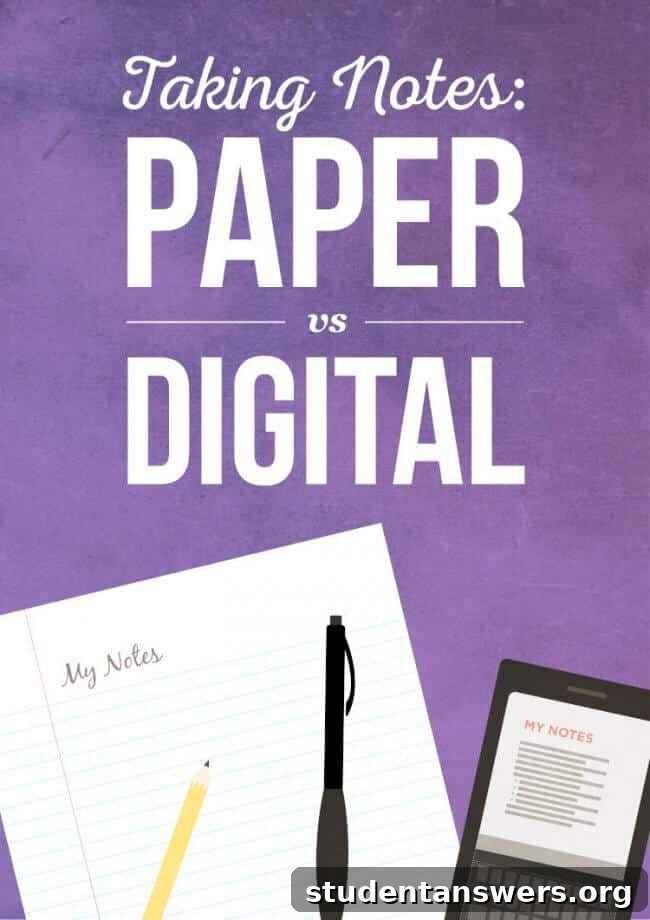
Bridging the Gap: How to Combine Paper and Digital Note-Taking for Maximum Productivity
In our hyper-connected world, it often feels like we’ve made a Faustian bargain with technology. We gained incredible convenience and access to information, but in exchange, we sacrificed a significant portion of our focus and our connection to the present moment. The simple, tactile pleasure of pen on paper—and the unique cognitive benefits that come with it—seems lost to the digital tide of infinite storage and instant searchability. But does it have to be a choice? What if you could harness the best of both worlds?
The debate between analog and digital is a familiar one for students and professionals alike. Do you stick with the classic notebook that never runs out of battery, or do you embrace the powerful organization of a digital app? The truth is, the most effective system often lies in the middle. By creating a hybrid workflow, you can leverage the focused, creative power of paper for initial ideas and learning, while using the robust organizational power of digital tools for archiving, searching, and sharing.
This comprehensive guide will explore how to build a powerful hybrid note-taking system that works for you. We’ll dive deep into the specific advantages of each medium and provide a step-by-step process for integrating them seamlessly. Furthermore, we’ll extend this “best of both worlds” philosophy to other critical areas of student life, including:
- The Grades vs. Extracurriculars Debate: How to find a balance that builds both a strong academic record and essential life skills.
- How to Choose a Career Path: Moving beyond the flawed advice of “follow your passion” to build a fulfilling and practical career.
Get ready to transform your approach to productivity and planning. Let’s build a system that gives you the clarity of paper and the power of pixels.
The Enduring Power of Paper in a Digital Age
Before we build our bridge to the digital world, it’s crucial to understand why paper has remained an indispensable tool for centuries, even in the face of incredible technological advancement. Its benefits are not just about nostalgia; they are deeply rooted in how our brains process information.
Enhanced Memory and Conceptual Understanding
One of the most significant advantages of handwriting is its impact on learning and retention. When you type, the process is often a passive transcription. Your fingers move in a repetitive pattern, and the focus is on capturing words verbatim. In contrast, writing by hand is a more complex cognitive task. It forces you to process and summarize information in real time. You have to listen, digest the concept, and then reframe it in your own words. This active engagement with the material embeds it more deeply in your memory.
Studies have consistently shown that students who take notes by hand demonstrate better conceptual understanding and recall than their laptop-using counterparts. The act of forming letters, drawing arrows, and structuring ideas spatially creates stronger neural pathways, making the information easier to retrieve later.
Unmatched Freedom and Flexibility
A blank page is a canvas for non-linear thinking. Unlike the rigid, top-to-bottom structure of a word processor, a notebook allows for complete freedom. You can mind-map a complex topic, sketch a diagram to visualize a process, use different-sized lettering to create emphasis, or simply doodle in the margins while you think. This freedom is invaluable during brainstorming sessions, creative projects, or when trying to grasp intricate subjects. Digital tools have tried to replicate this with styluses and tablets, but for many, the physical feedback and unrestricted space of paper remain superior for sparking creativity.
A Distraction-Free Sanctuary
Perhaps the most obvious benefit of paper is what it lacks: notifications. A notebook will never buzz with a new email, tempt you with a social media feed, or lure you down a rabbit hole of web browsing. It is a single-tasking tool in a multitasking world. When you open a notebook, your sole purpose is to engage with the page in front of you. This focused environment is incredibly conducive to deep work, thoughtful reflection, and effective studying.
The Unbeatable Advantages of Digital Tools
While paper excels in the initial capture and processing of ideas, digital tools offer unparalleled power in organization, accessibility, and long-term storage. A purely analog system can quickly become unwieldy, with information scattered across multiple notebooks and impossible to find when you need it most.
Instant Searchability and Organization
This is the killer feature of the digital world. Imagine needing to find a specific note about a historical figure from a lecture six months ago. With a paper system, you’d be flipping through pages, hoping you remember which notebook it was in. With a digital hub like Evernote or OneNote, a simple search for the name brings up the exact note in seconds. The ability to tag, categorize, and link notes creates a powerful personal knowledge base that grows with you over time. This transforms your notes from a static record into a dynamic, interconnected web of information.
Universal Accessibility and Portability
Your digital notes are not tied to a physical object. They live in the cloud, accessible from your phone, laptop, or any computer with an internet connection. This means you can review your class notes on the bus, add a thought to your project plan while waiting in line for coffee, or pull up research during a study group session. You no longer have to carry around heavy binders or worry about losing your one-and-only notebook. Everything is backed up and synchronized across your devices.
Seamless Integration and Collaboration
Digital tools are designed to work together. You can clip articles directly from the web, embed PDFs into your notes, link to tasks in a project management app like Asana, and easily share your notes with classmates or colleagues. This level of integration creates a centralized command center for your academic and personal life, streamlining your workflow and making collaboration effortless.
Crafting the Perfect Hybrid System: A Step-by-Step Guide
The goal is not to choose between paper and digital but to create a workflow that leverages the strengths of each. This hybrid system involves capturing ideas on paper and then processing and archiving them digitally.
Step 1: Choose Your Analog and Digital Tools
Your system is only as good as the tools you enjoy using. For your analog side, this could be a classic Moleskine notebook, a simple spiral-bound pad, or a set of index cards. The key is to choose something you find portable and pleasant to write on. For your digital hub, popular choices include Evernote for its powerful tagging and web clipping, OneNote for its free-form canvas that mimics a physical notebook, or Notion for its database and project management capabilities.
Step 2: Define Your Capture Workflow
Decide what goes where. A great rule of thumb is to use paper for “in-the-moment” tasks that require focus and creativity. This includes:
- Taking lecture notes in class.
- Brainstorming ideas for an essay.
- Creating daily to-do lists.
- Mind-mapping a new project.
Use your digital hub for long-term storage, planning, and information that needs to be searchable. This includes:
- Archived lecture notes.
- Research articles and web clippings.
- Completed project outlines.
- Long-term goals and plans.
Step 3: The Digitization Bridge
This is the most critical step. Set aside time each day or at the end of each week to process your paper notes. Using a document scanning app like Evernote’s built-in Scannable or your phone’s native scanning feature, take a clear picture of your handwritten pages. These apps will automatically convert them into clean, high-contrast PDFs or images.
Next, upload these scans to your digital hub. As you file them, take a moment to add relevant titles, dates, and tags (e.g., “#BIOL101”, “#MidtermReview”, “#EssayIdea”). This simple act of organization is what makes your hybrid system so powerful. Your handwritten notes, with all their cognitive benefits, are now fully searchable, backed up, and accessible from anywhere.
Beyond Note-Taking: Applying a Balanced Approach to Your Future
This philosophy of integrating the best of different approaches extends far beyond your note-taking system. Two of the biggest questions students face—how to balance their time and how to choose a career—also benefit from a hybrid, well-reasoned approach.
Grades vs. Extracurriculars: Finding the Right Balance
Students often feel pressured to choose between achieving perfect grades and building a “well-rounded” profile through extracurriculars. This is a false dichotomy. Strong grades are your ticket to entry—they open doors to scholarships, graduate programs, and competitive job interviews. However, what you do outside the classroom builds the skills that will make you successful once you walk through those doors.
Extracurricular activities are where you develop leadership, teamwork, communication, and problem-solving skills. They allow you to explore interests, take on responsibility, and learn from failure in a low-stakes environment. The key is strategic balance. Use your organizational system to block out time for both studying and activities. Treat your extracurricular commitments like a class, dedicating focused time to them. This ensures you’re building both a strong academic foundation and the practical skills employers are desperately seeking.
How to Choose a Career Without Losing Your Mind
The common advice to “follow your passion” can be misleading. As author Cal Newport argues, passion is often the result of becoming very good at something valuable, not the prerequisite for starting. A more effective approach is to identify your general interests, find where those interests overlap with skills the market values, and then dedicate yourself to mastering those skills.
Use your hybrid system to research potential career paths. Keep digital notes of interesting professions, required skills, and potential contacts. Use a paper notebook for reflection: What problems do you enjoy solving? What kind of impact do you want to make? This combination of pragmatic research and personal introspection will guide you toward a career that is both fulfilling and viable. For instance, if you are interested in programming, a great starting point is learning How to Learn to Code and exploring different specializations.
By blending the thoughtful, focused nature of analog methods with the organizational power of digital tools, you can build a truly robust system for success in college and beyond.
Resources and Tools Mentioned in This Episode:
- Evernote: A powerful digital hub for organizing notes, web clippings, and scanned documents.
- OneNote: A free-form digital notebook from Microsoft, excellent for mimicking the flexibility of paper.
- Moleskine Notebooks: A popular choice for a high-quality, durable analog companion.
- Asana: A project management tool perfect for tracking academic projects and extracurricular commitments.
- Scannable: An app designed to quickly and clearly digitize your handwritten notes.
- Cold Turkey Writer: A tool that turns your computer into a distraction-free typewriter for focused writing sessions.
Related Podcast Episodes for Deeper Learning:
- Grades vs. a “Well-Rounded Education” (Ep. 84): A deep dive into balancing your academic and extracurricular life for maximum benefit.
- Study Advice From A Medical Student (Ep. 26): Get high-level study strategies from someone who has mastered a demanding academic field.
- Why “Follow Your Passion” Is Bad Advice With Cal Newport (Ep. 35): Explore a more effective framework for building a career you love.
- How to Learn to Code (Ep. 106): A practical guide to acquiring one of the most valuable skills in today’s market.
Want more cool stuff? You can find all sorts of great tools at my Resources page.