

Craft Your Focus Zone for Peak Productivity

Where do you typically hit the books? If your study session involves a laptop balanced on your knees in bed, with a bag of snacks as your only companion, it might be time for a serious upgrade to your study environment. A poorly designed space can sabotage your focus and turn a simple task into a monumental struggle.
This comprehensive guide is dedicated to helping you create or discover a study space that empowers you to work efficiently, produce your best work, and get back to enjoying your college life. A well-optimized study area isn’t a luxury; it’s a fundamental tool for academic success.
We will explore the various types of study locations available, outline the essential do’s and don’ts of creating your own personal study nook, and delve into the core principles that make a study space truly effective. By the end, you’ll not only understand the theory but also see practical examples that bring these ideas to life. Let’s build a space that works for you.
Finding Your Ideal Study Location: 4 Powerful Options
While much of this guide focuses on crafting a permanent study sanctuary in your dorm or apartment, it’s crucial to recognize the different environments available to you. Your ideal study spot might change depending on the task at hand. Let’s explore the most common options.
1. The University Library: The Classic Hub of Focus
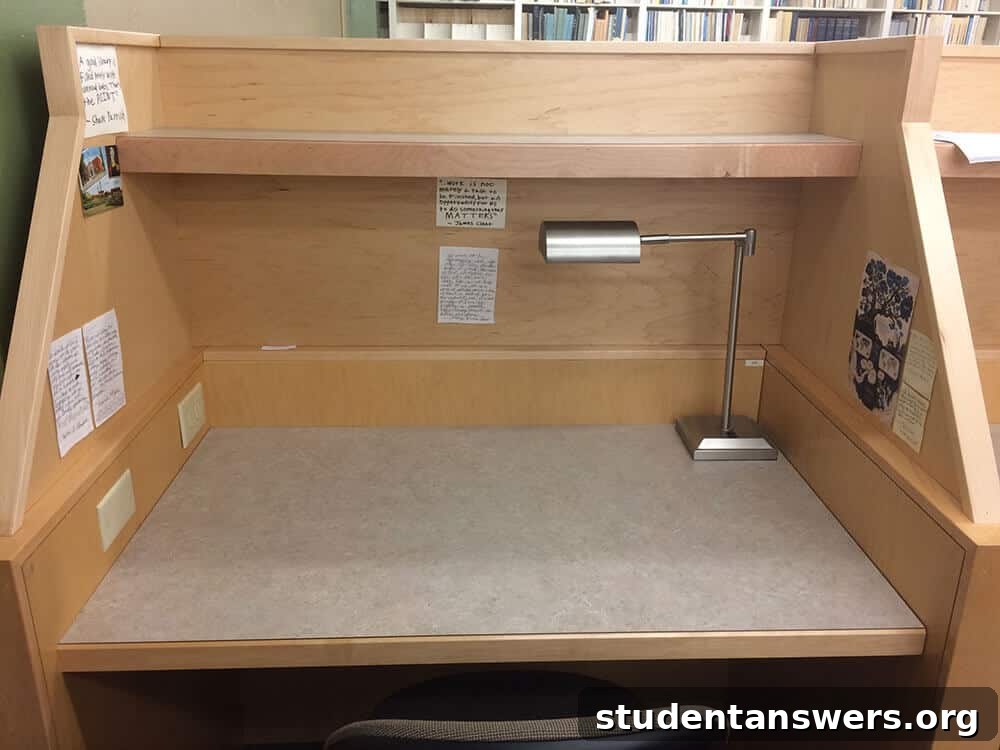
For deep, uninterrupted work, the library is often the undisputed champion. When you need to write a lengthy research paper or cram for a final exam, the academic atmosphere of a library is hard to beat. The key is to find the right spot within the library that matches your needs. Consider these factors:
- Noise Level: Most libraries have designated zones. You’ll find collaborative areas where conversation is welcome, quiet floors where only whispers are tolerated, and completely silent zones for ultimate concentration. Choose the level that best suits your focus style. Noise-canceling headphones can turn any quiet area into a silent one.
- Ample Space: Look for a desk or table large enough to accommodate your laptop, textbooks, notebooks, a drink, and any other materials you need. Feeling cramped can lead to mental clutter and frustration.
- Low Traffic: To minimize distractions, seek out a corner or a less-traveled section of the library. If you’re constantly looking up to greet friends passing by, your productivity will plummet. Find a hidden gem, like a desk in the less popular book stacks or a remote corner on an upper floor.
Even without a dedicated carrel, you can claim a specific spot as your own. Consistency helps build a routine. Your brain will start to associate that specific location with focused work, making it easier to get into a state of flow each time you sit down.
2. Academic Buildings: Studying on Home Turf

Don’t overlook the potential of your department’s academic buildings. Many offer student lounges, empty classrooms after hours, or specialized labs designed for studying. These spaces are often underutilized and can be fantastic resources.
For subjects like math or science, departments frequently have “labs” or tutoring centers where you can work on problem sets with expert help nearby. Using these resources is a smart way to stay on top of challenging coursework.
Furthermore, studying in an academic building offers a powerful psychological advantage, especially when preparing for an exam. This is due to a phenomenon called context-dependent memory. Your brain forms connections between the information you’re learning and the environment you’re in. By studying in the same room where your exam will be held, you provide your brain with extra retrieval cues, which can boost your recall and reduce test anxiety.
3. Miscellaneous Campus Spots: A Change of Scenery
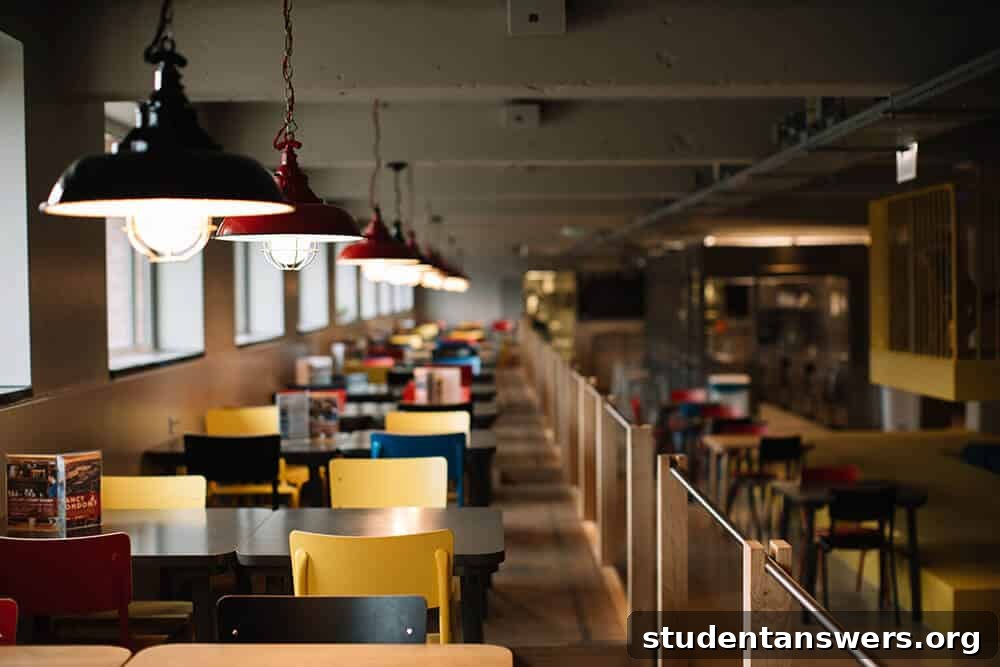
While not ideal for intense, deep work, various other locations on campus can serve as effective study spots for lighter tasks. Think student center lounges, quiet outdoor quads on a sunny day, or even a corner of the dining hall during off-peak hours.
These places can be excellent for casual group meetings, reviewing flashcards, or catching up on reading. The ambient background noise can be stimulating for some students. The key is self-awareness. If you find yourself more interested in people-watching than your textbook, it’s a sign you need a more secluded environment. If it works for you, embrace it.
4. Off-Campus Havens: Escaping the Bubble

Sometimes, the best way to focus is to leave campus entirely. A local coffee shop can provide the perfect blend of ambient energy and anonymity. The act of physically traveling to a location solely for work can create a powerful mental shift, signaling to your brain that it’s time to be productive. It becomes your personal “office.”
Another excellent off-campus option is the local public library. You’re far less likely to run into classmates, which minimizes social distractions. Access to a different library system can also be a huge asset for research projects, opening up a new collection of books and databases. Getting out of the campus “bubble” can refresh your mind and break you out of a study rut.
How to Create the Ultimate Study Space in Your Room: A 4-Step Guide
Now, let’s dive into the main event: transforming a corner of your own room into a powerhouse of productivity. For most students, this will be in a dorm room or bedroom. With a strategic approach, you can create an environment that promotes focus and learning.
Step 1: Declare War on Distractions

The first and most critical step is subtraction. Before you add anything to your study space, you must remove everything that pulls your attention away from your work. The goal is to create a low-friction environment for studying and a high-friction environment for procrastination.
Here are the primary culprits to banish from your immediate study area:
- Your Phone: Put it on silent, in a drawer, or across the room. Out of sight, out of mind.
- Video Game Consoles: If your desk doubles as your gaming station, ensure all gaming equipment is put away before you begin studying.
- Unrelated Browser Tabs: Use a browser extension to block distracting websites or work in a separate browser profile dedicated solely to schoolwork.
- Messy Food: Keep snacks clean and simple. Greasy or crumbly foods create a mess and a distraction.
- Clutter: Remove anything from your desk that isn’t directly related to the task at hand. A clear desk promotes a clear mind.
Step 2: Assemble Your Study Toolkit

With distractions removed, it’s time to thoughtfully add the items you need. Having everything within arm’s reach prevents you from breaking your focus to search for a pen or a textbook. We’ve divided these items into essentials and powerful upgrades.
The Non-Negotiables:
- Ergonomic Seating: A comfortable, supportive chair is a must. If possible, consider a standing desk. Alternating between sitting and standing is a game-changer for energy levels and long-term health.
- Sufficient Desk Space: Ensure you have enough room to work without feeling cramped.
- Good Lighting: Natural light is best, but a quality desk lamp is essential to prevent eye strain, especially at night.
- All Necessary Supplies: This includes your laptop, textbooks, notebooks, pens, pencils, highlighters, calculator, and any other subject-specific tools.
- A “Brain Dump” Pad: Keep a separate notepad nearby. When a random thought or task pops into your head (like “do laundry” or “email professor”), jot it down immediately. This gets it out of your mind so you can stay focused on your work.
Productivity Upgrades:
- External Monitor and Mouse: Using a larger screen at eye level and a proper mouse is far more ergonomic than hunching over a laptop, preventing neck and wrist pain.
- Whiteboard: Incredibly useful for solving math problems, brainstorming essay outlines, or visualizing complex ideas.
- Noise-Canceling Headphones: An essential tool for blocking out roommates, family members, or any other ambient noise.
- Hydration and Healthy Snacks: Keep a water bottle and some non-messy snacks like nuts, fruit, or a granola bar nearby to maintain your energy and blood sugar levels.
- Inspirational Decor: A small plant, a motivational poster, or a few inspiring quotes can make your space more inviting and personal.
- A Kitchen Timer: Perfect for implementing time management techniques like the Pomodoro Technique, where you work in focused 25-minute sprints.
Step 3: Master Your Lighting
Lighting has a profound impact on your mood, energy, and ability to concentrate. Whenever possible, position your desk near a window to take advantage of natural sunlight, which is proven to boost alertness and mood.
Beyond natural light, consider the color temperature of your artificial light. Research has shown that cooler, blue-toned light (around 6000K) is better for concentration and analytical tasks, while warmer, yellow-toned light (around 3000K) can foster creativity. An adjustable LED desk lamp that allows you to change both the brightness and color temperature is an excellent investment, giving you full control over your lighting environment.
Step 4: Regulate the Temperature
It’s difficult to focus when you’re shivering from cold or sweating from heat. Studies on workplace productivity have found that performance is optimal in a temperature range between 72°F and 77°F (22°C and 25°C). When the temperature moves outside this range, cognitive performance can dip, and the rate of errors increases.
While you may not have control over your dorm’s central thermostat, you can take steps to manage your microclimate. Use a small personal fan if it’s too hot, or keep a cozy blanket on your chair if it’s too cold. Dressing in layers also allows you to adapt as needed. If the temperature is truly unbearable, it’s better to temporarily relocate to a more comfortable spot like the library.
Pro-Tips for Maintaining an Effective Study Space

Creating your study space is just the beginning. Maintaining its effectiveness requires adopting a few key habits and mindsets.
- Prioritize Ergonomics: Protect your body from the strain of long study sessions. Sit up straight, keep your feet flat on the floor, position your monitor at eye level, and ensure your wrists are in a neutral position when typing. Your future self will thank you.
- Embrace Your Preferred Style: Some research suggests messy desks can foster creativity, while other experts advocate for strict minimalism. There’s no single right answer. Experiment to find what truly works for you. The only rule is to keep it sanitary—no old food containers allowed.
- Schedule Regular Breaks: Your brain needs downtime to consolidate information. Step away from your desk for 5-10 minutes every hour. Stretch, walk around, or look out a window. This will improve your focus and prevent burnout.
- View It as a Work in Progress: Your study space should evolve with you. Don’t feel pressured to create the “perfect” setup overnight. Start with the basics and gradually add or change elements as you discover what helps you study most effectively.
- Get Creative with Your Limitations: Living in a small dorm with a roommate presents challenges. View these constraints as an opportunity for creativity. Loft beds can open up floor space for a desk, and clever storage solutions can keep a small area organized.
Inspiration Gallery: Real-World Study Spaces
To help you visualize these principles, here are some examples of effective study spaces from students and professionals.
1. The Minimalist Zen Setup
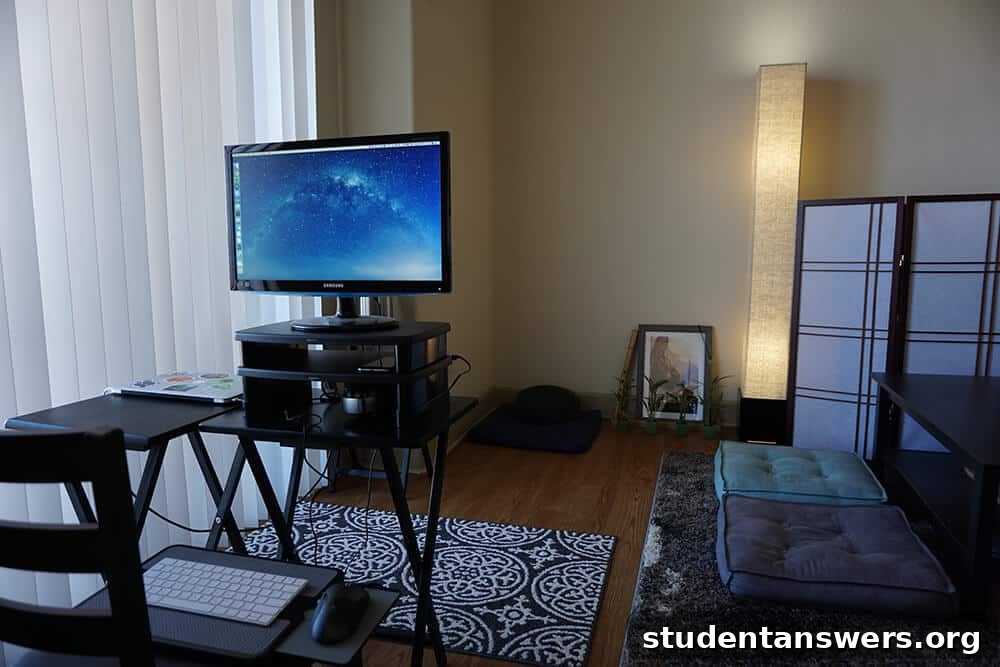
This workspace embodies clean minimalism. The monitor is elevated to eye level for proper ergonomics, the lighting is bright and focused, and the clutter is non-existent. The nearby meditation cushion is a great reminder to take mindful breaks.
2. The Dual-Monitor Command Center
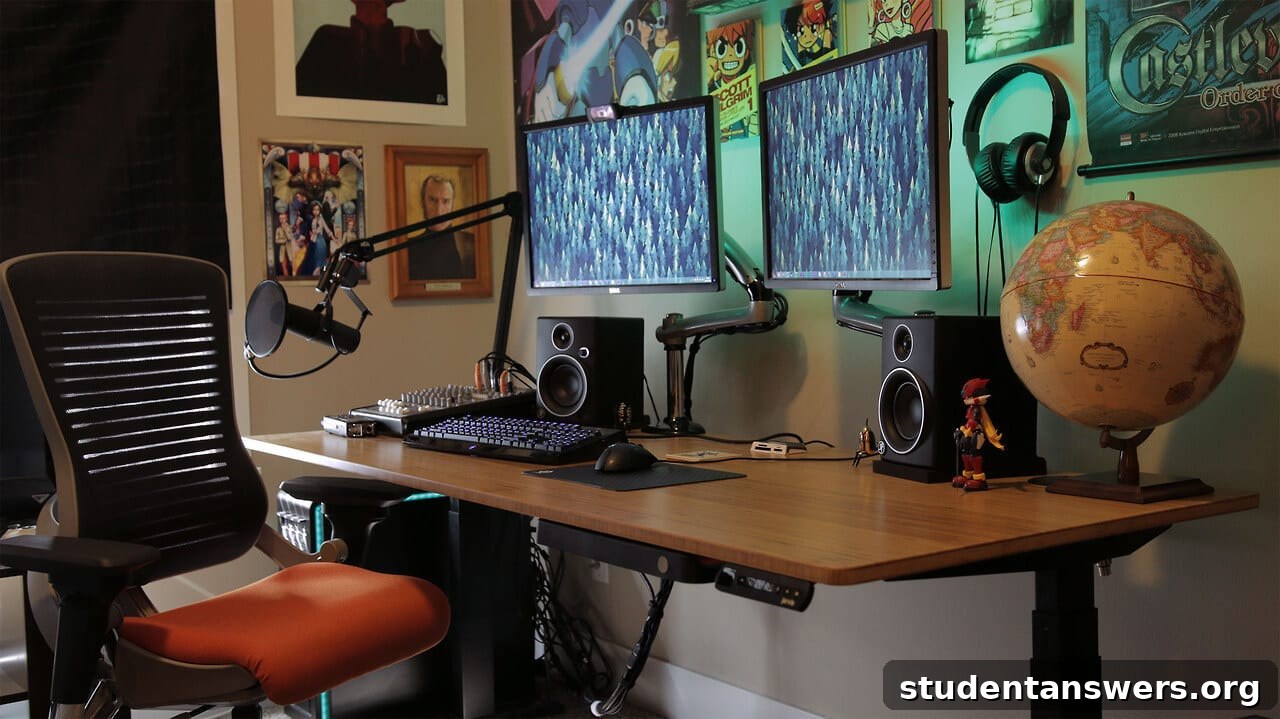
This setup shows that a productive space doesn’t have to be minimalist. For tasks like video editing, coding, or research, dual monitors can be a massive productivity booster. Note the excellent cable management and deliberate lighting, which create a professional and focused environment.
3. The Loft Bed Study Nook
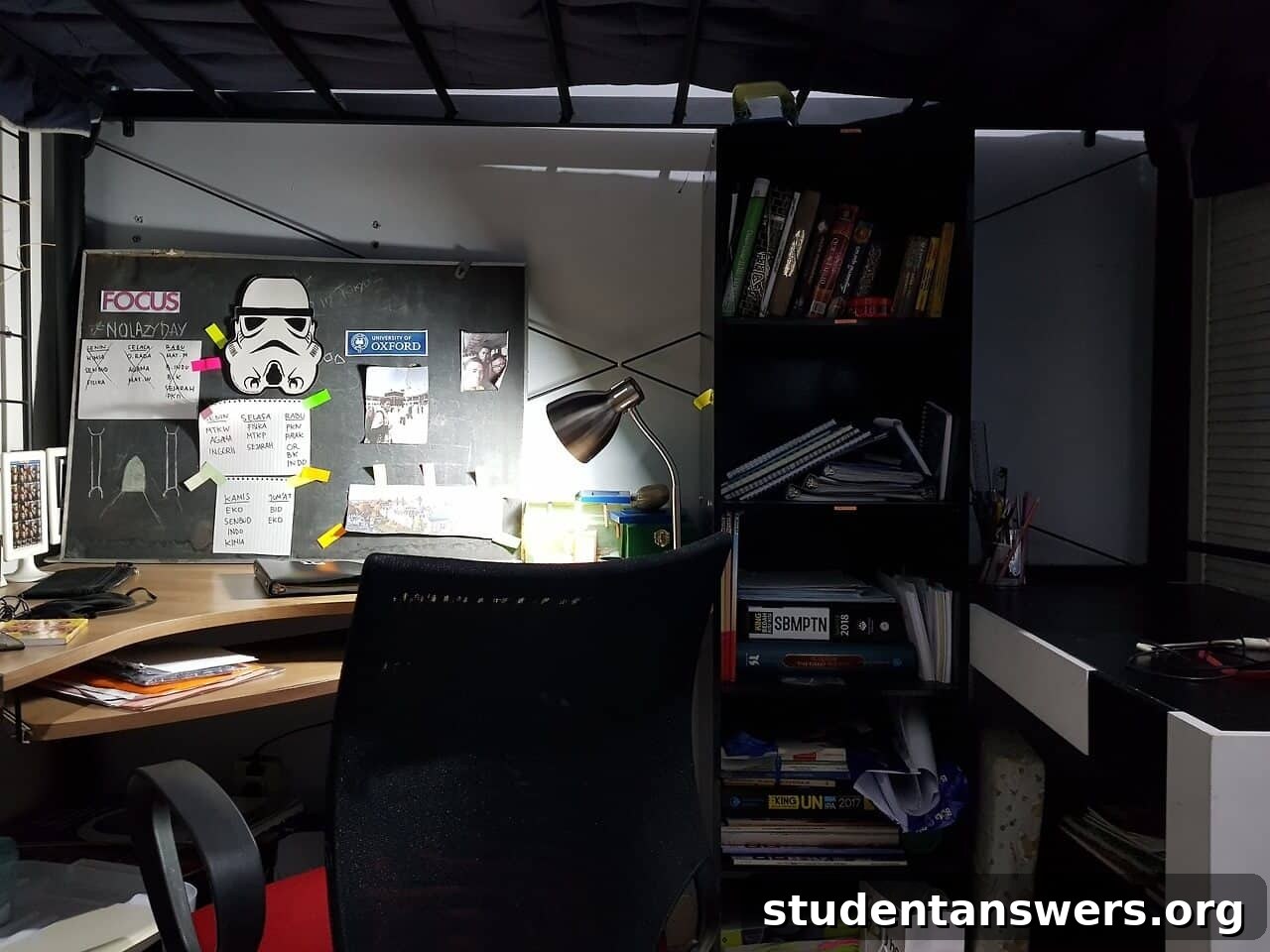
This is a brilliant example of maximizing space in a small dorm room. By lofting the bed, the student has created a dedicated and cozy study nook below. The chalkboard wall is a great, versatile tool for motivation, organization, and creative expression.
Your Study Space is a Tool, Not the Goal
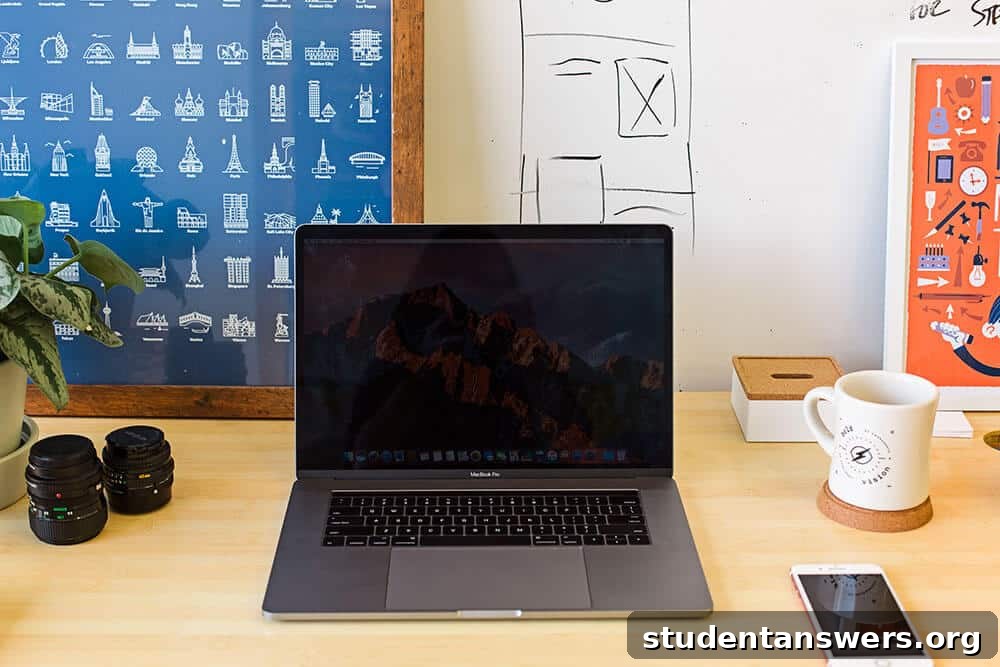
We hope this guide has inspired you to be more intentional about where and how you study. Remember, the ultimate purpose of creating a great study space is to make the act of studying more effective and less stressful. Be careful not to let the process of perfecting your space become a form of procrastination itself.
The “perfect” study space doesn’t exist. What matters is creating a space that is perfect for you—one that minimizes distractions and empowers you to do your best work. Now, take one or two of these ideas, apply them to your own environment, and then get back to what truly matters: learning.