

Cure Procrastination With Decisive Simplicity
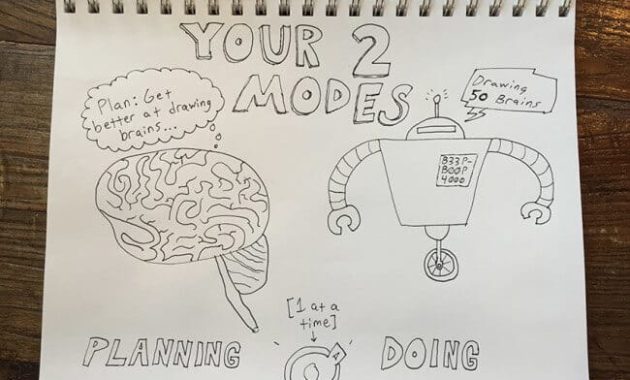
How to Enter “Robot Mode” and Triple Your Productivity as a Student
Imagine for a moment that you are a robot. Your actions aren’t governed by whims, moods, or the tempting allure of procrastination. Instead, every task you perform is the direct result of a pre-defined set of instructions. When it’s time to work, you simply work. This might sound like a sci-fi fantasy, but it’s the key to unlocking a level of focus and productivity you’ve only dreamed of.
The very word robot comes from the Czech word robotnik, which translates to “worker” or, in older Slavic languages, “slave.” While the connotations are stark, the underlying principle is powerful. Workers, in this context, are not bogged down by the high-level planning; they are masters of execution. They get things done.
As a student, you possess an incredible amount of freedom. No one is standing over your shoulder forcing you to study for that chemistry exam or start that history paper. This freedom, however, is a double-edged sword. It’s often the very thing that sabotages your success, leading to decision fatigue and endless procrastination. The constant choice of *what* to do, *when* to do it, and *how* to start can be paralyzing.
This guide will teach you how to strategically eliminate that freedom when it’s time to be productive. You will learn how to program yourself by planning ahead, allowing you to seamlessly switch into a powerful “robot mode” for focused execution. It’s time to stop thinking about the work and start doing it.
The High Cost of Too Much Choice
Sheena Iyengar, a renowned professor at Columbia Business School, has dedicated much of her career to studying the psychology of choice. Her research reveals a startling paradox: while we think more options are better, an abundance of choice can often lead to inaction and poor decisions. She famously noted:
“There are times when the presence of more choices can make us choose things that are not good for us. For me, the clearest example is that the more retirement fund options a person has, the less likely they are to save for their old age.”
This phenomenon, often called “analysis paralysis,” is something many people experience when faced with investing. The sheer number of funds and strategies is so overwhelming that they become afraid of making the wrong choice. Tragically, the worst financial decision is often delaying the decision to invest at all.
As a student, you face a similar battle every single day, not with financial returns, but with your most valuable asset: time. Your internal monologue might sound something like this:
- “Should I start with the math homework since it’s due sooner, or the English essay because it’s worth more of my grade?”
- “Maybe I should just quickly check my email before I start studying.”
- “I need to research sources for my paper, but which database should I use first? What if I miss a key article?”
This cycle of questioning and hesitating burns precious mental energy and time. While you’re deliberating over the “optimal” path, you’re not making progress on any path. The most successful students have learned to short-circuit this debilitating process. They understand the fundamental separation between two distinct modes of operation: Planning and Doing.
The Two-Mode System: Planning vs. Doing
To achieve peak productivity, you must treat planning and doing as two completely separate activities. You cannot effectively do both at the same time. Trying to plan while you’re supposed to be executing is the root cause of distraction and procrastination. The solution is to get all your planning done upfront, so when it’s time to work, you can shift into a pure state of execution.
Mastering the Planning Mode
Planning is the strategic phase where you act as the mission commander. It’s a short but critical period where you make all the decisions so your future “robot” self doesn’t have to. An effective planning session should consider three key elements:
- Task Context: What does this task require? Does it demand deep focus (writing a paper) or is it a low-energy task (organizing notes)? Where do you need to be (library, home office)? What tools do you need (laptop, specific software, textbooks)?
- Clear Priority: What is most important and what is most urgent? Distinguishing between the two will help you create a logical order for your tasks, ensuring you tackle the most critical items first.
- Your Energy Levels: Be honest with yourself. Are you a morning person with high energy after waking up, or do you hit your stride in the afternoon? Match your most demanding tasks to your peak energy windows.
By considering these factors, you can intelligently batch similar tasks together. For example, you can dedicate a block of time to “research mode,” where you gather all the articles for three different classes at once. This is far more efficient than switching back and forth between writing, researching, and emailing.
Make daily planning a non-negotiable habit. Each morning, or the night before, take 10-15 minutes to write down exactly what you need to accomplish and, crucially, in what order. This simple act removes ambiguity and provides a clear roadmap for the day.
Breaking Down Overwhelming Projects
A major hurdle in productivity is facing a task that feels too big. “Study for Finals” or “Write Research Paper” are not tasks; they are massive projects. A robot can’t execute a command like that because it’s too vague. You need to break it down into small, concrete, and actionable steps. Think of yourself as a project manager directing a team.
For example, “Study for Calculus Final” can be deconstructed into a clear checklist:
- Organize study space: clear desk, gather textbook, notes, and calculator.
- Download and print the practice problem set from the university portal.
- Spend 45 minutes reviewing the chapter on L’Hôpital’s Rule and creating summary flashcards.
- Work through the first 10 problems on the practice set.
- Take a 10-minute break.
- Review incorrect answers and identify areas of weakness.
Each of these steps is a precise instruction that is easy to start and complete. This approach dramatically lowers the mental barrier to getting started.
Here’s a real-world example. When creating a video for YouTube, the process of adding “B-roll” (graphics, animations, and supplemental footage) can be messy and time-consuming. To stay focused and efficient, one might create a detailed checklist broken down by context.
Notice how the list is organized. Items are grouped by type: text overlays, graphics, and animations. This allows for task batching. First, create all the text elements. Then, design all the graphics in Photoshop. Finally, build the animations. This is far more efficient than constantly switching between different software and mental states for each individual item.
Engaging Robot Mode: The Art of Doing
Once your detailed plan is in place, it’s time to switch off the strategic part of your brain and activate Robot Mode. Your only job now is to execute the first item on your list. Don’t question it, don’t re-evaluate it, just do it.
To supercharge your focus in this mode, use the Pomodoro Technique. This simple time management method helps you resist distractions and build momentum. Here’s how it works:
- Choose a single task from your list.
- Set a timer for 25 minutes.
- Work on that task—and only that task—until the timer rings.
- Take a short 5-minute break to stretch, get water, or rest your eyes.
- After four “Pomodoros,” take a longer break of 15-30 minutes.
This technique is incredibly effective because a 25-minute commitment feels manageable, making it easier to start. It also trains your brain to maintain intense focus for short bursts, building your mental endurance over time. For a simple digital tool, you can use a website like Tomato Timer.
Your Action Plan to Become a Productivity Robot
In summary, the key to conquering procrastination and getting more done is to separate your thinking from your doing. Be a brilliant strategist in Planning Mode, then become a relentless executor in Robot Mode.
Here are your action items to get started today:
- Establish a Central Task System: Use a trusted app (like Todoist, Asana, or a simple notebook) to capture every single task, deadline, and idea. Get them out of your head and into a system you review regularly.
- Make Daily Planning a Habit: Dedicate 10 minutes every day to creating a prioritized, ordered to-do list. This is the most important investment you can make in your productivity.
- Deconstruct Large Projects: Never put a vague project on your to-do list. Break it down into the smallest possible action steps. Your list should read like a recipe, not a goal.
- Embrace the Pomodoro Technique: Use a timer to work in focused 25-minute intervals. This will train your focus and help you power through your task list without burning out.
- Engineer a Distraction-Free Zone: When you enter Robot Mode, turn off phone notifications, close unnecessary browser tabs, and let roommates or family know you’re in a focus block. Protect your attention at all costs.
By implementing this system, you’ll replace the anxiety of choice with the clarity of a plan. You’ll stop wasting energy wondering what to do next and start dedicating all your power to doing the work that truly matters. Welcome to Robot Mode.