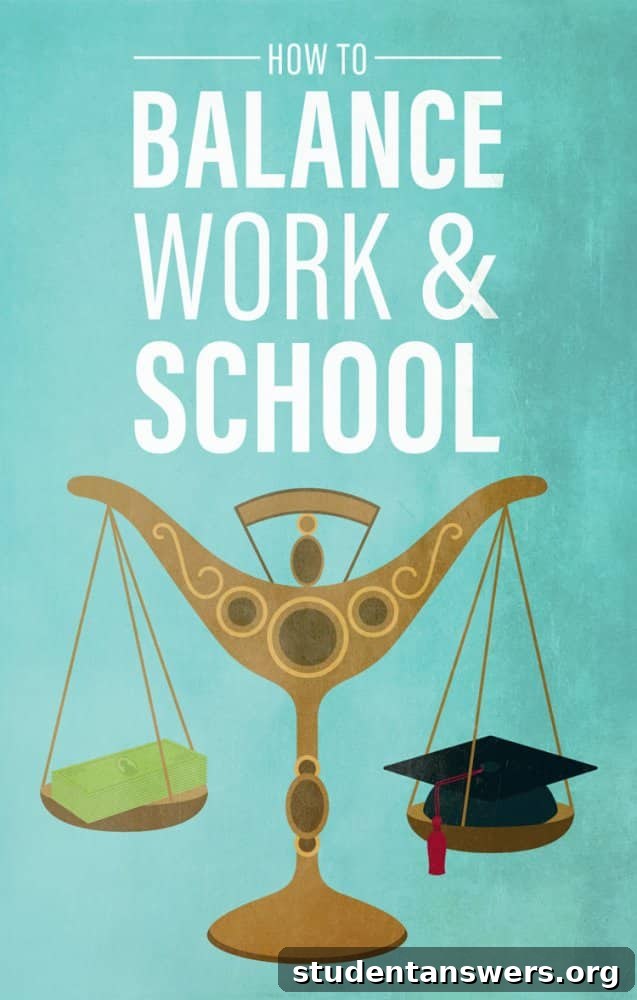
Earn and Learn Without the Burnout

Juggling a Job and College? A Complete Guide to Balancing Work and School
Life is full of numbers we track: our age, our savings, our social media followers. But for a college student, two numbers often cause the most stress: your Grade Point Average (GPA) and your bank account balance. It often feels like a cruel trade-off, where focusing on one means neglecting the other. The pressure to excel academically while also earning money to cover tuition, rent, and the occasional pizza night is a reality for millions of students.
But what if it didn’t have to be an either-or situation? What if you could successfully manage a job without sacrificing your grades or your sanity? It’s not just possible; it’s a skill that can set you up for lifelong success. This comprehensive guide will walk you through the essential strategies for finding a harmonious balance between your work commitments and your academic responsibilities. From choosing the right job to mastering your schedule and protecting your well-being, we’ll cover everything you need to thrive, not just survive.
First Things First: Why Working in College is a Smart Move
Before diving into the “how,” let’s briefly touch on the “why.” While the primary motivation for getting a job in college is often financial, the benefits extend far beyond your wallet. Understanding these advantages can provide the motivation you need on days when you feel overwhelmed.
- Financial Independence: The most obvious benefit is earning money. A steady income can reduce your reliance on student loans, cover daily expenses, and give you a sense of financial freedom and responsibility.
- Invaluable Work Experience: Any job, even one outside your future career path, helps you build a resume. It demonstrates to future employers that you are reliable, responsible, and capable of managing your time. If you can find a job related to your major, you’re hitting a home run.
- Skill Development: The workplace is a training ground for crucial soft skills that you don’t always learn in a classroom. These include communication, teamwork, problem-solving, customer service, and conflict resolution.
- Networking Opportunities: Your colleagues and managers are the first additions to your professional network. They can provide mentorship, write letters of recommendation, and potentially connect you with future job opportunities.
- Mastering Time Management: Juggling work and school forces you to become an expert in time management. This skill is perhaps the most valuable takeaway, serving you well throughout your entire career and personal life.
The Foundation: Choosing the Right Job for a Student
Not all jobs are created equal, especially for a busy student. The key is to find a position that complements your student life rather than competes with it. Your goal is flexibility and understanding. Here’s what to look for:
1. On-Campus Jobs
Working on campus is often the ideal scenario. These jobs are designed with students in mind. Your employers are part of the university and understand that your primary commitment is to your studies. They know you’ll have exams, major projects, and a fluctuating class schedule. Positions in the library, a department office, the campus coffee shop, or as a research assistant often offer incredible flexibility and are conveniently located.
2. Part-Time Jobs with Flexible Hours
Look for employers known for their flexibility. Retail, restaurants, and coffee shops near campus are often accustomed to hiring students and can be willing to work around your class schedule. During your interview, be upfront about your academic commitments and ask about their policy for scheduling and requesting time off for exams.
3. Remote Work and Freelancing
The rise of the gig economy has opened up a world of possibilities for students. Freelancing in areas like writing, graphic design, social media management, or virtual assistance allows you to be your own boss. You can set your own hours and work from anywhere, which is a massive advantage. While it requires a high degree of self-discipline, the autonomy it offers is unparalleled for balancing with a demanding academic load.
Master Your Schedule: Essential Time Management Strategies
Once you have a job, your calendar becomes your most powerful tool. Effective time management is the engine that will keep both your work life and academic life running smoothly. It’s not about having more time; it’s about making the most of the time you have.
Use a Planner (Digital or Analog)
Whether it’s Google Calendar, a mobile app, or a physical notebook, you need one central place to track everything. Input your class schedule, work shifts, assignment due dates, exam dates, and social commitments. Seeing your entire week or month at a glance helps you identify potential conflicts and find open pockets of time for studying.
Embrace Time Blocking
Time blocking is the practice of scheduling out every part of your day. Instead of a simple to-do list, you assign specific blocks of time to each task. For example:
- 9:00 AM – 10:30 AM: Attend Biology Lecture
- 10:30 AM – 12:00 PM: Study for Midterm at Library
- 12:00 PM – 1:00 PM: Lunch Break
- 1:00 PM – 5:00 PM: Work Shift
- 5:00 PM – 6:00 PM: Commute/Relax
- 6:00 PM – 8:00 PM: Work on English Paper
This method prevents procrastination and ensures that you allocate sufficient time for your most important tasks.
Learn to Prioritize Ruthlessly
Not all tasks are created equal. Use a system like the Eisenhower Matrix to categorize your tasks into four quadrants: Urgent & Important, Important & Not Urgent, Urgent & Not Important, and Neither. Focus your energy on the “Urgent & Important” tasks first, and make sure to schedule time for the “Important & Not Urgent” activities (like studying in advance) to prevent them from becoming last-minute emergencies.
Protect Your GPA: How to Study Smarter, Not Harder
Working a job means you have less time to study, so you need to make every study session count. Efficiency is your new best friend. Ditch passive, time-consuming methods like re-reading textbooks and highlighting everything in sight.
Focus on “Deep Work”
The concept of “Deep Work,” coined by Cal Newport, refers to the ability to focus without distraction on a cognitively demanding task. When it’s time to study, put your phone in another room, close irrelevant tabs on your computer, and find a quiet space. Two hours of focused, uninterrupted deep work is far more effective than four hours of distracted, intermittent studying.
Utilize Downtime Wisely
Your day is full of small pockets of “dead time”—the bus ride to work, waiting in line for coffee, or the 15 minutes before class starts. Use this time productively. Review flashcards on your phone, listen to a recorded lecture, or quickly read over your notes. These small efforts add up significantly over a week.
Communicate with Your Professors
Don’t be afraid to talk to your professors. Let them know your situation. Visit them during office hours to clarify concepts you’re struggling with. They are often more understanding and willing to help if they know you are making a sincere effort to succeed while also supporting yourself financially.
Don’t Burn Out: Prioritizing Your Health and Sanity
The relentless cycle of work, class, and study can lead to burnout if you’re not careful. Your well-being is not a luxury; it is a necessity for long-term success. Ignoring it will eventually cause your grades and your job performance to suffer.
Schedule Your Downtime
Just as you schedule study sessions and work shifts, you must schedule time for rest and recreation. Block out time in your calendar for hobbies, exercise, or simply doing nothing at all. This is non-negotiable time to recharge your mental and physical batteries.
Prioritize Sleep
It’s tempting to pull all-nighters to cram for an exam after a long shift, but it’s one of the worst things you can do. Sleep deprivation impairs memory, concentration, and cognitive function. Aim for 7-9 hours of quality sleep per night. A well-rested mind is a more effective and efficient mind.
Fuel Your Body
When you’re busy, it’s easy to rely on fast food and caffeine. However, poor nutrition can lead to energy crashes and brain fog. Try to plan your meals, keep healthy snacks on hand (like nuts, fruit, or yogurt), and stay hydrated with water throughout the day.
Balancing work and school is undoubtedly a challenge, but it’s also an incredible opportunity for growth. By choosing the right job, mastering your time, studying efficiently, and taking care of yourself, you can achieve your financial and academic goals without burning out. You’ll not only graduate with a degree but also with a powerful set of skills that will make you a standout candidate in any field you choose to pursue.