
Master Your Student Kitchen: 5 Simple & Budget-Friendly Recipes for University Life

Delicious and easy meals to master at university.
Heading off to university is an exhilarating new chapter filled with independence, new friends, and exciting studies. However, for many, it also brings a daunting new challenge: the kitchen. Suddenly, the comforting reality of home-cooked meals prepared by parents vanishes, replaced by the stark reality of your own culinary skills—or lack thereof. I remember my first year vividly; my diet consisted of a sad rotation of instant noodles, expensive takeaways, and bland ready-meals. Not only was this terrible for my health, but it also rapidly drained my student loan.
If you’re standing in your new student accommodation, staring blankly at an oven you’ve never used, don’t despair. Learning to cook is one of the most valuable life skills you can acquire, and it doesn’t have to be complicated or expensive. Mastering a few simple, reliable recipes will empower you to eat healthier, save a significant amount of money, and even impress your new flatmates. To help you get started on your culinary journey, I’ve compiled five of the easiest and most delicious student-friendly meals that got me through my first year. These recipes require minimal equipment, use affordable ingredients, and are practically foolproof. Let’s get cooking!
1. Bacon-Wrapped Stuffed Chicken: An Impressively Easy Classic
This recipe sounds fancy, but it’s deceptively simple and a fantastic way to turn a boring chicken breast into something special. It’s perfect for when you want a satisfying, protein-packed meal that feels a bit more gourmet than your average student dinner. It requires very little active cooking time, as the oven does most of the work for you.
Ingredients
- 2 boneless, skinless chicken breasts
- 4 slices of streaky bacon
- 2 cloves of garlic, finely minced or crushed
- 50g of cheese (cheddar, mozzarella, or cream cheese work wonderfully)
- A bag of oven chips or potatoes for making your own
- A bag of mixed salad leaves
- Olive oil
- Salt and pepper
Method
- Preheat your oven to 180°C (Gas Mark 4). Line a baking tray with foil for easy cleanup.
- Place each chicken breast on a cutting board. Carefully cut a horizontal slit into the thickest side of each breast to create a pocket. Be careful not to cut all the way through.
- In a small bowl, mix your chosen cheese with the minced garlic. Season with a pinch of salt and pepper.
- Carefully stuff the cheese and garlic mixture into the pocket of each chicken breast. Don’t overfill it, or the cheese will ooze out too much while cooking.
- Wrap two slices of bacon securely around each stuffed chicken breast, making sure to cover the opening of the pocket. Tuck the ends of the bacon underneath to hold them in place.
- Place the wrapped chicken on the prepared baking tray and bake in the preheated oven for 25-30 minutes, or until the bacon is crispy and the chicken is cooked through. A good way to check is to ensure the juices run clear when pierced with a knife.
- While the chicken is baking, cook your chips according to the package instructions.
- Prepare a simple side salad by tossing the mixed leaves with a light vinaigrette.
- Once cooked, let the chicken rest for a minute before serving alongside the hot chips and fresh salad.
2. Speedy & Zesty Potato Salad: The Perfect Side Dish
A good potato salad is incredibly versatile. You can eat it on its own for a light lunch, or serve it as a side dish with grilled meats, sandwiches, or at a flat barbecue. This recipe is much fresher and lighter than the heavy, store-bought versions and can be customized to your taste.
Ingredients
- 500g new potatoes, washed
- 4 spring onions, finely sliced
- 1 fresh lemon
- 3-4 tablespoons of mayonnaise (full-fat or light)
- A generous pinch of salt and black pepper
Method
- Place the new potatoes in a saucepan and cover with cold, salted water. Bring to a boil and cook for 15-20 minutes, or until they are tender when pierced with a fork.
- Once cooked, drain the potatoes and allow them to cool down for at least 20 minutes. This is an important step, as adding mayonnaise to hot potatoes will cause it to become oily.
- While the potatoes are cooling, finely slice the spring onions and place them in a large mixing bowl.
- Once the potatoes are cool enough to handle, you can either leave them whole or slice them in half or quarters, depending on your preference. Add them to the bowl with the spring onions.
- Squeeze the juice of half a lemon over the potatoes. This adds a fantastic zesty flavour that cuts through the richness of the mayonnaise.
- Add the mayonnaise to the bowl and gently mix everything together until the potatoes are evenly coated.
- Season generously with salt and pepper to taste. Mix again and have a final taste to see if it needs more seasoning or lemon juice.
- Cover and store in the fridge until you’re ready to serve. It tastes even better after an hour, once the flavours have had time to meld.
3. Hearty Sweet Potato & Chickpea Curry: A Vegan Delight
This curry is a student cooking champion. It’s incredibly cheap to make, packed with nutrients, and completely vegan. It’s a one-pot wonder, which means less washing up, and it tastes even better the next day, making it perfect for batch cooking and leftovers for lunch.
Ingredients
- 1 tbsp vegetable or coconut oil
- 1 tbsp cumin seeds
- 2 onions, diced
- 2 cloves of garlic, thinly sliced
- 1 tsp ground ginger
- 1/2 tsp chilli powder (adjust to your spice preference)
- 1 tsp ground coriander
- 1 large sweet potato (about 400g), peeled and cut into bite-sized chunks
- 1 regular potato (about 250g), peeled and cut into bite-sized chunks
- 1 can (400g) of chickpeas, drained and rinsed
- 1 can (400g) of chopped tomatoes
- Salt and pepper
- Rice or naan bread, to serve
Method
- Heat the oil in a large saucepan or pot over a medium-high heat. Add the cumin seeds and fry for about a minute until they become fragrant.
- Add the diced onions with a pinch of salt and pepper. Cook for about 5 minutes, stirring occasionally, until the onions have softened.
- Stir in the sliced garlic, ginger, chilli powder, and coriander. Cook for another 2 minutes until you can smell the aromatic spices.
- Add the sweet potato and regular potato chunks to the pot, along with the drained chickpeas and the can of chopped tomatoes.
- Pour in about 600ml of hot water from a kettle, just enough to cover the vegetables. Stir everything together well and bring the mixture to a simmer.
- Once simmering, reduce the heat to low, cover the pot with a lid, and let it gently bubble away for about 45 minutes to an hour. Stir it occasionally to prevent it from sticking to the bottom. The curry is ready when the potatoes are tender and the sauce has thickened.
- Season to taste with more salt and pepper if needed. Serve hot with fluffy boiled rice or warm naan bread.
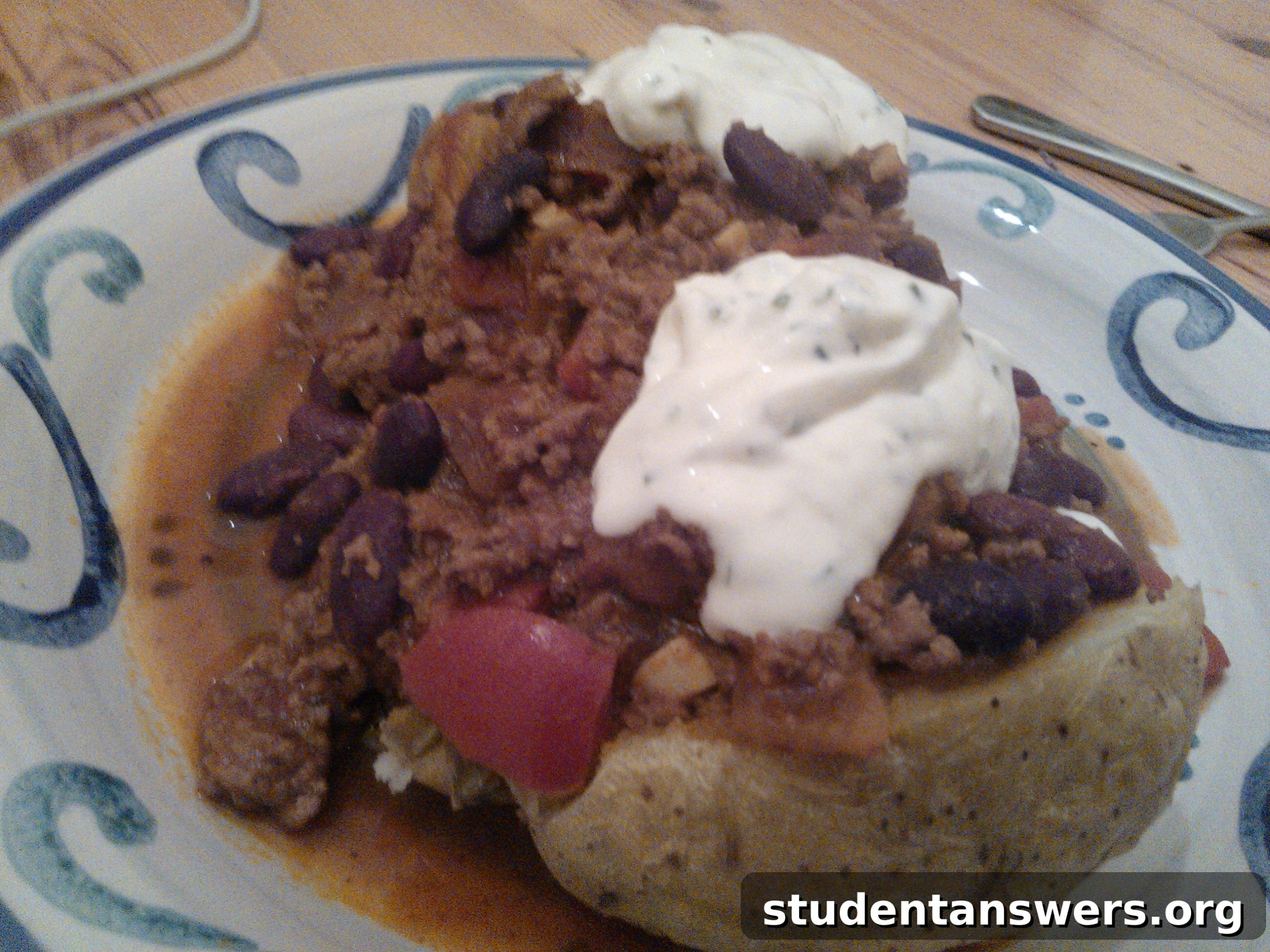
4. Student Chilli Con Carne: The Ultimate Batch-Cook Meal
A big pot of chilli is a student’s best friend. This recipe makes at least four generous portions, and it freezes brilliantly. It’s a rich, flavourful, and filling meal that’s perfect for a cold evening. You can adjust the spice level to your liking and serve it in multiple ways.
Ingredients
- 500g beef mince (or veggie mince for a vegetarian version)
- 1 onion, chopped
- 2 cloves of garlic, chopped
- 1 red pepper, chopped
- 1 can (400g) of chopped tomatoes
- 1 can (400g) of kidney beans, drained and rinsed
- 2 beef stock cubes, crumbled
- 2 tbsp tomato puree
- 1 tsp chilli powder
- 1 tsp ground cumin
- 1 tsp smoked paprika
- 1 tsp sugar
- A little olive oil
Method
- Heat a little olive oil in a large, deep frying pan or saucepan over a medium heat. Add the chopped onion and garlic and fry gently for 5 minutes until softened.
- Add the chopped red pepper along with the chilli powder, cumin, paprika, and sugar. Cook for another two minutes, stirring constantly to release the flavours of the spices.
- Turn up the heat, add the mince to the pan, and cook until it has browned all over. Use a wooden spoon to break it up as it cooks.
- Crumble in the stock cubes, then pour in the chopped tomatoes and about 300ml of hot water. Stir well to combine everything.
- Squeeze in the tomato puree and season with a good pinch of salt and pepper. Stir it all in.
- Bring the mixture to a gentle boil, then reduce the heat, put a lid on the pan, and let it simmer for at least 30 minutes. The longer it simmers, the richer the flavour will be.
- After 30 minutes, add the drained kidney beans, stir them in, and let the chilli simmer for a final 10-15 minutes without the lid to allow the sauce to thicken up.
- Serve your delicious chilli over a bed of rice or a baked jacket potato. A spoonful of sour cream or some grated cheese on top is a great addition. Freeze any leftovers in individual portions for a quick future meal.
5. Marmite Spaghetti: The 5-Minute Lifesaver
This recipe might divide opinion, but if you’re a Marmite lover, it’s an absolute game-changer. It’s the ultimate emergency meal for when you’re short on time, money, and energy. With just a handful of ingredients, you can create a savoury, umami-packed pasta dish that is surprisingly delicious.
Ingredients
- A handful of spaghetti (about 75-100g per person)
- 1 tsp of Marmite (or Vegemite)
- A generous knob of butter or a splash of olive oil
- A handful of grated Parmesan cheese (or nutritional yeast for a vegan option)
- Freshly ground black pepper
Method
- Bring a large pot of salted water to a boil and cook the spaghetti according to the packet instructions, usually around 8-10 minutes.
- Just before the pasta is ready, scoop out about half a cup of the starchy pasta water and set it aside. This is the secret ingredient that helps create a silky sauce.
- In a small bowl, mix the Marmite and butter. Add a few tablespoons of the hot pasta water and stir until the Marmite and butter have melted into a smooth, dark sauce.
- Drain the cooked spaghetti and immediately return it to the hot pot.
- Pour the Marmite sauce over the pasta and toss everything together vigorously until every strand of spaghetti is coated. If the sauce seems too thick, add another splash of the reserved pasta water to loosen it.
- Serve immediately in a warm bowl, topped with a very generous sprinkling of grated Parmesan cheese and a good crack of black pepper. Enjoy this incredibly simple yet satisfying meal.