

How to Stop Procrastinating: A Science-Backed Guide to Regaining Focus
That big project deadline is staring you down. It’s been on your calendar for weeks, maybe even months, but as the clock ticks, your focus evaporates. You try to fight it, but you find yourself checking social media for the tenth time, brewing another cup of coffee, and promising you’ll start tomorrow when there are “fewer distractions.”
But that perfect, distraction-free day never arrives. Procrastination is a common struggle, but it’s not an unbeatable one. While completely eliminating distractions is an unrealistic fantasy, you can learn to manage your tendencies and reclaim your productivity. This guide will explore the science behind why we procrastinate and provide actionable, proven strategies to help you get things done.
To defeat the enemy, we must first understand it.
Why We Procrastinate: Understanding the Emotional Roots
The human brain is a complex battleground. Your rational, planning mind (the prefrontal cortex) is in a constant tug-of-war with your impulsive, emotional brain (the amygdala). While logic tells you to get to work, powerful emotions often win the day. Procrastination isn’t a sign of laziness; it’s primarily an emotional regulation problem.
We procrastinate to avoid negative feelings associated with a task—boredom, frustration, anxiety, or self-doubt. Putting it off provides a temporary mood boost, even though we know it will lead to more stress later. We are emotional beings, and we often prioritize short-term mood repair over long-term goals.
This tendency is particularly strong in those who struggle to manage their emotions. We rationalize our delay, telling ourselves it’s not a big deal. A study from Bishop University highlighted this perfectly. When chronic procrastinators were presented with a scenario where delay caused a negative outcome (like waiting too long to see a doctor about a suspicious mole), they tended to downplay the consequences. They’d say, “At least I went before it got really bad,” instead of, “If only I had gone sooner.”
This “no-big-deal” response is a form of self-deception called a downward counterfactual. It’s a mental trick to make ourselves feel better in the moment. The more productive response, an upward counterfactual, involves acknowledging the negative consequences to learn from the mistake. By constantly rationalizing our behavior, we get trapped in a self-perpetuating cycle of procrastination and guilt.
The Brain on Procrastination: A Look at the Biology
Procrastination can physically alter your brain. A German research team using fMRI scans discovered a link between procrastination and a larger amygdala—the brain’s fear and “fight or flight” center. People who struggled to take action had more gray matter volume in this area, suggesting a heightened sensitivity to the perceived “threat” of a difficult or unpleasant task.
But don’t despair. Our brains are incredibly plastic, meaning they can change and adapt. The right habits can literally rewire your brain for success. For instance, a 2013 study revealed that just eight weeks of mindfulness meditation can shrink the amygdala. As the study notes:
“As the amygdala shrinks, the prefrontal cortex—associated with higher order brain functions such as awareness, concentration and decision-making—becomes thicker.”
This research aligns with another study from Brooklyn College, which found a strong correlation between procrastination and poor executive functioning. Executive functions are the self-regulatory skills that allow us to plan, focus, and control our impulses. The study showed that higher levels of procrastination were directly related to weaknesses in all nine measures of executive functioning, including emotional control and organization.
The Power of Self-Forgiveness
When you fall into the procrastination trap, your first instinct might be to beat yourself up. This is the worst thing you can do. Shame and guilt only create more negative emotions, making it even harder to start. The most productive first step is to forgive yourself.
In a study of college students, researchers found that students who forgave themselves for procrastinating on their first exam were significantly less likely to procrastinate on the next one. Self-forgiveness breaks the cycle of negative emotion, allowing you to move forward without the baggage of past failures.
You Are Not Alone in This Struggle
Procrastination can feel like a lonely battle, but it’s a deeply human trait. Even the most brilliant minds in history struggled with it. Walter Isaacson’s biography of Leonardo da Vinci reveals the artist’s constant struggle with inaction:
“The most obvious evidence that he was human rather than superhuman is the trail of projects he left unfinished… ‘Tell me if anything was ever done,’ he repeatedly scribbled in notebook after notebook.”
Knowing that even geniuses like da Vinci fought this battle can be a powerful source of encouragement.
The Link Between Perfectionism and Procrastination
Financial expert Carl Richards once wrote, “If you want to carve an elephant from a block of wood, you don’t start the process with fine-grit sandpaper.” This metaphor perfectly captures the relationship between perfectionism and procrastination. The project is your block of wood, and perfectionism is the fine-grit sandpaper. You can’t focus on the tiny details before you’ve made the big, initial cuts.
Perfectionism is the enemy of progress. It makes tasks seem so monumental and daunting that we become paralyzed by the fear of not doing them perfectly. We fantasize about the flawless final product but avoid the messy, imperfect process of actually starting. Richards explains, “You know what trying to sand an elephant out of a block of wood actually is? It’s daunting… And what daunting means is that you’re probably going to quit before you even start.”
The solution is to embrace imperfection in the early stages. Grab your proverbial chainsaw and make those first rough cuts. Start the project, write the terrible first draft, and get something—anything—down on paper. You can always refine it later with the sandpaper. The most important step is simply to begin.
The Procrastination Equation: A Formula for Motivation
Dr. Piers Steel, a leading researcher on procrastination, developed a formula in his book, The Procrastination Equation, that explains your level of motivation for any given task.
Motivation = (Expectancy * Value) / (Impulsiveness * Delay)
Understanding these variables can give you a clear roadmap for boosting your drive:
- Expectancy: Your confidence that you can successfully complete the task.
- Value: How rewarding or meaningful the task is to you.
- Impulsiveness: Your susceptibility to distractions and immediate gratification.
- Delay: The amount of time between completing the task and receiving its reward.
To increase motivation, you need to increase the top part of the equation (Expectancy and Value) and decrease the bottom part (Impulsiveness and Delay). This framework can help you diagnose your specific problem. Are you lacking confidence? Is the task not valuable to you? Are you too easily distracted? Is the reward too far in the future? The following strategies are designed to help you manipulate this equation in your favor.
7 Actionable Strategies to Overcome Procrastination Today
1. Master Your Environment
Your workspace can either set you up for success or for failure. If your environment is filled with temptations, you’re fighting an uphill battle from the start. Taking control of both your physical and digital spaces is the first line of defense.
- Remove Distractions: Move your video game console, turn off your phone or put it in another room, and clear your desk of anything not related to the task at hand.
- Create Consistency: Your brain thrives on routine. By working in the same dedicated space every time, you train your mind to associate that location with focus.
- Prepare Everything in Advance: Make sure you have all your books, notes, and tools within arm’s reach. Leaving to find a calculator is an easy excuse to get sidetracked.
Your digital environment is just as important. Use website blockers, close unnecessary tabs, and turn off notifications on your computer and phone.
2. Eliminate Choices to Reduce Overwhelm
In his book, The Paradox of Choice, psychologist Barry Schwartz argues that having too many options leads to anxiety and inaction. The same is true for your to-do list. When you have a dozen tasks competing for your attention, you waste mental energy deciding what to do next instead of actually doing it.
The solution is to become a robot. Break down your large projects into small, specific, and sequential steps. Focus on completing only one item at a time. This single-tasking approach eliminates the mental load of choice and channels all your energy into execution.
3. Use the Pomodoro Technique
The Pomodoro Technique is a time-management method that uses intervals to maximize focus and prevent burnout. It’s incredibly simple and effective.
- Choose One Specific Task: Don’t just “do homework.” Be precise: “Solve problems 1-4 in the math assignment.”
- Work with Intense Focus for 25 Minutes: Set a timer and give the task your undivided attention. No interruptions.
- Jot Down Distractions: When an unrelated thought pops into your head, write it down on a piece of paper and immediately return to your task. This gets it out of your mind without breaking your flow.
- Take a 5-Minute Break: After the 25-minute sprint, step away from your work. Stretch, get some water, or walk around. This recharges your brain.
- Repeat: After four “Pomodoros,” take a longer break of 15-30 minutes.
4. Create Accountability with a Commitment Contract
Sometimes, internal motivation isn’t enough. Raising the stakes by creating external accountability can be a powerful deterrent to procrastination. This is the modern version of “blackmailing yourself.” You create a contract with yourself where there are real, negative consequences for inaction.
Here’s the framework:
- Define a Specific Goal and Deadline: “I will write 500 words of my essay every day this week.”
- Assign a “Referee”: Find a trusted friend who will hold you accountable and won’t accept your excuses.
- Set the Stakes: Decide on a consequence for failure that you genuinely want to avoid. A common method is putting money on the line. For example: “If I miss a day, I will donate $50 to a political organization I strongly oppose.”
The key is to make the consequence painful enough that procrastination is no longer the easier option.
Top Apps and Tools to Enforce Focus
If self-control fails, technology can step in to create the structure you need. These applications are designed to block distractions and enforce your commitment contracts.
Freedom
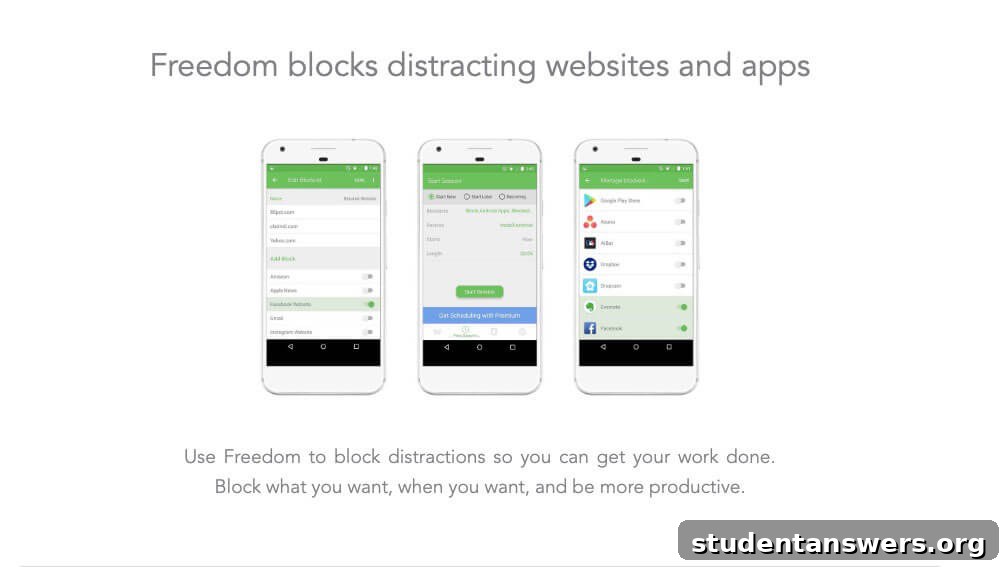
Freedom is an app for Mac, Windows, Android, and iOS that allows you to block distracting websites and applications. You can start a focused session on the fly or schedule recurring blocks of time where your biggest time-wasters are inaccessible. It’s a powerful way to take control of your digital environment.
Beeminder
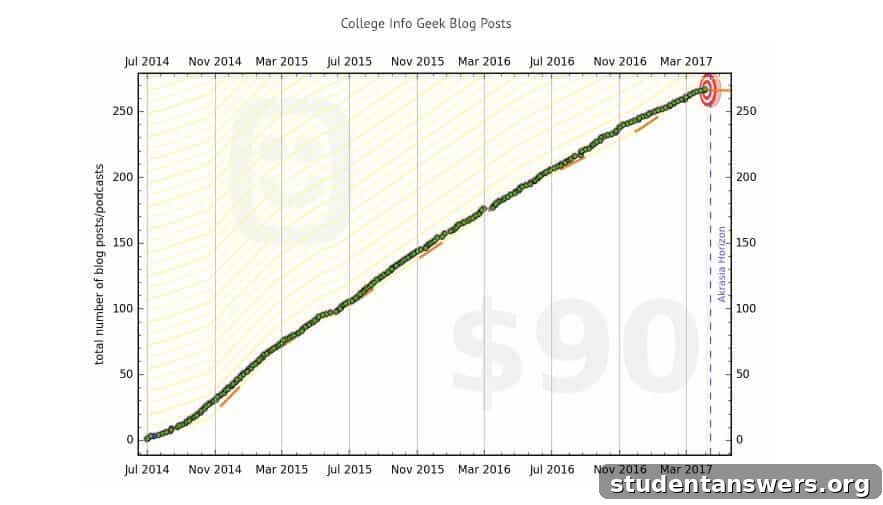
Beeminder describes itself as “goal-tracking with teeth.” It’s an accountability app that makes you pay (literally) for going off track. You set a quantifiable goal (e.g., “study for 5 hours per week”), and Beeminder creates a “Yellow Brick Road” of progress for you to follow. If you fall behind, you have to pledge money, starting at $5. The next time you fail, you’re charged that amount, and the pledge increases.
SticKK
Created by behavioral economists at Yale University, SticKK is built around the principles of loss aversion and accountability. You create a “Commitment Contract” for your goal, set the financial stakes, and choose a referee. If you fail to meet your goal, SticKK automatically sends the money you pledged to a friend, a charity, or even an “anti-charity”—an organization you despise.

Cultivating an Anti-Procrastination Mindset
Tools and techniques are helpful, but long-term success requires a shift in your mindset. Here are four principles to guide you.
Accept Your Inner Laziness
Everyone has a part of them that wants to take the easy way out. Author Steven Pressfield calls it “The Resistance.” Trying to deny or suppress this impulse often makes it stronger. Instead, acknowledge it. Accept that the temptation to slack off will always be there. By being aware of it, you can recognize it when it appears and choose not to act on it.
Reevaluate the Meaning of Your Work
Chronic procrastination can be a signal. As Basecamp founder Jason Fried says, distractions can tell us “that our work is not well-defined, our work is menial, or the project as a whole is useless.” If you consistently put off certain tasks, it might be time to ask why. Are you in the right major? The right job? Sometimes, the best solution to procrastination is to find work that genuinely excites and engages you.
Define Your “Why”
Purpose is the ultimate fuel for action. It’s hard to push through discomfort for a goal that has no meaning. As Simon Sinek explains in his book Start With Why, having a clear purpose gives you the resilience to overcome obstacles. Why are you studying? Why are you working out? Connect your daily tasks to a larger, meaningful goal. This “why” will be your anchor when willpower fades.
Curate Your Social and Physical Environment
Jim Rohn famously said, “You are the average of the five people you spend the most time with.” The people around you set the standard for what is acceptable. If your friends value productivity and ambition, you’re more likely to adopt those traits. If they value apathy and indifference, that can be infectious too. The same goes for your environment—from your social media feeds to the food in your kitchen. Design your life to make good habits the easy choice.
Further Reading: 3 Books to Help You Stop Procrastinating
If you want to dive deeper, these books offer profound insights and practical systems for productivity and focus.
168 Hours: You Have More Time Than You Think by Laura Vanderkam
This book will change how you view your time. Vanderkam argues that we all have enough time for what matters and provides a practical framework for prioritizing your life and fitting in your goals.
Atomic Habits: An Easy & Proven Way to Build Good Habits & Break Bad Ones by James Clear
Clear’s masterpiece explains the science of habit formation. He shows how breaking down your desired behaviors into tiny, “atomic” habits makes progress feel effortless and sustainable, which is the perfect antidote to the overwhelm that causes procrastination.
Deep Work: Rules for Focused Success in a Distracted World by Cal Newport
Newport makes a compelling case that the ability to focus without distraction is becoming increasingly rare and valuable. This book is a training manual for developing the skill of “deep work,” allowing you to produce high-quality output in less time.
Take Control: Your Next Step Starts Now
Procrastination may feel like an unstoppable force, but it’s just a pattern of behavior—and patterns can be broken. You are in control. The power to change doesn’t lie in a magical productivity hack, but in the small, conscious choices you make every day.
As author Ryan Holiday says, “The right activities are as accessible as all the bad influences… What you decide to do with those assets is up to you. But choose wisely, because it will determine who you are.”
Now is the time to choose. Close this browser, pick one small task, and start.