How does play based learning prepare children for formal schooling
Okay, so my daughter, Lily, is starting kindergarten next year, and they have this "play-based learning" thing. I’m all for her having fun, but honestly, I’m worried she won’t be prepared for actual school. You know, sitting at a desk, following instructions, learning to read and write properly. All that good stuff.
So, how does play-based learning actually translate into skills she’ll need in a formal classroom setting? Specifically, I’m wondering about things like:
- Focus and attention span: How does playing with blocks or dress-up help her concentrate during a lesson?
- Social skills and cooperation: I know they learn to share, but how does that prepare her for working in groups on assigned tasks?
- Problem-solving: Does building a fort really teach her anything about math or science?
- Early literacy and numeracy: I see them "reading" picture books, but are they actually learning phonics? And what about number recognition?
I’m not trying to be critical, I just want to understand the connection between play and academics. I want her to have a strong foundation and be successful in school, and I’m not sure if play-based learning is the best way to achieve that. Any insights or examples would be greatly appreciated! Are there any specific types of play that are particularly beneficial for academic readiness?
Answer
Play-based learning offers a multitude of benefits that directly contribute to a child’s preparedness for formal schooling. It fosters essential skills and attitudes that are crucial for success in a structured academic environment. Here’s a breakdown of how:
1. Social and Emotional Development:
- Cooperation and Collaboration: Play, especially group play, necessitates cooperation. Children learn to share, take turns, negotiate, and resolve conflicts. These skills are fundamental for working in groups and participating in classroom activities in a formal school setting. They learn to consider different perspectives and find common ground.
- Emotional Regulation: Play provides a safe space for children to explore and express emotions. They learn to manage their frustrations, deal with disappointment, and celebrate successes. They practice resilience when things don’t go as planned. This emotional regulation is vital for handling the demands and social dynamics of a classroom.
- Empathy and Social Understanding: Through role-playing and imaginative play, children step into different roles and perspectives. This fosters empathy and helps them understand social cues and expectations. They develop a sense of belonging and learn how to interact appropriately with peers and adults.
- Self-Confidence and Initiative: Play encourages children to make choices, take risks, and try new things. This fosters self-confidence and a sense of initiative. They learn to trust their abilities and approach challenges with a positive attitude, which are essential for academic success.
2. Cognitive Development:
- Problem-Solving and Critical Thinking: Play is inherently exploratory. Children encounter challenges and obstacles that they must overcome. They learn to think critically, experiment with different solutions, and learn from their mistakes. Building a tower that keeps falling over, for instance, requires them to analyze the problem and adjust their approach.
- Language and Literacy Development: Play provides rich opportunities for language development. Children engage in conversations, tell stories, and use language to negotiate and express themselves. They encounter new vocabulary and develop their listening skills. Activities like dramatic play can improve narrative skills and understanding of story structure, while playing with blocks can introduce early concepts of spatial reasoning and geometry.
- Creativity and Imagination: Play encourages children to think outside the box and develop their imaginations. They create their own worlds, invent stories, and find innovative solutions to problems. This creative thinking is valuable in all areas of learning and helps them approach challenges with originality.
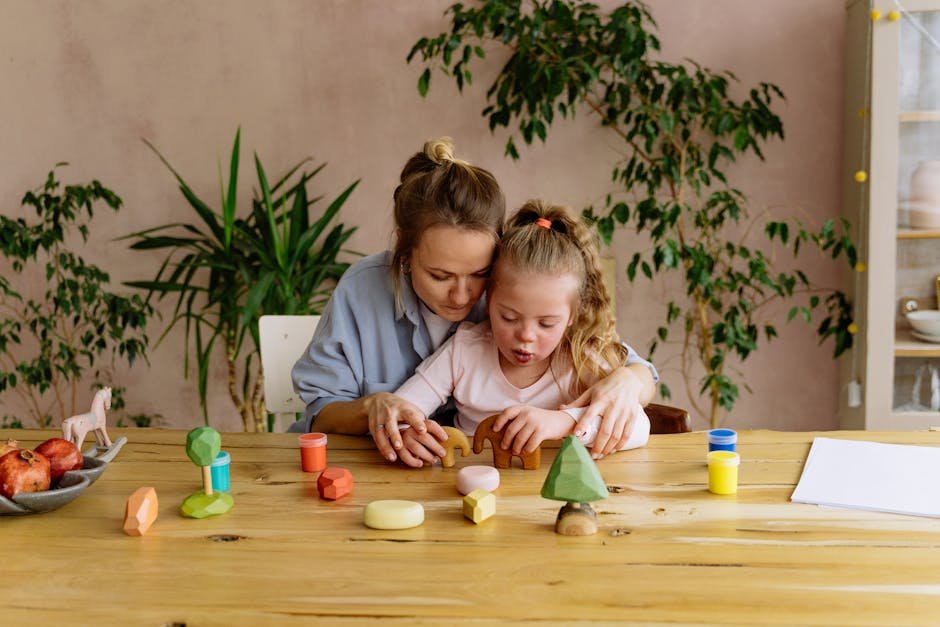
- Mathematical Concepts: Play often involves opportunities to explore mathematical concepts such as counting, sorting, measuring, and spatial reasoning. Building with blocks, playing with puzzles, and engaging in board games can all help children develop a foundation for mathematical understanding.
3. Physical Development:
- Fine Motor Skills: Activities like drawing, cutting, building with small blocks, and manipulating play dough help develop fine motor skills. These skills are essential for writing, using tools, and performing other tasks required in a formal school setting.
- Gross Motor Skills: Running, jumping, climbing, and throwing balls during outdoor play develop gross motor skills, which are important for physical coordination and overall health. These skills also support focus and attention, which are essential for classroom learning.
- Body Awareness and Coordination: Play helps children develop body awareness and coordination. They learn to control their movements and navigate their environment with confidence. This physical competence contributes to their overall well-being and allows them to participate fully in classroom activities.
4. Fostering a Love of Learning:
- Intrinsic Motivation: Play is driven by intrinsic motivation, meaning that children are engaged because they find it enjoyable and interesting. This fosters a love of learning and a desire to explore new things. This inherent curiosity and enthusiasm are essential for lifelong learning.
- Positive Associations with Learning: When children associate learning with positive experiences, they are more likely to approach academic challenges with a positive attitude. Play-based learning creates these positive associations, making the transition to formal schooling smoother and more enjoyable.
- Self-Directed Learning: Play allows children to pursue their own interests and learn at their own pace. This fosters a sense of independence and self-direction, which are valuable skills for success in formal schooling.
In essence, play-based learning provides a holistic foundation for formal schooling by fostering essential social, emotional, cognitive, and physical skills, as well as a love of learning. It allows children to develop the confidence, curiosity, and resilience they need to thrive in a structured academic environment.
This content has been prepared by the Studentanswers editorial team for educational and informational purposes only. We recommend consulting a qualified professional before making any personal decisions.