

Your Complete Guide to the Federal Work-Study Program: How It Works & How to Qualify
Have you ever walked across campus and wondered how so many students manage to land jobs at the bookstore, library, or coffee shop? While some may have applied directly, many are likely benefiting from a powerful financial aid tool: the Federal Work-Study Program. This program can seem a bit complex at first glance, but it’s a fantastic way to earn money for college expenses while gaining valuable experience.
If you’ve heard the term “Work-Study” but aren’t sure what it means, how to apply, or what to expect once you’re approved, you’re in the right place. We’re here to demystify the entire process. This comprehensive guide will walk you through what the Federal Work-Study Program is, how to become eligible, the types of jobs you can get, and crucial details you need to know before you start.
What Exactly Is the Federal Work-Study Program?
At its core, the Federal Work-Study Program is a form of need-based financial aid that helps students earn money to pay for their education expenses. It’s funded by the U.S. government, which provides a set amount of funds to participating colleges and universities each year. These schools then use the money to subsidize the wages of students working in eligible part-time jobs.
It’s important to understand that a Work-Study award isn’t a grant or a loan that’s directly applied to your tuition bill. Instead, think of it as an authorization to earn up to a certain amount of money through an approved job. You receive this money in the form of a regular paycheck for the hours you work, which you can then use for costs like textbooks, transportation, supplies, or personal expenses.
Unlocking Your Eligibility: How to Qualify for Work-Study
Qualifying for the Federal Work-Study Program is more straightforward than many other financial aid opportunities. There are no essays to write or specific GPA requirements to meet. The entire process hinges on one key document and a few basic criteria.
The First and Most Important Step: The FAFSA
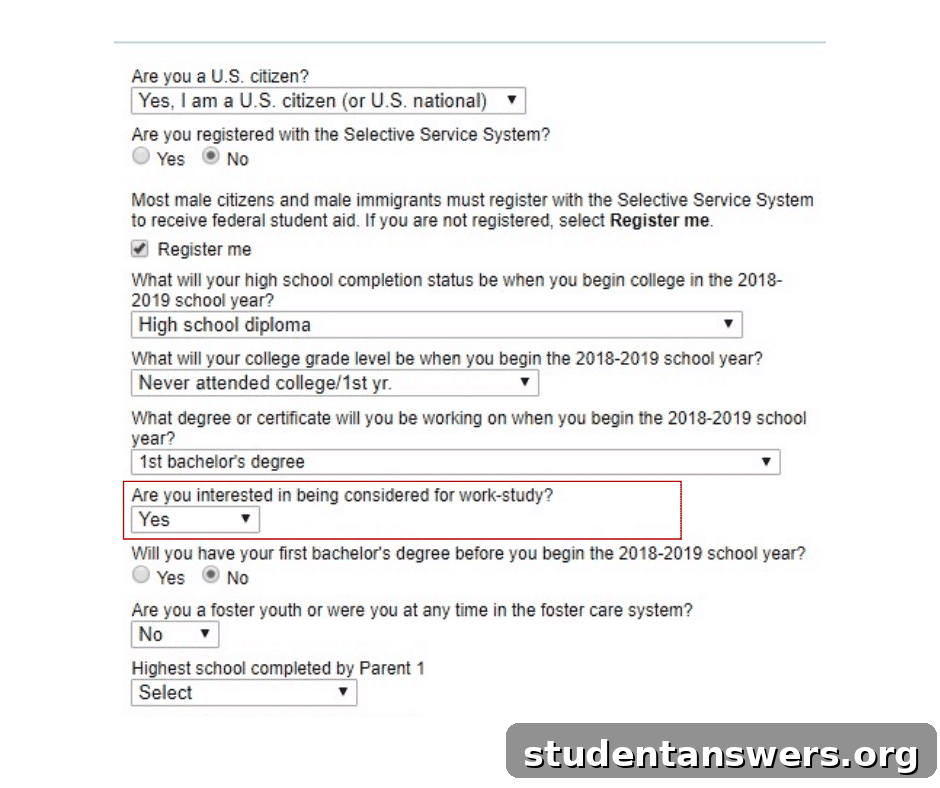
Your journey to a Work-Study award begins and ends with the Free Application for Federal Student Aid (FAFSA). When you fill out this form, you’ll come across a question asking if you’re interested in being considered for the Federal Work-Study Program. Simply check “yes.” That’s the only application step required on your end.
The single most critical factor in qualifying is filling out your FAFSA as early as possible. Each university receives a limited pool of Work-Study funds from the government. Once that money is awarded to students, no more awards can be given out for that academic year. It’s a first-come, first-served system, so procrastination can cost you the opportunity.
Basic Eligibility Requirements
In addition to demonstrating financial need through your FAFSA, you must meet the general eligibility criteria for federal student aid. This means you must be a U.S. citizen or U.S. national, or hold a Permanent Resident Card (Green Card) or an Arrival-Departure Record (I-94) from U.S. Citizenship and Immigration Services (USCIS).
Congratulations, You’ve Qualified! What Happens Now?
If you’ve received your financial aid award letter and it includes a Federal Work-Study amount (e.g., $3,000), congratulations! However, this is where a common misconception arises. That money is not automatically deposited into your account. The award signifies the maximum amount you are permitted to earn through a Work-Study job during the academic year.
The responsibility now shifts to you to secure a position. Your next step should be to contact your college’s financial aid or student employment office. They will provide you with a list of available Work-Study positions, or they may direct you to an online job portal specifically for approved students. You will need to apply, interview, and be hired for these positions just like any other job.
Exploring Your Options: Types of Work-Study Jobs
The variety of available jobs can be surprising and often depends on the size and resources of your school. Most positions fall into one of three categories:
1. On-Campus Convenience
These are the most common and often the most convenient type of Work-Study jobs. Since they are located right on campus, they eliminate commute times and are typically very flexible around your class schedule. Examples include:
- Working at the front desk in the library or a computer lab.
- Assisting with administrative tasks in an academic department.
- Serving as a teaching assistant for a professor.
- Working in the campus bookstore, coffee shop, or dining hall.
- Helping out in the admissions or alumni relations office.
2. Meaningful Community Service
Federal regulations require that a portion of a school’s Work-Study funds be used for community service positions. These roles offer a fantastic opportunity to give back while earning your award. These jobs often involve working with local non-profits, public schools, or government agencies. You might find yourself working as:
- A literacy or math tutor for elementary school children.
- An assistant in an English as a Second Language (ESL) program.
- A helper at a local food bank, homeless shelter, or community center.
3. Career-Focused Off-Campus Positions
Some schools partner with private, for-profit companies to offer off-campus Work-Study jobs. These positions are an incredible opportunity because they are required to be relevant to your course of study. This allows you to gain real-world, resume-building experience in your chosen field and start making professional connections long before you graduate.
The Money Talk: How You Get Paid Through Work-Study
Once you’ve secured a job, your pay will be handled like any other part-time position. Your employer, whether it’s the university or an off-campus partner, is required to pay you at least once a month. Most students receive a paycheck or have the funds sent via direct deposit to their bank account.
Your hourly wage will depend on the specific job and its responsibilities. By law, you must be paid at least the federal minimum wage. Undergraduate positions often pay at or slightly above this rate. If you’re a graduate student, you may find positions that offer a higher hourly wage or even a salary, depending on the nature of the work.
5 Crucial Things to Understand About Your Work-Study Award
While the program is an excellent resource, there are a few key details to keep in mind to manage your expectations and make the most of the opportunity.
1. Your Earnings are Capped by Your Award Amount
Your Work-Study award is a firm ceiling. If your award is for $3,000, you can only work until your cumulative earnings reach that amount. Once you hit the cap, your Work-Study employment for the year is over. While you can ask the financial aid office if additional funds are available, there is no guarantee.
2. Your Paycheck is Not Applied Directly to Tuition
Unlike grants or scholarships, Work-Study earnings are paid directly to you. This money is intended to help with day-to-day living expenses like textbooks, food, and transportation. It will not be automatically deducted from your tuition or housing bill, though some schools may offer an option to have your earnings applied that way if you request it.
3. Eligibility Isn’t Guaranteed Every Year
Qualifying for Work-Study one year does not automatically ensure you will qualify the next. Your eligibility is reassessed annually based on your FAFSA information. Changes in your family’s financial situation can affect your eligibility, so it’s vital to file your FAFSA early every single year.
4. The Award Itself Is Not a Job Guarantee
This point cannot be stressed enough. Being awarded Work-Study funds is only the first step. You are still responsible for actively seeking, applying for, and being hired for an eligible job. The good news is that many colleges give Work-Study students priority access to on-campus job applications, giving you a competitive edge.
5. Pay Rates and Hours Will Vary
There is no standard pay rate or guaranteed number of hours across all Work-Study jobs. A position as a research assistant will likely pay more than one at the gym’s front desk. You’ll typically work between 10-20 hours per week, but the exact schedule and pay are determined by the specific job you land.
The Unseen Advantages: Major Benefits of the Federal Work-Study Program
Beyond the paycheck, participating in the Work-Study program offers several powerful benefits that can enhance your college experience and set you up for future success.
1. Protect Your Future Financial Aid
This is arguably the biggest hidden benefit. Income earned through the Federal Work-Study Program is not counted against you on the following year’s FAFSA. This is a huge advantage over a regular off-campus job, where every dollar you earn can potentially reduce your financial aid package for the next year.
2. Build a Resume and Professional Network
Employers consistently value relevant work experience, sometimes even more than a perfect GPA. A Work-Study job provides practical skills—time management, communication, problem-solving—that look great on a resume. You’ll also have the chance to connect with professors, university staff, and other professionals who can serve as mentors or provide a strong letter of recommendation down the road.
3. A Truly Student-Friendly Work Schedule
Work-Study employers know that your primary role is being a student. They are accustomed to building work schedules around classes, midterms, and finals. This built-in flexibility is a significant relief compared to many off-campus jobs that may be less understanding of academic demands. Furthermore, many on-campus jobs, like manning a front desk, offer downtime where you can study and complete homework while on the clock.
Final Thoughts: Is the Federal Work-Study Program Right for You?
If you have demonstrated financial need and are looking for a way to earn money for college without negatively impacting future aid, applying for the Federal Work-Study Program is a wise move. It offers a structured, supportive environment to gain work experience, build your network, and manage your educational expenses.
Now that you understand how the program works, from the FAFSA application to finding a job and getting paid, you can approach the process with confidence. Remember the golden rule: file your FAFSA early to give yourself the best possible chance of securing an award and unlocking all the benefits this fantastic program has to offer.