

Master Your Sleep: The Ultimate Guide to a Perfect Sleep Schedule
Imagine a perfect world for your body. In this world, you’d drift off to sleep whenever you felt tired and wake up naturally, feeling refreshed and energized, without the jarring sound of an alarm clock. This ideal scenario isn’t a fantasy; it’s how our bodies are designed to function.
Our sleep is governed by two powerful internal systems. The first is sleep-wake homeostasis, which works like an hourglass. The longer you’re awake, the more “sleep pressure” builds up, increasing your desire for rest. The second is the circadian clock, your body’s 24-hour master clock that syncs all your biological processes, like hormone release and body temperature, with the natural cycle of day and night.
When these two systems are in harmony, your sleep quality is phenomenal. You feel sharp, focused, and ready to conquer your day. However, modern life often throws a wrench into this finely tuned machinery. We frequently disrupt these natural rhythms with habits that sabotage our sleep, such as:
- Prioritizing work, studies, or late-night entertainment over essential rest.
- Exposing ourselves to bright, artificial light long after the sun has set.
- Consuming stimulants like caffeine or nicotine too close to bedtime.
Because our lives are dictated by rigid schedules—early morning classes, 9-to-5 jobs, and countless other commitments—we can’t always listen to our body’s natural cues. When the day’s obligations are finally done, we crave a few precious hours for fun and relaxation. There are books to read, shows to binge-watch, and friends to meet. And, of course, there’s the infinite scroll of the internet, a black hole for time and a major obstacle to a healthy sleep schedule.
This conflict between our scheduled lives and our natural sleep patterns creates a significant problem. We diligently set our morning alarms but often fail to set an equally important alarm: a designated bedtime. This article will dive into the science of sleep and provide a practical, step-by-step guide to help you reclaim your nights, master your sleep schedule, and wake up feeling your best every single day.
The Science of Your Internal Clock
To fix your sleep schedule, you first need to understand how it works. Your circadian clock, or circadian rhythm, is the star of the show. This internal pacemaker is managed by a tiny region in your brain called the suprachiasmatic nucleus (SCN). Think of the SCN as the conductor of your body’s orchestra. It responds primarily to one major cue: light.
Specialized cells in your eyes detect the ambient light levels and send signals directly to the SCN. For most of human history, the only significant light sources were the sun and fire. Our biology evolved to sync with the sun’s rhythm—awake and alert during the bright daylight hours, and tired and ready for sleep after sunset.
This is where a specific type of light becomes crucial: blue light. The sun emits a broad spectrum of light, including a high concentration of blue wavelengths. This blue light is a powerful signal to the SCN that it’s daytime. As Mark Sisson explains in his in-depth article on light and sleep:
“Blue light regulates our secretion of melatonin, the sleep hormone. Exposed to blue light, we limit the production of melatonin, and we stay alert and awake; in the absence of blue light, melatonin production ramps up, and we get sleepy.”
The problem is that our modern world is flooded with artificial sources of blue light. Guess what emits it in high doses? Light bulbs, and especially the screens on our smartphones, tablets, laptops, and televisions. The LEDs used in these devices are particularly potent emitters of blue light. When you stare at a screen late at night, your brain misinterprets that artificial glow as sunlight. In response, it suppresses the production of melatonin, tricking your body into thinking it’s still the middle of the day. This makes it incredibly difficult to feel tired and fall asleep at a reasonable hour, leading to a chronic cycle of sleep deprivation.
How Much Sleep Do You Really Need?
There’s a pervasive “hustle culture” myth that sleep is for the lazy. Famous figures like Thomas Edison have called it a “criminal waste of time.” But modern science tells a very different story. Sleep is not a luxury; it’s a fundamental biological necessity. During sleep, your brain consolidates memories, flushes out harmful toxins, and your body repairs muscles and tissues. Skimping on sleep has been linked to a host of health problems and a significant decline in cognitive performance.
So, how much sleep is enough? While individual needs can vary slightly, the National Sleep Foundation has provided science-backed guidelines for different age groups:
- Teenagers (14-17): 8-10 hours are recommended.
- Young Adults (18-25): 7-9 hours are recommended.
- Adults (26-64): 7-9 hours are recommended.
Beyond just the total hours, the quality and structure of your sleep matter immensely. Your sleep isn’t a flat, monolithic block of time. Instead, you cycle through different stages of brain activity throughout the night.
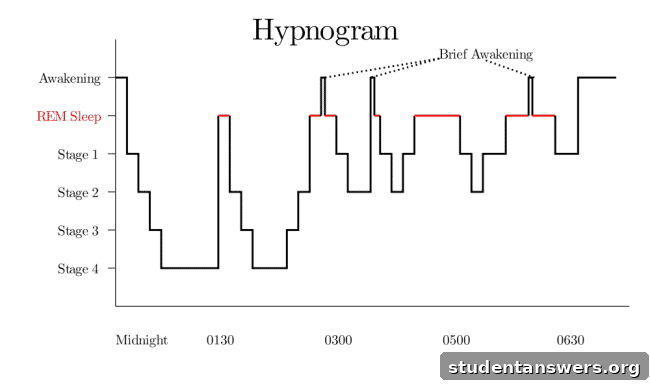
A complete sleep cycle takes approximately 90 minutes and generally follows this pattern:
- Stages 1 & 2 (Light Sleep): This is the initial phase where you begin to doze off. Your heart rate and breathing slow down.
- Stages 3 & 4 (Deep Sleep): This is the most restorative stage. Your body repairs tissues, builds bone and muscle, and strengthens the immune system. It’s very difficult to be woken up during deep sleep.
- REM (Rapid Eye Movement) Sleep: Your brain activity surges, and this is when most dreaming occurs. REM sleep is crucial for memory consolidation and emotional regulation.
If your alarm clock jolts you awake in the middle of a deep sleep cycle, you experience something called sleep inertia. It’s that awful, groggy, disoriented feeling that makes you want to hit the snooze button a dozen times. The key to waking up refreshed is to time your alarm to go off at the end of a complete 90-minute cycle, when you are in a much lighter stage of sleep.
How to Create Your Perfect Bedtime
Knowing this, you can strategically plan your sleep. The goal is to align your wake-up time with the end of a sleep cycle. You can easily do this by working backward. Decide what time you need to wake up, then count back in 90-minute increments to find your ideal bedtime.
For example, if you need to wake up at 6:30 A.M., you could aim for 7.5 hours of sleep (five 90-minute cycles) or 9 hours (six 90-minute cycles). Online sleep calculators can do this math for you instantly.
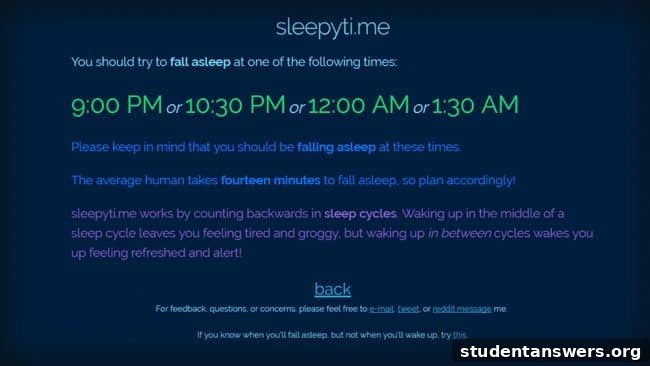
Remember to factor in the time it takes you to actually fall asleep. The average person takes about 15 minutes. So, if your goal is to get 7.5 hours of sleep and wake up at 6:30 A.M., your target bedtime would be 11:00 P.M., meaning you should be in bed with the lights out by 10:45 P.M.
Once you’ve determined your optimal bedtime, the most important thing you can do is stick to it consistently. Yes, your mother was right all along. A consistent bedtime is just as important as a consistent wake-up time. This regularity reinforces your circadian rhythm, making it easier to fall asleep and wake up naturally.
The Power of a Wind-Down Ritual
Of course, simply knowing your bedtime isn’t enough. In our hyper-stimulated world, you can’t expect to go from 100 to 0 in an instant. You need a buffer zone to transition from the stress of the day to a state of rest. This is where a wind-down ritual comes in.
A wind-down ritual is a consistent sequence of calming activities you perform every evening for 30-60 minutes before your designated bedtime. The purpose of this routine is threefold:
- To disengage your brain from stimulating or stressful activities.
- To send powerful signals to your body that the day is over and it’s time to prepare for sleep.
- To remove any potential barriers to falling asleep quickly.
Think of it as the reverse of a morning routine. While a morning routine builds momentum for the day, a wind-down ritual helps you decelerate, promoting relaxation and better sleep quality. Your ritual can be customized to whatever you find relaxing, but here are some effective ideas to include:
- Disconnect from Screens: Make this the first and most non-negotiable step. Turn off the TV, put your phone away, and close the laptop at least an hour before bed.
- Prepare for Tomorrow: Tidy up your workspace, pack your bag, or lay out your clothes for the next day. This clears your mind of last-minute stressors.
- Practice Good Hygiene: Take a warm shower or bath, brush your teeth, and wash your face. These simple acts can be very meditative.
- Engage in a Relaxing Hobby: Read a physical book (not on a screen), listen to calm music or a podcast, journal your thoughts, or do some light stretching or yoga.
- Create a Sleep-Friendly Environment: Dim the lights in your home, lower the thermostat slightly, and make sure your bedroom is dark, quiet, and cool.
To make this ritual a habit, set an alarm for it. A recurring daily alarm that goes off an hour before your bedtime serves as a hard stop to whatever you’re doing and a reminder to begin your wind-down process. Track your consistency with a habit-tracking app or a simple journal. As the famous management consultant Peter Drucker said, “What gets measured gets managed.”
Remind Yourself of the Benefits
Building new habits is hard, especially when it means resisting the immediate gratification of one more video or one more chapter. Author Gretchen Rubin offers a powerful mental trick to overcome this inertia: consciously perform a cost-benefit analysis.
“Remind yourself how great it feels to wake up naturally, before the alarm goes off, without that sickening jolt into wakefulness. Then, when you’re surfing the internet at 11:30 p.m., ask yourself, “Am I making a good trade-off?””
By pausing and asking this simple question, you force your brain to weigh the short-term pleasure against the much greater long-term reward of a restful night and an energized morning. More often than not, you’ll realize that the extra 30 minutes of screen time isn’t worth sacrificing the feeling of being truly well-rested. By consistently choosing the long-term benefit, you reinforce a positive feedback loop that makes sticking to your sleep schedule easier and more rewarding over time.