

A Practical Guide to Mastering Your Money: From Budgeting to Financial Freedom
Money is a powerful tool. While it may not buy happiness directly, it provides the resources and freedom necessary to build a life you love. It allows you to pursue your passions, care for your loved ones, and create a safety net against life’s unexpected challenges. Yet, for many of us, personal finance feels like a constant struggle. Living paycheck to paycheck, with financial ruin just one emergency away, is a stressful and all-too-common reality.
The good news is that mastering your money is a skill, not an innate talent. It’s about building smart habits, understanding where your money goes, and creating a clear plan for your future. This guide will walk you through a practical, step-by-step approach to take control of your finances, eliminate financial anxiety, and start building a future of stability and freedom.
The Foundation: Why You Need Clear Financial Goals
Before you can effectively manage your money, you need to know what you’re working towards. A budget without a goal is like a ship without a rudder—you might stay afloat, but you’re not heading anywhere specific. Financial goals provide the motivation to stick to your plan, especially on days when it’s tempting to overspend.
Your goals can be short-term, like saving for a vacation or paying off a credit card. They can also be long-term, such as buying a home, funding your children’s education, or achieving financial independence to retire early. The “Financial Independence, Retire Early” (FIRE) movement, popularized by bloggers like Mr. Money Mustache, has inspired thousands to live more intentionally, save aggressively, and build enough wealth to stop working decades before the traditional retirement age. While early retirement might not be your specific goal, the principles of conscious spending and aggressive saving are valuable for anyone seeking financial security.
To make your goals effective, they should be SMART:
- Specific: Instead of “save more money,” try “save $5,000 for a down payment on a car.”
- Measurable: You can track your progress toward a $5,000 goal.
- Achievable: Is saving that amount realistic for your income and timeline? Adjust if necessary.
- Relevant: Does this goal align with your life values and larger aspirations?
- Time-bound: Set a deadline, such as “save $5,000 in the next 12 months.”
Write down your goals and place them somewhere you’ll see them often. This simple act will keep you focused and motivated on your journey to financial wellness.
Visualize Your Finances: The Budgeting Pipeline Method
One of the most effective ways to understand and manage your money is to visualize its flow. Forget complicated spreadsheets for a moment and think of your finances as a “budgeting pipeline.” Your income flows in at one end, and it’s directed into different “buckets” or reservoirs along the way.
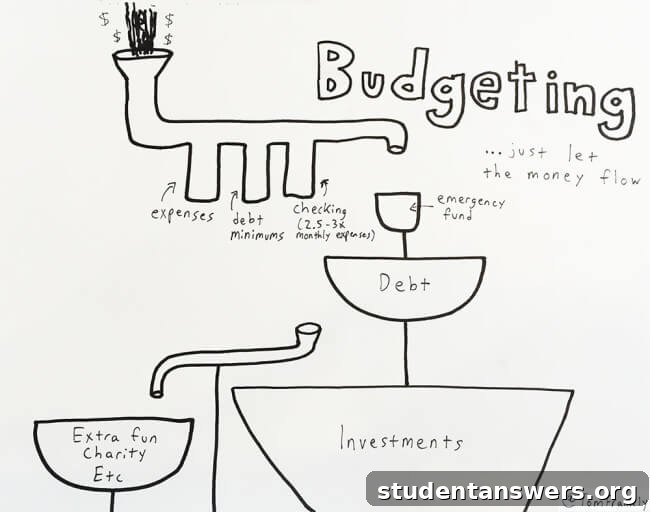
The key principle of the pipeline method is to fill the most important buckets first. Before money ever reaches your “fun” or discretionary spending bucket, it must first pass through your savings, investments, and essential expenses. This ensures your future is secure and your obligations are met before you spend on wants.
Automate Your Way to Wealth: The “Pay Yourself First” Strategy
The single most powerful habit you can build for financial success is automation. Relying on willpower to manually save and invest money each month is a recipe for failure. Life gets busy, temptations arise, and it becomes easy to say, “I’ll save next month.”
Automation removes willpower from the equation. The “pay yourself first” strategy means that as soon as your paycheck hits your account, a portion is automatically sent to your savings and investment accounts before you even have a chance to spend it. This makes saving effortless and consistent.
How to Automate Your Finances:
- Direct Deposit: If your employer allows it, split your direct deposit. Have a portion go directly into a high-yield savings account and the rest into your primary checking account.
- Automatic Transfers: Set up recurring weekly or bi-weekly transfers from your checking account to your savings, emergency fund, and investment accounts.
- Automated Bill Pay: Set up automatic payments for all your fixed bills like rent, mortgage, car loans, and insurance. This prevents late fees and helps you know exactly how much money is left over for other expenses.
- Retirement Contributions: If you have a workplace retirement plan like a 401(k), contribute automatically from each paycheck. This is the easiest way to build long-term wealth.
Filling Your Financial Buckets: A Step-by-Step Priority List
Using the pipeline analogy, let’s break down the order in which you should fill your financial buckets. This priority system ensures your foundation is strong before you build upon it.
Bucket 1: Fixed Essential Expenses
These are your non-negotiable, recurring costs that are roughly the same amount each month. They form the bedrock of your budget.
- Rent or Mortgage
- Car Payments
- Insurance (Health, Auto, Renters)
- Student Loan Payments
- Utilities (Internet, Phone Bill)
Automate these payments to ensure they are always paid on time, protecting your credit score and avoiding late fees.
Bucket 2: Your Financial Future (Savings & Investments)
This is the “pay yourself first” bucket. Before you even think about groceries or entertainment, you must allocate money to your future self. This is the most crucial step for building wealth.
- Emergency Fund: Your top priority. Aim to save 3-6 months’ worth of essential living expenses in a separate high-yield savings account. This fund is your shield against job loss, medical emergencies, or unexpected repairs.
- Retirement Savings: Contribute to your 401(k), especially if your employer offers a match—it’s free money! If you don’t have a 401(k), open a Roth IRA.
- Other Investments: Once your emergency fund is healthy and you’re contributing to retirement, you can open a taxable brokerage account to invest for other long-term goals.
Bucket 3: Variable Essential Expenses
These are necessary expenses that can fluctuate from month to month. This is where you have some control and can find opportunities to save.
- Groceries
- Gasoline / Transportation
- Utilities (Electricity, Water)
Track your spending in these categories for a month or two to get a realistic average. Then, set a budget for each and look for ways to optimize, such as meal planning to reduce food costs.
Bucket 4: Sinking Funds for Irregular Expenses
Have you ever had your budget derailed by an annual subscription, car repairs, or holiday gifts? These aren’t emergencies; they are predictable but non-monthly expenses. A “sinking fund” is a mini-savings account for a specific future expense. By saving a small amount each month, you’ll have the cash ready when the bill arrives.
Create sinking funds for:
- Car Maintenance
- Annual Subscriptions (e.g., Amazon Prime)
- Vacations
- Gifts (Birthdays, Holidays)
- Home Repairs
Bucket 5: Guilt-Free Spending Money
This is the money left over after all your needs are met and your future self is taken care of. This is your “fun money” for dining out, hobbies, shopping, and entertainment. Because you’ve already handled your responsibilities, you can spend this money completely guilt-free. A budget isn’t about deprivation; it’s about empowerment and conscious spending.
Use Credit Cards as a Tool, Not a Trap
Credit cards often get a bad reputation, and for good reason—high-interest credit card debt can be financially crippling. However, when used responsibly, credit cards are a powerful financial tool. The key is to treat your credit card like a debit card and never spend money you don’t have.
The Golden Rule of Credit Cards:
Always pay your statement balance in full and on time, every single month. If you do this, you will never pay a penny in interest, and you can reap all the benefits.
Benefits of Responsible Credit Card Use:
- Building Your Credit Score: A good credit score is essential for getting favorable interest rates on future loans for a car or a home. Using a credit card responsibly is one of the best ways to build it.
- Rewards and Cash Back: Many cards offer 1-5% cash back on purchases, travel points, or other rewards. This is essentially a discount on everything you buy.
- Security and Fraud Protection: If your credit card is stolen or used fraudulently, federal law limits your liability. Debit card fraud can be much harder to resolve.
- Purchase Protection and Warranties: Many cards offer extended warranties on products you buy or protection against damage or theft.
Use tools like Credit Karma or NerdWallet to monitor your credit score for free and find a credit card that fits your spending habits, whether it’s a simple cash-back card or a travel rewards card.
Conclusion: Your Journey to Financial Control
Managing your money doesn’t have to be complicated or restrictive. By shifting your mindset and implementing a simple, structured system, you can transform your financial life. Start by defining clear, motivating goals. Use the budgeting pipeline model to visualize where your money should go, and then put that plan on autopilot. Prioritize your essential expenses and financial goals, create sinking funds for irregular costs, and enjoy your leftover money guilt-free. Finally, learn to use financial tools like credit cards to your advantage.
Financial freedom is a marathon, not a sprint. There will be setbacks and adjustments along the way. But by taking these steps, you are building a foundation of financial literacy and security that will serve you for the rest of your life. Start today, and empower yourself to build the future you deserve.