

How to Stop Being Late: 5 Practical Strategies to Be on Time, Every Time
If you constantly find yourself apologizing for being late, you’re not alone. The struggle to be punctual is a common one, but it can create stress, damage relationships, and harm your professional reputation. The good news is that chronic lateness is a solvable problem. With a few strategic shifts in your habits and mindset, you can transform from a perpetually late person into someone who arrives on time, calm and prepared.
Before we dive into the five proven strategies to conquer lateness, let’s quickly understand the root causes. Beyond simple disrespect, which is rarely the true intention, lateness often stems from a few key psychological factors:
- Inaccurate Time Perception: Humans are notoriously bad at estimating how long tasks will take. We fall victim to the Planning Fallacy, a cognitive bias that makes us consistently underestimate the time needed to complete a future task, despite knowing that similar tasks have taken longer in the past.
- The Pull of Procrastination: When we are engaged in an enjoyable activity, our brain’s reward center is highly active. This makes it incredibly difficult to pull away and transition to the next, often less exciting, task—like getting ready to leave. It’s the adult version of a child begging for “just five more minutes” of playtime.
- Simple Forgetfulness: In our busy lives, it’s easy for appointments and commitments to slip through the cracks. Without a reliable system, we sometimes simply forget we have somewhere to be until it’s far too late.
Understanding these underlying issues is the first step. Now, let’s explore the actionable solutions that will help you master the art of punctuality.

1. Visualize Every Step of the Process
One of the biggest mistakes we make when planning our departure time is focusing only on the main event—the travel itself. If Google Maps says the drive is 25 minutes, we budget 25 minutes. This narrow focus is a classic example of the Segmentation Effect, where we overlook the dozens of small but crucial sub-tasks involved in a process.
To counteract this, take a moment to mentally walk through the entire sequence of events, starting from what you’re doing right now and ending with your arrival at the destination. This detailed visualization forces you to account for the time consumed by often-forgotten micro-steps.
Think about a simple trip to a coffee shop to meet a friend. Your brain’s initial estimate might only account for the drive. However, the full process looks more like this:

Here’s a more realistic breakdown:
- Finish and save your current work (1 minute).
- Use the restroom (2 minutes).
- Change your shirt because you notice a coffee stain (2 minutes).
- Find your keys, which aren’t on their hook (1 minute).
- Find your wallet (30 seconds).
- Put on your shoes and jacket (1 minute).
- Walk to your car (1 minute).
- Start the car and wait for the windshield to defrost (2 minutes).
- The actual drive (25 minutes).
- Find parking (3 minutes).
- Walk from the car to the coffee shop (1 minute).
Suddenly, that 25-minute trip requires at least 40 minutes of preparation and travel. By visualizing the complete sequence, you move from a wildly optimistic estimate to a much more realistic one, setting yourself up for success from the very beginning.
2. Master Time Estimation with a Personal “Buffer Ratio”
Even with detailed visualization, our brains are hardwired for optimism. The Planning Fallacy ensures that our “best guess” for how long something will take is often identical to the “best-case scenario” where everything goes perfectly. We don’t plan for traffic, long lines, or the slow driver in front of us. We plan for a world with no obstacles.
To overcome this innate bias, you need to build a revision step into your planning process. This is where a “Fudge Ratio,” a concept popularized by writer Steve Pavlina, becomes an invaluable tool. It’s a simple, data-driven way to correct your own overly optimistic estimates.
Here’s how it works: For a week, track your time estimates against reality. For any given task, write down how long you think it will take. Then, time yourself and record how long it actually took.
The formula is: Actual Time / Estimated Time = Your Fudge Ratio
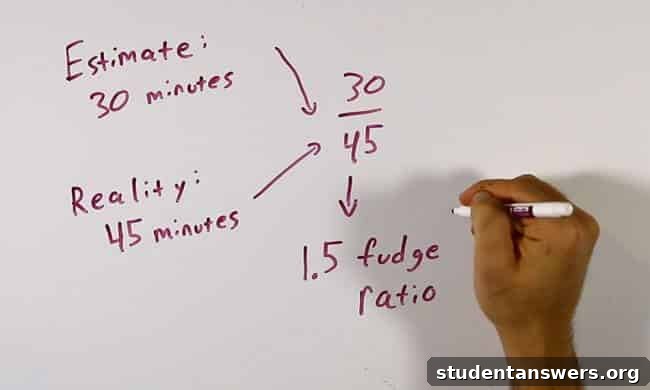
If you estimate it will take 30 minutes to get ready and go to the gym, and it actually takes you 45 minutes, your Fudge Ratio is 1.5. After tracking several similar tasks, you can calculate an average ratio. From then on, whenever you make a time estimate, multiply it by your personal Fudge Ratio to get a more accurate prediction. If you think a task will take 20 minutes, and your ratio is 1.5, you should realistically budget 30 minutes (20 x 1.5).
This method forces you to confront the difference between your perception and reality, systematically injecting a realistic buffer into all your plans.
3. Prepare Ahead of Time: Your Future Self Will Thank You
One of the most effective ways to ensure punctuality is to reduce the number of tasks you need to complete right before you leave. By doing things in advance, you simplify your departure process and minimize the chances of unexpected delays.
This principle is a cornerstone of an efficient morning routine. If you often struggle to get out the door on time for work or school, consider implementing these preparation habits the night before:
- Meal Prep: Prepare and pack your lunch for the next day. If you struggle with breakfast, consider making overnight oats or cooking a large batch of breakfast burritos on the weekend that you can quickly reheat. Fill your coffee maker with water and grounds.
- Pack Your Bags: Ensure your work bag, gym bag, or backpack is completely packed and placed by the door. This includes your laptop, chargers, notebooks, workout gear, and water bottle.
- Lay Out Your Clothes: Choose your entire outfit for the next day, right down to your socks and accessories. This eliminates decision fatigue in the morning when your brain is still waking up.
This concept extends beyond mornings. Adopt a “clear to neutral” habit. This means resetting your environment at the end of each day or after completing a task. Wash your dishes immediately after a meal, tidy your desk when you finish work, and put things back where they belong. A clean, organized space means no more frantic, last-minute searches for your keys, phone, or an important document when you’re already running behind schedule.
4. Set a Hard Stop for Your Current Task
How often has “I’ll just finish this one last thing” made you late? This is the battle between the rational part of your brain (the prefrontal cortex) that knows you need to leave, and the instant gratification-seeking part (the limbic system) that wants to continue the enjoyable task at hand. The limbic system is a powerful, ancient part of our brain, and it often wins this fight.
To tip the scales in your favor, you need an external system to enforce the transition. Don’t just rely on willpower. Schedule a hard end time for your current activity. This is a non-negotiable deadline that signals it’s time to stop what you’re doing and begin the process of leaving.
You can implement this in several ways:
- Use a Timer: The Pomodoro Technique, which involves working in focused 25-minute intervals, is excellent for this. Set a timer that will go off precisely when you need to start wrapping up. Tools like Tomato Timer or even the timer on your phone are perfect.
- Set a “Wrap-Up” Alarm: If you need to leave at 9:00 AM, set an alarm for 8:45 AM. This alarm isn’t for leaving; it’s the signal to save your work, close your browser tabs, and begin your departure sequence. This small buffer provides a mental cool-down period, making the transition much smoother.
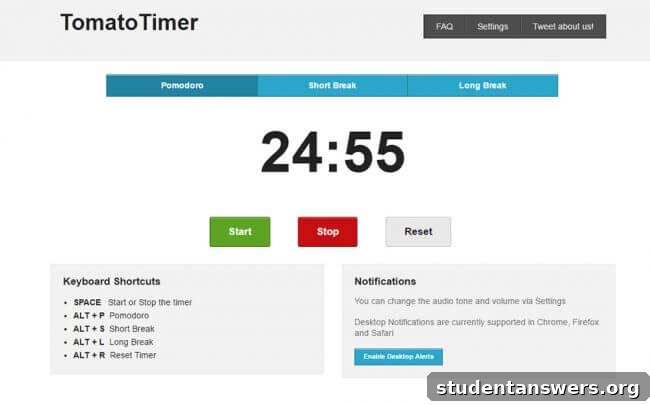
By outsourcing the decision to an external alarm, you take the emotional struggle out of the equation. The alarm rings, and you act. It’s a simple but profoundly effective way to overcome the pull of procrastination and respect your own schedule.
5. Leverage Your Calendar as Your Punctuality Command Center
Finally, we address the problem of simply forgetting. In a world of constant information, our brains are not reliable storage devices for appointments and deadlines. A digital calendar is the solution, but it only works if you use it correctly. Follow these three golden rules to turn your calendar into a powerful tool against lateness:
- Capture Everything Immediately: The moment a new event, appointment, or meeting is scheduled, put it in your calendar. Don’t tell yourself you’ll “do it later.” This five-second action prevents it from being forgotten.
- Review It Daily: Make checking your calendar for the day ahead a non-negotiable part of your morning routine. Look at what’s scheduled while you have your coffee. This gives you a clear mental map of your day and prevents any surprises.
- Use Reminders Strategically: Don’t just rely on a single 10-minute warning. For important events, set multiple reminders. For example, a doctor’s appointment might have a reminder 24 hours before (to confirm), 2 hours before (to plan your day around it), and 30 minutes before (to signal it’s time to leave).

Productivity expert David Allen famously said, “Your mind is for having ideas, not holding them.” The same is true for your schedule. Offload the mental burden of remembering your commitments to a trustworthy system. This frees up your brainpower for more important tasks and ensures you never miss an appointment again.

By implementing these five strategies—visualizing the entire process, using a buffer ratio, preparing in advance, setting hard stops, and mastering your calendar—you can systematically dismantle the habits that cause lateness. Start by focusing on just one or two of these tips. As you build confidence and see results, you can incorporate the others. Being on time is not an innate talent; it is a skill that anyone can learn.