
Unlock Peak Productivity: 7 Lessons from a Chef’s “Mise-en-Place”
On the surface, the worlds of a bustling professional kitchen and a quiet modern office seem universes apart. One is a realm of intense physical action, sharp knives, and open flames; the other a domain of mental gymnastics, glowing screens, and clicking keyboards. Office work typically adheres to a nine-to-five schedule, while kitchen life pulses at all hours, from early morning prep to late-night service.
However, as author Dan Charnas masterfully argues in his book Work Clean, these two worlds are more connected than we think. He suggests that knowledge workers—writers, programmers, managers, and students—can learn invaluable lessons from the disciplined systems that chefs use to thrive under pressure. The cornerstone of this system is a powerful French principle: mise-en-place.
Literally translating to “put in place,” mise-en-place is the fundamental philosophy governing every professional kitchen. It is both a state of mind and a physical arrangement, a commitment to organization that allows chefs to perform complex tasks with speed and precision. Before the first pan is heated, every ingredient is washed, chopped, and measured. Every tool is clean and within arm’s reach. Only when this perfect order is achieved can the creative, often chaotic, work of cooking begin.
Work Clean brilliantly adapts these culinary principles for the office, offering a blueprint for managing our daily tasks with greater efficiency and less stress. While the full book is a treasure trove of fascinating stories and detailed techniques, we’ve distilled its core wisdom into seven transformative productivity lessons. Here’s a taste of how you can apply the chef’s mindset to master your own work.
1. Take Time to Plan Your Work Meticulously
“Chefs become planning machines so they can become cooking machines.”
– Dan Charnas, Work Clean
How often do you dive into your workday without a clear plan? According to Charnas, this is a critical mistake. He observes that elite chefs often spend more time planning their service than they do actually cooking. This might sound counterproductive, but it’s the secret to their flawless execution. When a chef is on “the line” during a frantic dinner rush, there is no time for deliberation—only for action. To make this high-stakes performance possible, every detail must be planned in advance.
This planning extends to every aspect of their work: the precise layout of their station, the arrangement of their tools, and the exact timing for each component of a dish. This meticulous preparation minimizes cognitive load, freeing up their mental energy to focus purely on the craft of cooking. For knowledge workers, the pressure may be different, but the principle holds true. How many times have you started a project, only to be halted by a missing file, a needed password, or an unanswered question? These small roadblocks can completely derail your focus and momentum.
By dedicating even fifteen minutes at the start of your day to plan your tasks, you can prevent these disruptions. Outline the steps for your main project, gather all necessary digital files and research, and anticipate potential obstacles. You don’t need to spend more time planning than doing, but investing in a clear, actionable plan is never wasted time. It’s the foundation upon which a productive day is built.
2. Gather Your Resources Before You Begin
A chef’s planning isn’t just about efficiency; it’s also a powerful tool for managing stress. By planning the day’s menu and tasks well in advance, a chef ensures that every ingredient and tool is available long before the first customer arrives. This foresight eliminates last-minute panic and creates an environment of calm control.
You can bring this same sense of calm to your own life by preparing for tomorrow, today. Each evening, take a few moments to set yourself up for a successful morning. This simple ritual can transform your entire day. Consider incorporating these habits:
- Pack your work bag with everything you’ll need: your laptop, charger, notebook, and any important documents.
- Check the weather forecast and lay out your clothes for the next day.
- Prepare your lunch or coffee machine to streamline your morning routine.
- Review your calendar for the next day so you know exactly what to expect.
The objective, as Charnas explains, is to “give yourself as little as possible to plan or do the next morning.” This approach not only makes your mornings less frantic but also allows you to truly disconnect and relax in the evenings, free from the nagging worry that you’ve forgotten something important.
3. Embrace Cleaning as a Foundational Practice
In a professional kitchen, cleanliness is not a suggestion; it’s a non-negotiable rule. A cluttered and messy workstation is a recipe for disaster. It leads to mistakes, cross-contamination, and inefficiency. The physical state of a cook’s station is often a direct reflection of their mental state—a messy station suggests a scattered mind, which makes high-quality execution impossible. More critically, a dirty kitchen poses a serious health risk to diners.
While a messy desk is unlikely to have life-or-death consequences, it can still have a profound psychological impact. Physical clutter contributes to mental clutter, making it harder to concentrate and easier to feel overwhelmed. The simple act of wiping down your desk, organizing your papers, and arranging your pens can serve as a powerful mental reset. It signals to your brain that it’s time to transition into a state of focus. This ritual is especially beneficial before tackling a complex or mentally demanding task that requires deep concentration.
4. Clean As You Go to Maintain Focus
Beyond maintaining a clean physical workspace, the principle of “cleaning as you go” is even more crucial in our digital environments. If you’ve ever found yourself with dozens of browser tabs open, you understand digital clutter. Each open tab, application, and notification is a potential distraction, pulling your attention in multiple directions and preventing you from achieving a state of deep work.
The chef’s solution is to clean continuously. Charnas suggests a simple rule: for every hour of work, spend one minute resetting your workspace. This applies to both your physical desk and your digital desktop. For example, if you’ve just finished a one-hour session of answering emails, take a minute before moving on to your next task. Close your email client, shut down irrelevant browser tabs, and quit any applications you won’t need. This small act of “digital tidying” creates a clean slate for your mind, ensuring that lingering notifications and visual clutter won’t disrupt your focus on the new task at hand.
5. Give Yourself One Less Thing to Do Each Day
In today’s fast-paced world, the pressure to be constantly productive often leads us to overschedule our days. We pack our calendars and to-do lists to the brim, driven by ambition and a fear of falling behind. This inevitably leads to a cycle of frustration and disappointment when we fail to accomplish everything we set out to do. The solution, Charnas proposes, is to intentionally “underschedule” yourself.
He shares an anecdote about fashion icon Coco Chanel, who famously advised people to look in the mirror before leaving the house and “take one thing off.” You can apply this same philosophy to your schedule. After you’ve planned your day, take a critical look at your list and remove one task. This forces you to prioritize what is truly essential and what can wait. It builds buffer time into your day for unexpected issues and allows you the mental space to do your most important work well, rather than rushing through a long list of tasks poorly.
6. Eliminate Points of Friction in Your Work
Efficiency in the kitchen is a game of seconds. Chefs constantly refine their movements and processes to eliminate any wasted motion. Every second saved is a second that can be dedicated to perfecting a dish. Over the course of a thousand-meal service, these saved seconds add up to a significant advantage in quality and consistency.
You can apply this same mindset of continuous improvement to your own work. Identify the “points of friction” in your recurring tasks—the parts of a process where you consistently get stuck, make errors, or waste time. Once you’ve identified these bottlenecks, you can systematically work to eliminate them. For instance, do you waste time searching for a specific file every week? Create a shortcut on your desktop. Do you find yourself typing the same email response repeatedly? Create a text template. By smoothing out these small bumps in your workflow, you free up valuable time and mental energy for more creative and impactful work.
7. Strive for Perfection, But Never Perfectionism
“Excellence is quality delivered.”
– Dan Charnas, Work Clean
Have you ever missed a deadline because you were endlessly tweaking a project, trying to make it absolutely perfect? If so, you’ve fallen into the trap of perfectionism. While the desire to produce high-quality work is admirable, perfectionism is a destructive force that prioritizes flawless ideals over practical delivery. No matter how brilliant your work is, it has no value if it never reaches its audience.
Chefs understand the crucial difference between striving for perfection and being crippled by perfectionism. They aim for a perfect dish every single time, but they operate under the unyielding pressure of a deadline. A dish cannot be tweaked indefinitely; a hungry customer is waiting. This constraint forces them to deliver the best possible product within a realistic timeframe. Delivering your work on time is essential for professional growth. It’s how you receive feedback, learn from your mistakes, and improve your craft. So, the next time you’re tempted to spend “just one more hour” on a project, remember that a deadline is not your enemy. It’s a valuable tool that pushes you to deliver, learn, and ultimately, achieve true excellence.
Work Cleaner to Work Better
We hope these lessons, inspired by the disciplined world of professional chefs, have given you fresh ideas to apply to your own work or studies. You don’t need to wear a white apron to benefit from the profound wisdom of mise-en-place. By integrating these principles of planning, preparation, and cleanliness into your daily routine, you can create a workflow that is more focused, efficient, and ultimately, more fulfilling.
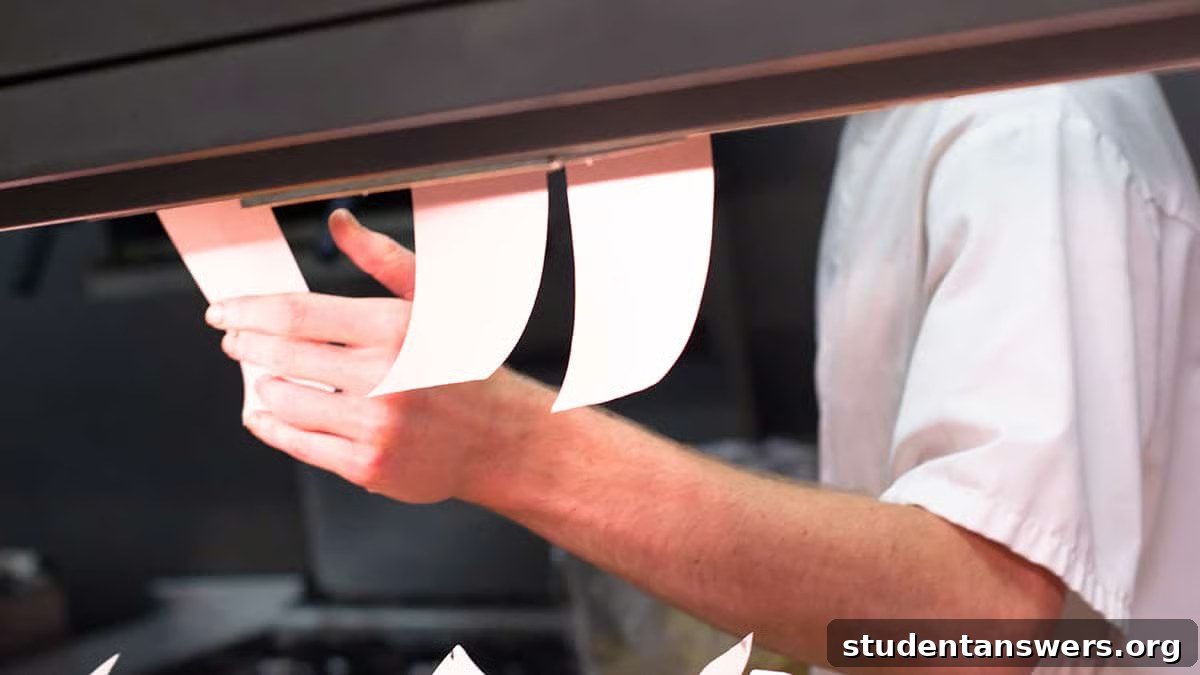
Image Credits: Cook pulling an order ticket from the line