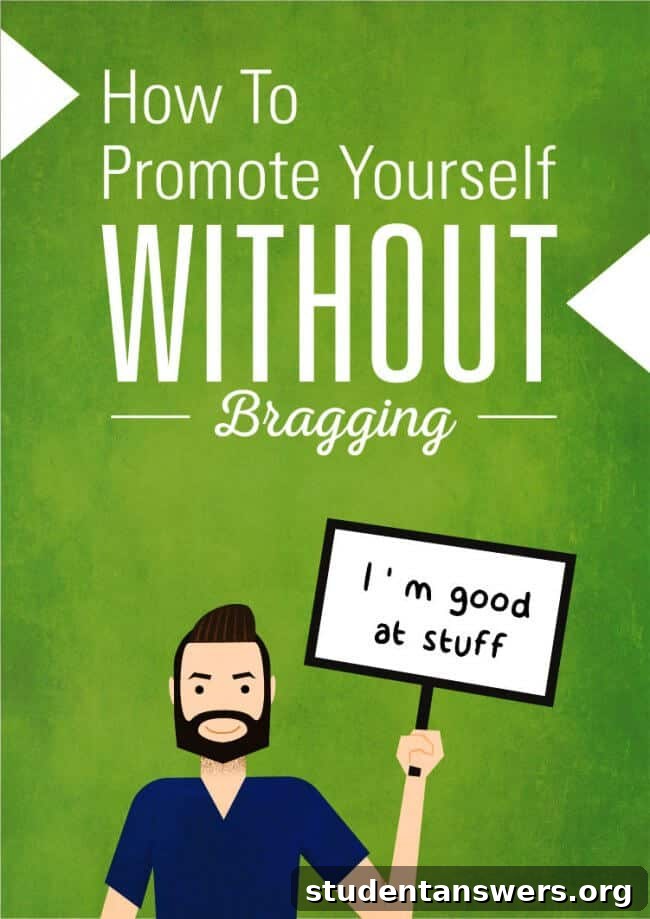

How to Promote Yourself Effectively Without Sounding Like a Braggart
Promoting yourself is a delicate dance. Lean too far in one direction, and your skills, accomplishments, and passions remain a well-kept secret. Lean too far the other way, and you risk being labeled an arrogant braggart, discovering firsthand why they say it’s lonely at the top. So, how do you find that perfect, confident middle ground where you can advocate for your value without alienating everyone around you?
The truth is, tasteful self-promotion isn’t just a “nice-to-have” skill; it’s a critical component of personal and professional growth. In a world where opportunities often go to the most visible, not necessarily the most deserving, learning to articulate your worth is essential. It’s about ensuring your hard work gets the recognition it deserves, opening doors to new projects, promotions, and collaborations.
This comprehensive guide will explore the art of self-promotion with grace and authenticity. We will delve into actionable strategies that allow you to highlight your achievements naturally. Furthermore, we’ll tackle the complex social dynamics that can arise, such as navigating relationships with friends who may feel competitive or left behind as you strive for more. Finally, we’ll uncover one of the most powerful tools for self-promotion: becoming a confident and compelling public speaker.
Why Self-Promotion is a Crucial Skill in Today’s World
The idea of “promoting yourself” can feel uncomfortable, often associated with aggressive sales tactics or inflated egos. However, it’s time to reframe this concept. Think of it less as boasting and more as strategic communication. It’s about making sure the right people know what you’re capable of, what you’ve achieved, and what you aspire to do next.
In the modern economy, your professional reputation is your most valuable asset. Whether you’re a freelancer seeking clients, an employee aiming for a promotion, or an entrepreneur building a brand, your ability to communicate your value proposition is paramount. A “heads-down” approach, where you assume your good work will automatically be noticed, is no longer a viable strategy. Decision-makers are busy; they won’t always have the time to dig for your hidden talents. You have to help them see what you bring to the table.
Effective self-promotion builds your personal brand. It establishes you as a knowledgeable and capable professional in your field. This visibility leads to a stronger network, better opportunities, and greater control over your career trajectory. It’s about taking ownership of your professional narrative.
The Fine Line: Confident Advocacy vs. Arrogant Bragging
Understanding the difference between confidence and arrogance is the key to mastering tasteful self-promotion. The line is defined by intent, delivery, and context. Bragging is self-serving and often comes at the expense of others, while advocacy is about sharing factual information to create value and opportunity.
What Bragging Looks Like:
- Exaggeration and Hyperbole: Inflating your role in a success or overstating the impact of your achievements.
- Constant “I” Statements: Dominating conversations with stories about your own accomplishments without showing interest in others.
- Putting Others Down: Implicitly or explicitly comparing your successes to the perceived failures of others.
- Seeking Validation: Sharing achievements not to inform, but to fish for compliments and approval.
What Tasteful Promotion Looks Like:
- Focusing on Facts and Data: Instead of saying “I did an amazing job,” say “I led the project that resulted in a 15% increase in user engagement.”
- Sharing Credit Generously: Acknowledge the team and individuals who contributed to a success. Use “we” to describe a team win and “I” only to clarify your specific contribution.
- Telling a Story: Frame your accomplishments within a narrative. Talk about the challenge, the process, the solution, and the outcome. This is engaging and feels less like a raw boast.
- Being Genuinely Helpful: Share your knowledge and expertise freely. When you help others solve their problems, your value becomes self-evident.
Navigating Social Dynamics: When Friends Feel Left Behind
One of the most challenging aspects of personal growth is its effect on existing relationships. As you become more ambitious and focused, you may encounter friction with friends who aren’t on the same path. They might interpret your drive as a judgment on their own choices, leading to feelings of competitiveness, envy, or distance. This can be painful and isolating.
Handling this situation requires empathy and clear communication. It’s important to remember that their reaction is often more about their own insecurities than it is about you. Acknowledge that change can be unsettling. Share your struggles along with your successes to show that your journey isn’t a seamless highlight reel. Make a conscious effort to celebrate their achievements, no matter how small they may seem, and maintain genuine interest in their lives outside of your own professional pursuits. Sometimes, it also means seeking out new communities and peer groups—not to replace old friends, but to supplement your support system with people who understand and share your current ambitions.
The Ultimate Tool for Promotion: Becoming a Better Speaker
If there is one skill that can supercharge your ability to promote yourself effectively, it is public speaking. The ability to stand before a group and articulate your ideas clearly and persuasively is an unparalleled asset. It builds authority, demonstrates confidence, and dramatically increases your visibility. Every presentation, every team meeting, and every conference talk is an opportunity to showcase your expertise and establish your personal brand.
Many people fear public speaking, but it is a skill that can be learned and honed with practice. The rewards are well worth the initial discomfort. A well-delivered speech can influence key stakeholders, win over new clients, and position you as a thought leader in your industry. It’s self-promotion in its most powerful form because you are delivering tangible value to an audience while simultaneously demonstrating your competence.
Actionable Steps to Improve Your Public Speaking:
- Start Small: You don’t need to book a TED Talk tomorrow. Begin by speaking up more in team meetings, volunteering to present a project update, or joining a local Toastmasters club.
- Structure Your Message: A clear structure is your best friend. Use a simple framework: tell them what you’re going to tell them (introduction), tell them (body), and then tell them what you told them (conclusion).
- Focus on the Audience: Shift your focus from “How do I look?” to “What value can I provide?” When you genuinely aim to help, inform, or entertain your audience, your nerves tend to take a backseat.
- Practice, Record, and Refine: Rehearse your talk multiple times. Record yourself on video to identify nervous tics, filler words (like “um” and “ah”), and areas where your energy drops. This is the fastest way to improve.
- Embrace Authenticity: Don’t try to be a carbon copy of another speaker. Let your genuine personality shine through. Authenticity creates a connection with the audience that is far more powerful than a flawless but sterile delivery.
Ultimately, learning how to promote yourself is about owning your story and your value. It’s a journey of building confidence, communicating effectively, and strategically sharing your contributions with the world. By focusing on facts, sharing credit, and providing value to others, you can advocate for your career growth with integrity and grace, ensuring that your hard work never goes unnoticed.
Recommended Resources and Further Reading:
- Mark Manson’s book on challenging conventional self-help advice.
- A Charisma on Command video exploring charismatic communication.
- Information on StyleCon, a conference focused on men’s style and personal branding.
- An episode discussing unambitious friends and other life strategies.
- Real Men Real Style, a resource for men’s fashion and self-improvement.
- I Am Alpha M, a lifestyle and confidence-building resource.
- The College Info Geek Community on Reddit for peer support.
- I Want to Fly With Hippos, an example of a creative personal project site.
- An episode discussing how to create “love letter” sites to stand out.
- Business Professionals of America, an organization for developing career skills.
- Toastmasters, the premier organization for practicing public speaking.
- Ignite, a format for fast and engaging presentations.
- Thomas Frank’s Ignite talk on the power of fascination.
- Thomas Frank’s Ignite talk about his trip to Japan.
- Listen Money Matters, a podcast on personal finance.
- An article with 9 Tips for Becoming a Great Public Speaker.
- A guide on How to Be More Confident with 5 practical strategies.
- An early example of a speech on remote work.
- A professional keynote speech at Luther College.
- A guide on how to start your own podcast.
Want more cool stuff? You can find all sorts of great tools at my Resources page.