
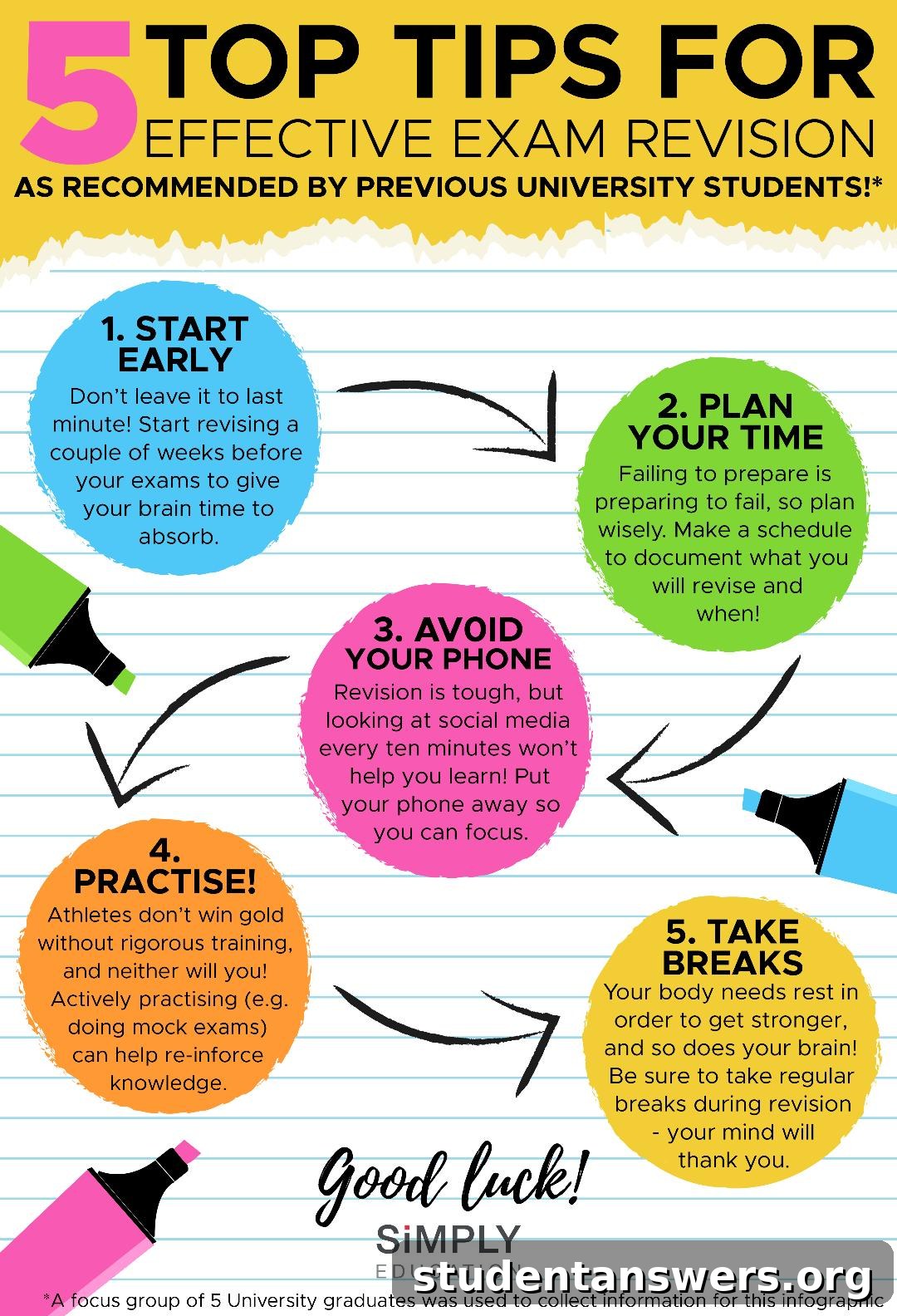
The Ultimate Guide to Exam Revision: Ace Your Finals with These 5 Expert Strategies
Exams. The word alone can conjure feelings of stress, late-night study sessions, and the pressure to perform. Like many of life’s necessary challenges, facing them is unavoidable for most university students. The revision process can feel overwhelming and, at times, incredibly monotonous. How can you be sure your study method is effective? Are you on the path to success, or are you heading for a last-minute panic?
The best way to navigate this challenging period is to learn from those who have successfully been through it. By understanding the strategies that work, you can build a revision plan that is not only efficient but also reduces anxiety and boosts your confidence. This guide breaks down five fundamental, time-tested tips, originally shared by university graduates, to help you transform your approach to studying and achieve the results you deserve.
These tips aren’t complicated secrets; they are simple, powerful principles that are often overlooked in the rush of exam season. By integrating them into your routine, you can move from passively reading notes to actively mastering your subjects. Let’s dive into the essential steps for exam success.
1. Start Early: Why Cramming is Your Worst Enemy
The temptation to procrastinate is universal, but when it comes to exams, leaving everything to the last minute is a recipe for disaster. The single most impactful piece of advice from successful graduates is to start your revision early. This isn’t just about avoiding a stressful all-nighter; it’s about how your brain learns and retains information most effectively.
Last-minute cramming forces an immense amount of information into your short-term memory. While you might remember some of it for the exam, it’s quickly forgotten afterward. This approach leads to superficial understanding and high levels of stress, which can impair your cognitive performance on the day of the test. Your brain simply isn’t designed to absorb and process weeks’ worth of complex material in a few hours.
The Power of Spaced Repetition
Effective learning relies on a principle called spaced repetition. This involves reviewing information at increasing intervals over time. When you start early, you give your brain the time it needs to transfer knowledge from short-term to long-term memory. Each time you revisit a topic, the neural pathways associated with that information are strengthened. This leads to deeper understanding and much better recall under pressure.
How to implement this:
- Create a long-term schedule: At the beginning of the semester, map out key dates and create a rough revision timeline.
- Review weekly: Spend an hour or two at the end of each week reviewing the notes from that week’s lectures. This small, consistent effort will save you dozens of hours of panicked re-learning later.
- Break it down: Divide large, intimidating subjects into smaller, manageable topics. Plan to cover one or two of these mini-topics each day or week, rather than trying to tackle an entire module at once.
2. Plan Your Time Wisely: The Art of a Smart Revision Schedule
Starting early is the first step, but without a plan, that extra time can easily be wasted. A well-structured revision timetable is your roadmap to success. It turns the vague, overwhelming goal of “revising for exams” into a series of clear, achievable daily tasks. This not only ensures you cover all the necessary material but also dramatically reduces anxiety by giving you a sense of control.
A good plan isn’t about filling every waking moment with study. It’s about being strategic. It should be balanced, realistic, and tailored to your personal needs. It accounts for different subject difficulties, your energy levels throughout the day, and, crucially, includes time for rest and relaxation.
Building Your Ultimate Revision Timetable
Your schedule should be a tool that serves you, not a rigid prison. Here’s how to create one that works:
- Prioritize your subjects: Identify which subjects are your most challenging or have the heaviest weighting. Allocate more time to these, but ensure every subject gets adequate attention.
- Use time-blocking: Instead of a simple to-do list, block out specific times in your calendar for specific tasks. For example, “Monday 10am-11:30am: Psychology – Chapter 3 Practice Questions.” This creates commitment.
- Try the Pomodoro Technique: This popular time-management method involves working in focused 25-minute intervals, separated by 5-minute breaks. After four sessions, you take a longer break (15-30 minutes). It helps maintain concentration and prevents burnout.
- Be realistic and flexible: Don’t schedule eight hours of non-stop, high-intensity study per day. Life happens. Build in some buffer time and don’t be discouraged if you have to adjust your plan.
3. Practice, Practice, Practice: Simulate Success with Mock Exams
Passively reading your textbooks and lecture notes is one of the least effective ways to revise. Your brain needs to be actively engaged to truly learn. The best way to achieve this is through practice, specifically by using past papers and mock exams. This method shifts you from a passive recipient of information to an active user of knowledge.
Working through practice questions and mock exams does several critical things:
- It strengthens memory through active recall: Forcing yourself to retrieve information from your brain without looking at your notes is a powerful learning tool. It’s far more effective than simply re-reading the answer.
- It identifies your weak spots: You might think you understand a topic until you try to answer a question about it. Practice papers quickly reveal the gaps in your knowledge, allowing you to focus your revision where it’s needed most.
- It familiarizes you with the format: You’ll get used to the style of questions, the time constraints, and the marking scheme, which reduces surprises and anxiety on exam day.
Find past papers on your university’s online portal or library resources. If they aren’t available, create your own questions based on key concepts from your lectures. The key is to simulate exam conditions: set a timer, put your notes away, and complete the paper as you would in the real thing.
4. Avoid Distractions: Reclaim Your Focus in a Digital World
In today’s world, the biggest obstacle to effective study isn’t a lack of resources; it’s a lack of focus. Social media, notifications, and the endless lure of the internet can sabotage even the best-laid plans. A five-minute “quick check” of Instagram can easily turn into a 45-minute scroll, completely derailing your concentration.
Effective revision requires periods of deep, uninterrupted work. Every time you switch your attention from your studies to your phone and back again, you incur a “context switching” cost. It takes time and mental energy to refocus, making your study sessions fragmented and inefficient. Former students consistently rate minimizing these distractions as a key factor in their success.
Strategies for a Distraction-Free Study Zone
Taming the digital beast requires a conscious effort and the right tools:
- Create a dedicated study space: Your environment signals your intent. Have a clean, organized desk that is used only for studying. Keep it free of clutter and non-essential electronics.
- The phone goes away: The most effective solution is often the simplest. Put your phone in another room or turn it completely off. If you need it for music or as a timer, use airplane mode or “Do Not Disturb” settings.
- Use technology against itself: Apps and browser extensions like Freedom, Cold Turkey, or Forest can block distracting websites and apps for set periods, holding you accountable to your study goals.
- Schedule your distractions: Allow yourself specific, short breaks (e.g., 10 minutes every 90 minutes) to check your phone or social media. This can act as a reward and make it easier to stay focused during your study blocks.
5. Take Regular Breaks: Rest is Part of the Work
The “work hard, play hard” mentality can be toxic during exam season, often leading students to believe that more hours spent studying automatically equals better results. This is a myth. Your brain is not a machine; it requires downtime to process information, consolidate memories, and recharge. Neglecting breaks leads to mental fatigue, diminished returns, and ultimately, burnout.
Taking regular, planned breaks is not a sign of laziness—it’s a core component of a sustainable and effective revision strategy. A short rest can reset your focus, improve your mood, and increase your overall productivity. Graduates who thrived during exams consistently emphasize the importance of stepping away from the books to maintain their well-being.
How to Take Breaks That Actually Work
The quality of your break matters as much as its length. Here’s how to make them count:
- Get physical: Move your body. A short walk, some stretching, or a quick workout can boost blood flow to the brain and release endorphins, improving your mood and energy levels.
- Go screen-free: Try to avoid swapping your textbook screen for your phone screen. Give your eyes and mind a true rest from digital displays.
- Hydrate and refuel: Use break time to drink a glass of water and have a healthy snack, like fruit or nuts. Proper nutrition and hydration are vital for cognitive function.
- Prioritize sleep: The most important break of all is a full night’s sleep. During sleep, your brain consolidates what you’ve learned. Sacrificing sleep for extra hours of revision is one of the most counterproductive things you can do.
By embracing these five foundational principles—starting early, planning wisely, practicing actively, eliminating distractions, and resting properly—you can build a revision process that is not only less stressful but far more effective. Exam success isn’t about magic; it’s about consistent, intelligent effort. Start implementing these strategies today and walk into your exams with the preparation and confidence you need to excel.