

Six Non-Negotiable Classes for a Modern College Education
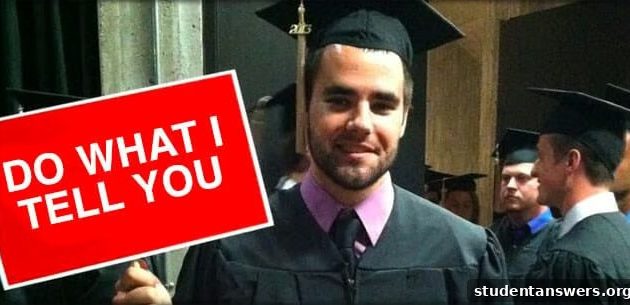
Have you ever listened to someone passionately describe a hyper-specific college class, insisting it should be mandatory for everyone? Perhaps it was something like “The Sociological Impact of 18th-Century French Poetry.” While their enthusiasm is admirable, the idea of a one-size-fits-all education has always felt flawed.
We all have unique interests, learning styles, and goals. Forcing a future engineer to analyze poetry or a future artist to master advanced calculus often feels counterproductive. It’s like the famous saying, often attributed to Einstein:
“Everybody is a genius. But if you judge a fish by its ability to climb a tree, it will live its whole life believing that it is stupid.”
While I don’t believe there’s a single academic major that everyone should pursue, I do believe some skills are universally crucial for success in any field. Over the years, countless students have asked for advice on which classes to take to round out their education. This prompted me to think: if I could design a curriculum of required courses, what would it include?
I landed on six fundamental subjects. These aren’t about specific career paths; they’re about building a foundation for a successful and well-rounded life. Here are the six courses I believe every student should take, why they are so vital, and resources to get you started on your own.
1. Logic and Critical Thinking
Before you can communicate an idea effectively, you must first ensure that the idea itself is sound. This is why Logic and Critical Thinking is the bedrock of this curriculum. It’s the essential skill of thinking clearly and rationally.
This isn’t about spending weeks on abstract symbolic logic, though a brief introduction can be helpful. The real focus should be on practical reasoning for everyday life. Our minds are naturally prone to cognitive biases, logical fallacies, and mental shortcuts that can lead to poor decisions. A well-designed logic course should equip students to identify these pitfalls.
Imagine a class that teaches you to:
- Recognize common logical fallacies like “ad hominem” or “straw man” arguments in news articles or debates.
- Understand cognitive biases such as confirmation bias (favoring information that confirms your existing beliefs) and the halo effect (letting one positive trait overshadow everything else).
- Evaluate evidence, distinguish fact from opinion, and build arguments based on sound reasoning rather than emotion.
In a world saturated with misinformation, the ability to think critically is more than an academic exercise—it’s a crucial survival skill. This course would empower you to navigate complex information, make better-informed decisions, and build a solid foundation for all other learning.
Resources for Learning Logic and Critical Thinking:
- Think Again: How to Reason and Argue – A popular free course from Duke University on Coursera.
- Thinking, Fast and Slow – A groundbreaking book by Nobel laureate Daniel Kahneman that explores the two systems that drive the way we think.
- YourLogicalFallacyIs.com – A simple, visual guide to common logical fallacies.
2. Public Speaking and Communication
The fear of public speaking is famously widespread, often cited as more common than the fear of death. While most of us would, in fact, choose giving a speech over the alternative, the anxiety is very real. But here’s the secret: almost everyone feels it. The key is not to eliminate the fear, but to learn to manage it and perform effectively despite it.
Why is this so important? Because recruiters and employers consistently rank communication skills at the very top of their list of desired attributes in new hires. Jennifer Floren, CEO of Experience, Inc., noted that “soft skills” like communication, teamwork, and flexibility are what employers value most, as technical skills can always be taught on the job.
A mandatory public speaking course offers immense benefits:
- Mastering Persuasion: You learn how to structure an argument using the classical principles of ethos (credibility), pathos (emotion), and logos (logic).
- Building Confidence: Each speech you give, even in a safe classroom environment, builds your confidence and reduces anxiety. It’s far better to practice and make mistakes among fellow students than in a high-stakes professional presentation.
- Improving Interpersonal Skills: The skills you learn for formal presentations—like organizing your thoughts and speaking clearly—translate directly to better one-on-one conversations, interviews, and networking.
At some point in your career, you will be asked to present your ideas to a group. Mastering this skill in college will give you a significant advantage and set you apart from your peers.
Resources for Learning Public Speaking:
- Dynamic Public Speaking Specialization – A comprehensive set of courses from the University of Washington.
- Toastmasters International – A global organization with local clubs dedicated to helping members improve their public speaking and leadership skills.
- TED Talks – An excellent resource for observing and analyzing the techniques of world-class speakers.
3. Effective Writing and Written Communication
In our digital world, we communicate through writing more than ever before. Emails, reports, resumes, presentations, and even social media posts all depend on our ability to write clearly and professionally. Unfortunately, strong writing skills are far from universal among students and graduates.
An effective writing course should be a rigorous boot camp. The goal is to move beyond basic grammar and punctuation to a deeper understanding of what makes writing work. Through consistent practice and constructive, critical feedback, students should internalize the principles of good writing until they become second nature.
By the end of such a course, you should know that:
- Clarity is king. The primary goal of most professional writing is to convey information efficiently and without ambiguity.
- Structure matters. A well-organized document with a logical flow is far more persuasive than a jumble of disconnected ideas.
- Tone is crucial. You must learn to adapt your writing style for different audiences and purposes, whether it’s a formal report or a casual email.
As a professional, your writing is often the first impression you make. Unclear, sloppy, or error-filled writing can undermine your credibility and waste everyone’s time. Conversely, the ability to write effectively is a powerful tool that will benefit you in every aspect of your academic and professional life.
Resources for Learning Effective Writing:
- Read and write constantly. There is no substitute for practice. Start a blog, read books outside your major, and pay close attention to the writing styles you admire.
- Purdue Online Writing Lab (OWL) – An incredible free resource for grammar, citation styles, and writing tips.
- The Elements of Style by Strunk and White – A timeless, concise guide to the principles of clear English prose.
4. Personal Finance Management
If I could make one change, I would require this course not in college, but in high school—before students make life-altering decisions about student loans. The lack of financial literacy among young adults is a crisis, leading to crushing debt that can delay life goals for decades.
A proper personal finance class should begin with real-world stories. It would contrast the experience of a graduate burdened with $50,000 in debt for a low-paying degree with that of a graduate who used community college, scholarships, and smart choices to graduate debt-free and begin building wealth immediately.
The curriculum would be intensely practical, covering essential life skills like:
- Budgeting and Saving: Creating a realistic budget, tracking expenses, and developing consistent saving habits.
- Understanding Debt: The real cost of student loans, credit card interest, and mortgages.
- Taxes and Banking: How to file your taxes, choose the right bank account, and manage your credit score.
– Investing Basics: The magic of compound interest and how to start investing for retirement early (e.g., in a Roth IRA).
Financial literacy is not about getting rich quick; it’s about gaining freedom. Understanding how money works empowers you to make informed choices, avoid costly mistakes, and build a secure future for yourself.
Resources for Learning Personal Finance:
- I Will Teach You To Be Rich – Ramit Sethi’s blog and book offer practical, no-nonsense advice on personal finance for young people.
- NerdWallet – A website with tools and articles to help you compare financial products and make smart money decisions.
- The Simple Path to Wealth by JL Collins – An accessible and powerful guide to long-term investing.
5. Proactive Problem-Solving
Most of us carry a device in our pockets with instant access to nearly all of humanity’s collective knowledge. It is, for all practical purposes, a superpower. So why, when faced with a problem we don’t immediately know how to solve, is our first instinct so often to give up or ask for help?
This class would be designed to cultivate a proactive problem-solving mindset. It’s about learning to be self-reliant and resourceful. A problem-solver doesn’t just say, “I don’t know.” They say, “I’ll figure it out.”
A true problem-solver:
- Tries first. Before asking for help, they make a genuine effort to find the solution on their own using the tools available to them.
- Knows how to search. They are masters of “Googling,” able to formulate precise search queries to find the information they need quickly.
- Is innovative. When a straightforward solution isn’t apparent, they can think creatively and approach the problem from different angles.
- Asks smart questions. When they do need help, they can clearly explain what they’ve already tried, making it easier for others to assist them effectively.
This skill is invaluable to employers. An employee who can independently tackle challenges without constant hand-holding is an enormous asset. This course would consist of a series of challenges and non-obvious problems, forcing students to learn by doing and build the confidence to solve anything that comes their way.
Resources for Learning Problem-Solving:
- This is a skill learned through practice. Challenge yourself to fix something, learn a new software, or plan a complex trip on your own.
- Google and YouTube are your best friends. There is a tutorial for almost everything.
- Websites like Stack Overflow (for coding) or iFixit (for repairs) show how communities can collaborate to solve complex problems.
6. Career Development and Professionalism
Finally, all the academic knowledge in the world won’t help you if you don’t know how to navigate the professional landscape. This course would bridge the gap between college and career, teaching students the practical skills needed to land a great job and succeed once they’re there.
This would be a hands-on class focused on tangible outcomes. The curriculum would cover:
- Crafting Your Narrative: How to write a compelling resume and cover letter that highlights your skills and experiences, avoiding common mistakes.
- Building a Professional Brand: Creating a polished LinkedIn profile, building a personal website or portfolio, and managing your social media presence.
- Mastering the Interview: Preparing for common interview questions, practicing your responses, and learning proper interview etiquette (for both in-person and virtual settings).
- Networking Authentically: How to build genuine professional relationships—not just collect contacts—through informational interviews and industry events.
- Professional Etiquette: Understanding the unwritten rules of the workplace, from email communication to dressing appropriately.
By the end of the semester, every student would have a polished resume, a professional online presence, and have conducted at least one informational interview with someone in their desired field.
Resources for Learning Professional Skills:
- Your university’s career services office is an underutilized but invaluable resource. Use it for resume reviews, mock interviews, and networking events.
- LinkedIn is the most important professional network. Build a complete profile and start connecting with people in your field.
- This blog contains a wealth of information on personal branding, resumes, and interviews. Start with the guides on building a personal website and avoiding resume mistakes.
To be fair, I believe in a compromise between required learning and self-direction. Therefore, in my imaginary university, students could test out of any of these classes. If you can demonstrate you already possess these skills, you’re free to spend your time elsewhere. The goal isn’t to fill seats, but to ensure everyone graduates with the tools they truly need.
So, what do you think of these picks? What essential classes would you add to a mandatory curriculum? Share your thoughts in the comments below.