

Six Steps to Language Mastery
How to Learn a New Language: A Comprehensive Guide to Fluency
For many, learning a foreign language is just another box to check on a college application or a forgotten high school requirement. But viewing it this way means missing out on a world of incredible opportunities. Acquiring a new language is a superpower that can genuinely transform your life. It can significantly boost your career prospects in a globalized market, enhance your cognitive abilities by strengthening memory and problem-solving skills, and even delay the onset of age-related mental decline. More than that, it opens a door to new cultures, new perspectives, and a deeper understanding of the world.
However, the path to fluency is often littered with the ghosts of failed high school classes. Why do so many people struggle? The problem often lies not with the student, but with the method. Traditional education tends to overemphasize rote memorization of grammar rules and vocabulary lists, while neglecting the practical, communicative aspects of language. To truly master a language, you need a balanced approach that develops all the necessary skills in tandem. Fluency isn’t just about what you know; it’s about what you can do.
This guide moves beyond the textbook and dives into the six essential pillars of language acquisition: Memorization, Listening, Speaking, Pronunciation, Reading, and Writing. By understanding and practicing each of these distinct skills, you can build a solid foundation and chart a clear, effective path to becoming bilingual.
The Six Pillars of Effective Language Learning
Think of these six areas as different muscles. To become truly strong, you can’t just work out your arms; you need a full-body workout. Similarly, to become fluent, you must train each of these language skills. Excelling in one, like writing, doesn’t automatically make you proficient in another, like speaking. Let’s explore how to develop each one.
1. Strategic Memorization: Building Your Mental Toolkit
Let’s start with the skill most people are familiar with: memorization. Yes, you need to learn vocabulary, verb conjugations, and grammar rules. This is the bedrock of your language knowledge. However, the key is to be strategic, not just a passive consumer of information. The goal is to make this knowledge accessible and useful, not just locked away for a test.
A powerful technique is to focus on relevance. Pay attention to the words and phrases you use frequently in your native language. When you find yourself thinking of a common phrase, ask yourself, “How would I say this in my target language?” If you don’t know, look it up immediately. This method tailors your learning to your personal communication style, making new vocabulary instantly more memorable and useful.
When looking up words, use online translators for individual words, but be cautious with full sentences. To verify a word’s meaning and context, use a Google Image search. Seeing pictures associated with a word provides a much stronger and more accurate mental link than a simple text definition. For phrases, search for them in quotes to see how native speakers use them in real-world articles and forums.
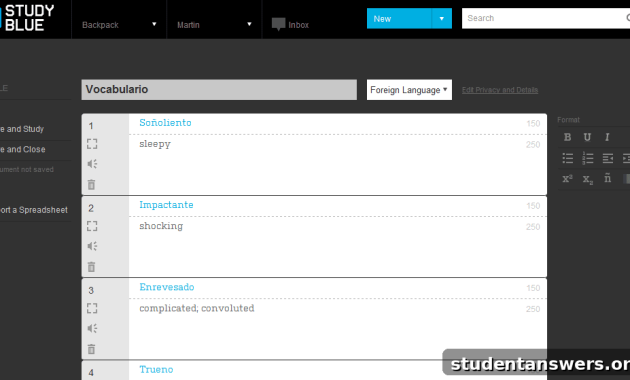
To supercharge your memorization, embrace modern tools that utilize Spaced Repetition Systems (SRS). Apps like Anki and Memrise are far more effective than traditional flashcards. They present information to you just before you’re about to forget it, strengthening your neural pathways and moving knowledge from short-term to long-term memory. Instead of cramming, you learn efficiently and sustainably. Focus on learning the 100 or 200 most common verbs first, as they will form the backbone of most conversations.
2. Active Listening: Decoding the Sound of a Language
Listening is perhaps the most underestimated and challenging skill to develop. It’s one thing to recognize a word on a page; it’s another entirely to catch it in a rapid stream of native speech. Effective listening requires your brain to distinguish word boundaries, process sounds instantly, and derive meaning in real-time. If you have to pause and translate every word in your head, you’ll never keep up with a conversation.
The only way to improve is through consistent immersion. Surround yourself with the sounds of the language. Here’s a progressive approach:
- For Beginners: Start with materials designed for learners. Listen to podcasts or watch YouTube channels where speakers talk slowly and clearly. Children’s television shows are also fantastic resources because they use simple vocabulary and clear annunciation.
- For Intermediates: Graduate to listening to music in your target language while following along with the lyrics. Watch movies or series you’re already familiar with, but this time with audio and subtitles in your target language. This provides contextual clues to help you understand.
- For Advanced Learners: Challenge yourself with content made for native speakers. Listen to news broadcasts, popular podcasts on subjects that interest you, and watch new movies without any subtitles. The goal is to move from actively translating to passive understanding.
3. Speaking: Turning Knowledge into Communication
Speaking is where the rubber meets the road. It forces you to actively recall vocabulary and construct sentences on the fly. Many learners are paralyzed by the fear of making mistakes, but you must overcome this. Mistakes are not failures; they are data points on your journey to fluency. Every error is an opportunity to learn and improve.
The ultimate goal is to reach a point where you can think in your target language, bypassing the clunky process of mental translation. Here are some ways to practice:
- Talk to Yourself: This may feel strange, but it’s an incredibly powerful, zero-pressure technique. Narrate your daily activities. Describe what you’re doing, what you see, or what you’re thinking. This builds the habit of forming sentences and accessing vocabulary without the fear of being judged.
- Use Language Exchange Apps: Platforms like Tandem or HelloTalk connect you with native speakers who want to learn your language. You can text, send voice messages, or have video calls. It’s a fantastic way to get real-world conversation practice.
- Practice Shadowing: Find a short audio clip of a native speaker and try to mimic their speech exactly as you hear it, copying their rhythm, intonation, and pace. This technique dramatically improves your flow and makes you sound more natural.
4. Pronunciation: Mastering the Physicality of Speech
Speaking is the mental act of forming language; pronunciation is the physical act of producing its sounds. Your mouth, tongue, and throat are accustomed to the movements of your native language. Learning a new one requires training these muscles to create new, unfamiliar sounds. Simply applying your native phonetics will often result in a heavy accent that can be difficult for others to understand.
For example, the ‘r’ sound is completely different across languages. In American English, it’s formed in the middle of the mouth; in Spanish, it’s a tap or trill at the front; and in French, it originates from the back of the throat. Pay close attention to these nuances. Use online resources like Forvo, which has a massive database of words pronounced by native speakers from different regions. Watch videos on YouTube that break down the phonetics of your target language. Record yourself speaking and compare it to a native speaker to identify areas for improvement.
5. Reading: Expanding Your Vocabulary and Understanding
Reading is an incredible tool for vocabulary expansion. In written text, you’ll encounter a much richer and more diverse set of words than you typically would in daily conversation. While this can be intimidating, it’s also a huge opportunity. The key is to leverage context.
Resist the urge to look up every single unfamiliar word as you read. This breaks your flow and makes the process tedious. Instead, try to infer the meaning from the surrounding sentences. You’ll be surprised how often you can grasp the general idea even if you only understand 60-70% of the words. Make a list of the words you don’t know, and only look them up after you’ve finished a section or a chapter. This forces you to engage with the text more deeply and develops your inference skills.
Start with accessible materials like graded readers, children’s books, or a translation of a book you love (the Harry Potter series is a popular choice for learners). As you progress, move on to news articles, blogs, and eventually, complex novels.
6. Writing: Reinforcing Grammar and Structure
Writing is a slower, more deliberate process than speaking, which makes it the perfect arena for focusing on accuracy. It forces you to confront the grammar rules you’ve learned and solidify your understanding of sentence structure and spelling. If your target language uses a different script, such as Japanese Hiragana or Katakana, practice is non-negotiable. The physical act of writing characters helps commit them to muscle memory.
Incorporate daily writing into your routine. It doesn’t have to be a novel. Start a simple journal where you write one or two sentences about your day. Use platforms like the WriteStreak community on Reddit, where you can post your writing and receive corrections from native speakers. This feedback loop is invaluable for catching and correcting recurring errors.
Your Journey to Fluency Starts Today
True language mastery isn’t achieved by acing a grammar test; it’s the result of a holistic practice that embraces every facet of communication. By dedicating consistent effort to all six pillars—Memorization, Listening, Speaking, Pronunciation, Reading, and Writing—you will build a robust, well-rounded skill set that far surpasses what’s taught in a traditional classroom. The key is consistency. A focused 30 minutes every day is infinitely more effective than a multi-hour cram session once a week. Embrace the process, celebrate small victories, and enjoy the incredible journey of opening your mind to a new way of speaking, thinking, and seeing the world.