
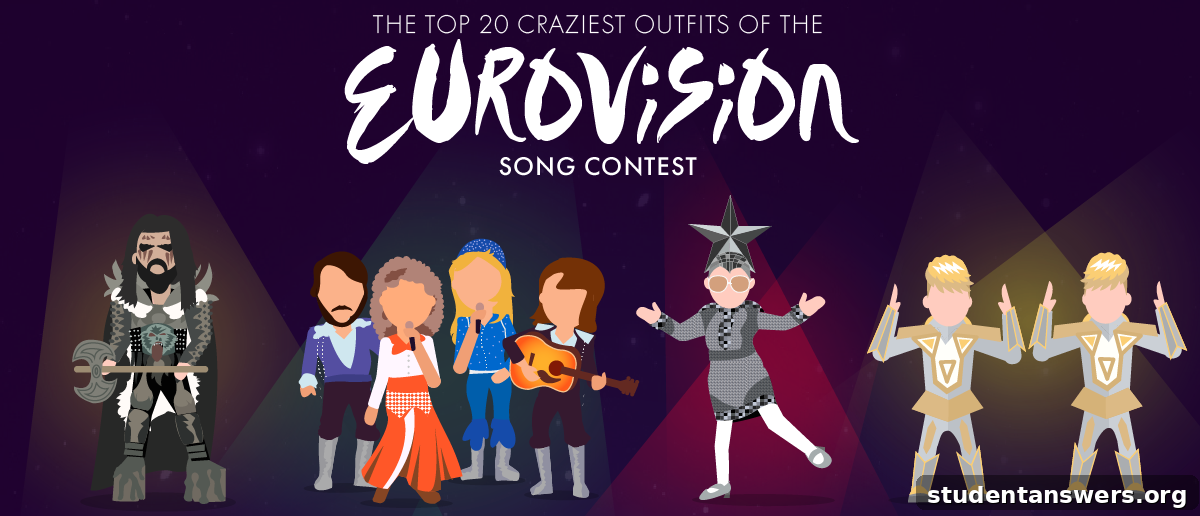
Eurovision’s Wildest Wardrobe: A Deep Dive into the Most Unforgettable Outfits
Since its glamorous debut in 1956, the Eurovision Song Contest has evolved into much more than a musical competition. It is a dazzling, continent-spanning spectacle where culture, camp, and chaos collide. While the songs are the main event, it’s often the extraordinary, and sometimes outright bizarre, fashion that steals the show and captures the imagination of millions. The Eurovision stage has become a runway for some of history’s most memorable style moments, from glittering bodysuits and monstrous prosthetics to questionable interpretations of national dress. To celebrate decades of unforgettable style, we’re taking a journey through the craziest, most wonderful, and truly iconic outfits ever to grace the Eurovision stage.
Each year, an audience of over 180 million people tunes in, drawn by the promise of powerful ballads, infectious pop anthems, and, of course, the outlandish performances. But the contest wasn’t always a festival of gimmicky outfits. In its early years, Eurovision was a more demure affair, a platform that helped launch the international careers of legends like Celine Dion, Julio Iglesias, and, most famously, ABBA. However, as the number of participating countries grew over the past few decades, so did the competition. In a bid to stand out and avoid the dreaded ‘nul points’, artists began to push the boundaries of performance art and fashion, turning their three minutes on stage into a full-blown theatrical production. The outfits became louder, bolder, and infinitely more wacky.
The Evolution of Eurovision Fashion
The visual transformation of Eurovision mirrors the changing tides of pop culture. The early contests of the 50s and 60s featured performers in elegant gowns and sharp tuxedos, reflecting the formal concert hall atmosphere of the era. The 70s, however, brought a splash of color and rebellion. The turning point was undeniably ABBA’s 1974 victory with “Waterloo.” Their shimmering glam-rock satin, sky-high platform boots, and unapologetic flair set a new standard. They proved that a memorable look was just as important as a catchy tune. The 80s and 90s continued this trend, embracing power shoulders, sequins, and dramatic silhouettes that perfectly complemented the era’s power ballads and synth-pop beats.
In the 21st century, the visual element has become paramount. With dozens of countries vying for a limited number of spots in the Grand Final, a unique and attention-grabbing presentation is essential. This has led to an unofficial ‘arms race’ of style, where costumes are designed to be instantly shareable on social media and memorable enough to secure precious televotes.
A Hall of Fame for Outrageous Outfits
From shimmering sequins to terrifying latex, some Eurovision looks have become legendary for their sheer audacity. These are the outfits that live on in montages and fan discussions for years after the contest ends.
Lordi (Finland, 2006) – The Monsters of Rock
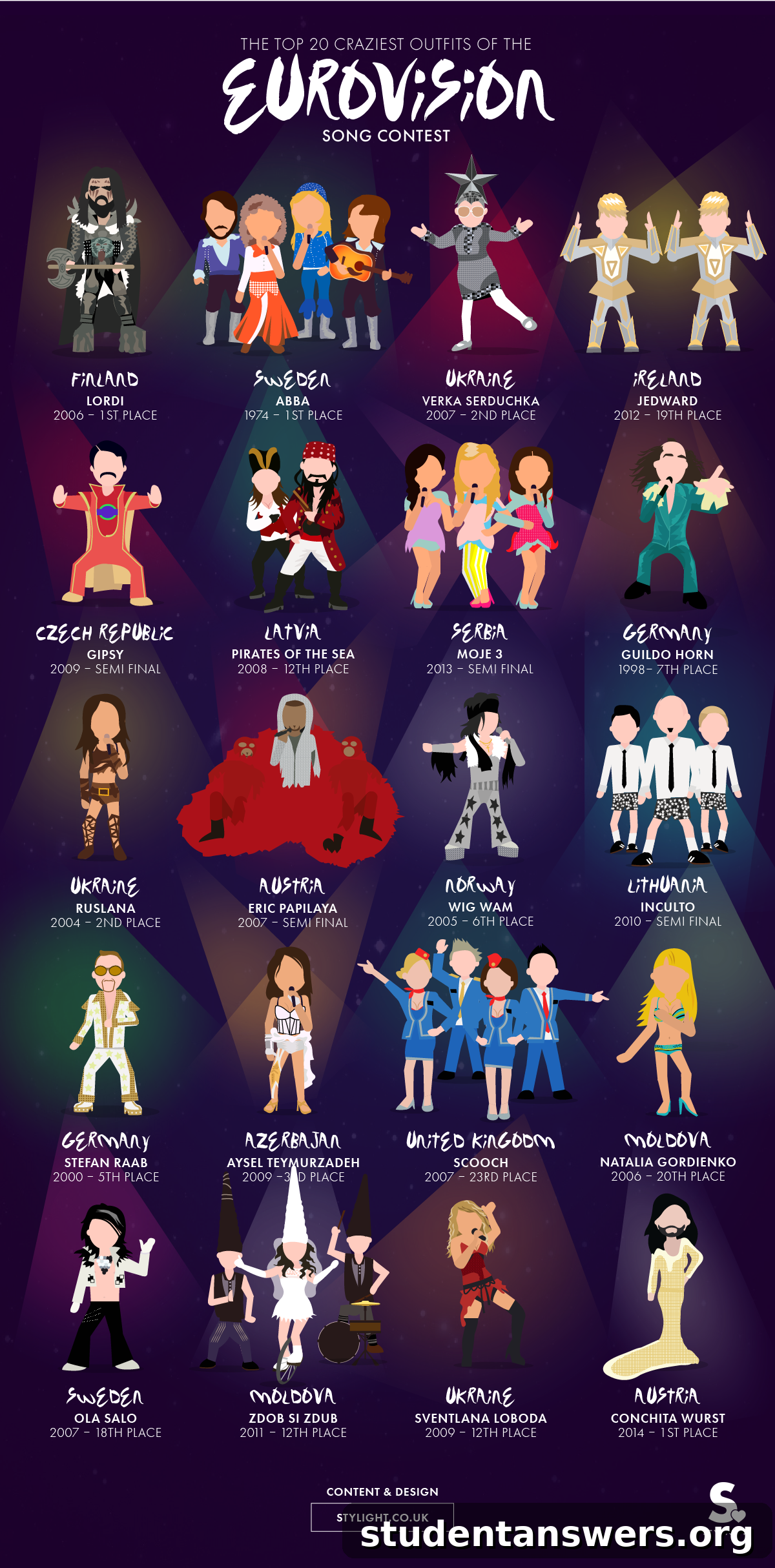
Perhaps the most shocking winners in Eurovision history, Finnish hard rock band Lordi shattered all conventions. They took to the stage in full-body monster prosthetics, looking like demonic orcs from a fantasy epic. With gruesome masks, rotting armor, and pyrotechnics, they performed “Hard Rock Hallelujah.” It was a stark contrast to the usual pop and ballad fare, and Europe loved it. Lordi proved that a bold, high-concept look, when paired with a powerful performance, could be an unstoppable combination, securing Finland’s first-ever victory.
Verka Serduchka (Ukraine, 2007) – The Human Disco Ball
Drag queen Verka Serduchka became an instant Eurovision icon with her unforgettable performance of “Dancing Lasha Tumbai.” Dressed head-to-toe in a silver foil-like material, complete with a massive star on her head, she resembled a sci-fi disco ball. Flanked by equally shiny backup dancers, her performance was a masterclass in high-energy camp. While she finished in second place, Verka’s look has become one of the most beloved and instantly recognizable in the contest’s history, a symbol of Eurovision’s joyful and chaotic spirit.
Conchita Wurst (Austria, 2014) – A Statement in Style
Conchita Wurst’s victory was a landmark moment for Eurovision. The drag artist, with her stunning floor-length golden gown, immaculate makeup, and signature beard, presented a look that was both classic Hollywood glamour and a powerful statement about identity and acceptance. The song, “Rise Like a Phoenix,” was a soaring Bond-esque ballad, and the visual presentation elevated it to something truly iconic. Conchita’s look wasn’t “crazy” for its absurdity, but for its boldness and the important conversation it sparked across the globe.
InCulto (Lithuania, 2010) – The Sequined Surprise
At first glance, Lithuania’s entry InCulto looked like a standard retro band in sharp suits. But midway through their funky song “Eastern European Funk,” they ripped off their trousers to reveal a dazzling secret: tiny, silver sequined hot pants. The audacious costume change was a moment of pure, unadulterated fun that perfectly encapsulated the song’s cheeky energy. While it didn’t win them the trophy, it certainly won them a place in the hearts of viewers who appreciate a good gimmick.
Gipsy.cz (Czech Republic, 2009) – The Superhero Mishap
Sometimes, a bold concept doesn’t quite land. Gipsy.cz from the Czech Republic attempted to capture votes with their lead singer dressed as “Super Gipsy.” The costume consisted of an ill-fitting red and yellow all-in-one suit, a flowing cape, and a rather unconvincing fake mustache. While intended to be comical, the performance came across as more awkward than entertaining, and the act unfortunately finished with the dreaded “nul points” in the semi-final. It serves as a cautionary tale that a gimmick needs to be backed by a strong overall performance.
Scooch (United Kingdom, 2007) – A Turbulent Fashion Choice
The UK has had its fair share of memorable, and often ridiculed, Eurovision entries. Scooch’s “Flying the Flag (For You)” is a prime example. Dressed as cabin crew in overly shiny, budget-airline-style outfits, their performance was filled with aviation-themed double entendres. The look was deliberately camp and cheesy, but for many, it crossed the line into cringeworthy territory, becoming a symbol of the UK’s troubled Eurovision run in the 2000s.
The Barbara Dex Award: An Honor for the Worst Dressed
The passion of Eurovision fans is so immense that they even created their own unofficial prize: the Barbara Dex Award. Named after the Belgian singer from the 1993 contest who wore a famously unflattering, self-made dress, this award is given to the contestant deemed the “worst dressed” each year. Far from being a mean-spirited joke, the award has become a badge of honor, a celebration of the bold, the bizarre, and the fashion choices that were so bad, they were good. It’s a testament to the idea that in Eurovision, making a memorable impression is a victory in itself.
Does a Crazy Outfit Actually Lead to Victory?
While a striking costume is guaranteed to get people talking, it is by no means a ticket to the top of the scoreboard. In fact, an analysis of recent winners reveals a different story. Winners like Måneskin (2021), Duncan Laurence (2019), and Salvador Sobral (2017) opted for more subtle, stylish, and authentic looks that complemented their music rather than overshadowing it. Their focus was on emotional connection and musical artistry.
For every Lordi or Conchita Wurst, where a powerful look amplified a winning song, there are dozens of acts whose elaborate costumes failed to compensate for a weaker entry. The data suggests that while a memorable outfit can help an act stand out during the semi-finals, the winners of the Grand Final often rely on a more holistic package: a strong song, a flawless vocal performance, and a charismatic stage presence. The costume is just one piece of the puzzle.
But where’s the fun in subtlety? We love Eurovision for its quirky performances and glorious fashion disasters. These moments of pure, unadulterated joy and absurdity are the lifeblood of the contest. They are what we talk about for years to come and what keeps us eagerly awaiting the next spectacular parade of style. As we look forward to the next contest, we can’t wait to see what new fashion frontiers will be explored.
They’re so bad they’re good… right?!