
Have you ever felt the pull between diving deep into a single passion and exploring a wide array of interests? In a world that often pressures us to specialize, many of us are naturally curious about various fields, from art and technology to business and sports. It can seem like a choice between being a “master of one” or a “jack of all trades.” But what if there was a way to get the best of both worlds?
Many of the most innovative and successful individuals throughout history, from Leonardo da Vinci to modern entrepreneurs, have demonstrated a powerful combination of deep expertise and broad knowledge. They don’t just stay in one lane; they build bridges between different disciplines. This approach isn’t just a coincidence; it’s a strategic way of thinking and learning.
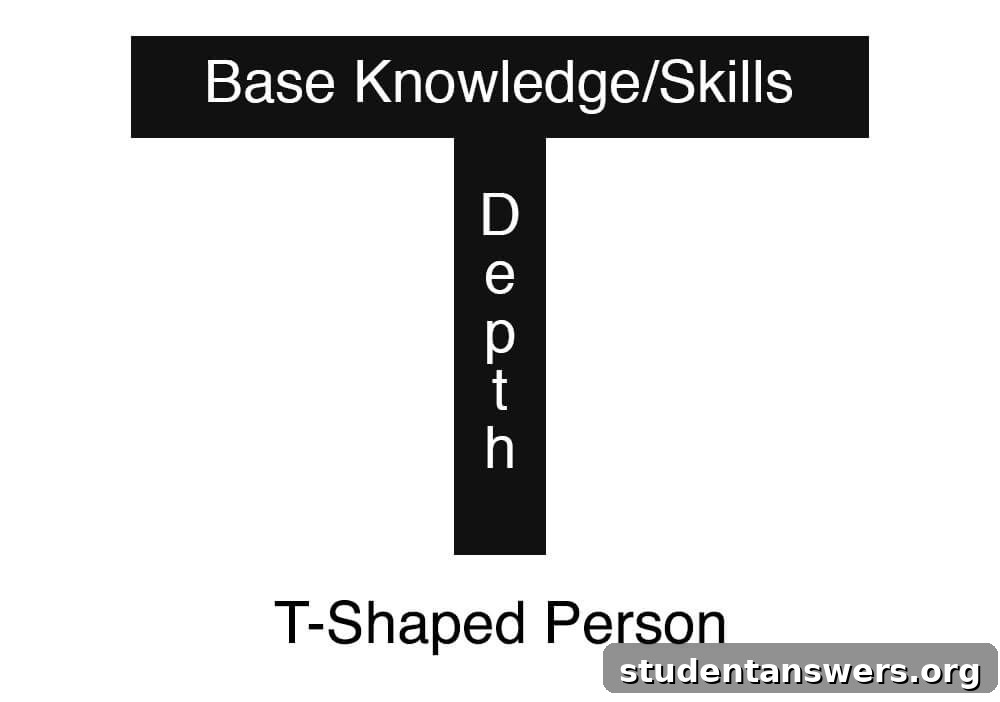
Fortunately, there’s a term for this powerful model of personal and professional development: the T-shaped person. This concept provides a compelling framework for anyone looking to build a versatile and valuable skill set. It’s about cultivating a core specialization while simultaneously nurturing a wide range of complementary abilities. This article will explore what it means to be a T-shaped individual, why it’s a crucial advantage in today’s world, and how you can strategically develop your own T-shaped profile.
What is a T-Shaped Person? A Simple Definition
The concept of a T-shaped person is an elegant metaphor for a specific type of skillset. It has nothing to do with physical attributes and everything to do with the structure of your knowledge and abilities. The definition is straightforward:
A T-shaped person combines deep expertise in a single field (the vertical stem of the “T”) with a broad base of knowledge and skills in many other areas (the horizontal bar of the “T”).
Visually, it’s easy to understand. The vertical part of the letter ‘T’ represents the depth of your skills in a primary discipline—your specialization. The horizontal bar represents your breadth of knowledge across various other domains. This combination makes you both an expert and a versatile collaborator.
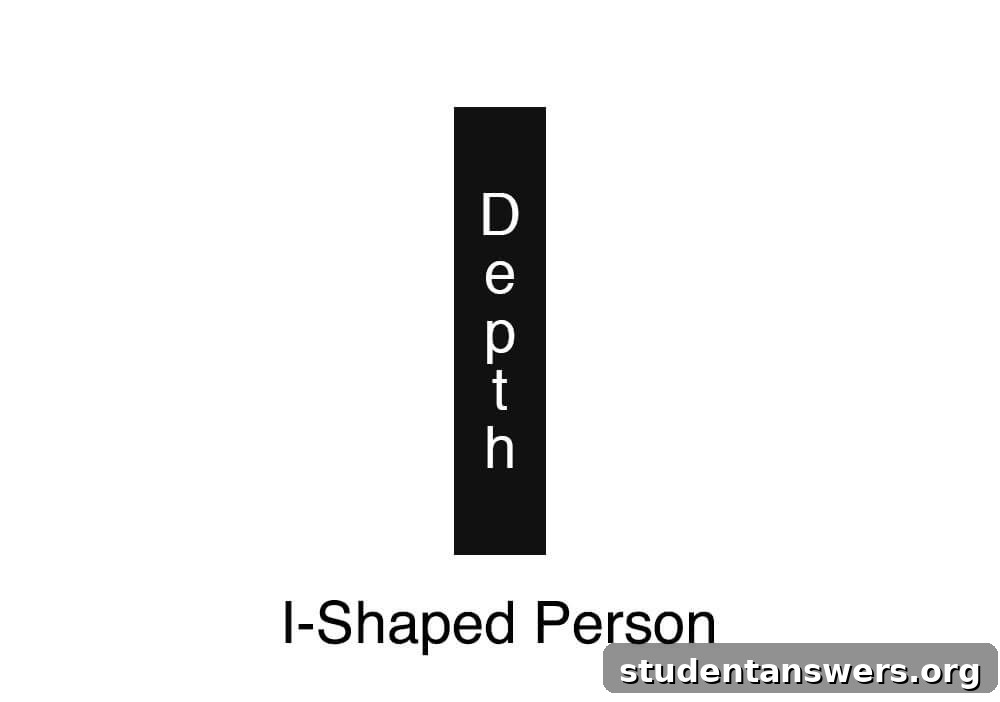
Of course, not everyone starts out this way. Many people begin their careers looking more like an “I-shaped person,” who is a deep specialist with limited knowledge outside their core field. They have significant depth but lack the broad context that fosters collaboration and innovation.
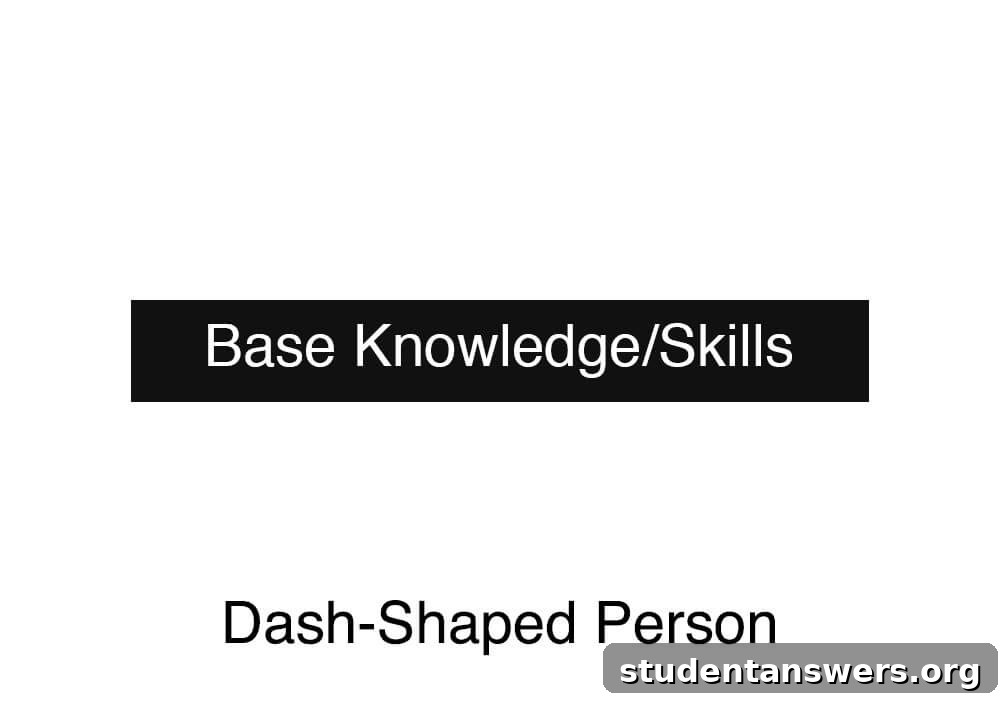
On the other end of the spectrum is the “dash-shaped person,” often called a generalist. This individual has a wide array of surface-level skills but lacks the deep expertise in any single area to be a true authority.
The T-shaped model is the ideal synthesis of these two extremes. It transforms the old saying, “Jack of all trades, master of none,” into a new, more powerful mantra: “A master of one, with the skills of many.”
The Core Benefits of Becoming a T-Shaped Professional
Adopting the T-shaped mindset offers profound advantages that extend from your personal growth to your professional success. By balancing depth with breadth, you unlock benefits that neither a pure specialist nor a pure generalist can access.
1. Enhanced Collaboration and Communication
Because you possess a broad base of knowledge, you can “speak the language” of experts in different fields. This foundational understanding allows you to communicate more effectively with designers, engineers, marketers, and analysts. You grasp their challenges and perspectives, making you an invaluable team member who can bridge departmental silos and foster genuine collaboration.
2. Boosted Creativity and Innovation
Groundbreaking ideas often emerge at the intersection of different disciplines. When you have a T-shaped skillset, you can connect disparate concepts in novel ways. Your knowledge of psychology might inform your marketing strategy, or your understanding of data analysis could revolutionize your approach to creative writing. This cross-pollination of ideas is the engine of innovation, helping you solve problems that specialists, confined to their own domain, might not even see.
3. Greater Career Resiliency and Adaptability
In a rapidly changing job market, hyper-specialization can be risky. Industries evolve, and specific roles can become obsolete. T-shaped professionals are far more resilient. Your core expertise makes you valuable, while your broad skills make you adaptable. If your primary field transforms, you can pivot by leveraging your other abilities, making you an attractive candidate for a wider range of roles.
4. Increased Job Satisfaction and Engagement
Focusing on a single area indefinitely can lead to burnout and monotony. The T-shaped model allows you to satisfy your intellectual curiosity. When you need a break from your deep work, you can explore one of your other interests, keeping your mind fresh and engaged. This variety not only prevents boredom but also fuels a lifelong love of learning.
5. You Become More Interesting and Influential
People with diverse interests and knowledge are inherently more interesting. In a job interview, networking event, or team meeting, your ability to discuss a range of topics makes you more memorable and relatable. This not only helps you build a stronger professional network but also enhances your ability to lead and influence others.
A Practical Guide: How to Become a T-Shaped Person

Embarking on the journey to become T-shaped is a rewarding, lifelong adventure. It begins with self-awareness and a strategic plan. Here is a step-by-step framework to guide you.
Step 1: Conduct a Thorough Self-Assessment
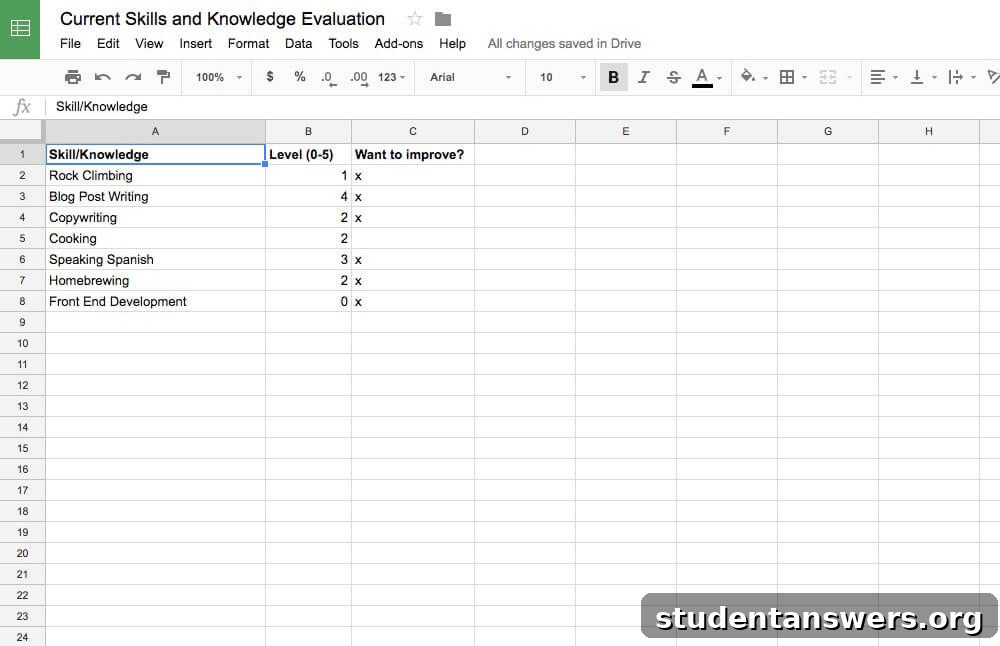
Before you can build, you need a blueprint. Start by mapping out your existing skills and knowledge. A simple spreadsheet is an excellent tool for this. List every skill you can think of, from programming and public speaking to graphic design and negotiation. Then, rate your proficiency in each area on a scale of 0 to 5.
- 0 – Unfamiliar: You know the name of the skill but have zero experience or knowledge.
- 1 – Novice: You’ve just started learning. You understand basic concepts but cannot perform independently.
- 2 – Advanced Beginner: You can perform basic tasks with guidance but still rely heavily on instructions.
- 3 – Competent: You can work independently and achieve reliable results. You understand when and how to apply your skills.
- 4. – Proficient: You have a deep understanding and can handle complex situations. You can guide others and see the bigger picture.
- 5 – Expert: Your skill is intuitive and second nature. You are a thought leader who can innovate and push the boundaries of the field.
This honest evaluation will give you a clear picture of your current “shape.”
Step 2: Define Your Ideal T-Shape
With your self-assessment complete, it’s time to decide what you want your “T” to look like. This involves four key decisions:
- Where to Go Deep (Your Stem): Identify the single area you want to master. This will be the vertical stem of your T. Choose something you are genuinely passionate about, as mastery requires long-term dedication. This could be your major, your current job function, or a new field you want to enter.
- What to Improve: Look at your existing skills (rated 1-3) and decide which ones you want to strengthen to build out your horizontal bar. These should ideally complement your core expertise.
- What to Add: Identify brand new skills (rated 0) that you want to learn. These could be skills that will make you more marketable, support your specialization, or simply satisfy a personal curiosity.
- What to Maintain: Not every skill needs constant improvement. Acknowledge the areas where your current proficiency is sufficient and requires only occasional practice to maintain.
Step 3: Develop a Strategic Learning Plan
Once you know where you’re going, you need a roadmap to get there. Here are some guiding principles for your learning plan:
- Mix Hard and Soft Skills: A robust T-shape includes both technical abilities (hard skills like coding or data analysis) and interpersonal traits (soft skills like communication, leadership, and emotional intelligence). Both are critical for success.
- Follow Your Genuine Interests: Intrinsic motivation is the most powerful fuel for learning. Pursue skills that fascinate you, not just those you think you *should* learn. Your passion will carry you through the difficult phases of learning.
- Read Widely and Voraciously: The easiest way to build the horizontal bar of your T is to read across a wide variety of subjects. Read books, articles, and studies from fields outside your own to build mental models and foster intellectual curiosity.
* Don’t Let Your Major or Job Define You: Your formal education or current role is just one part of your identity. Use your free time to explore skills outside of that box. A chemistry major can become a brilliant digital marketer, and an accountant can learn to be a skilled woodworker.
Step 4: Put Your Plan into Action
A plan is useless without execution. Here’s how to make your T-shaped development a consistent practice:
- Build Learning Habits: Integrate skill development into your daily or weekly routine. Dedicate specific blocks of time to practice, reading, or taking courses. Use tools like calendars or habit-trackers to hold yourself accountable.
- Embrace Project-Based Learning: The most effective way to learn is by doing. Instead of just reading about web development, build a personal website. Instead of just studying design theory, create a portfolio. Projects solidify your knowledge and give you tangible proof of your abilities.
- Seek Feedback and Evaluate Regularly: Periodically reassess your skills using your 0-5 scale. Teach what you’ve learned to someone else—it’s a fantastic way to expose gaps in your own understanding. Seek feedback from mentors or peers to guide your next steps.
- Give Your Specialization Extra Focus: While building your breadth is important, never neglect your depth. Dedicate the most significant portion of your learning time to your core specialty. Seek out mentors, attend advanced workshops, and push yourself to become a true expert.
Conclusion: Your Journey to Becoming a Versatile Expert

Committing to the T-shaped model is one of the most powerful investments you can make in your future. It’s a path away from the false choice between being a specialist and a generalist, and toward becoming a more creative, resilient, and valuable individual. The combination of deep expertise and broad knowledge will open doors you never knew existed, both professionally and personally.
This journey requires curiosity, discipline, and a commitment to lifelong learning. There will be challenges, but the rewards—a fulfilling career, sustained intellectual engagement, and the ability to make a unique impact on the world—are well worth the effort. Start building your “T” today.
Image Credits: featured, multiple paths, field notes