
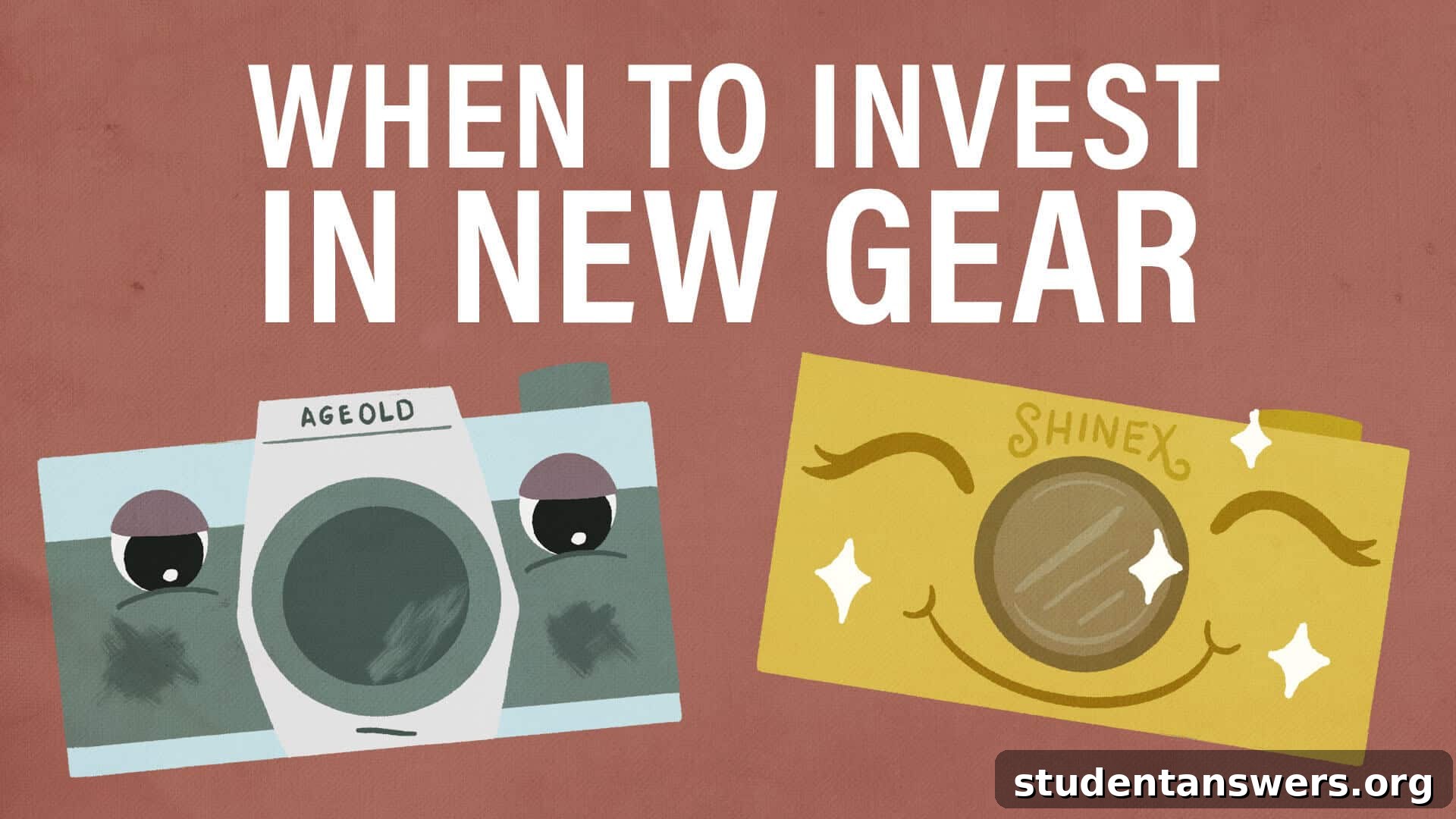
Shiny Object Syndrome: Is New Gear a Shortcut to Success or a Detour from Hard Work?
There’s an undeniable thrill that comes with unboxing a brand-new tool. Whether it’s a gleaming camera lens, a lightning-fast computer, or a promising online course, we often feel a surge of motivation. It feels like this new acquisition is the missing piece, the very thing that will unlock the next level of our skill or hobby. We imagine ourselves suddenly becoming more productive, more creative, and more successful. But how often is that feeling a reality, and how often is it just a fleeting illusion?
Unfortunately, more often than not, these shiny new toys are simply fun distractions. They provide a temporary high, making us feel like we’re making progress without requiring us to engage in the challenging, often tedious, work of actual improvement. The act of purchasing becomes a substitute for the act of practicing. This phenomenon, often called “Shiny Object Syndrome,” can be a significant barrier to genuine growth.
In this comprehensive guide, we’ll explore the difference between a strategic investment and a costly distraction. We aim to equip you with the mindset to know when a new purchase is a genuine catalyst for improvement and when it’s merely a placeholder for the hard work you need to be doing. By the end, you’ll be able to make smarter decisions about your tools, your time, and your path to mastery.
The Psychology Behind the Purchase: Why We Crave New Tools
To understand how to overcome this tendency, we first need to explore why we’re so drawn to new things in the first place. The appeal goes far beyond simple utility; it’s deeply rooted in our psychology. When we buy something new related to a goal, our brain gives us a rewarding hit of dopamine. This chemical rush makes us feel good, reinforcing the behavior. We associate the purchase with the positive feeling of progress, even if no real progress has been made.
This creates an “illusion of progress.” You haven’t actually improved your photography skills, but buying a professional-grade lens makes you feel like a professional photographer. You haven’t written a single line of code, but subscribing to a “Masterclass in Python” makes you feel like a developer. This is a cognitive trap. Announcing your goals or making a preparatory purchase can give you a premature sense of completion, satisfying the brain’s desire for achievement and reducing your motivation to do the actual work.
Marketing also plays a massive role. Companies are experts at tapping into our insecurities and aspirations. They sell us the dream, not just the product. Advertisements show us what’s possible with their tool, implying that the tool itself is the key, rather than the skill of the person using it. It’s a powerful narrative that’s easy to buy into, especially when we’re struggling or feeling stuck.
When an Upgrade Is Justified vs. When It’s a Procrastination Tactic
So, how can you distinguish a necessary tool from a tempting distraction? The key is to shift your focus from what a tool promises to what problem it solves. A purchase is often a form of procrastination when you haven’t yet mastered the fundamentals with the equipment you already own. A beginner guitarist doesn’t need a $3,000 custom-shop guitar; they need to practice their scales and chords on the instrument they have. A new writer doesn’t need the most advanced writing software; they need to establish a consistent writing habit.
Before making your next big purchase, conduct an honest self-assessment. Ask yourself these critical questions:
- Have I reached the absolute limit of my current gear? Are you consistently running into technical limitations that are actively preventing you from executing your vision? For example, is your computer so slow that it crashes every time you try to edit a video, making your workflow impossible? Or is your current camera physically unable to perform in the low-light situations you need to shoot in? If your tool is the bottleneck, an upgrade may be justified.
- What specific problem will this new purchase solve? Don’t think in vague terms like “it will make me better.” Be specific. “This faster processor will cut my video rendering time in half, saving me five hours a week,” is a valid reason. “This new camera has a cool feature I might use someday,” is not.
- Could I achieve a similar result by improving my skills? Often, the perceived limitations of our tools are actually limitations in our knowledge. Before buying a new lens for better portraits, have you truly mastered lighting and composition with the lens you already have? Before buying a productivity app, have you tried implementing a simple, non-digital system first?
- Am I buying this to solve a problem or to feel a certain way? Be honest. Is the purchase driven by a genuine need, or is it an emotional response to frustration, boredom, or a desire for a quick fix?
True progress comes from pushing your existing tools to their breaking point. When you know your equipment inside and out and have exhausted its capabilities, that’s when you have earned the right to upgrade. An upgrade should be a reward for your hard work, not an excuse to avoid it.
The Trap of Educational Hoarding: When Learning Becomes Procrastination
This same principle extends beyond physical gear to educational resources like books and online courses. The internet has made learning more accessible than ever, but it has also created a new form of “shiny object syndrome”: knowledge hoarding. It’s incredibly easy to buy a dozen courses on a platform like Udemy or Skillshare during a sale, feeling wonderfully productive as you fill your digital library. The problem is, owning a course is not the same as completing it and applying its lessons.
This behavior is another clever form of procrastination. It allows you to feel like you’re working toward your goal without ever taking the first risky step of creating something. You tell yourself, “I’ll start my YouTube channel as soon as I finish this course on video editing,” or “I’ll launch my business after I take one more marketing class.” This “just one more course” mentality can become a perpetual cycle that prevents you from ever starting.
To make your educational investments count, follow these guidelines:
- Learn with a specific project in mind. Don’t just learn for the sake of learning. Enroll in a course because you need a specific skill to complete a project you are actively working on. This “just-in-time” learning is far more effective because you immediately apply what you learn, which helps solidify the knowledge.
- Implement as you go. Don’t passively watch hours of video tutorials. Watch a lesson, pause it, and immediately practice the technique or concept. Build the muscle memory and practical experience alongside the theoretical knowledge.
- Commit to one resource at a time. Resist the urge to jump between multiple books and courses on the same topic. Choose one comprehensive resource and see it through to completion before moving on. Finishing one course and applying its lessons is infinitely more valuable than starting ten and finishing none.
Episode Sponsors and Resources
This discussion is supported by platforms dedicated to genuine skill-building. When used correctly, they can be powerful tools for growth:
- Skillshare: With a vast library of over 27,000 courses, Skillshare is an incredible resource for learning a wide range of skills. The key is to use it strategically. Find a course that addresses a specific need for a current project. You can explore it with 2 free weeks of unlimited learning.
- Brilliant: This platform focuses on building foundational skills in math, science, and computer science through interactive problem-solving. It’s the epitome of active learning, forcing you to engage with concepts rather than just passively consuming them. Start for free and see how it can sharpen your thinking.
Key Resources and Tools from the Episode
Here are some other valuable resources mentioned that can help you on your journey of skill development and productivity:
- Thomas’ Productivity course on Skillshare
- How to Be Good at Everything — The Rapid Skill Learning Process
- 10 Essential Life Skills That Every Student Should Have
- Why You Shouldn’t Tell People About Your Goals
- Potato Jet on YouTube
- Duet Display (iOS)
- This is How Matt D’Avella Works
- How to Stop Feeling Tired in the Afternoon
- Matty Brown’s Low Budget Filmmaking course on Skillshare
- italki (iOS | Android)
- Essentialism: How to Do More by Doing Less
- Essentialism: The Disciplined Pursuit of Less, by Greg McKewon
- How to Actually Use Productivity Tips and Improve Your Life
- 5 Questions: Keeping Track of Bills, Coasting, and Moving to a New City
- Let’s Talk About Minimalism
- The Life-Changing Magic of Tidying Up, by Marie Kondō
- Udemy
You can find an even broader collection of tools and recommendations on my Resources page.
Episode Timestamps:
- 0:03:14 – How buying new gear makes you think you’re improving
- 0:10:42 – Discussing some of our own gear-buying experiences
- 0:22:02 – Sponsor: Skillshare (Focusing on learning new skills)
- 0:24:17 – Sponsor: Brilliant (Focusing on problem-solving skills)
- 0:26:27 – Continuing the discussion on gear and its purpose
- 0:27:17 – Identifying the right time to genuinely upgrade your gear
- 0:39:38 – The value of investing in education and, crucially, applying what you learn
- 0:54:01 – Practical advice for getting started with a new hobby without overspending
- 1:09:56 – The pros and cons of buying online courses
- 1:12:18 – Final thoughts and conclusion
Conclusion: Invest in Practice, Not Just Products
The next time you feel the pull of a shiny new object, pause and reflect. Acknowledge the desire, but question its origin. Is this a genuine need that will remove a significant obstacle from your path, or is it a desire for a shortcut around the hard work? True mastery is forged in the hours of deliberate practice, the consistent effort, and the perseverance through challenges. Tools are important, but they are only amplifiers of the skill you possess. Without the underlying skill, the best tool in the world is useless.
Focus on mastering what you have. Fall in love with the process, not just the products associated with it. When you do, you’ll find that your growth is more sustainable, your skills are more profound, and your wallet is a little heavier. And when the day comes that you truly need to upgrade, the purchase will feel earned, purposeful, and genuinely empowering.
If this discussion resonated with you, consider diving deeper by listening to the full podcast episode. Subscribe to the podcast on iTunes to get new episodes automatically. It’s a great way to support the show and continue your journey of learning and self-improvement.