
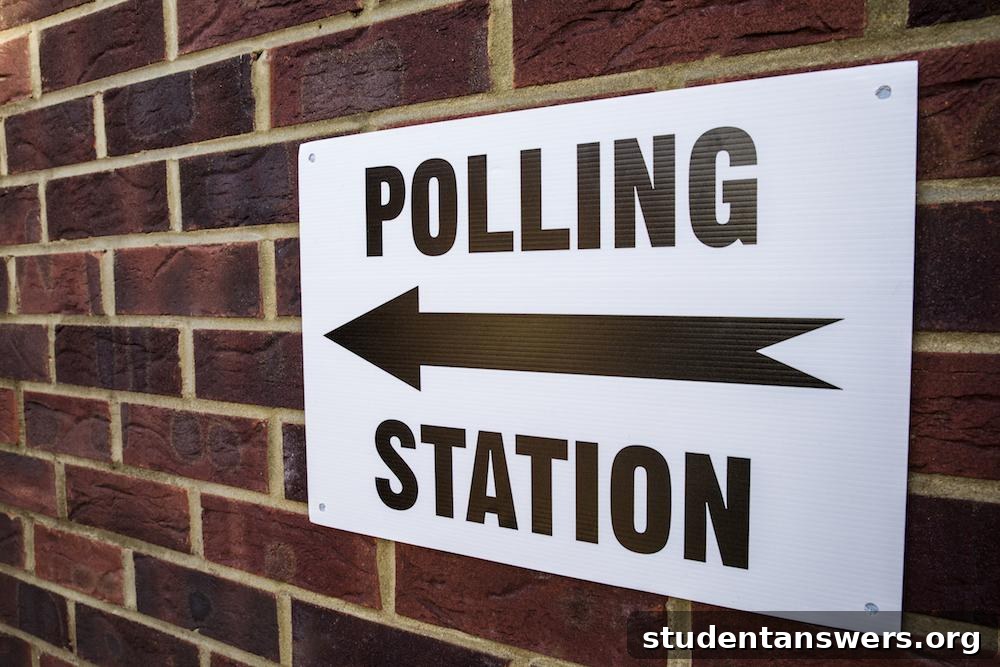
As exam season collides with a general election, it’s tempting to stay buried in textbooks. But here’s why making a trip to your local polling station is the most important test you’ll take this year.
If you’ve recently turned 18, chances are your political engagement has taken a backseat to navigating student life, deadlines, and the occasional cheap bottle of wine. Let’s be honest: aside from a nudge from your parents to get on the electoral roll, the right to vote might not have been your top priority. With revision schedules packed and stress levels high, a surprise general election can feel like the last thing you need. But what if it’s exactly what you need?
This is a critical moment. Now more than ever, understanding the political landscape—who the key players are, what their policies mean, and how they will directly impact your future—is essential. It’s your opportunity to make an educated, informed decision that will resonate for years to come. This isn’t just another date on the calendar; it’s your chance to shape the country you will graduate into.
Bridging the Gap: Why Young Voter Turnout is Crucial
When faced with a big decision, many of us turn to our friends. Yet, mentioning the upcoming election in a student common room can often be met with indifference or comments like, “politics is boring.” It quickly becomes clear that the question isn’t who to vote for, but if they will vote at all. This sentiment isn’t isolated. Statistics from past elections paint a worrying picture. For instance, voting intention surveys have shown that youth turnout can be dramatically lower than that of older generations. In the 2015 general election, Ipsos MORI found that only 43% of 18-24 year olds cast their vote, a stark contrast to the 78% of those aged 65 and over.
What’s even more significant is the long-term impact of this apathy. Professor Michael Bruter of the London School of Economics suggests that voting habits are cemented within an individual’s first two elections. If a young person doesn’t vote in their first couple of opportunities, they are far less likely to become a regular voter later in life. This creates a dangerous cycle where future governments may face serious issues of legitimacy and accountability because a huge segment of the population is disengaged. We have the power to break this cycle and establish a positive habit before it’s too late.
Your reason for voting doesn’t have to be a grand, elaborate political statement. You don’t need a perfectly rehearsed argument on the nuances of foreign policy to place an ‘X’ on a ballot paper. As one A-level student, Emily Jays, put it: “I’m voting because I want a government that will give me the best opportunities to achieve educationally, despite social class background sometimes making that difficult.” Your motivation can be that simple and that personal. It’s about securing the best possible future for yourself and your peers.
A Defining Issue for Students: The Battle Over Tuition Fees
With nearly half of all young people in the UK now attending university, higher education is undeniably a major political battleground. If you’re a student reading this, you’re either already navigating the costs of university or you’re deep in revision, hoping to secure a place. Either way, the policies surrounding higher education will have a direct and lasting financial impact on your life. As one first-year politics student noted, “It’s essential more young people vote and take an interest in the issues that will affect them most.”
Let’s break down how the major parties have typically approached this key issue.
Labour’s Pledge: Abolishing Tuition Fees
Historically, the Labour Party has positioned itself as a champion for students by making bold promises on education funding. A flagship policy has often been the complete abolition of university tuition fees in England. Their proposals have included plans to free students from paying up to £9,250 per year, funded by increasing taxes on corporations or high earners. Such a policy would mean that students starting their courses could potentially have their first-year fees written off retrospectively, with fees being completely abolished through legislation from the following year onwards.
The Conservative Stance: Inflation-Linked Rises
Under a Conservative government, tuition fees have typically been maintained and subject to increases. Legislation has previously been passed to allow fees to rise annually in line with inflation until a set date. This means the cost of a degree would continue to climb year after year. The party has also generally remained committed to the system of postgraduate loans for master’s and PhD courses, providing a pathway for further study but also further debt.
The Liberal Democrats’ Position: A Focus on Maintenance Grants
The Liberal Democrats have often taken a middle-ground approach. After facing significant criticism for backtracking on a pledge to scrap fees in the past, the party has since ruled out making such an expensive promise again. Instead, their focus has often shifted towards reintroducing maintenance grants for the most disadvantaged students. The argument is that this provides targeted support to those who need it most, helping with living costs which can be as significant a barrier as the fees themselves.
Other Parties’ Proposals
Of course, the political landscape is broader than just the main three parties. UKIP has previously pledged to scrap tuition fees, but with the caveat that it would only be for students pursuing specific STEM subjects. The Green Party has consistently advocated for a fully funded education system, which includes abolishing undergraduate tuition fees entirely. Meanwhile, in Scotland, the SNP has already established a system where Scottish and EU students receive free university tuition, demonstrating that alternative models are possible.
Navigating the Noise: How to Make an Informed Choice
Trying to get a clear picture of politics from the internet can feel overwhelming. A quick search for information can leave you wading through dense articles filled with jargon like ‘austerity’ and ‘economic forecasts,’ making you feel more confused than when you started. It’s easy to throw your hands up and say, “I don’t get it.” But the truth is, you don’t have to be an expert to make a good decision. The best approach is to listen to what the politicians and parties have to say for themselves and build your understanding from there.
The major political parties publish manifestos before an election—these are documents outlining their key promises and vision for the country. Taking half an hour out of your revision schedule to read the summaries can be incredibly enlightening. You can also watch televised leader debates or interviews where politicians are questioned by journalists and the public. These moments reveal how leaders perform under pressure and clarify their positions on important issues.
You’ll find that different parties have vastly different priorities. One party might focus on creating a strong economy and managing national debt, believing this is the foundation for a prosperous society. Another might prioritize social justice, focusing on building “a country for the many, not the few,” with policies aimed at reducing inequality and strengthening public services. By looking at their core messages, you can decide which vision aligns most closely with your own values and the kind of society you want to live in.
From Clicks to Crosses: Turning Online Activism into Action
A ‘like’ on Facebook is not a vote. A retweet is not a vote. This is a concept that our generation, so accustomed to digital interaction, can sometimes overlook. We are incredibly active online, sharing memes, engaging in debates, and following political figures by the hundreds of thousands. Political parties have massive online followings, with some leaders attracting nearly a million likes on their official pages. While this online buzz is great for raising awareness, a ‘favourite’ or a ‘follow’ does not translate into a ballot cast.
Until a secure electronic voting system is introduced, the only way to make a tangible difference is to physically go to a polling station and mark a piece of paper. Aggressively tweeting your frustration about student loans or the job market is a way to vent, but voting is the way to enact change. Essentially, the right to vote is the right to complain with legitimacy. If you don’t take the time to research the parties and cast your ballot, you lose the right to grumble about the outcome. If you do vote, and your chosen party doesn’t win, you can—in true British fashion—enjoy whinging about the government for the next five years, guilt-free, knowing you fulfilled your democratic duty.
Make Your Mark: Your Voice, Your Future
While students may sometimes get a bad reputation for political apathy, our generation is passionate about our futures, our communities, and the world we are inheriting. The decisions made by the next government will affect everything from graduate job prospects and housing affordability to climate change policy and the cost of a pint at the student union.
As we have seen in recent political events, polls can be wrong and outcomes can be unpredictable. Every single vote matters. That’s why it is so imperative that you make your voice heard. Take a short break from the library, step away from the flashcards, and use your power. If the major issues of education cuts, career prospects, or tuition fees aren’t enough to motivate you, then perhaps the smaller, everyday costs will. Whatever your reason, the most important thing is that you participate.
Your vote is your voice. Don’t let others decide your future for you. Register to vote, and on election day, make sure you get down to your local polling station and make your mark.