

Upgrade Your Style with a Free TM Lewin Suit
The Ultimate Student’s Guide to Buying Your First Suit
As you transition from student life to the professional world, certain milestones demand a new level of presentation. Your first major job interview, the long-awaited graduation ceremony, or a formal university ball—these are moments that call for more than your everyday attire. They call for your first suit. A well-chosen suit is not just an outfit; it’s an investment in your future, a statement of intent, and a powerful tool for making a memorable first impression. This guide will walk you through everything you need to know about selecting, styling, and caring for your first suit, ensuring you look sharp and feel confident for every important occasion.
Why Every Student Needs a Great Suit
You might think a suit is something you can put off buying until you’ve landed a job, but having one ready in your wardrobe is a strategic advantage. Key events in a student’s life often come with little notice, and being prepared can make all the difference.
- Job Interviews: In a competitive job market, first impressions are critical. Arriving in a sharp, well-fitting suit demonstrates professionalism, respect for the opportunity, and shows that you take yourself and your potential career seriously. It projects an image of confidence and competence before you even say a word.
- Graduation Ceremonies: This is a landmark achievement, a day of celebration with family, friends, and faculty. Wearing a suit under your gown honours the significance of the occasion and ensures you look your best in photos that you’ll cherish for a lifetime.
- University Balls and Formal Events: University life is filled with formal events, from society dinners to end-of-year balls. A versatile suit allows you to attend these functions in style, fitting in seamlessly while expressing your personal taste.
- Networking Events: Career fairs and networking sessions are your chance to connect with industry professionals. Dressing professionally helps you stand out and be remembered for the right reasons, opening doors to future opportunities.
A Nod to Timeless Quality: The T.M. Lewin Story
When considering where to buy your first suit, it’s wise to look at brands with a legacy of quality and craftsmanship. T.M. Lewin is a perfect example. The story begins in 1898 on Jermyn Street, a London hub that quickly became synonymous with the world’s finest tailors. The founder, Mr. Thomas Mayes Lewin, was a true innovator in the menswear industry.
At a time when shirts were pulled on over the head, T.M. Lewin introduced the pioneering ‘coat-shirt’—a garment with buttons all the way down the front. This design was revolutionary and served as the prototype for the modern shirt we all wear today. This spirit of innovation, combined with an unwavering commitment to quality, established the brand’s reputation.
While fashions have evolved dramatically over the last century, the core principles of T.M. Lewin—excellent craftsmanship, superior materials, dedicated service, and outstanding value—have remained constant. They still employ many of the traditional manufacturing techniques developed over 100 years ago, ensuring each garment is built to last. Today, with nearly 100 stores across the UK and a growing global presence, T.M. Lewin continues to be a trusted destination for those seeking timeless style and enduring quality, making it an excellent choice for a student’s first significant sartorial investment.
Your Step-by-Step Guide to Choosing the Perfect First Suit
Walking into a store to buy a suit can be intimidating. With so many options, fabrics, and fits, it’s easy to feel overwhelmed. Follow these steps to demystify the process and find a suit that you’ll be proud to wear.
1. Set Your Budget
Before you start shopping, decide how much you can comfortably spend. A first suit doesn’t need to cost a fortune, but it’s worth investing in the best quality you can afford. A well-made suit will last longer and look better over time. Look for brands that offer a good balance of price and quality. A budget between £150 and £300 can get you a fantastic, durable wool-blend or pure wool suit from a reputable retailer, especially during sales seasons.
2. Nail the Fit: The Most Crucial Element
Fit is everything. An inexpensive suit that fits perfectly will always look better than a designer suit that’s too big or too small. Pay close attention to these key areas:
- Shoulders: The shoulder seam of the jacket should end exactly where your natural shoulder does. If it extends beyond, the jacket is too big. If it bunches up, it’s too small. This is the hardest part of a suit to alter, so get it right from the start.
- Jacket Closure: With the top button (on a two-button suit) or middle button (on a three-button suit) fastened, you should be able to slide your hand comfortably between the jacket and your shirt. If it pulls into an “X” shape, it’s too tight.
- Sleeve Length: Your jacket sleeves should end right at your wrist bone, allowing about a half-inch of your shirt cuff to be visible. This creates a clean, polished look.
- Jacket Length: Stand with your arms at your sides. The bottom of the jacket should end around the middle of your hand or where your knuckles are.
- Trouser Waist: The trousers should sit comfortably on your waist without needing a belt to hold them up. A belt should be an accessory, not a necessity.
- Trouser Break: The “break” is the slight fold of fabric that occurs at the bottom of your trousers where they meet your shoes. For a modern, clean look, aim for a slight or no break, meaning the trousers just skim the top of your shoes.
3. Choose a Versatile Color
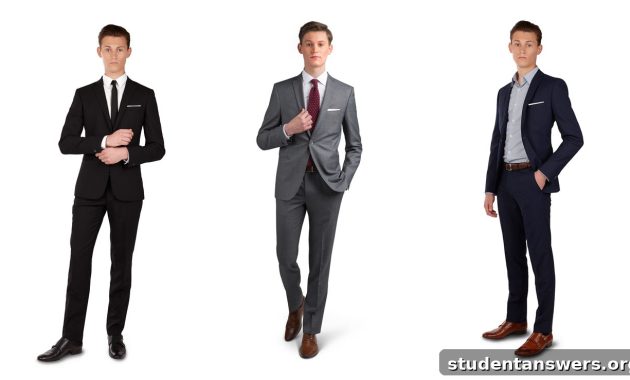
For your first suit, versatility is key. You want a color that is appropriate for any occasion, from a corporate interview to a formal wedding. The two best choices are:
- Navy Blue: Universally flattering and professional, a navy suit is the workhorse of menswear. It’s formal enough for any interview but can also be dressed down by wearing the jacket and trousers as separates.
- Charcoal Grey: Another classic and highly versatile option. Charcoal grey is just as formal as navy but offers a slightly different tone. It pairs well with both black and brown shoes, giving you more styling options.
While black might seem like a safe choice, it’s often considered too formal for business settings and is typically reserved for funerals or black-tie events.
4. Understand the Fabric
The fabric of a suit affects its breathability, durability, and overall appearance. For a first suit, 100% wool is the gold standard. It’s a natural, breathable fiber that resists wrinkles and drapes beautifully. It’s suitable for year-round wear. Wool blends (like wool-polyester) can be more affordable and durable, but may not be as breathable. Cotton and linen suits are great for warmer weather but wrinkle easily, making them less ideal for a versatile first suit.
Beyond the Suit: Assembling the Full Outfit
A suit is only the beginning. The right accessories are essential to completing the look and showing that you have an eye for detail.
- The Shirt: A crisp, well-fitting dress shirt is non-negotiable. Start with two essential colors: classic white and light blue. Ensure the shirt fits well in the collar (you should be able to fit two fingers between the collar and your neck) and the sleeves are the correct length.
- The Tie: Your tie is a chance to inject some personality. For professional settings, opt for a classic silk tie in a conservative color like navy, burgundy, or a subtle pattern like stripes or pin dots. The width of your tie should be in proportion to the width of your suit lapels.
- The Shoes: Your shoes anchor the entire outfit. A pair of classic leather dress shoes is a must. Oxfords are the most formal and a perfect choice for interviews. Derbys are slightly more casual but still very appropriate. For a navy or charcoal suit, dark brown or black shoes are your best options.
- The Belt: A simple rule to follow: your leather belt should match the color of your leather shoes. A slim, simple leather belt is the perfect finishing touch.
- Socks: Your socks should ideally match the color of your suit trousers. This creates a seamless line that visually elongates your legs. Avoid white athletic socks at all costs.
Caring for Your Investment
Once you’ve invested in a quality suit, proper care is essential to ensure it lasts for years. Follow these simple tips:
- Use a Proper Hanger: Always hang your suit jacket on a wide-shouldered wooden hanger to maintain its shape. Hang the trousers by the cuff or folded over the hanger bar.
- Give it a Rest: Avoid wearing the same suit on consecutive days. This gives the fabric time to breathe and recover its shape.
- Brush, Don’t Wash: After wearing, use a soft-bristled clothes brush to remove any dust or lint. This is much gentler than frequent cleaning.
- Steam, Don’t Iron: If your suit is wrinkled, use a garment steamer instead of a hot iron, which can damage the fabric fibers.
- Dry Clean Sparingly: Only dry clean your suit when it’s visibly dirty or has an odor, typically no more than once or twice a year. The chemicals used in dry cleaning can be harsh on the fabric over time.
Conclusion: Dress for the Future You Want
Buying your first suit is a rite of passage. It marks a transition towards new responsibilities and exciting opportunities. By focusing on fit, choosing a versatile color and fabric, and investing in quality from a trusted brand like T.M.Lewin, you’re not just buying clothes—you’re acquiring a key piece of your professional identity. This suit will be your armor for your first big interview, a symbol of your achievement at graduation, and your ticket to looking sharp at any formal event. Wear it with confidence, and you’ll be ready to conquer whatever comes next.