

In today’s competitive job market, an online portfolio is no longer a luxury—it’s your most powerful career tool. Think of it as a dynamic, interactive resume that does more than just list your experiences; it showcases your skills, accomplishments, and professional journey. While a traditional resume tells people what you can do, a portfolio shows them. You’ve invested countless hours honing your craft, and now it’s time to display the results in a way that captivates and convinces potential employers and clients.
You might feel the urge to simply drop a few links onto a basic webpage, but to truly stand out, your portfolio needs to be a thoughtfully curated exhibition of your best work. This comprehensive guide will walk you through everything you need to know. We’ll explore why nearly every professional needs a portfolio, how to create one that aligns with your career goals, and provide outstanding examples to spark your creativity and inspire your own digital masterpiece.
Why Every Professional Needs an Online Portfolio
We live in a digital-first world where your online presence often precedes your physical one. Before an interview or a meeting, recruiters and clients are likely to search for you online. A professional portfolio allows you to control that narrative and make a stellar first impression. Imagine being in an employer’s position: would you prefer a candidate who simply lists their skills, or one who provides tangible proof of their capabilities? A well-crafted portfolio builds trust and credibility instantly.
While some fields are inherently visual, making a portfolio an obvious necessity, its importance spans across almost every industry. Here are some professions where a compelling online portfolio is absolutely essential:
- Photographers & Videographers: Your work is visual. A gallery or video reel is the only way to truly demonstrate your style and technical skill.
- Architects & Interior Designers: Showcase your projects through high-quality images, blueprints, and 3D renderings to bring your designs to life.
- Graphic & Web Designers: Your portfolio is a direct reflection of your design sense. The website itself becomes a key piece in your collection.
- Artists & Illustrators: A digital gallery allows you to reach a global audience and display the breadth and depth of your creative talent.
- Marketing & Advertising Professionals: Display successful campaigns, ad copy, and social media results to prove your ability to drive growth.
- Web Developers & Software Engineers: Provide links to live sites, GitHub repositories, and detailed case studies that walk through your coding process.
- Writers, Editors, & Content Creators: An organized collection of your best articles, blog posts, or copy proves your command of language and your niche expertise.
The bottom line is simple: if you create, build, design, write, or problem-solve, you need a portfolio to showcase the value you bring.
Creating a Powerful Portfolio for Non-Visual Work
A common misconception is that portfolios are only for “creative” professionals. But what if your work involves data analysis, project management, or scientific research? The great news is that you can—and should—still have a powerful portfolio. It’s about demonstrating your process, expertise, and results, regardless of the format.
An online portfolio will set you apart from a sea of candidates who rely solely on a one-page resume. Here are several effective ways to showcase your accomplishments in a non-visual field:
Case Studies
Case studies are one of the most effective ways to demonstrate your problem-solving abilities. They allow you to tell a story: you present a problem, outline the steps you took to address it, and detail the successful outcome. This format shows employers your thought process and how you apply your skills in real-world scenarios. A well-written case study is a testament to your strategic thinking and expertise.
Research and Analysis
Are you a history major, a political scientist, or a market researcher? Your ability to gather, analyze, and synthesize complex information is a highly valuable skill. Your portfolio can feature abstracts of your research papers, links to full publications, or summaries of key findings. This proves your analytical prowess and subject matter authority to potential employers in academia, law, and beyond.
Lab Reports and Technical Documents
For those in STEM fields like nursing, pre-med, or engineering, your time is precious. You can easily repurpose existing work like lab reports, technical specifications, or project documentation. By converting these documents to PDFs and featuring them on your site, you provide concrete evidence of your technical knowledge, attention to detail, and methodical approach.
Presentations and Public Speaking
Almost every professional field requires strong communication skills. If you’ve created compelling presentations for a class or a previous job, don’t let them gather digital dust. You can embed a slideshow directly onto your website. For an even greater impact, include a video of you delivering the presentation. This showcases your public speaking skills, confidence, and ability to engage an audience.
Certifications and Credentials
If your industry values specific certifications, your portfolio is the perfect place to display them. You can create a dedicated section for your credentials, listing accomplishments like “Google Ads Certified” or “Certified Project Management Professional (PMP).” Including a digital badge or a screenshot of the certificate adds a layer of authenticity and immediately signals your qualifications to visitors.
How to Build Your Online Portfolio: A Step-by-Step Guide
Now that you’re convinced of the “why,” let’s dive into the “how.” Building a portfolio doesn’t have to be an overwhelming task. By breaking it down into manageable steps, you can create a professional and effective online presence.
Step 1: Create Your Personal Website
Your personal website is the foundation of your online brand. It’s your digital headquarters, a space you own and control. Unlike a social media profile, a personal website gives you complete freedom over the design, content, and user experience. It’s a living document that you can update instantly, ensuring it always reflects your latest achievements.
If you don’t have a website yet, make this your top priority. Building one is more accessible than ever with platforms like WordPress, Squarespace, and Wix. For a comprehensive walkthrough, our ultimate guide to building a personal website is an excellent place to start.
Step 2: Curate Your Best Work
Remember, your portfolio is a highlight reel, not an archive. The goal is to impress, which means you must be selective. Resist the temptation to include every project you’ve ever completed. Instead, focus on quality over quantity. Choose 5-10 of your strongest pieces that best represent your skills and the type of work you want to do in the future.
As you select your pieces, ask yourself: Does this work demonstrate a key skill? Am I proud of the outcome? Does it align with my career goals? If you’re hesitant about a piece, it’s probably best to leave it out. A smaller collection of outstanding work is far more impactful than a large, mediocre one.
Choosing Your Platform: Custom Design vs. Pre-Built Themes
Once you’ve selected your best work, you need to decide how to present it. You have two main options: designing and building your portfolio from scratch or using a pre-built theme or template. Each path has its own set of advantages.
Building from Scratch
If you’re a web developer, UI/UX designer, or have strong coding skills, building your portfolio from the ground up is a fantastic opportunity. The website itself becomes a testament to your abilities. It demonstrates your technical proficiency, attention to detail, and design aesthetic before a visitor even looks at your individual projects. However, if your design or coding skills aren’t polished, a poorly executed custom site can create a negative impression. Always get feedback from trusted peers before you launch.
Using Free WordPress Themes
For most professionals, a pre-designed theme is a lifesaver. It allows you to create a beautiful, functional portfolio quickly and without needing to code. Website builders like WordPress offer thousands of themes. Here are a few excellent free options tailored for portfolios:
Ignis
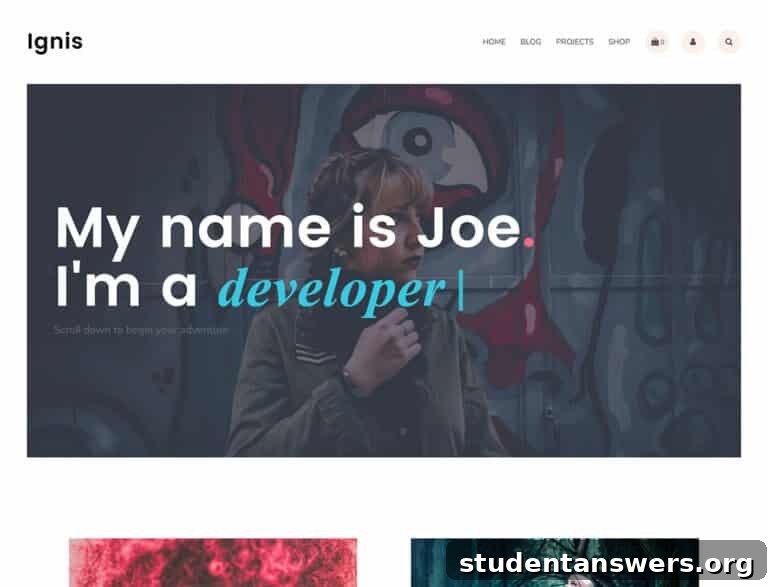
Ignis features a sleek, minimalist design that makes your work the star of the show. Its bold typography creates a strong visual impact, and its backend is organized for easy portfolio management.
Photomania
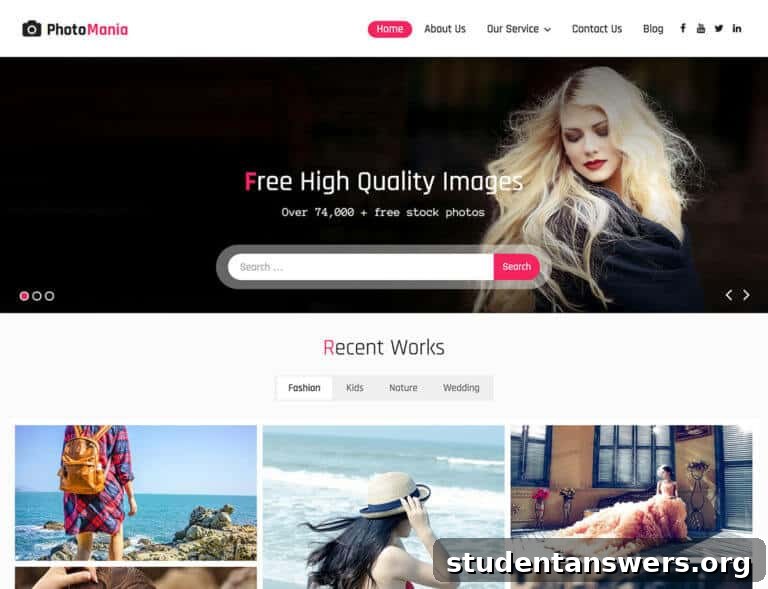
As the name suggests, this theme is built specifically for photographers. It offers a fully responsive design and customizable features like logos, colors, and fonts to match your brand.
Portfolio
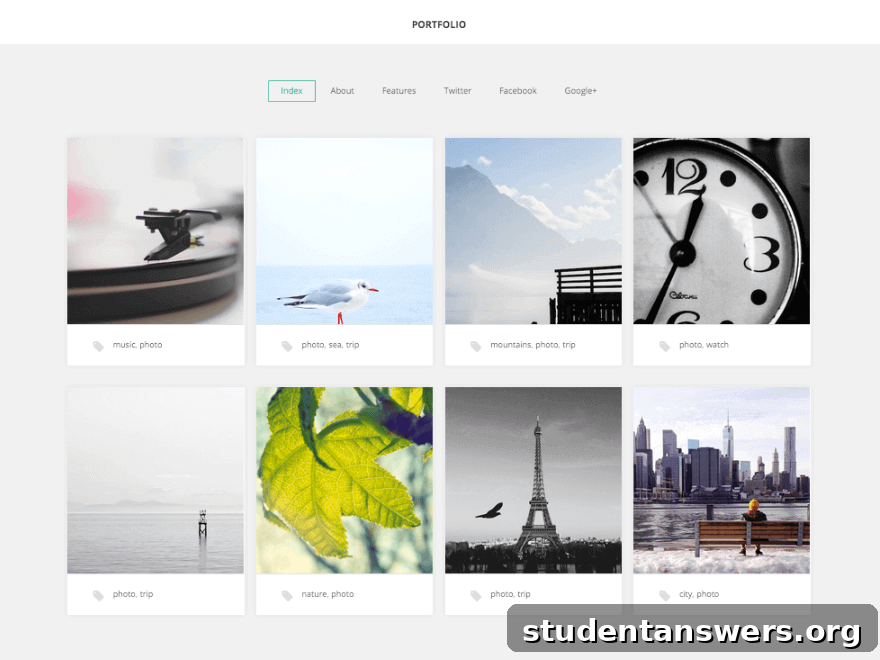
This theme is perfect for those who want a clean, straightforward presentation. It’s a minimalist option that still allows for customization with color schemes and animations if you want to add a personal touch.
Additional Portfolio Builders
WordPress isn’t your only option. Several other platforms are designed specifically for creating stunning portfolios with ease:
- Adobe Portfolio: Coming from the leader in creative software, this tool is powerful and intuitive. It integrates seamlessly with Behance and includes web hosting.
- PortfolioBox: An in-browser tool that gives you everything you need to create a professional portfolio website without mixing and matching templates for different pages.
- Jimdo: A versatile website builder that caters to all types of creatives, offering a range of beautiful templates and helpful examples to guide you.
What to Include in Your Portfolio: The Core Components
A great portfolio is clear, concise, and easy to navigate. While you can add many features, there are three non-negotiable elements every portfolio must have.
1. A Compelling Introduction
Who are you and what do you do? Answer this question clearly and concisely on your homepage. Avoid long, rambling life stories. A sharp, one- or two-sentence introduction, paired with a professional headshot, is all you need. Your introduction should be a value proposition—how do you help clients or employers?
Example: “Hi, I’m Jane Smith, a front-end developer who builds responsive and user-friendly websites that help businesses grow their online presence.”
2. Your Work, Presented with Context and Results
This is the heart of your portfolio. How you present your work is just as important as the work itself. For each project, you must provide context and results.
- Context: Briefly explain the project. What was the goal? What was your specific role? Was it a client project, a personal endeavor, or a school assignment? This helps visitors understand the circumstances.
- Results: This is where you sell yourself. Don’t just show the final product; explain the impact it had. Did you increase sales by 20%? Did you reduce user bounce rate? Did the client love the work? Use quantifiable data whenever possible. For qualitative results, testimonials are incredibly powerful.
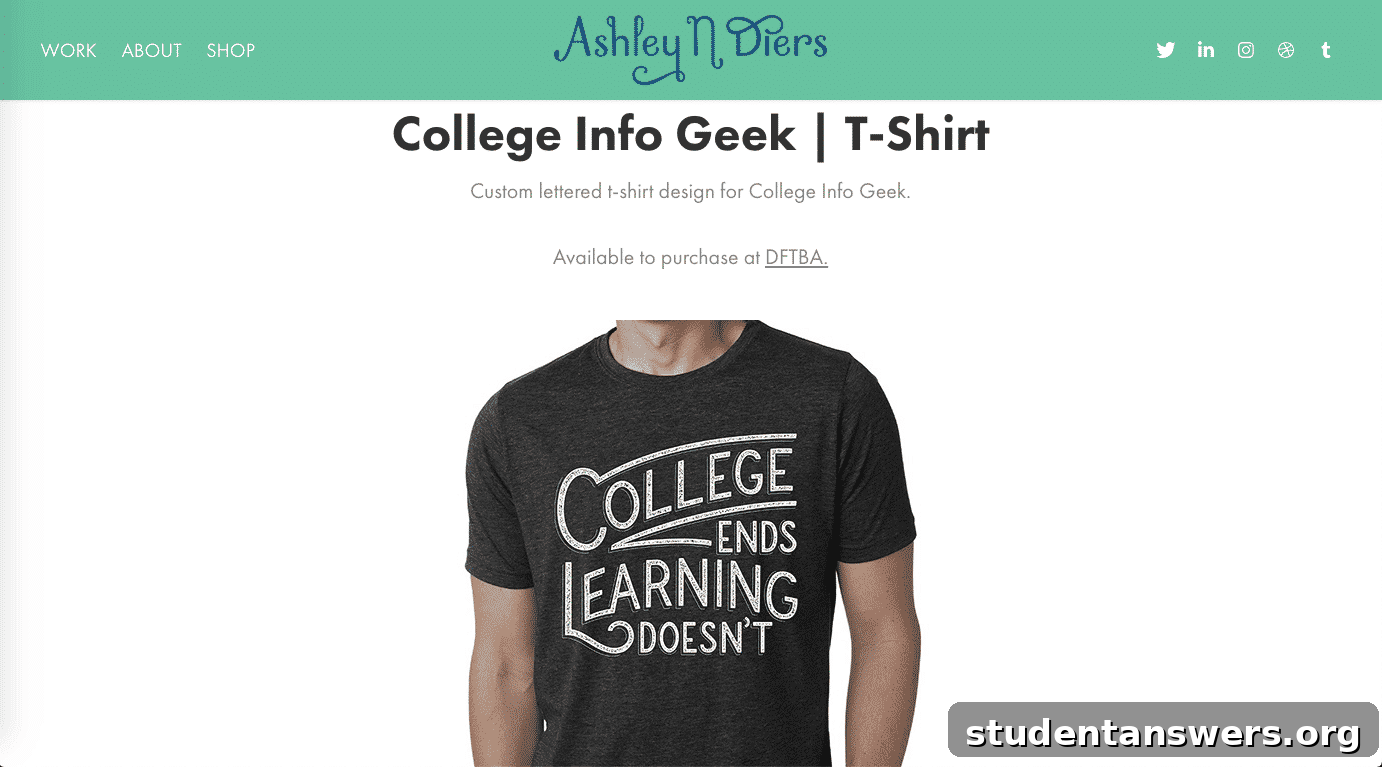
3. An Easy-to-Find Contact Page
After you’ve wowed visitors with your work, you need to make it incredibly easy for them to get in touch. A dedicated contact page is a must. You can include a simple contact form, list your professional email address, and add links to relevant social media profiles like LinkedIn. Remove any friction and give them a clear path to reach out for their next project or job opening.
Inspiration: Excellent Portfolio Examples to Learn From
Sometimes the best way to start is by seeing what others have done well. Here are a few fantastic portfolio examples that nail the fundamentals.
Kristin Wong
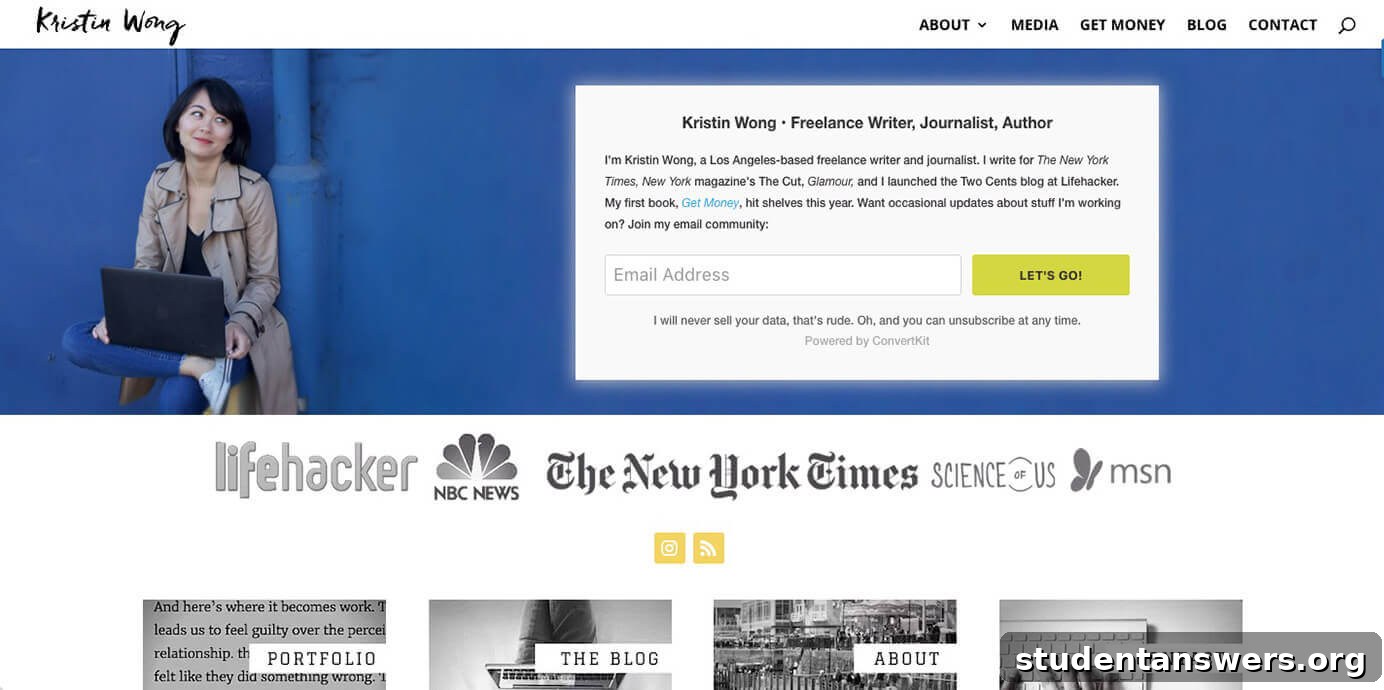
Kristin’s website is a masterclass in efficiency for a writer. Everything a visitor needs—portfolio, blog, about, and contact—is accessible from the homepage. The inclusion of logos from major publications she’s written for acts as immediate social proof, building credibility instantly.
Michael Tunney
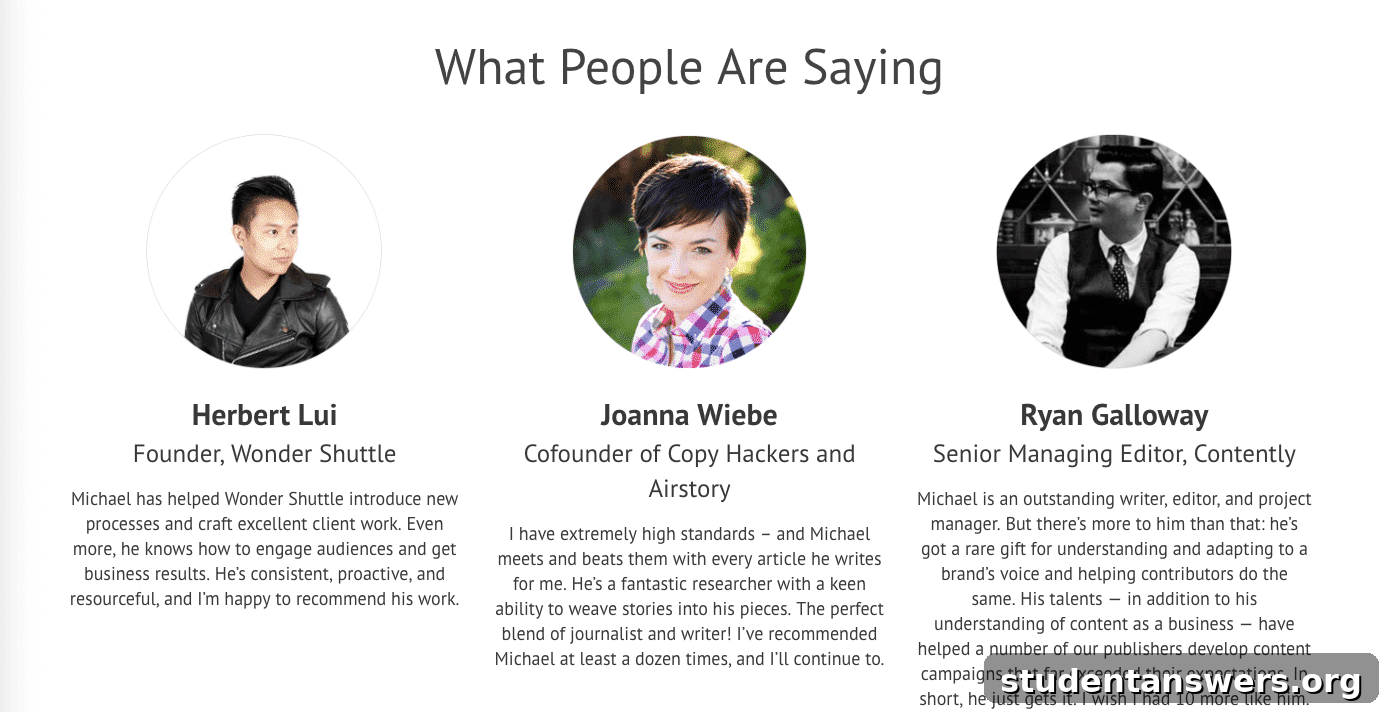
Michael understands the power of testimonials. His website features a simple yet effective section dedicated to client feedback. Placing this social proof prominently on the homepage ensures that visitors immediately see evidence of his successful collaborations and happy clients.
Dan Birman
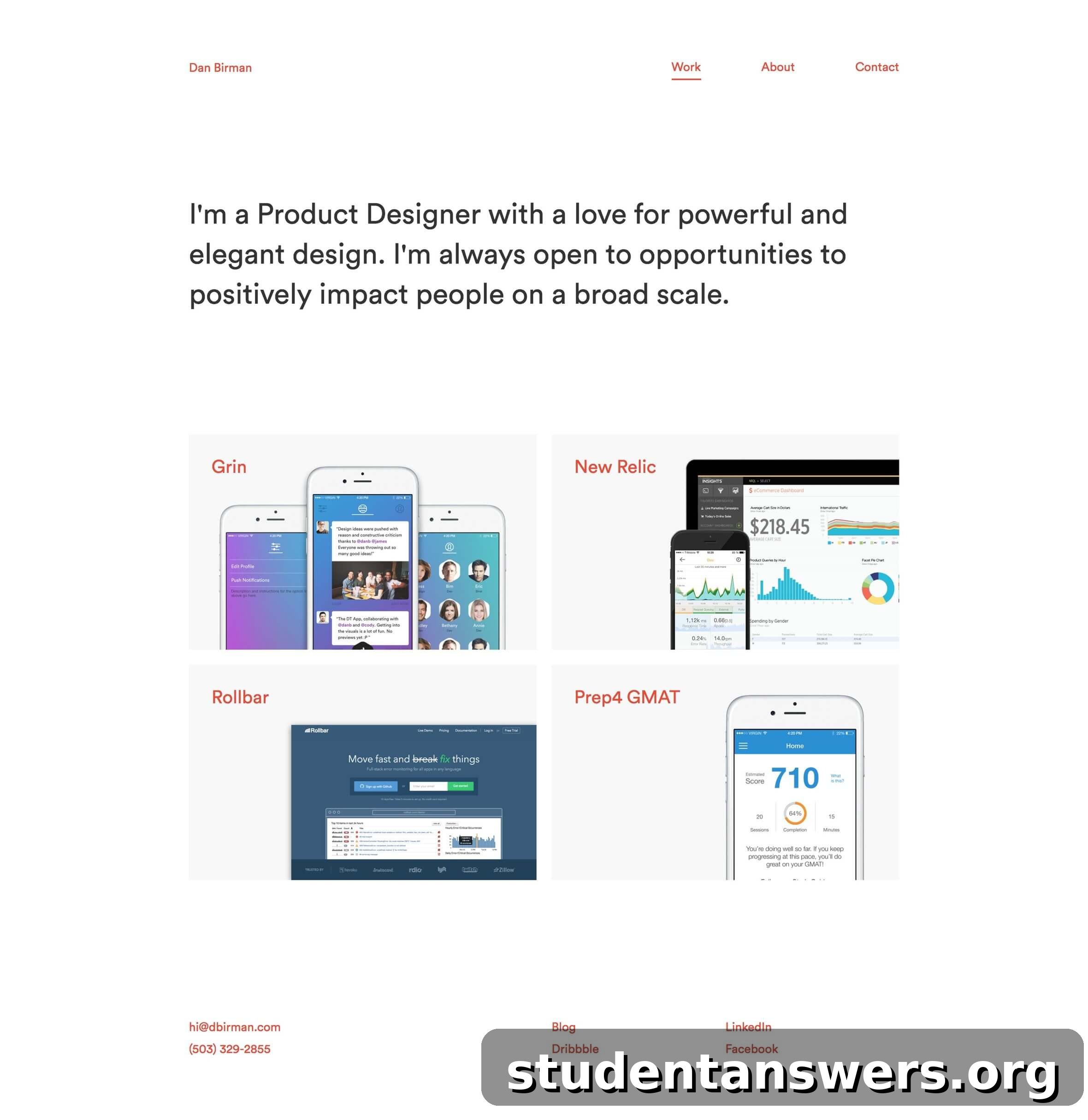
Dan’s portfolio is a brilliant example of “less is more.” As a product designer at Uber, his work is complex, but his portfolio is clean, minimalist, and free of jargon. This design choice proves that when your work is strong, you can let it speak for itself without any unnecessary fluff.
Your Next Step: Start Building
This guide has provided you with the blueprint for creating or refining your online portfolio. You now have the strategies, tools, and inspiration to build a digital presence that truly represents your skills and ambitions. If you need more ideas, check out our list of 50 awesome personal website examples for even more inspiration.
Your future career opportunities are waiting. It’s time to build the portfolio that will open those doors.