

In today’s competitive landscape, whether you’re a student aiming for your first job or a professional seeking new opportunities, a personal website is no longer a luxury—it’s a necessity. It’s your digital headquarters, a dynamic space to showcase your skills, narrate your story, and truly differentiate yourself from the sea of generic resumes. A well-crafted website can capture the attention of recruiters and open doors to incredible opportunities.
However, the journey of building a personal website can feel daunting. Beyond the technical setup, you’re faced with endless choices in design, layout, and content. Where do you even begin? The best way to overcome this paralysis is to seek inspiration from those who have done it well.
By studying great examples, you can gather ideas, understand current design trends, and find a style that authentically represents you. This process ensures your online presence feels modern, professional, and compelling, rather than like a relic from the early days of the internet.
To help you on this journey, we have curated a comprehensive list of 49 exceptional personal website examples from various industries and professions. For each website, we’ll break down precisely what makes it effective and what lessons you can apply to your own project. Think of this as your personal lookbook for web design and branding inspiration.
Let this collection spark your creativity and give you the confidence to build a website you’re proud of. When you’re ready to bring your vision to life, our step-by-step guides can walk you through the entire process, making it simpler than you ever imagined.
Let’s dive into the examples!
Inspiring Websites from Public Figures
First, we’ll explore a curated selection of websites from well-known public figures. This group includes influential entrepreneurs, creators, and authors. While their scale may be different, their websites offer powerful lessons in branding, content strategy, and user engagement that anyone can learn from.
Gary Vaynerchuk
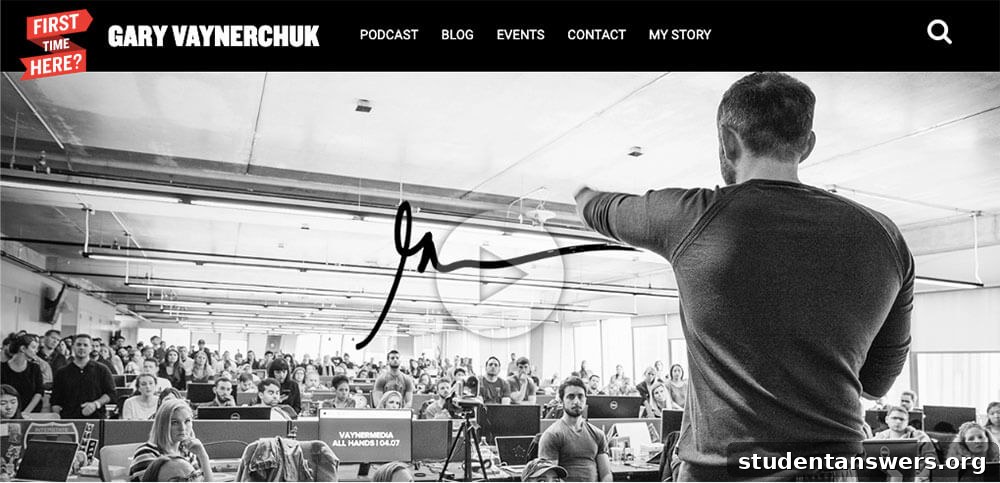
Gary Vaynerchuk is a powerhouse entrepreneur and CEO of VaynerMedia. His brand is built on high energy and direct communication, and his website perfectly mirrors this persona. It’s bold, dynamic, and unapologetically Gary.
- Key Takeaway: Leverage a Feature Video. The homepage immediately confronts you with a powerful video of Gary in his element. This isn’t just a clip; it’s a statement. It establishes his authority and energy instantly. If you have a compelling video—a presentation, a demo, or a personal introduction—placing it front and center can make a memorable first impression. Ensure it’s high-quality to bolster, not undermine, your credibility.
Hank Green
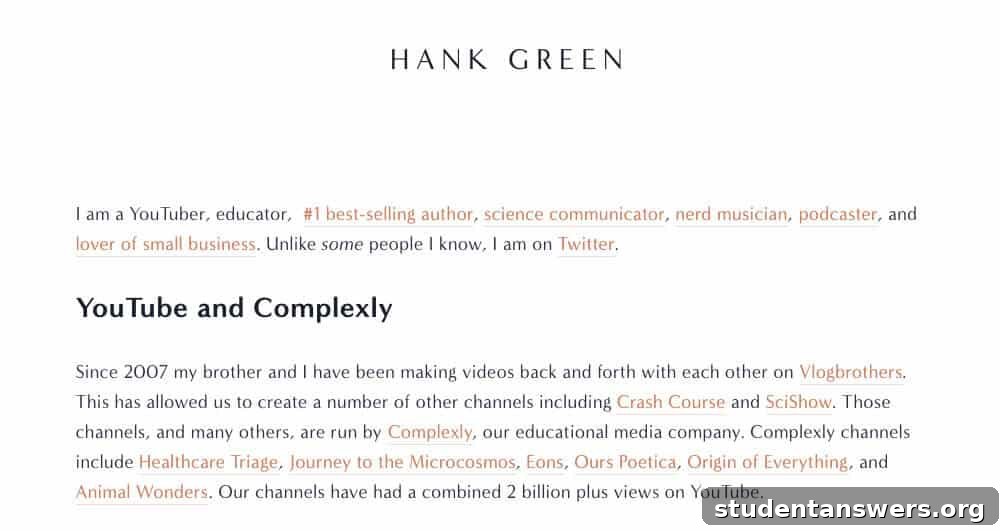
Hank Green is an internet pioneer, co-founder of numerous educational and entertainment projects, and a celebrated author. His work spans a wide range of fields, and his website acts as the central hub for all his endeavors.
- Key Takeaway: Showcase Projects with Personality. Hank has an extensive portfolio, but his homepage presents it with remarkable simplicity and a touch of humor. Each project is listed clearly, allowing visitors to easily navigate his digital ecosystem. This is a perfect example of how your website can serve as a “home base” that elegantly connects all your different ventures.
John Green
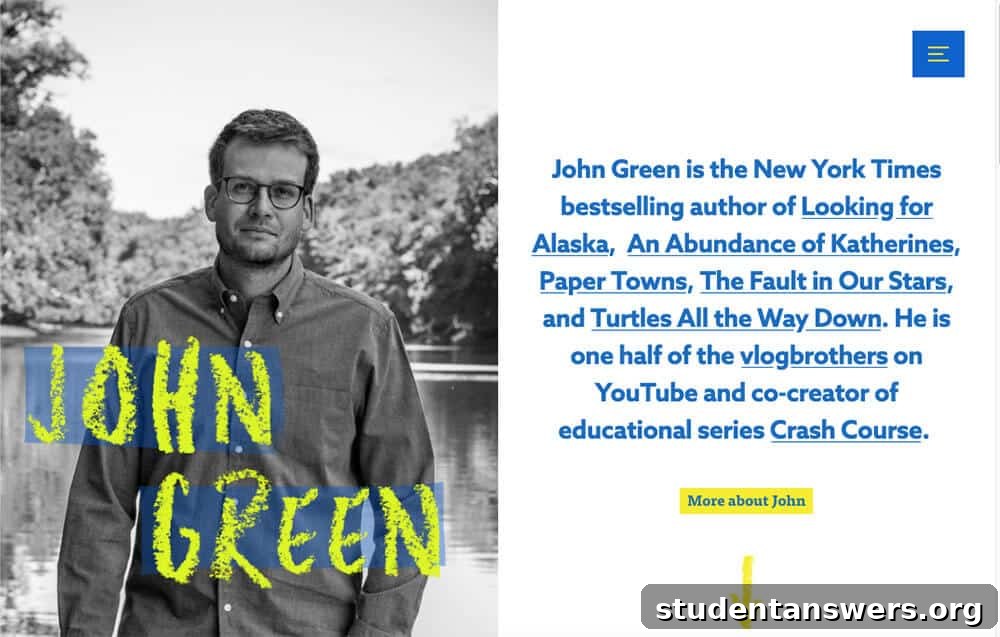
As the other half of the Vlogbrothers, John Green is a world-renowned author of bestselling novels. His website is primarily focused on his literary work, offering a masterclass in direct and effective communication.
- Key Takeaway: Master the Compact Summary. Within a single, concise paragraph, John’s website tells you everything you need to know about his major accomplishments. It provides links to his books and key projects without overwhelming the visitor. This approach is incredibly valuable for any personal site. Craft a brief, powerful summary of who you are and what you do, and provide clear next steps for those who want to learn more.
Teju Cole
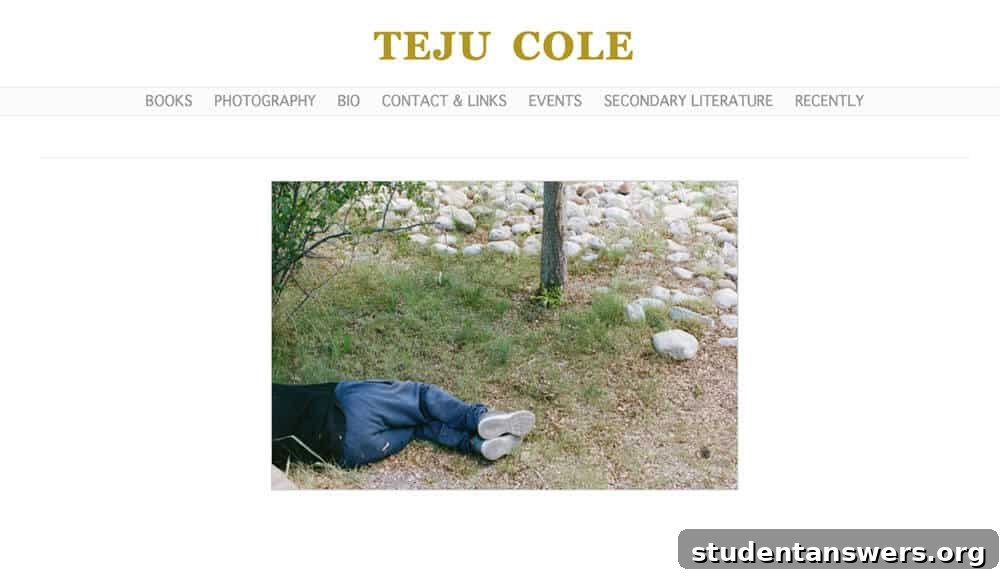
Teju Cole is a celebrated novelist, photographer, and essayist. His website is a reflection of his artistic and intellectual sensibilities—clean, elegant, and visually driven. It provides a fascinating contrast to John Green’s site, showing how two authors can create vastly different yet equally effective online presences.
- Key Takeaway: Showcase a Variety of Work with Style. Cole is a multi-talented creative, and his site elegantly balances his different pursuits. The homepage features one of his striking photographs, immediately establishing his visual artistry, while clear navigation directs visitors to his writing and other projects. This demonstrates how to present a diverse portfolio in a cohesive and sophisticated manner.
Ali Abdaal
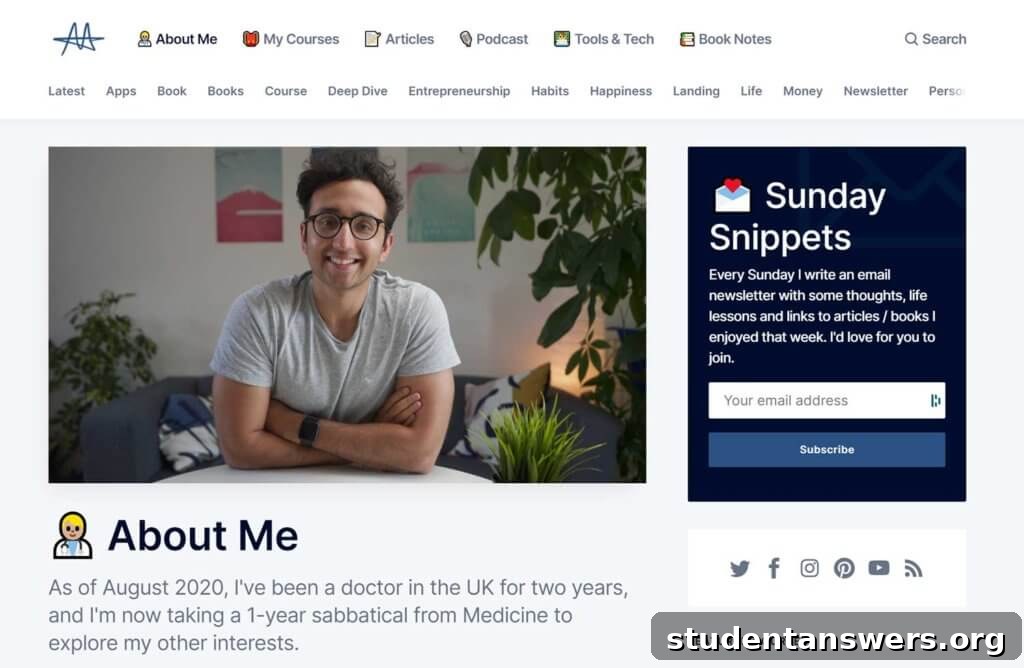
Ali Abdaal is a doctor, YouTuber, and productivity expert. His website is a testament to the power of content. With a clean, Notion-inspired design, it serves as a massive resource for his audience on topics ranging from studying to personal finance.
- Key Takeaway: Build a Content-Rich Hub. Ali’s site is far more than a simple online business card. It’s a library of value, featuring blog posts, podcast episodes, and book notes. By consistently publishing useful content, he strengthens his personal brand and creates numerous entry points for new visitors to discover his work through search engines.
Josh Kaufman
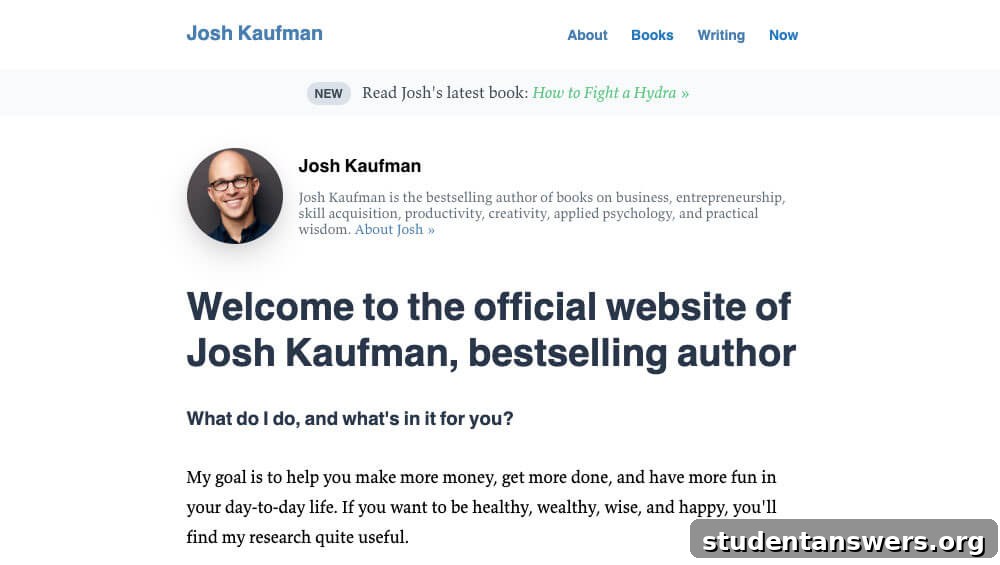
Josh Kaufman is the author of The Personal MBA, a book that demystifies business principles. His website is designed not just to showcase his accomplishments but to actively serve his audience.
- Key Takeaway: Explain How You Can Help. Instead of simply listing his books, Josh frames his expertise around the visitor’s needs by answering the question, “what’s in it for you?” This reader-centric approach builds trust and shows a genuine commitment to providing value, making visitors more likely to engage with his work.
Effective Websites for Solo Professionals
Next, we’ll examine websites from solo professionals, including freelancers, consultants, and small business owners. These examples are particularly instructive for anyone looking to market their skills or services online. They offer valuable insights into personal branding, client acquisition, and building a professional online presence.
Grant Baldwin
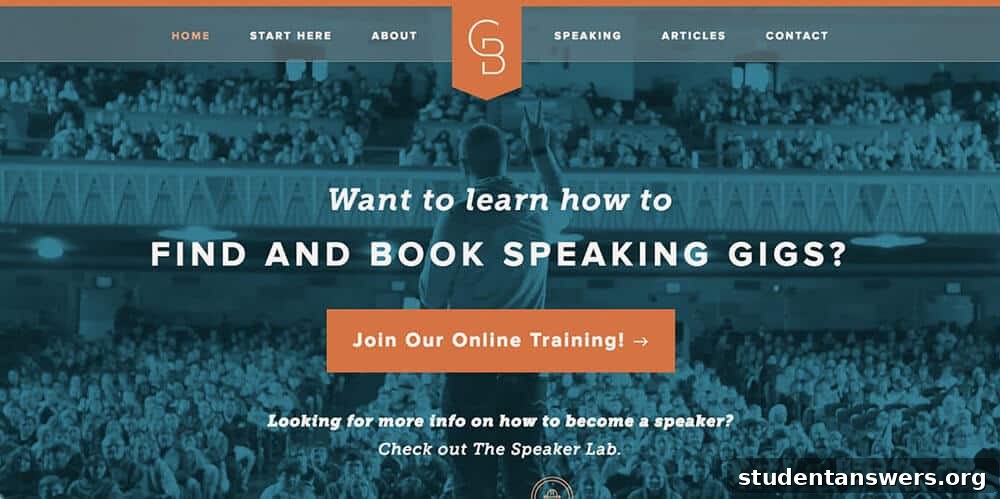
Grant Baldwin is a professional speaker who also teaches others how to build their own speaking careers. His website needs to cater to two distinct audiences: event organizers looking to hire him and aspiring speakers looking for training.
- Key Takeaway: Implement Clear Navigation for Different Audiences. Grant’s homepage masterfully handles this challenge. It highlights his primary offer for experienced speakers while also providing a clear, separate path for beginners. This thoughtful navigation ensures that every visitor can easily find the information relevant to them without confusion.
Rebecca Parson
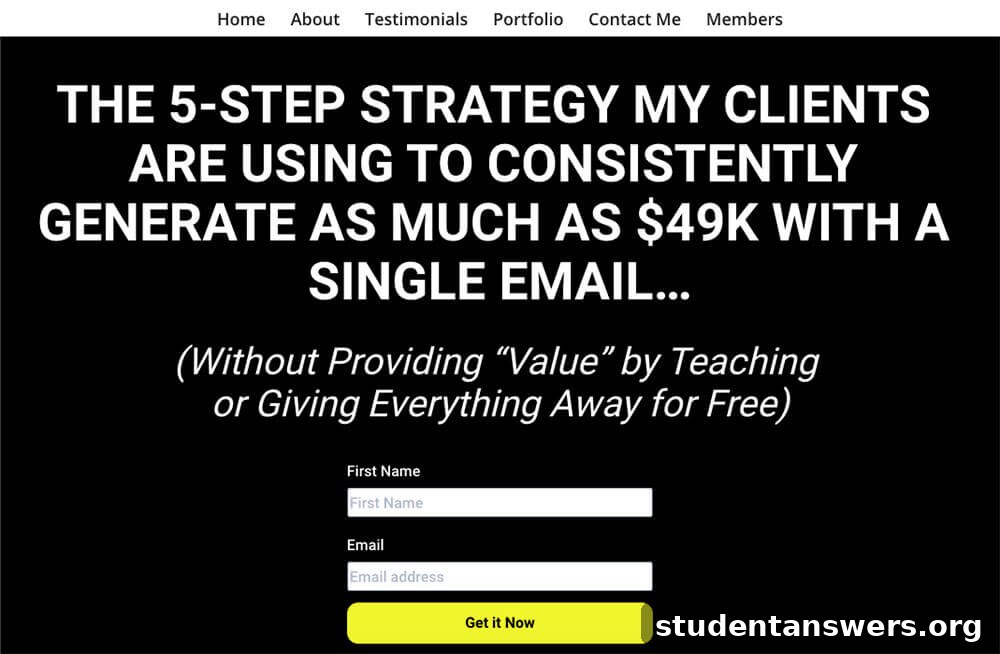
Rebecca Parson is a freelance copywriter whose website is a prime example of effective, conversion-focused design. It’s built to capture leads and showcase her expertise from the moment a visitor arrives.
- Key Takeaway: Lead with a Clear Call to Action (CTA). The first thing you see on Rebecca’s site is a compelling offer and a clear action to take. She knows her target audience’s pain points and presents an immediate solution. If your goal is to grow an email list or generate leads, emulating this direct and value-driven approach is a winning strategy.
Al Kavadlo
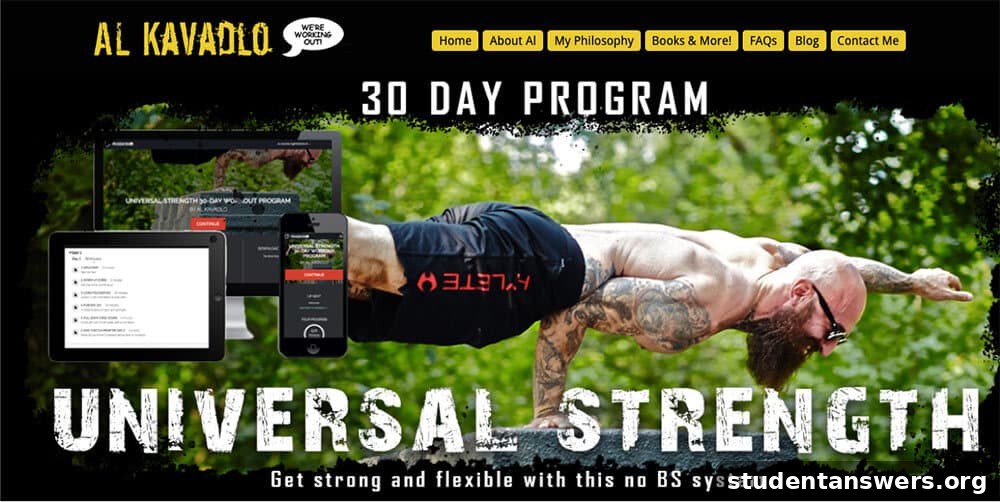
Al Kavadlo is a fitness expert known for his extreme calisthenics and energetic personality. His website is a perfect extension of his personal brand, designed to be as bold and unconventional as he is.
- Key Takeaway: Infuse Your Brand with Personality. Al’s site avoids the generic “health and wellness” aesthetic. The black and yellow color scheme, reminiscent of caution tape, and the gritty typography perfectly capture his edgy, no-nonsense approach to fitness. This is a powerful reminder that your website’s design should reflect your unique character.
Dr. Steven Kinnear
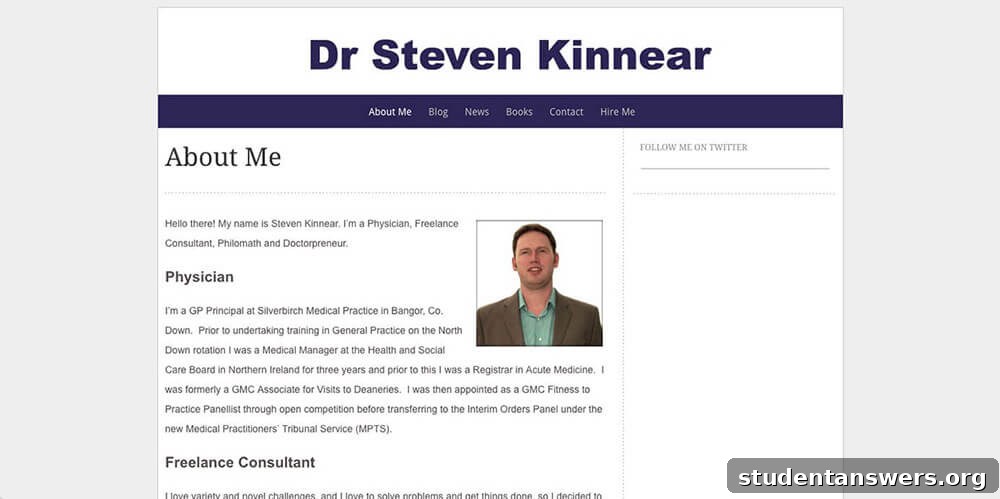
Dr. Steven Kinnear is a physician who combines his medical expertise with entrepreneurial ventures. His website effectively showcases his multifaceted career and unique professional identity.
- Key Takeaway: Embrace Unconventional Branding. Dr. Kinnear brands himself as a “doctorpreneur.” This single, invented word is both memorable and highly descriptive. It immediately communicates his unique blend of medicine and business, setting him apart from other physicians. Creating a unique term for what you do can be a powerful branding tool.
Desiree Adaway
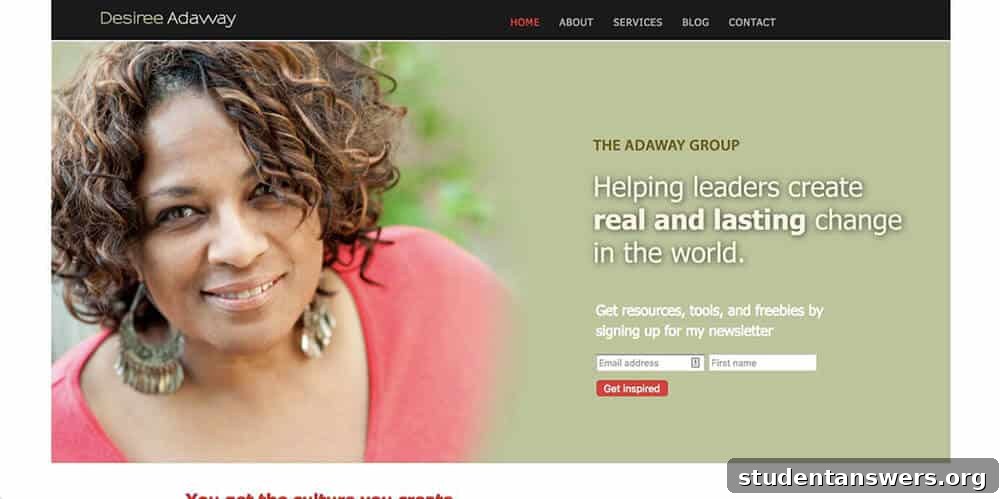
Desiree Adaway is a consultant specializing in equity and inclusion. Her website projects professionalism, warmth, and authority, largely through its excellent use of photography.
- Key Takeaway: Utilize a Prominent, Professional Photo. The large, high-quality photograph on Desiree’s site is a key design element. It portrays her as both an authoritative expert and an approachable consultant. Never underestimate the power of a great headshot to build trust and establish your personal brand.
James Ranson
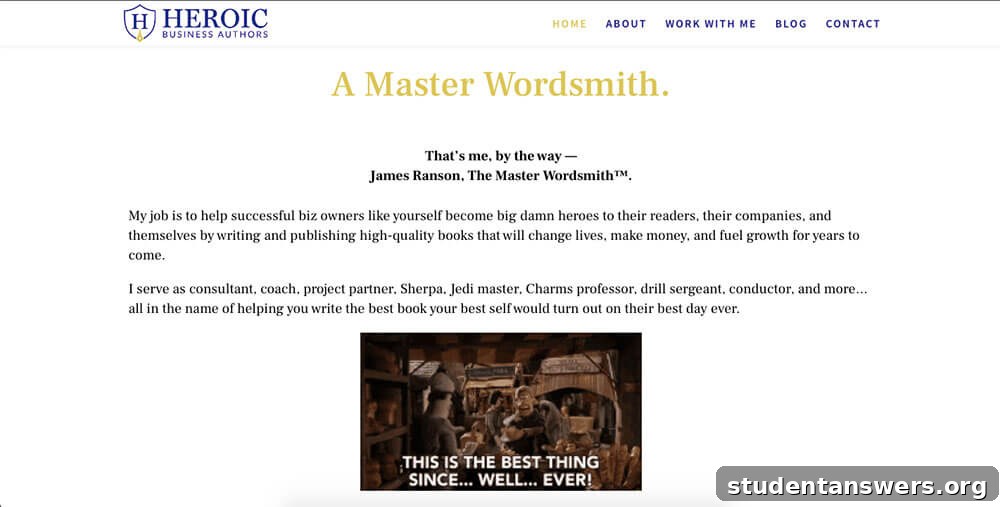
James Ranson is an author and book coach who helps business professionals write and publish their work. His website brilliantly balances a sense of mastery with a fun, approachable personality.
- Key Takeaway: Balance Professionalism with Personality. James uses the trademarked phrase “The Master Wordsmith” to convey ultimate expertise. However, he pairs this with playful GIFs and self-descriptions like a “Charms professor.” This combination shows that while he is a master of his craft, he doesn’t take himself too seriously, making him more relatable to potential clients.
Excellent Website Examples for Students
Many students believe a LinkedIn profile is sufficient for their online presence. This is a missed opportunity. A personal website gives you a platform to control your narrative, showcase projects that don’t fit on a resume, and demonstrate initiative to recruiters. Here are some inspiring examples from students and recent graduates.
Roxine Kee
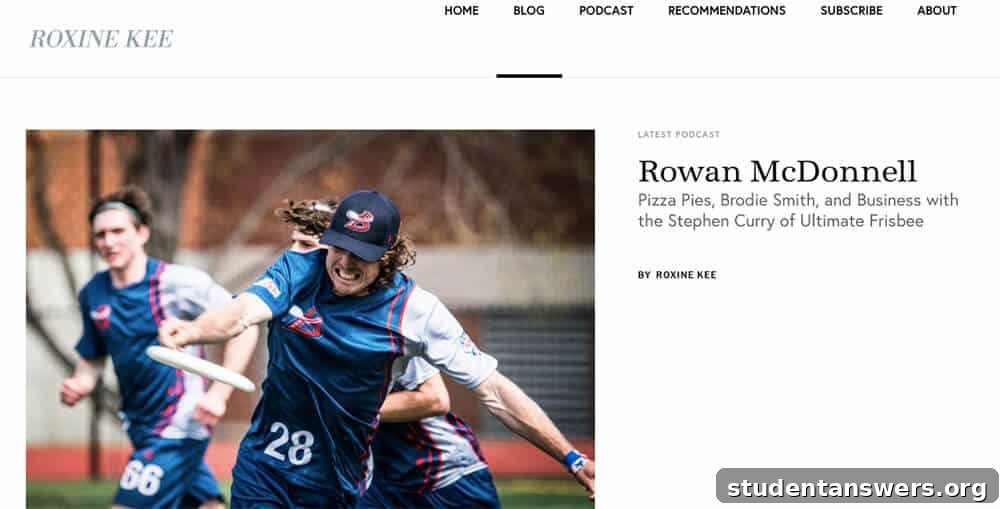
Roxine Kee, a former writer for our team, has built a personal website that serves as a dynamic hub for her creative projects. Her site is a great example of how to keep your online presence current and relevant.
- Key Takeaway: Feature Your Latest Work Prominently. Roxine’s homepage immediately directs visitors to her latest endeavor, a podcast called The Creator Maker Life. This is a smart strategy. If you have an ongoing project—a blog, a YouTube channel, a design series—make it the star of your homepage to show visitors what you’re actively working on right now.
Elizabeth Lundin
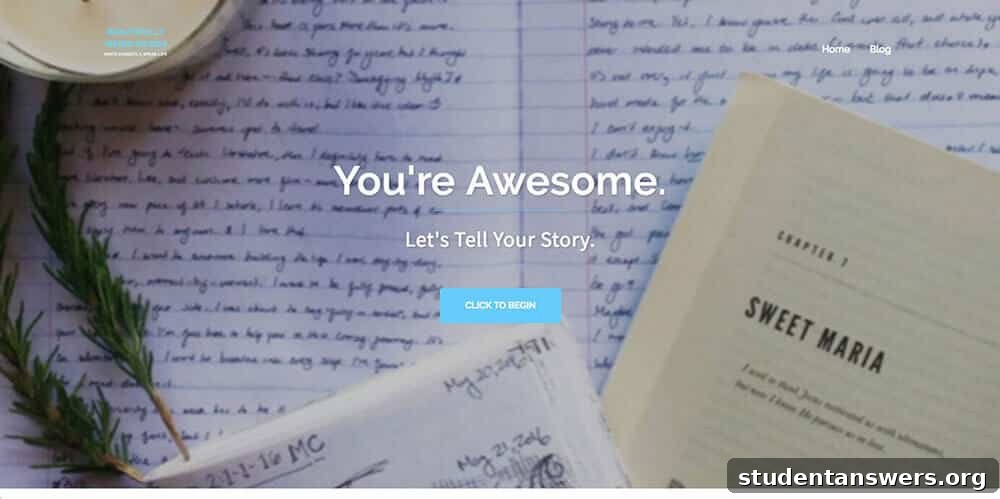
Elizabeth Lundin is a freelance writer with a website that showcases her work and tells her unique story. The site’s copy is particularly effective at drawing visitors in and making them feel welcome.
- Key Takeaway: Create an Affirmative and Inviting Homepage. The headline “You’re Awesome.” is a fantastic way to greet visitors. It’s positive and disarming. This is immediately followed by “Let’s Tell Your Story,” which seamlessly transitions into the services she offers. This approach builds an instant connection before you even get to the portfolio.
Taha Khan
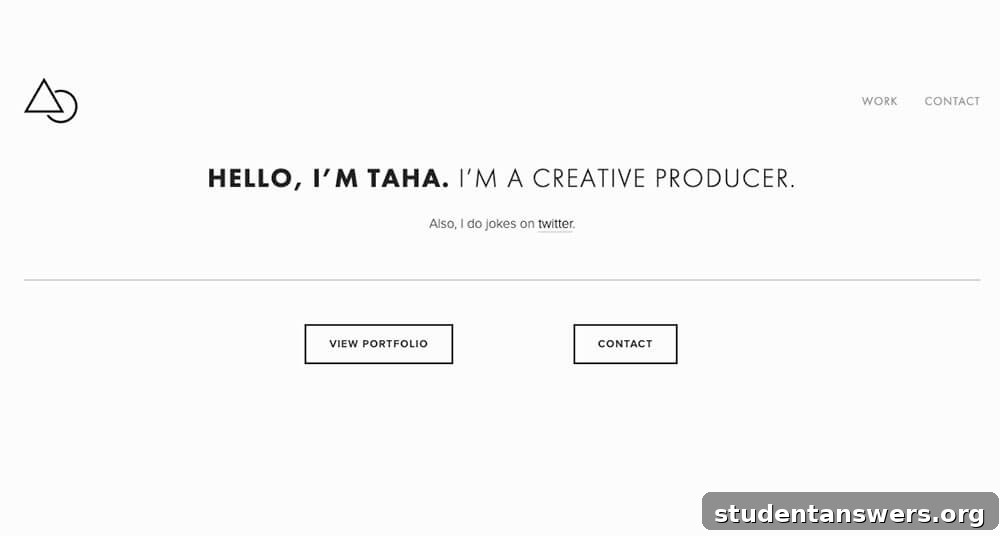
Taha Khan is a multi-talented creator involved in speaking, directing, comedy, and film. His website is a masterclass in minimalism, proving that you don’t need a lot of bells and whistles to make a strong impression.
- Key Takeaway: Embrace Clean and Minimalist Design. Taha’s updated website is the epitome of simplicity. The homepage features only three essential links: his Twitter, his portfolio, and his contact information. This stripped-down approach eliminates distractions and guides visitors directly to what matters most, showcasing his work with confidence and clarity.
Websites That Master Personal Branding
A great personal website does more than list your accomplishments; it communicates your personality, style, and unique point of view. The following examples are exceptional at personal branding, showcasing how to create a memorable and authentic online identity.
Andrew Huang
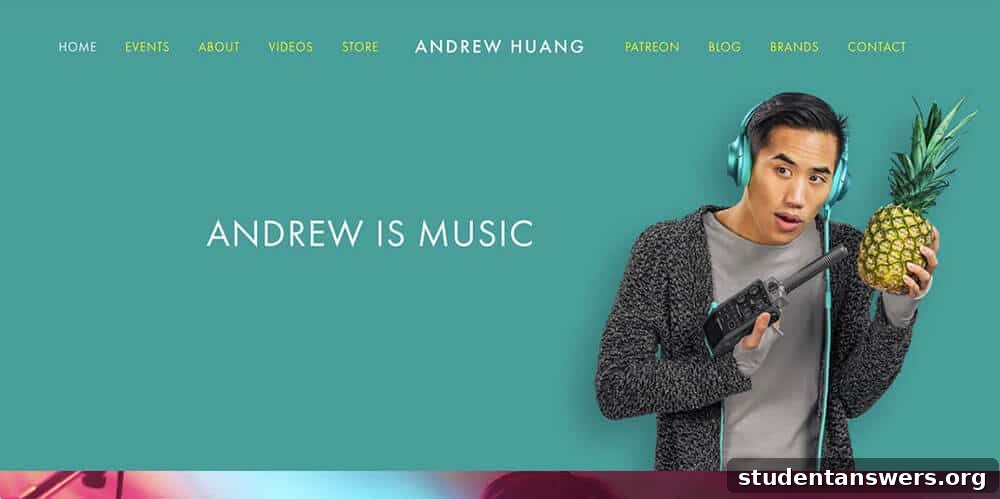
Andrew Huang is a wildly creative musician, producer, and YouTuber. His website is as innovative and visually interesting as his music. The tagline states “Andrew is music,” but the imagery tells a much richer story.
- Key Takeaway: Use a Unique and Evocative Photo. The photo on Andrew’s site is unconventional, stylish, and perfectly aligned with his creative brand. While not everyone needs a photo this artistic, it serves as a powerful lesson: your choice of imagery can communicate volumes about your personality and style long before a visitor reads a single word.
Tommy Edison
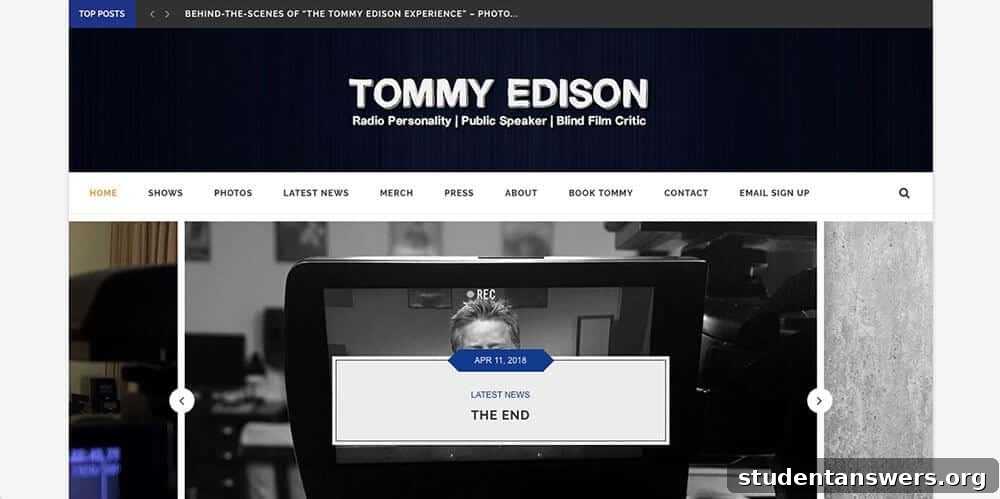
Tommy Edison is known as “The Blind Film Critic,” a brand that is instantly memorable and intriguing. His YouTube channel, The Tommy Edison Experience, uses humor and wit to answer questions about what it’s like to be blind.
- Key Takeaway: Build an Innovative and Unforgettable Brand. “Blind Film Critic” is a brilliant brand statement. It takes two seemingly contradictory concepts and combines them to create something completely unique and compelling. This challenges expectations and makes his work stand out in a crowded digital landscape. Think about what makes you different and how you can frame it in a surprising way.
Tom Scott
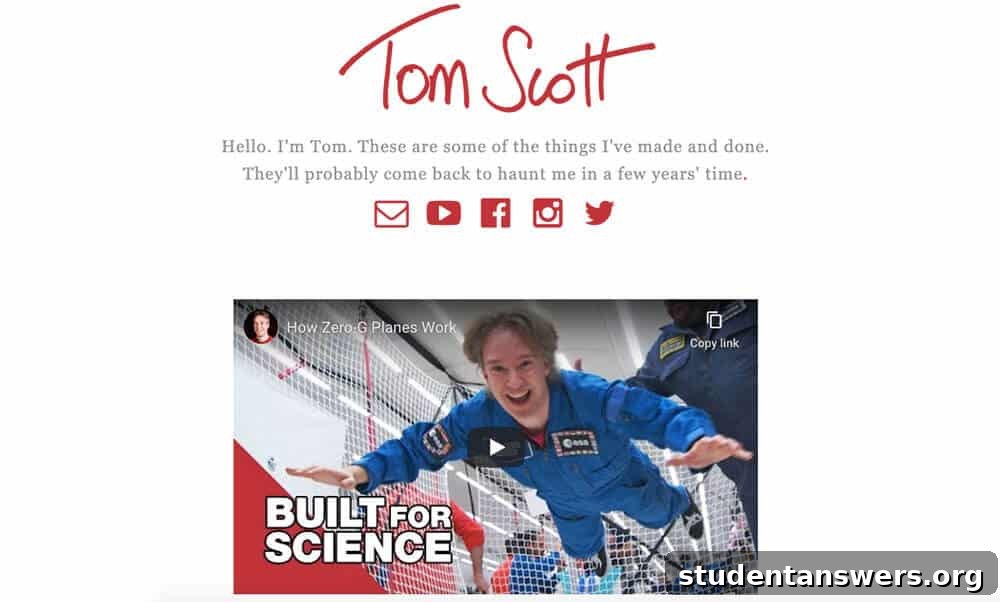
Tom Scott is a popular YouTuber who creates videos about amazing places and fascinating facts. His website reflects the smart, slightly quirky, and humorous tone of his content.
- Key Takeaway: Employ Self-Deprecating Humor Effectively. Tom uses humor to make his site more approachable. Before linking to his work, he includes the line, “They’ll probably come back to haunt me in a few years’ time.” When used correctly, a bit of self-deprecation can show confidence and make you more relatable. Just be careful that it doesn’t come across as a lack of self-esteem.
Clarissa Rodriguez
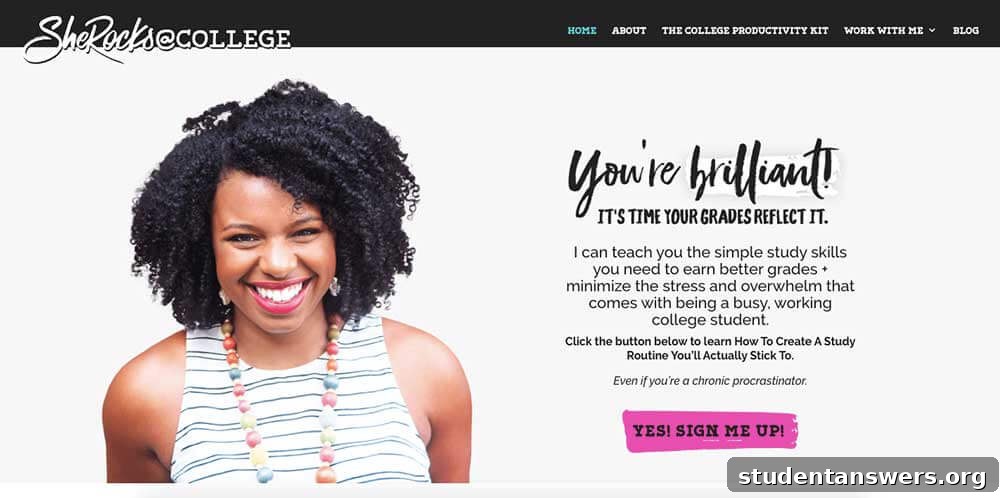
Clarissa Rodriguez helps students succeed in college through online courses and consultations. Her website is a great example of how a clever name and thoughtful branding can appeal directly to a target audience.
- Key Takeaway: Choose a Clever and Memorable Site Name. “SheRocks@College” is a fantastic brand name. It’s empowering and modern. The stylistic choice to use the “@” symbol is a subtle but effective way to connect with her college student audience and make the brand more distinctive. A great name can do a lot of the heavy lifting for your brand.
Nasos Papadopoulos
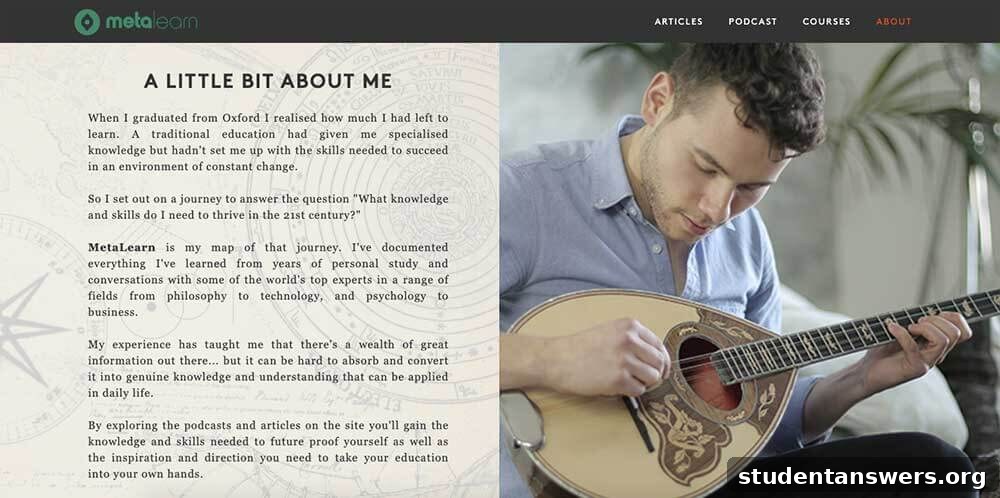
Nasos Papadopoulos is the founder of MetaLearn, a platform dedicated to teaching people how to learn effectively. His website’s “About” page is an excellent example of using imagery to reinforce a brand message.
- Key Takeaway: Select an Inviting and Relevant Photo. The photo on Nasos’s About page shows him playing a musical instrument. This image is perfectly aligned with his brand’s message of lifelong learning and skill acquisition. It’s a visual representation of his philosophy in action, making the brand feel more authentic and inspiring.
Matthew Barby
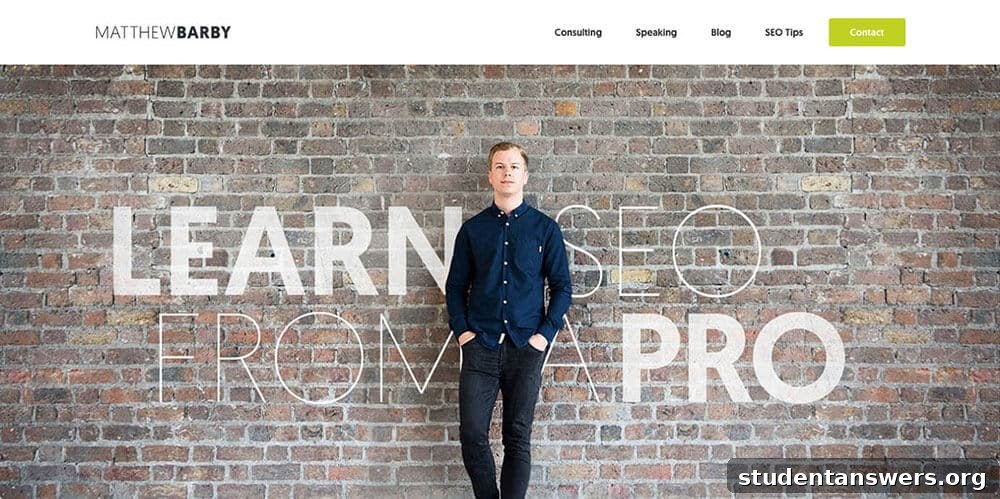
Matthew Barby is a leading expert in Search Engine Optimization (SEO). His website is a masterclass in establishing authority and credibility from the very first glance.
- Key Takeaway: Create a Compelling and Authoritative Tagline. The tagline “Learn SEO from a Pro” is simple, direct, and incredibly powerful. It immediately establishes his expertise and speaks directly to the needs of his audience. He then backs up this bold claim with extensive, high-quality content that proves his professional status. Your tagline should make a clear promise of value.
Isa Adney
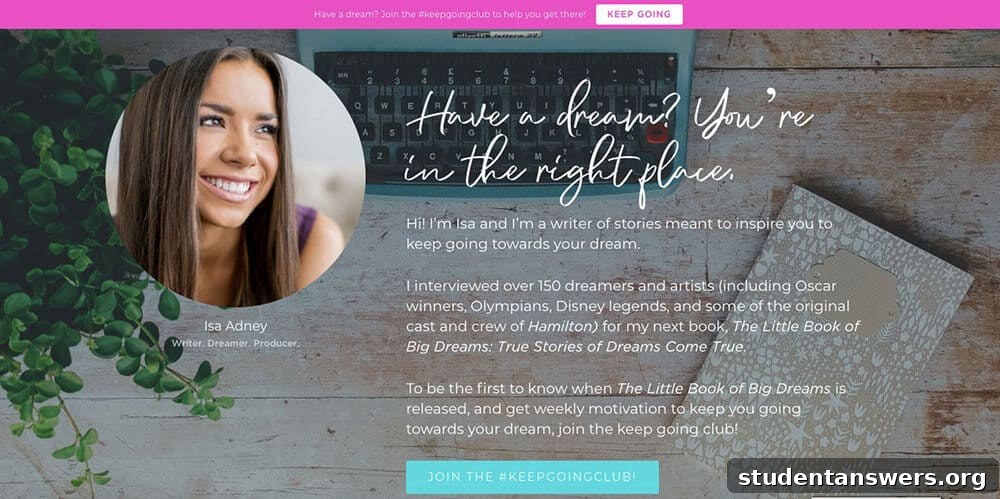
Isa Adney is a writer and author whose website does an excellent job of keeping her audience updated on her latest work. It serves as a dynamic platform that evolves with her career.
- Key Takeaway: Highlight Your Current Work. The front page of Isa’s site prominently features the book she is currently working on. This is a crucial practice. Your website should be a living document that reflects what you’re focused on now, not what you did five years ago. This keeps your online presence fresh and gives visitors an accurate snapshot of your current projects and priorities.
Tasha Meys
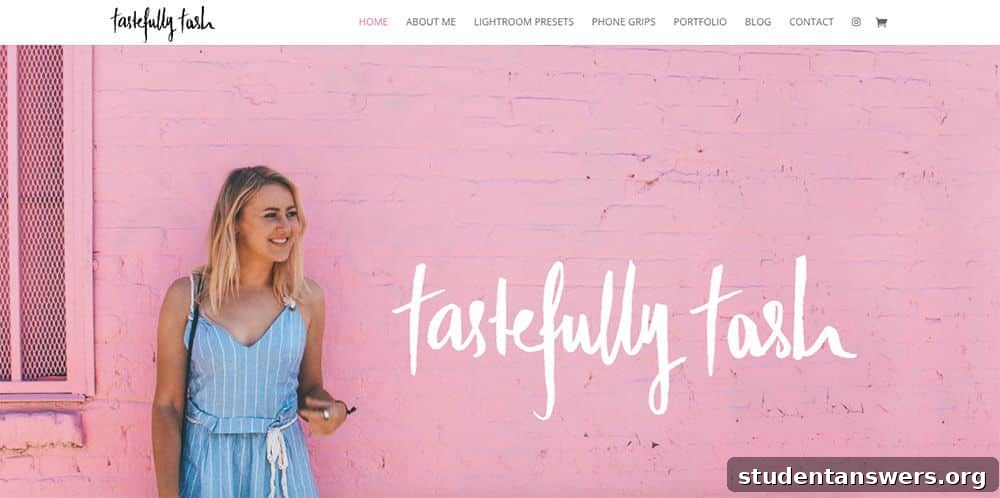
Tasha Meys is an artist, photographer, and social media consultant with a vibrant and exciting brand. Her site’s name and overall aesthetic are perfectly in sync.
- Key Takeaway: Craft a Clever Brand Name. “Tastefully Tash” is a brilliant personal brand name. The alliteration makes it catchy and memorable, while the word “tastefully” directly hints at the artistic skill and discernment she brings to her work. A clever name can be a powerful asset in making your brand stick in people’s minds.
Shanice Miller
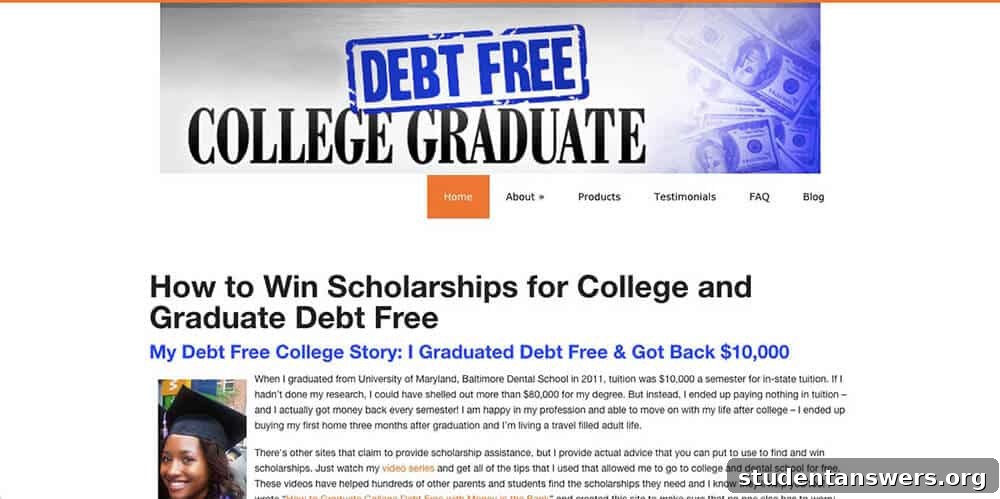
Shanice Miller helps students navigate college without accumulating debt, a mission that resonates strongly with our own. Her website uses strong visual elements to reinforce her brand’s core message.
- Key Takeaway: Use an Authoritative Logo. The logo on Shanice’s site, featuring a bold “Debt Free” stamp, is my favorite part. It’s a strong visual statement that instantly communicates the site’s purpose and value proposition. A well-designed logo can act as a powerful shorthand for your entire brand.
Andrew Rea
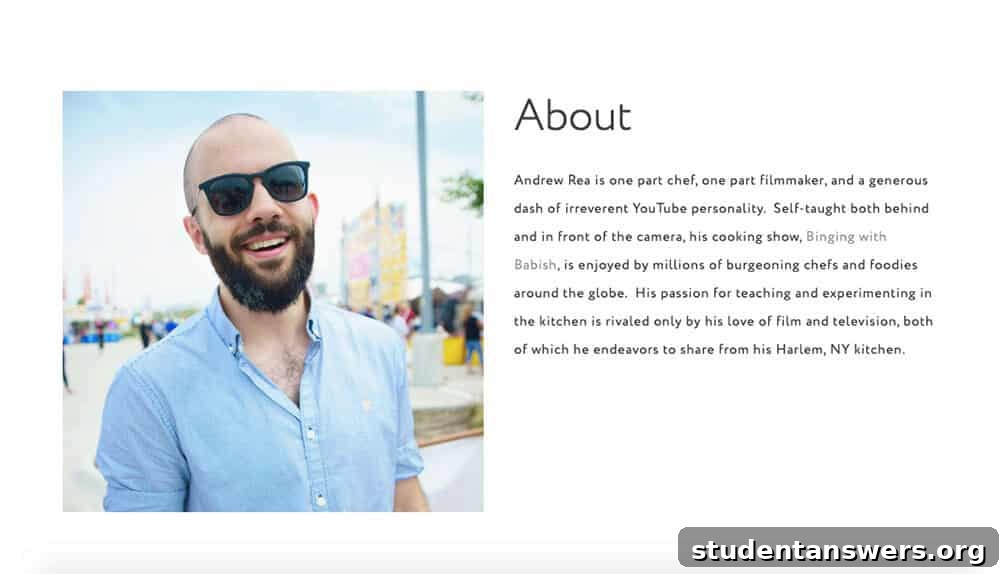
Andrew Rea is the creator of the massively popular YouTube cooking show, Binging With Babish. His website’s “About” page is a fantastic example of creative and on-brand copywriting.
- Key Takeaway: Write a Clever and Thematic Bio. Andrew’s bio describes him as “one part chef, one part filmmaker, and a generous dash of irreverent YouTube personality.” By writing his bio as a recipe, he cleverly connects it to his cooking show’s theme. This creative approach makes his story more engaging and reinforces his brand identity.
Exceptional Website Design Examples
Now, let’s focus on the visual aspect of personal websites. A great design not only looks good but also enhances user experience, guides visitors’ attention, and communicates professionalism. While many of these examples come from designers, they offer universal lessons in layout, color, and typography that can inspire any website creator.
Edna Cerrillos
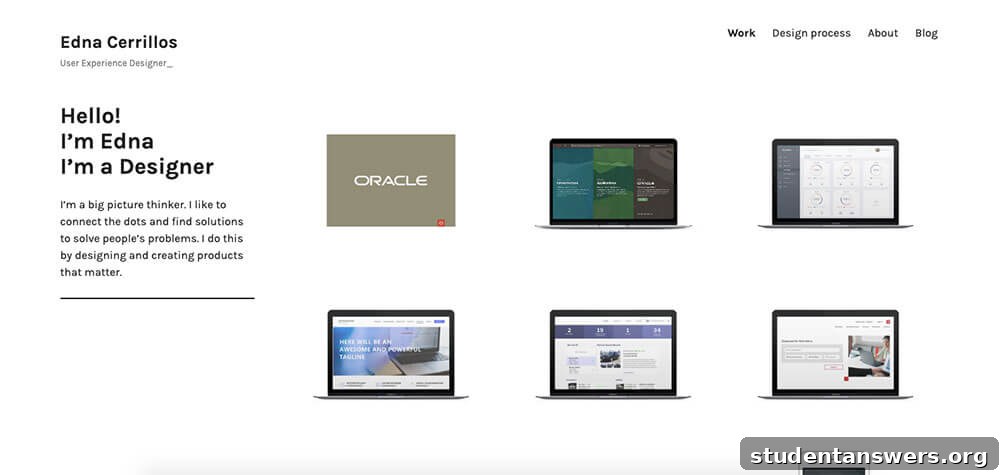
Edna Cerrillos is a product and UX/UI designer, and her portfolio site is a testament to her skills. It’s clean, intuitive, and beautifully showcases her work.
- Key Takeaway: Use Image Links for Portfolio Items. Edna uses large, compelling images to link to individual portfolio case studies. This is a visually appealing and highly effective way to present a variety of projects on a single page without clutter. It invites users to explore the work they find most interesting.
Roxane Gay
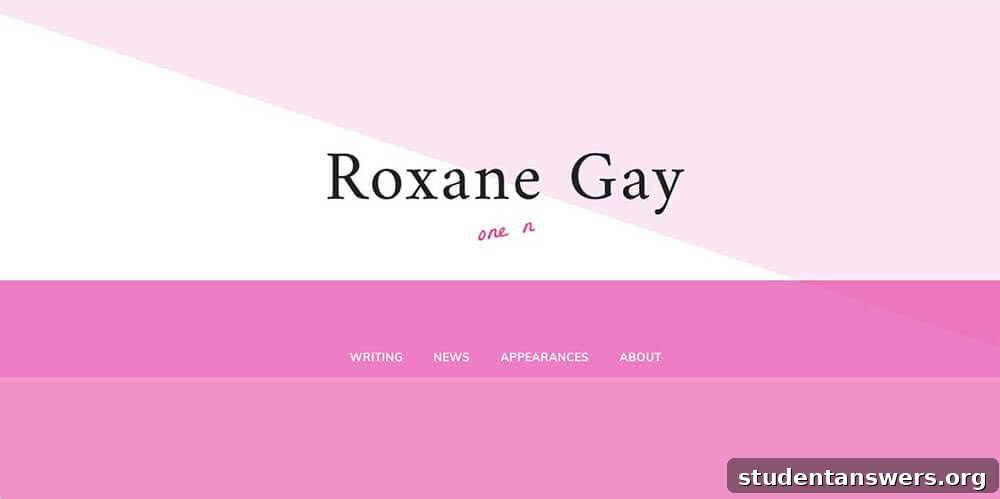
Roxane Gay is a prominent author and speaker. Her website is a stunning example of minimalist design that is both elegant and full of personality.
- Key Takeaway: Embrace Minimalism with Personality. When you visit Roxane’s site, you’re greeted by a clean, geometric design with a simple footer menu. There’s no clutter, just the essentials presented with style. The small branding touch of “one n” adds a personal flair. This shows that minimalism doesn’t have to be boring.
Charli Marie
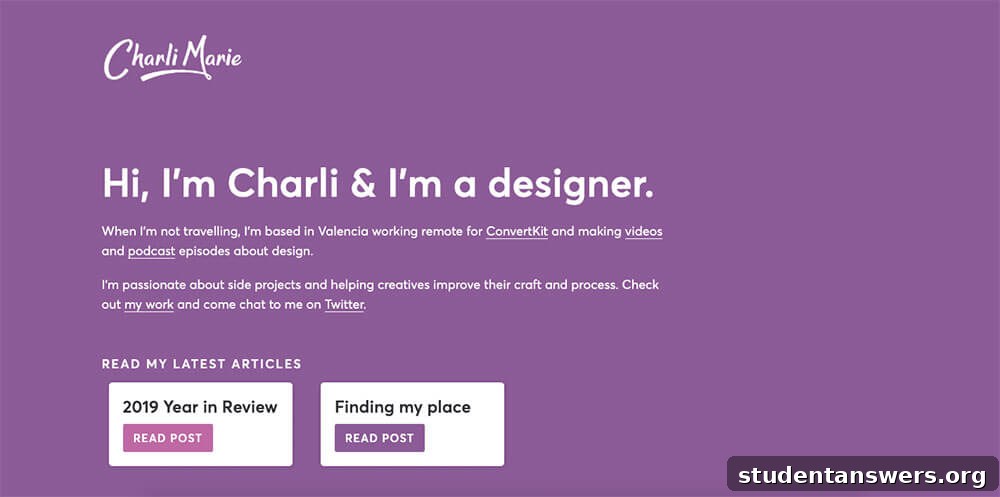
Charli Marie is a designer and speaker whose website is a masterwork of modern web design. It incorporates subtle animations and a clean layout to create a delightful user experience.
- Key Takeaway: Incorporate Tasteful Animation. When the site loads, Charli’s name appears with a “writing” animation. This is a small but charming detail. While animation can be difficult to execute well—it can easily slow down a site or feel distracting—Charli’s use is subtle and adds a touch of personality. If you have the skills, small animations can make your site feel more dynamic and polished.
Jon Miron
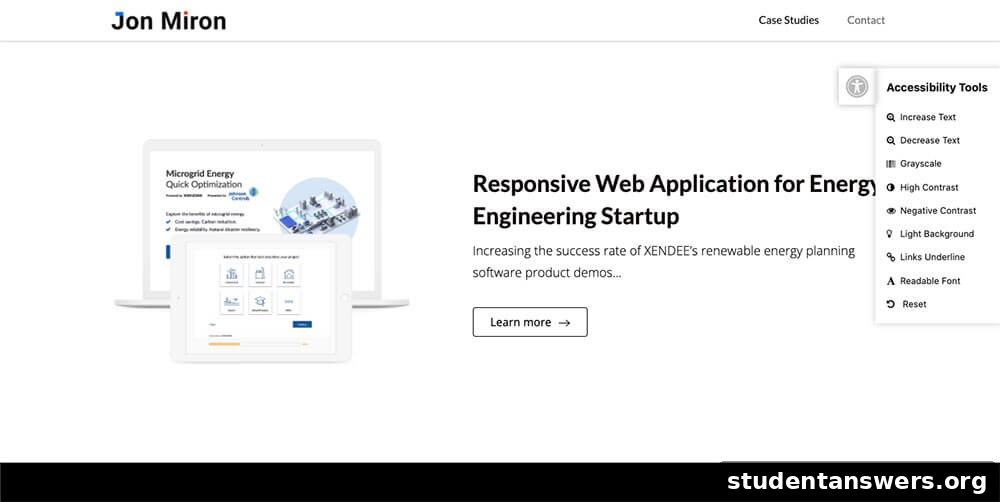
Jon Miron is a designer and product engineer. His website stands out not just for its aesthetics, but for its commitment to accessibility, an often-overlooked aspect of web design.
- Key Takeaway: Build In Accessibility Tools. Jon’s website includes a built-in accessibility menu. This is a brilliant feature. Not only does it make his site usable for a wider audience, but it also serves as a portfolio piece in itself, demonstrating to potential clients and employers his commitment to inclusive design principles.
Diogo Correia
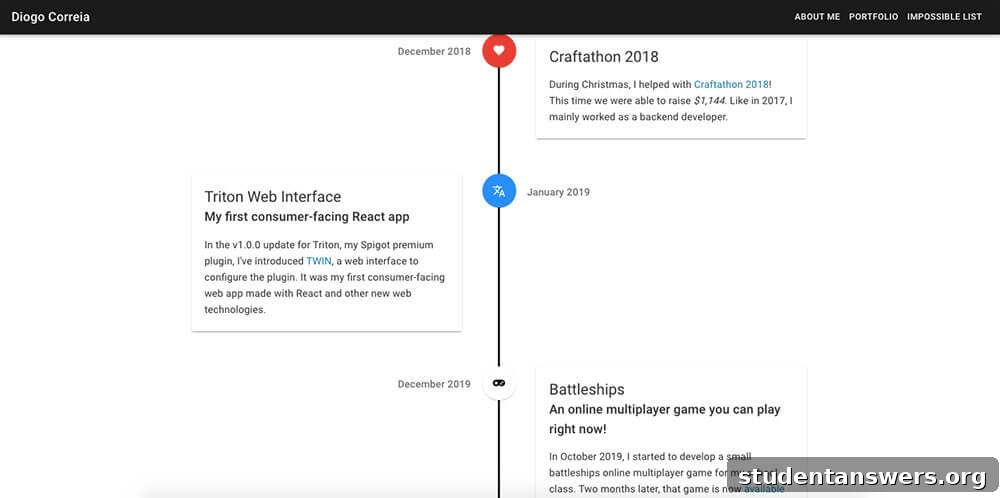
Diogo Correia is a student and developer. What’s most striking about his site is its creative and unconventional approach to showcasing his experience.
- Key Takeaway: Design an Unconventional Portfolio. Instead of a standard list or grid, Diogo presents his portfolio as a visual timeline. This creative format is far more engaging than a traditional resume and helps him stand out to recruiters who are used to seeing the same cookie-cutter layouts. Don’t be afraid to break from convention.
Scott Santens
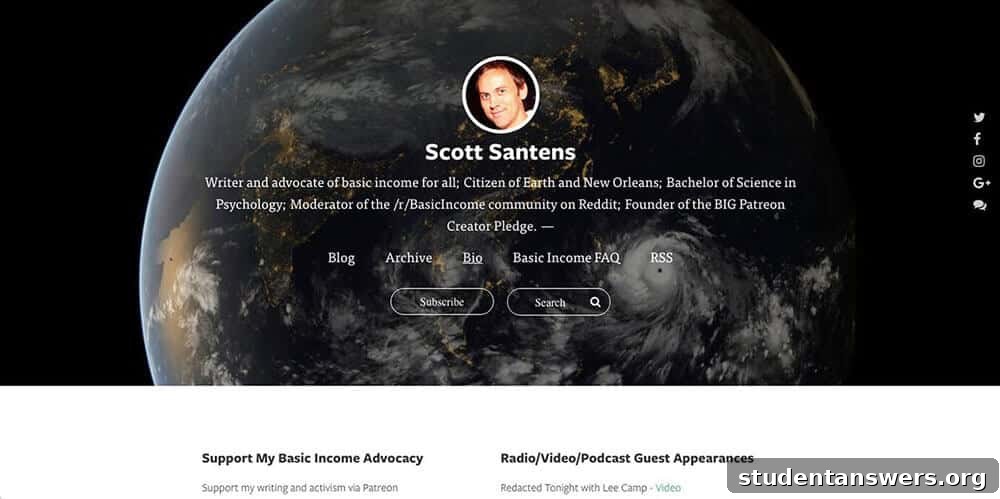
Scott Santens is a writer and advocate for universal basic income. His website is designed to be a clear and easily navigable hub for his extensive body of work.
- Key Takeaway: Prioritize Concise Design and Navigation. Scott’s homepage provides direct links to all his key projects and articles. The prominent search bar makes it even easier for visitors to find specific information. This user-friendly design ensures that visitors can access the content they’re looking for without any friction.
Chris Brogan
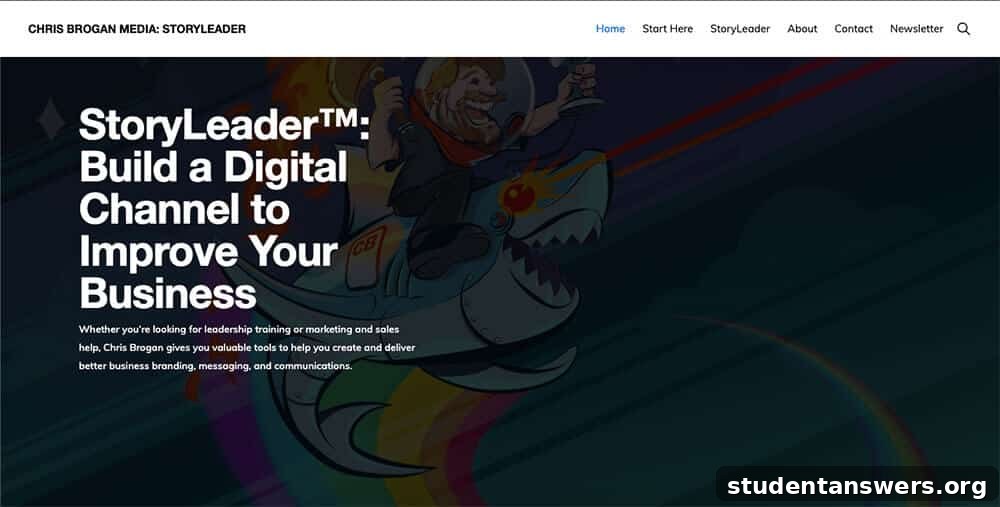
Chris Brogan is a bestselling author and business consultant. His website’s design immediately signals that he is not your typical “boring” business expert.
- Key Takeaway: Use a Unique Background Image. How many business consultants have an illustration of themselves riding a laser-eyed robot shark on their website? This incredibly creative and memorable background image instantly demonstrates the out-of-the-box thinking Chris brings to his work, assuring potential clients of his creative approach.
Examples of Compelling Website Copy
“Copy” refers to the text on your website. Great copy can grab a visitor’s attention, clearly communicate your value, and persuade them to take action. The following sites use language with exceptional skill, whether they’re selling a service or simply introducing themselves.
Sean O’Connor
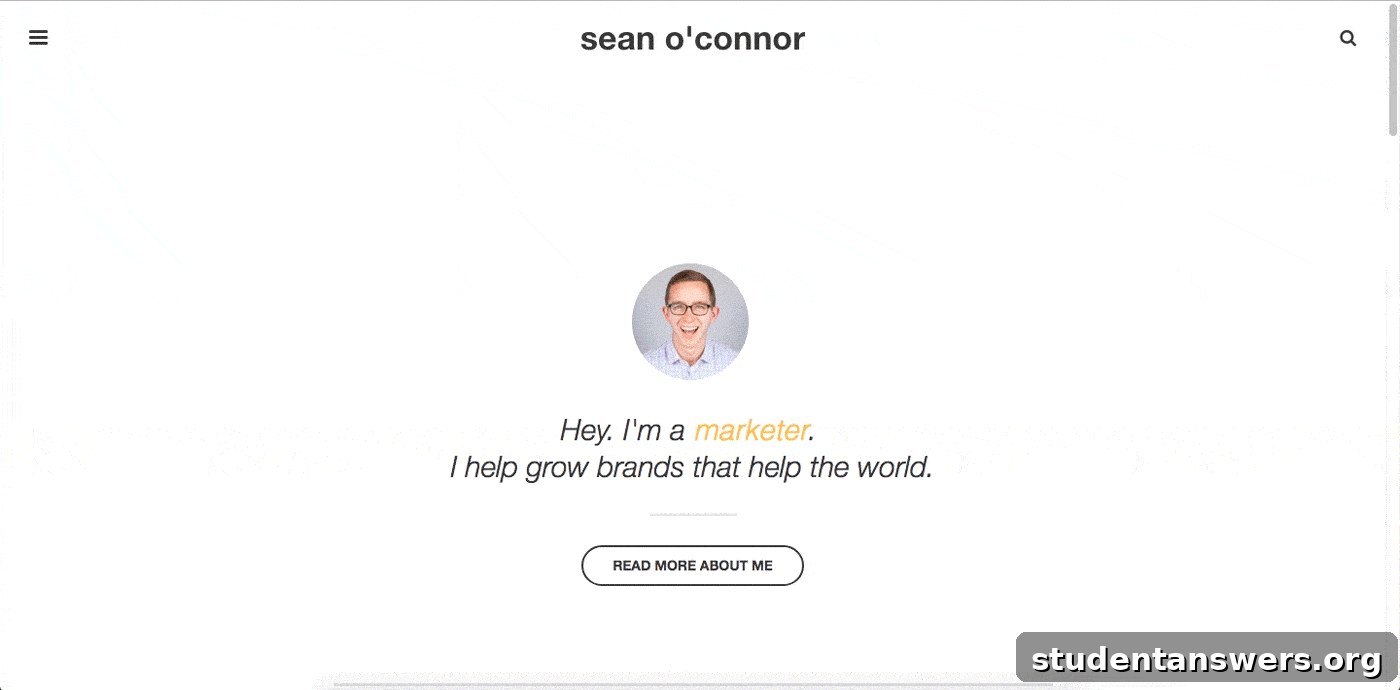
Sean O’Connor is a multi-talented professional whose website could have fit into the design category, but its copy is what truly shines. It’s a prime example of how to communicate your mission with power and brevity.
- Key Takeaway: Be Concise and Memorable. The line “I help grow brands that help the world” is a perfect mission statement. It’s short, impactful, and sticks with you. The challenge of distilling everything you do into a single, powerful sentence is significant, but the result is a marketing tool that communicates your purpose instantly.
Joel Runyon
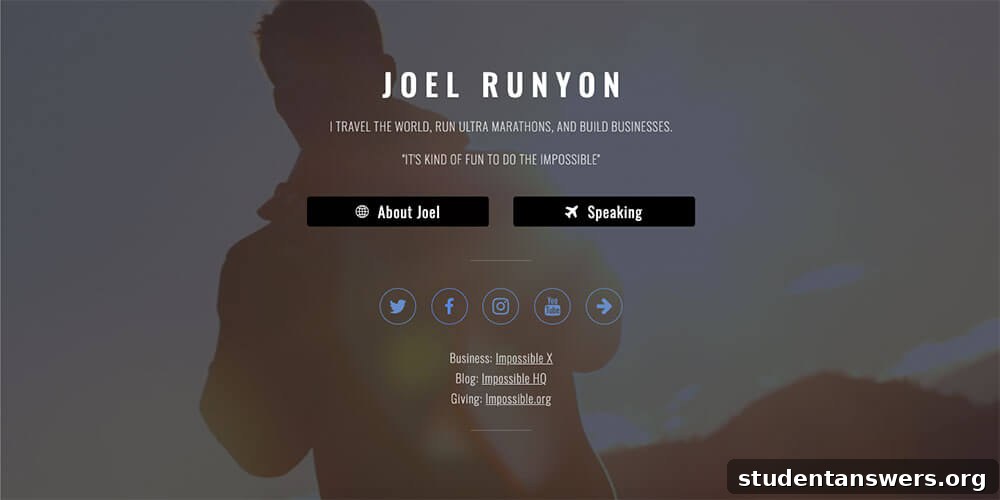
Joel Runyon is an entrepreneur and ultramarathon runner, best known for creating the “Impossible List” concept. His website effectively summarizes his diverse pursuits into a digestible format.
- Key Takeaway: Pick Three Things. It can be tempting to list every skill and project you’ve ever worked on, but this can overwhelm visitors. Joel’s site demonstrates a powerful simplifying tactic: pick your top three things. For him, it’s travel, ultramarathon running, and building businesses. This creates a clear and focused narrative. What are your three things?
Taylor Pearson
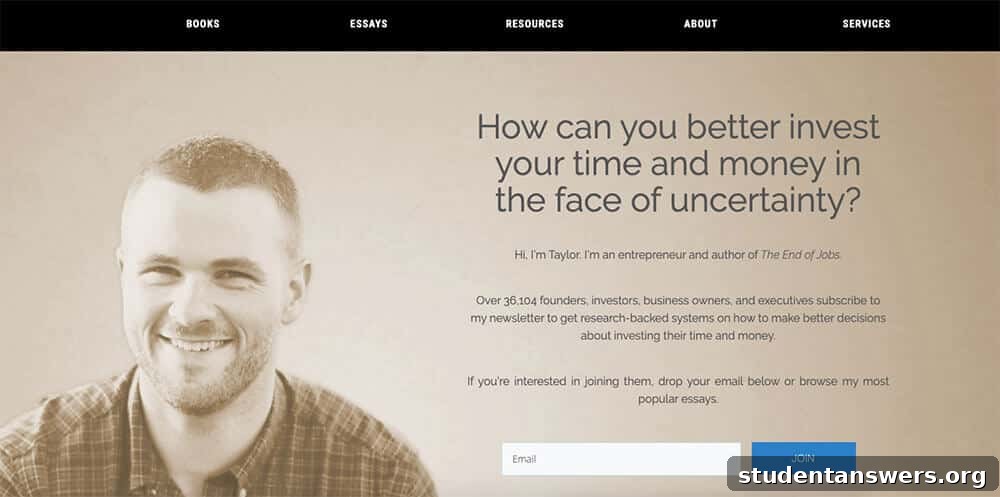
Taylor Pearson is an author and entrepreneur whose work explores the future of work and economics. His homepage copy is expertly crafted to draw visitors in and encourage them to subscribe.
- Key Takeaway: Ask a Compelling Question. Taylor’s homepage greets visitors with the question, “How can you better invest your time and money in the face of uncertainty?” This is a powerful hook because it speaks to a universal desire for security and improvement. Posing a thought-provoking question can be a highly effective way to engage your audience and present your content as the answer.
Tam Pham
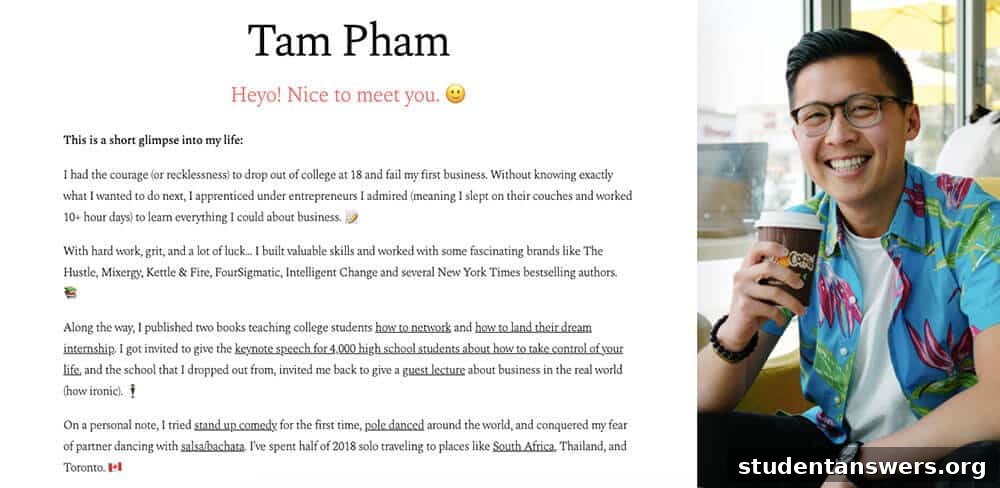
Tam Pham’s website showcases his diverse experiences and personality. One of the standout features of his copy is his strategic and effective use of emoji.
- Key Takeaway: Use Emoji Impactfully. Emoji can instantly give your writing a more casual and friendly tone. However, overuse can make your text look unprofessional or cluttered. Tam uses emoji strategically to add emphasis and personality without overwhelming the reader. A few well-placed emoji can be a great way to inject a bit of fun into your site.
Pat Flynn
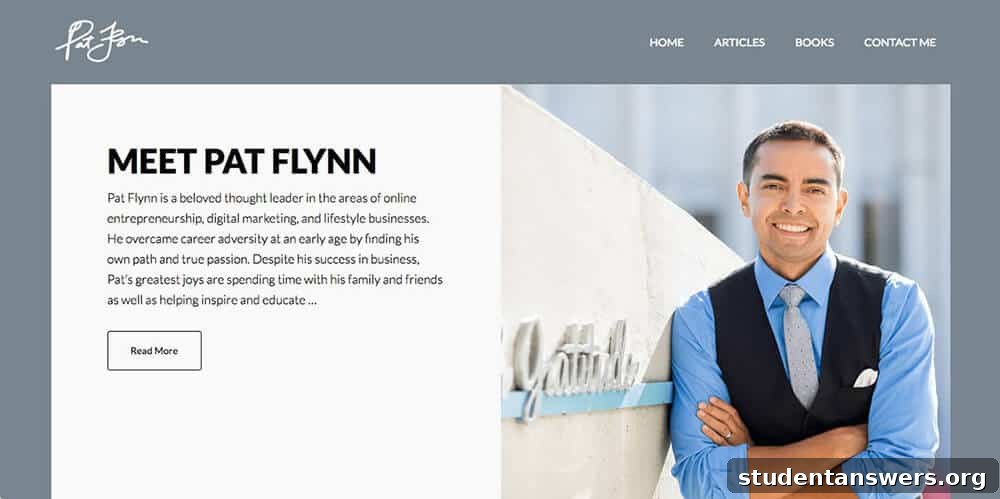
Pat Flynn is an entrepreneur and founder of Smart Passive Income, a site dedicated to teaching ethical online business. His personal site uses storytelling to create a compelling narrative about his journey.
- Key Takeaway: Tell a Compelling Story. The short blurb on Pat’s site that mentions he “overcame career adversity at an early age” is incredibly intriguing. It creates curiosity and makes you want to learn more about his story. Weaving a narrative of challenge and triumph into your bio can make your journey feel more relatable and inspiring.
Outstanding Blog Examples
Starting a blog is one of the best ways to establish your expertise, clarify your thinking, and showcase your communication skills to potential employers. A blog can be the dynamic heart of your personal website. Here are some of our favorite examples of blogs that do it right.
Scott Young
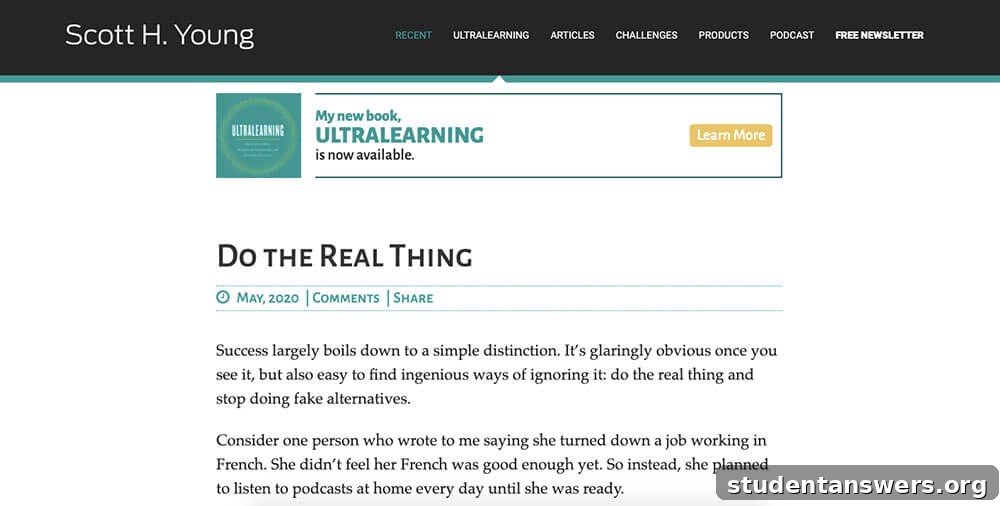
Scott Young’s blog is all about ultralearning and pushing the boundaries of self-education. From completing MIT’s computer science curriculum in one year to learning languages through immersion, his projects are a source of endless inspiration.
- Key Takeaway: Document Your Experiments. You don’t need to be an established expert to start a blog. Scott’s MIT Challenge was compelling precisely because he was learning from scratch. You can apply this same principle to your own interests. Document your journey as you learn a new skill, take on a fitness challenge, or explore a new subject. Sharing your progress can be just as valuable as sharing your expertise.
James Clear
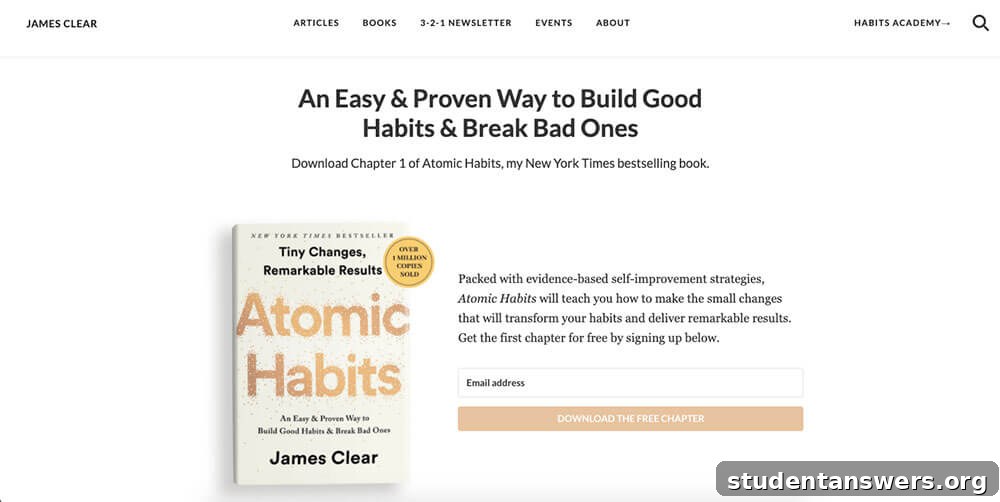
James Clear, author of the bestselling book Atomic Habits, has built an empire on the foundation of his blog. His posts are a masterclass in combining storytelling with actionable advice.
- Key Takeaway: Blend Storytelling with Practical Advice. A typical James Clear article starts with a fascinating story—from the history of a fitness pioneer to the strategies of a cycling team—and then masterfully extracts practical lessons about habit formation. This winning formula makes complex ideas engaging and memorable, and it provides a nearly infinite well of content ideas.
Nat Eliason
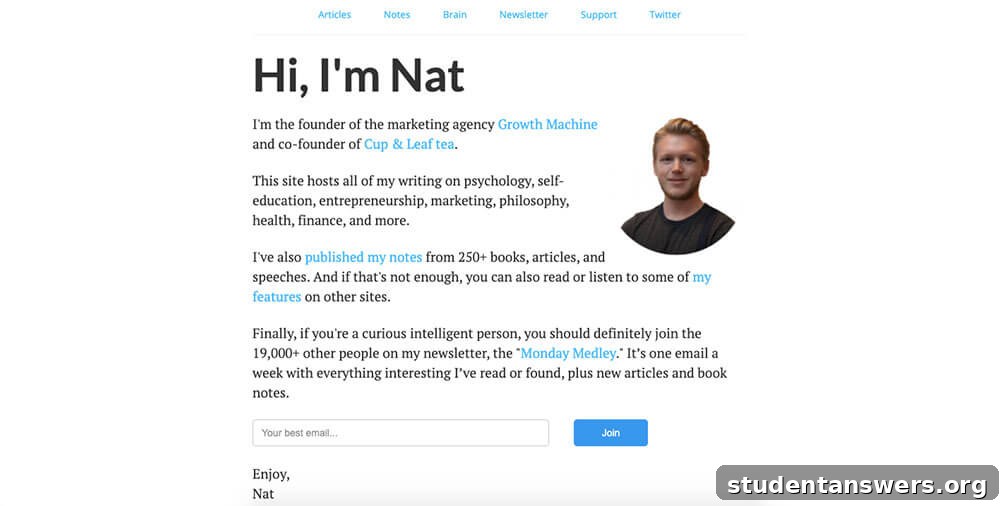
Nat Eliason’s blog is a testament to the power of following your curiosity. He writes about a wide range of topics, from marketing and finance to philosophy and cooking, proving that you don’t need to stick to a single niche.
- Key Takeaway: Write About What Interests You. Nat’s blog is a reflection of his changing interests over time. This is an inspiring strategy for anyone who wants to start a personal blog to explore their thoughts rather than build a niche business. Don’t be afraid to let your blog evolve with you. Your passion and curiosity will shine through.
Austin Kleon
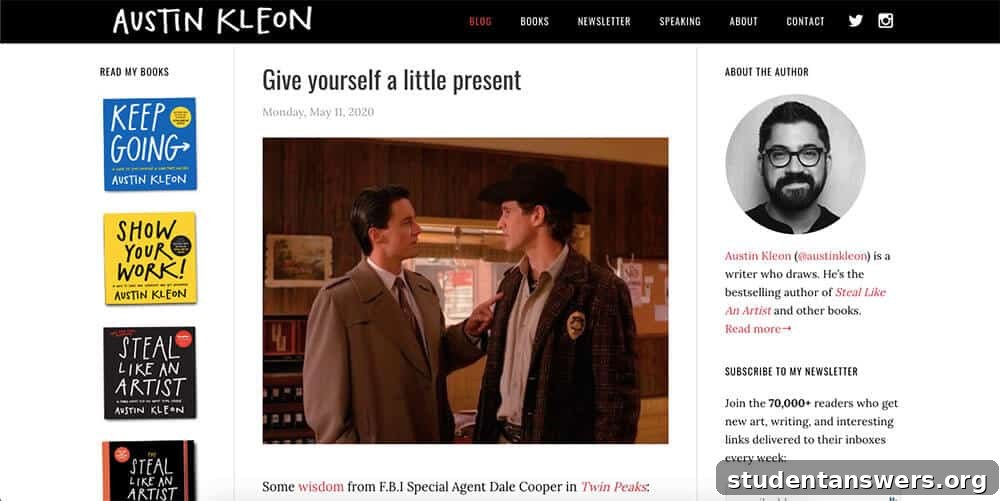
Austin Kleon, a self-described “writer who draws,” is the author of inspirational books like Steal Like an Artist and Show Your Work. His daily blog is a living embodiment of his creative philosophy.
- Key Takeaway: Show Your Work. The premise of Kleon’s blog is to share his process: works-in-progress, sketches, rough ideas, and inspirations. It’s fascinating to see his thinking evolve over time. No matter what field you’re in, you can use your blog as a place to document your process and showcase your progress. This transparency can build a strong connection with your audience.
Cal Newport
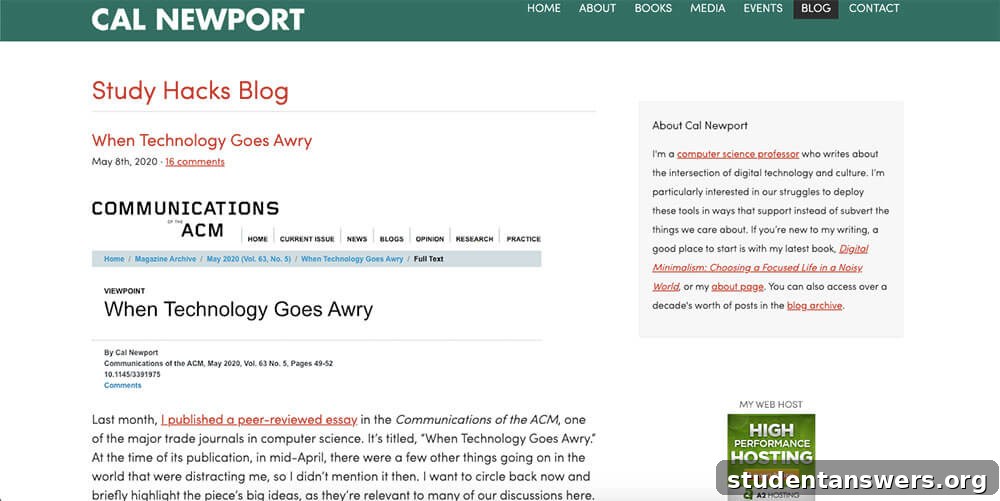
Cal Newport is an author and computer science professor whose books, including Deep Work and Digital Minimalism, have profoundly influenced modern thinking about productivity and technology. His long-running blog is a source of consistently thoughtful insights.
- Key Takeaway: Write Less; Say More. Many of Cal’s blog posts are quite short, yet they are always packed with valuable ideas. This demonstrates that you don’t need to write epic-length articles to have a successful blog. A short, information-dense post is often far more valuable to a reader than a long, rambling one. Focus on quality over quantity.
Tania Rascia
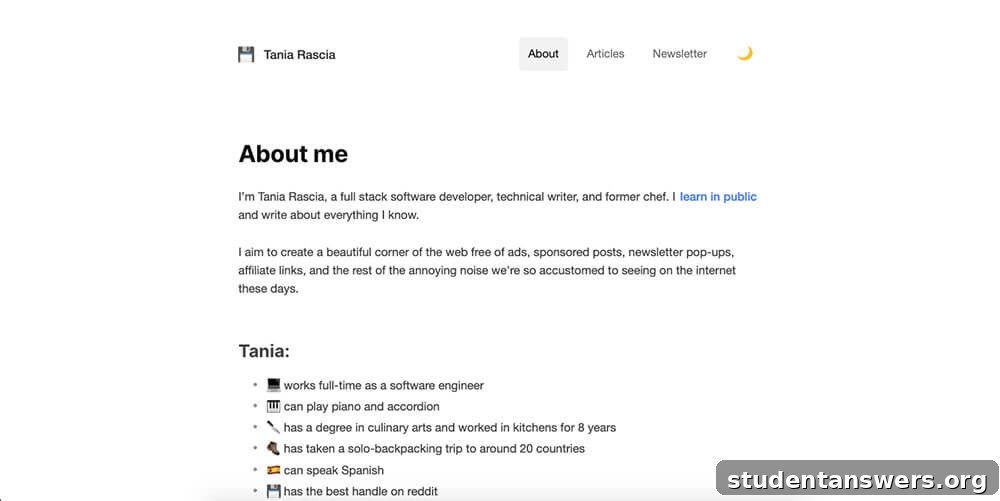
Tania Rascia is a software developer who writes some of the clearest and most helpful programming tutorials on the internet. Her blog stands out for its commitment to transparency and integrity.
- Key Takeaway: Maintain Editorial Integrity and Transparency. Tania makes it very clear that her site has no ads, affiliate links, or sponsored posts. This builds an immense amount of trust with her readers. While there’s nothing wrong with monetizing your blog, it’s crucial to be transparent with your audience about how you do it and whether it influences your content.
Impressive Portfolio Site Examples
Finally, let’s look at portfolio sites. A portfolio is essential for anyone in a creative or technical field, as it provides tangible proof of your skills. These examples from writers, designers, and developers showcase a variety of effective ways to present your work to potential clients and employers.
Kristin Wong
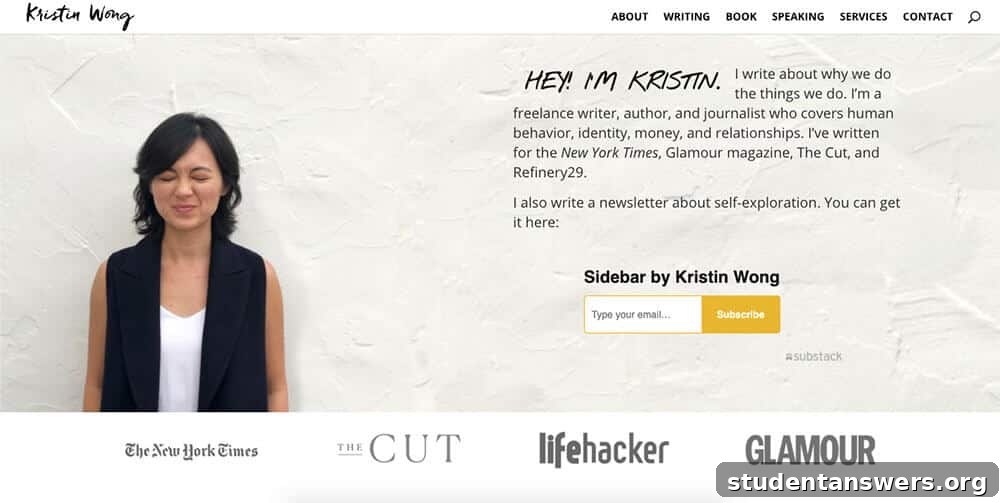
Kristin Wong is a journalist and author specializing in personal finance. Her portfolio website is designed to quickly establish her credibility and authority in the field.
- Key Takeaway: Use Media Logos for Social Proof. Kristin prominently displays the logos of major publications she’s been featured in, such as The New York Times. This is a powerful form of social proof. If you have been featured in the press or have worked with well-known brands, using their logos (with permission) can provide an immediate and significant boost to your credibility.
Anna Ellenberger
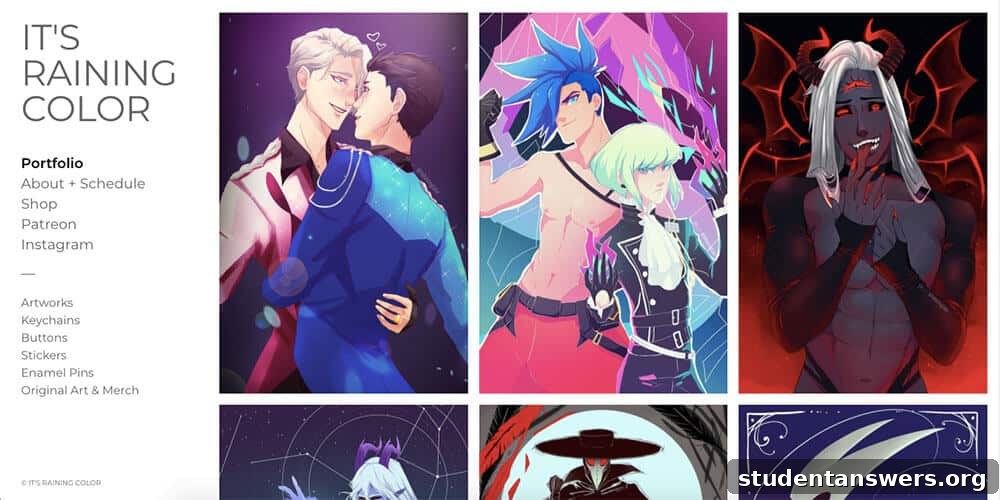
Anna Ellenberger is a talented artist who works under the brand name It’s Raining Color. Her website is designed to put her vibrant and beautiful artwork front and center.
- Key Takeaway: Adopt a Portfolio-First Design. For a visual artist, the art should be the star of the show. Anna’s website does this perfectly, featuring a gallery of her work directly on the homepage. This immediately showcases her style and skill. If your work is highly visual, consider a design that prioritizes your portfolio above all else.
Aja Frost
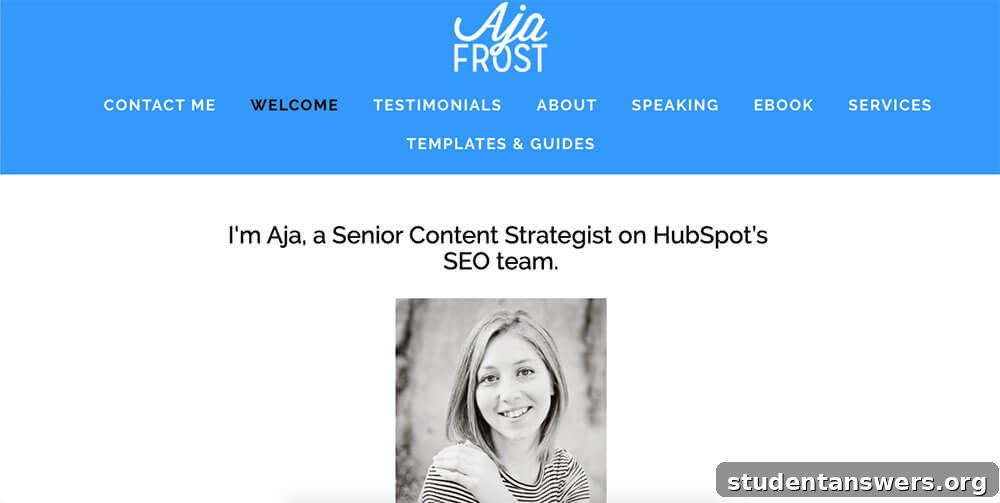
Aja Frost is a senior content strategist at HubSpot. Her portfolio website is a model of clarity and professionalism, with an emphasis on easy navigation.
- Key Takeaway: Embrace Classic, Easy Navigation. Aja’s site uses a simple and intuitive top menu that allows visitors to easily find her portfolio, bio, and contact information. While many of the sites on this list feature creative layouts, there is nothing wrong with a classic design. Sometimes the best design is the one that is most familiar and easy for users to navigate.
Martin Boehme
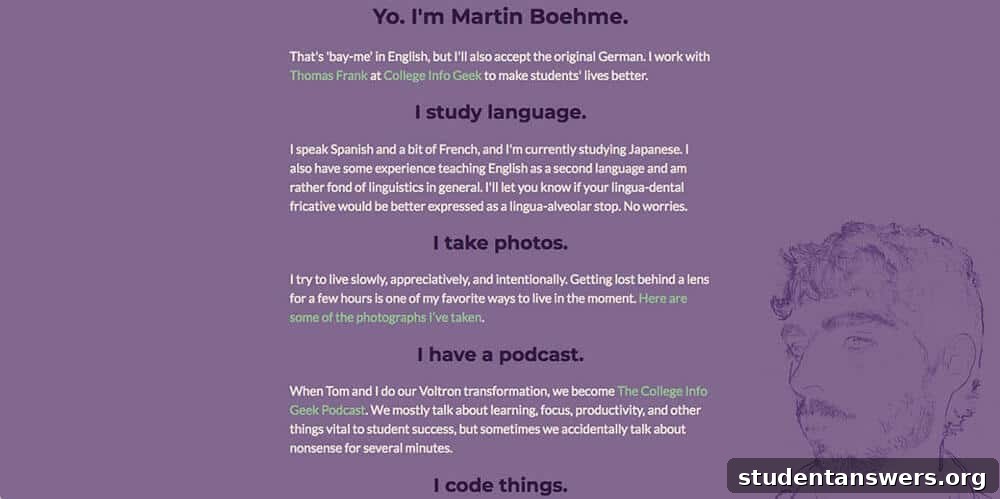
Martin Boehme is our lead developer here at College Info Geek. His personal website is a fantastic example of a concise and effective one-page portfolio.
- Key Takeaway: Master the One-Page Portfolio Design. In a single, scannable page, Martin effectively lists his skills, projects, and interests. He provides links for those who want to dive deeper, but the main page keeps things simple and easy to digest. This is an excellent approach for showcasing a diverse range of work without overwhelming visitors.
Ashley Diers
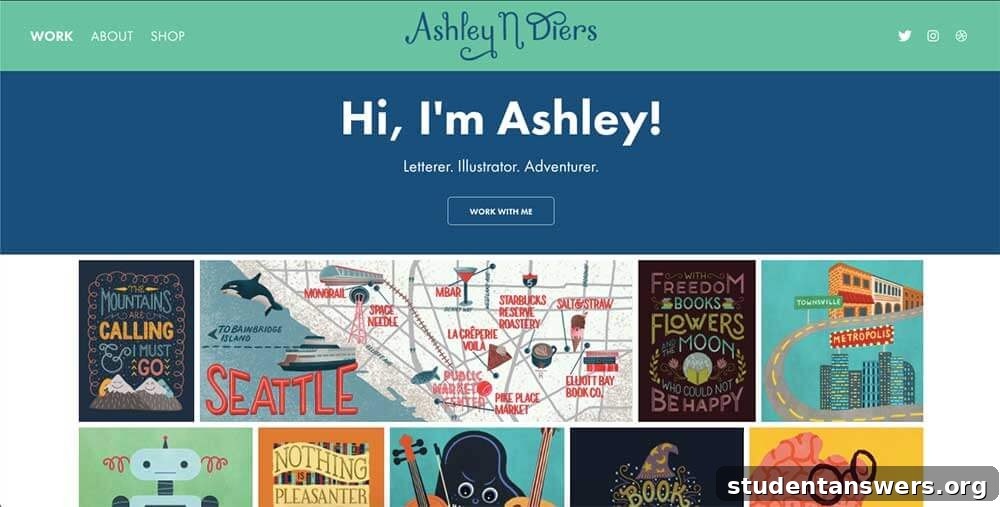
Ashley Diers is our talented graphic designer and illustrator. Her portfolio site demonstrates the power of leading with strong visuals to capture attention.
- Key Takeaway: Images Are Compelling. Ashley’s portfolio puts her beautiful illustrations right on the front page. This is the most direct and effective way to showcase her work. Even if your work isn’t purely visual, think about how you can use compelling images—project mockups, graphs, or even stock photos—to draw visitors in and make your projects more engaging.
Daniel Grindrod
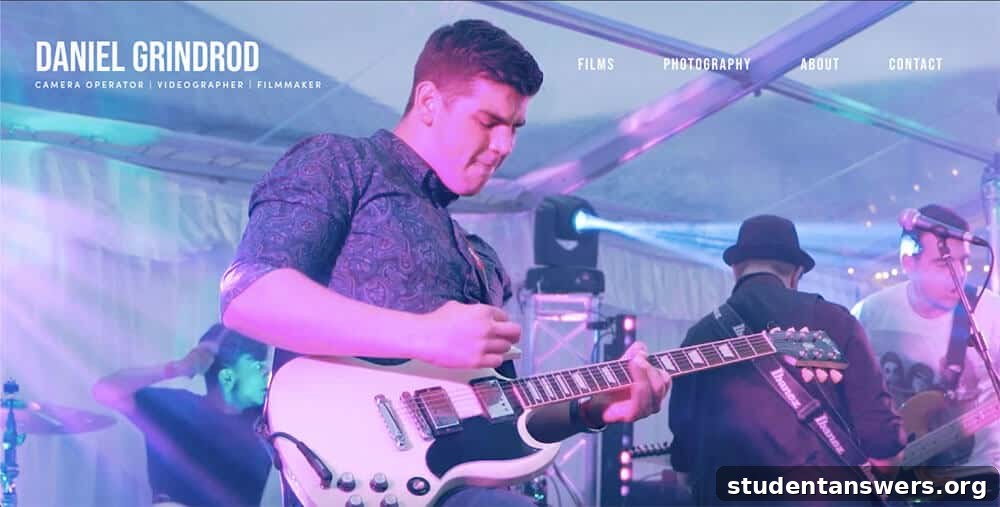
Daniel Grindrod is a filmmaker and videographer. His website immediately showcases his skills in the most direct way possible: by showing you his work in action.
- Key Takeaway: Feature a Highlight Reel. The first thing visitors see on Daniel’s site is an embedded video reel of his recent work. This is the perfect strategy for a videographer. If your work involves video, placing a strong highlight reel on your homepage can be an incredibly powerful way to demonstrate your abilities instantly.
Start Creating Your Awesome Website Today!
If you’ve made it this far, you’re clearly committed to building an outstanding personal website. We hope this extensive collection of examples has provided you with the inspiration and direction you need, whether you’re starting from scratch or refreshing an existing site. Now it’s time to take action and build your own digital home base. For more detailed guidance, check out our other comprehensive resources:
- The Ultimate Guide To Building A Personal Website
- The Essential Components of a Great Personal Website
- The Complete, Step-By-Step Guide To Creating A Successful Blog
Happy building!
Image Credits: featured image