

The Dawn of a New Gaming Era
PS4 vs. Xbox One: The Ultimate Next-Gen Console Showdown
The gaming world was set ablaze with the official reveal of pricing and features for the two titans of the next generation: the Sony PlayStation 4 and the Microsoft Xbox One. With the PS4 launching at a competitive £349 and the Xbox One at a higher £429, the battle for living room supremacy officially began. This deep dive will break down the hardware, features, and philosophies behind each console to help you understand what made this generation-defining clash so monumental.
Unveiling the Xbox One: The All-in-One Entertainment Hub
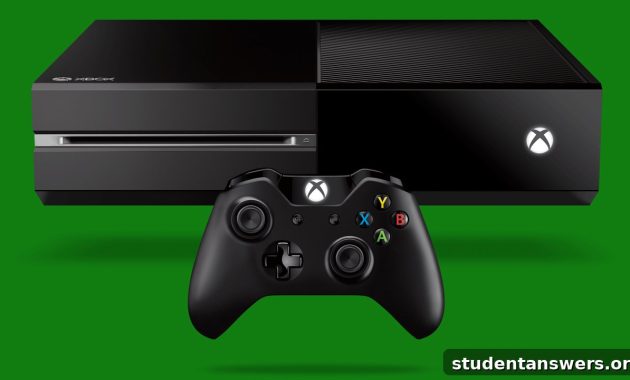
Microsoft positioned the Xbox One not merely as a gaming console, but as a comprehensive entertainment system designed to be the central hub of your digital life. The vision was to seamlessly integrate gaming, live television, movies, music, and communication. The core idea was to place you, the user, at the very center of a universe of entertainment.
A New Way to Interact with Your TV
The Xbox One was built around a powerful eight-core x86 processor and boasted over 5 billion transistors, providing the muscle to instantly switch between different forms of media without performance loss. With a simple voice command, “Xbox On,” the console would spring to life, presenting a personalized Home screen. This immediate access to your favorite games and shows was a key part of Microsoft’s strategy. No more fumbling with remotes to switch inputs; the Xbox One was designed to manage it all.
Several groundbreaking features defined the Xbox One experience:
- Integrated Live TV: The console allowed you to route your cable or satellite box through it, enabling you to watch and navigate live TV directly from the Xbox interface.
- Powerful Voice Commands: The enhanced Kinect sensor was pivotal, allowing users to turn on their entire entertainment system, launch apps, and navigate menus using only their voice.
- Snap Functionality: A true multitasking feature, Snap allowed you to run two applications side-by-side. You could jump into a multiplayer match while keeping a movie playing on the side of your screen, or chat with friends on Skype while watching a live sports event.
- Skype Integration: Skype was built for the Xbox One, enabling crystal-clear HD video calls on your TV, making it easier than ever to connect with friends and family.
- Trending and OneGuide: The console helped you discover new content by showing what was popular among your friends and the wider Xbox community. The OneGuide provided a tailored program guide that could be searched by network, name, or time using voice commands.
The Evolution of Xbox LIVE
Xbox LIVE, the acclaimed online service, was completely re-engineered for the Xbox One to be more powerful, personal, and intelligent. The new infrastructure aimed to make every aspect of the online experience more convenient. Games could be installed in segments, allowing you to start playing much faster while the rest of the game downloaded in the background. Your profile, games, and entertainment were stored in the cloud, accessible from any Xbox One console. Importantly, your existing Xbox 360 Gold Membership seamlessly transferred over.
The new Xbox LIVE introduced several key innovations:
- Smart Match: This advanced matchmaking system was designed to eliminate long waits in lobbies. It used complex algorithms to find players that matched your skill level and play style, even while you were doing other things on the console.
- Game DVR and Cloud Saving: The console continuously recorded your gameplay. The dedicated Game DVR allowed you to easily capture your best moments, save them to the cloud, and share them with friends.
- Living Games: This concept introduced dynamic game worlds that could evolve over time. Furthermore, advanced AI could learn your play style, creating a “Drivatar” or “shadow” of you that your friends could compete against even when you were offline.
- Expanded Achievements: The achievement system was enhanced to reward players in new ways, including capturing video of the exact moment an achievement was unlocked. Your Gamerscore from the Xbox 360 carried over, preserving your gaming legacy.
- Xbox SmartGlass: Evolving from its Xbox 360 counterpart, SmartGlass was now an integral part of the platform, allowing tablets and smartphones to act as intelligent second screens, displaying maps, inventory, or other supplementary content.
Hardware Redefined: Console, Kinect, and Controller
The physical hardware of the Xbox One was a statement in design and functionality.
- The Console: The unit featured a two-tone, liquid black finish with a 16:9 aspect ratio, optimized for its high-speed Blu-ray player. It was designed for a horizontal orientation to be a sleek, understated addition to any media center.
- The Kinect Sensor: The redesigned Kinect was a technological marvel. With a 1080p camera, it was more precise and responsive than ever. It boasted an expanded field of view, could work in almost any lighting condition, and could even read a player’s heartbeat. Its microphone array could isolate your voice commands in a noisy room.
- The Controller: The beloved Xbox controller received over 40 technical and design improvements. It featured a refined directional pad, more responsive thumbsticks, and a more ergonomic fit. The standout innovation was the vibrating “Impulse Triggers,” which provided precise haptic feedback directly to your fingertips, enhancing immersion in racing and shooting games.
Enter the PlayStation 4: For the Players
Sony’s approach with the PlayStation 4 was laser-focused on one thing: the gamer. The PS4 was engineered from the ground up to be the most powerful and developer-friendly console, ensuring it would be home to the very best and most immersive gaming experiences. It was built to redefine rich, immersive gameplay through raw power, intelligent personalization, and deeply integrated social features.
Gamer-Focused, Developer-Inspired Performance
Sony worked closely with game developers to create a system that was both powerful and easy to work with. The PS4’s architecture was centered on a powerful custom chip containing eight x86-64 cores and a state-of-the-art AMD Radeon-based graphics processor. This GPU generated a formidable 1.84 Teraflops of processing power, which could be applied to graphics, physics simulations, or a combination of both.
The console’s ace in the hole was its 8 GB of unified GDDR5 system memory. This was a significant advantage over its competitor, providing a massive 176 GB/second of bandwidth. This unified pool of super-fast memory made it easier for developers to create richer, higher-fidelity game worlds and more complex experiences that could truly shatter expectations.
The Social Gaming Revolution
Social interaction was woven into the very fabric of the PS4. The system featured a dedicated hardware chip for video compression and decompression, enabling seamless gameplay sharing. With a single press of the “SHARE” button on the new DualShock 4 controller, players could instantly capture and share their greatest gaming triumphs. You could scan through recent gameplay, tag a clip, and upload it to social networks like Facebook or streaming services like Ustream, all while continuing to play your game.
This social integration went even further. Gamers could broadcast their gameplay live, and friends could watch and comment in real-time. In an innovative twist, friends could even offer in-game assistance, such as sending health potions or special weapons to a player who was stuck on a difficult level.
Second Screens and Immediate Gameplay
The PS4 fully embraced the concept of second-screen gaming. The PlayStation Vita was positioned as the ultimate companion device, with “Remote Play” allowing gamers to stream and play their PS4 titles seamlessly on the Vita’s 5-inch screen over a Wi-Fi network. This meant your gaming session didn’t have to stop when someone else wanted to use the TV.
A new “PlayStation App” for smartphones and tablets extended this functionality, allowing users to view maps, purchase games from the PlayStation Store for remote download, or watch friends’ gameplay from anywhere.
Sony also radically reduced the time it took to get into a game. A “suspend mode” kept the system in a low-power state while preserving your game session, allowing you to jump back into the action at the exact point you left off with the press of a button. Furthermore, digital titles became playable as they downloaded. After a small fraction of the game data was downloaded, you could start playing immediately while the rest of the game installed in the background.
A Personalized Experience and the Power of the Cloud
The PS4’s user interface was designed to be intelligent and curated. It would learn your preferences and could even predict which game you might purchase next, pre-loading it so it would be ready to play the moment you hit “buy.” The goal was to reduce download times to zero.
Leveraging the cloud technology of Gaikai, Sony aimed to make game exploration seamless. In the future, players would be able to instantly try a portion of any game on the PlayStation Store before committing to a purchase. This cloud infrastructure also held the long-term vision of making the vast library of over 3,000 PS3 titles available to stream on the PS4, offering unparalleled access to a rich gaming history.
PlayStation 4 Technical Specifications at a Glance
- Main Processor: Single-chip custom processor with an x86-64 AMD “Jaguar” 8-core CPU.
- GPU: 1.84 TFLOPS, AMD next-generation Radeon based graphics engine.
- Memory: 8GB GDDR5.
- Storage: Built-in Hard Disk Drive.
- Optical Drive: Blu-ray and DVD reader.
- I/O: Super-Speed USB (USB 3.0), AUX port.
- Communication: Ethernet, IEEE 802.11 b/g/n Wi-Fi, Bluetooth 2.1.
- AV Output: HDMI, Analog-AV out, Digital Output (optical).