
Master Your Studies: 8 Proven Techniques for Using Flashcards Effectively
Flashcards are a timeless study tool, a staple for students everywhere. Their enduring popularity isn’t just due to tradition; it’s rooted in cognitive science. Flashcards harness the power of active recall, a method where you actively retrieve information from your memory rather than passively reviewing it. This process is one of the most efficient ways our brains build strong, long-lasting knowledge.
However, there’s a significant gap between simply using flashcards and using them effectively. Many students fall into common traps that reduce the power of this classic tool, turning an active learning exercise into a passive, inefficient chore. These mistakes often include:
- Creating cards that encourage simple rote memorization without deep understanding.
- Designing overly complex cards that lead to a false sense of security, where you mistake familiarity (recognition) for true mastery (recall).
- Relying on flashcards for every subject, even when other study methods would be far more suitable.
This guide is designed to help you avoid these pitfalls. When used correctly, flashcards can be a game-changer for your learning. For example, when tackling a complex subject like a new language with a different writing system, flashcards are invaluable for memorizing characters and vocabulary, accelerating the learning curve significantly.
Whatever you’re studying, chances are there’s a component that could benefit from a well-crafted flashcard strategy. In this article, we will explore eight best practices that will transform your flashcards from simple note cards into a powerful engine for learning. Let’s dive in and learn how to study smarter, not just harder.
1. The Power of Creation: Why You Should Always Make Your Own Flashcards
In our digital age, it’s tempting to search for a pre-made deck of flashcards online. Countless apps and websites offer ready-to-download sets for virtually any subject. While this might seem like a time-saving shortcut, it bypasses one of the most crucial stages of the learning process.
For deep and lasting learning, you must actively engage with the material. This involves more than just reading; it means taking in new information, mentally wrestling with it, and then re-creating it in your own words. The very act of deciding what to put on a flashcard, summarizing a concept, and phrasing a question forces your brain to process the information on a deeper level. This effort creates strong neural pathways, making the information easier to retrieve later.
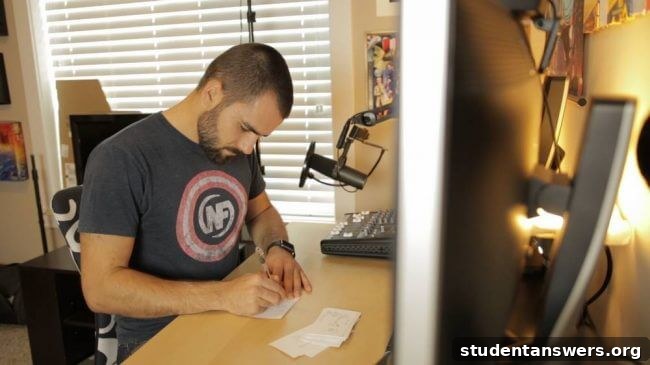
Think of it this way: when you use someone else’s cards, you’re essentially reviewing their notes. You’re skipping the critical cognitive work of synthesis and creation. Professor Marty Lobdell, in his famous “Study Less, Study Smart” lecture, emphasizes the importance of teaching what you learn. Making your own flashcards is a form of teaching yourself. You are forced to explain the concept in a clear, concise way that fits on a small card.
While a pre-made deck might be a last resort in a severe time crunch, the time you “save” by not making your own is often lost in less effective studying. Crafting your own cards is an investment that pays huge dividends in retention and understanding.
2. Boost Your Memory with a Mix of Pictures and Words
Our brains are wired to prioritize visual information. This phenomenon, known as the Picture Superiority Effect, demonstrates that we remember images far more effectively than words alone. From an evolutionary standpoint, this makes perfect sense. For millennia, our survival depended on recognizing landmarks, edible plants, and dangerous predators—all visual tasks. Written language is a relatively recent invention.
You can leverage this innate ability by incorporating images into your flashcards. Don’t just write the word “Mitochondria”; draw a simple diagram of a powerhouse. This creates a powerful visual anchor for the concept.
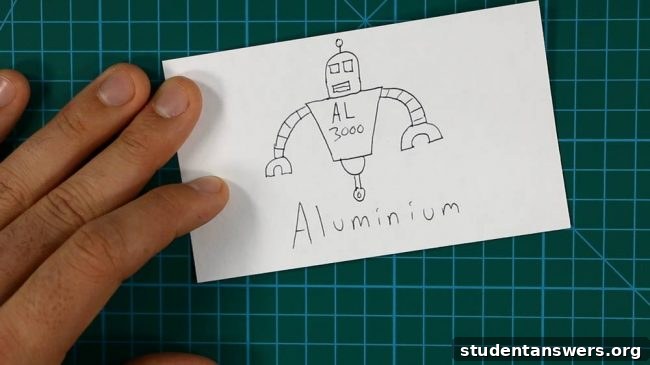
However, the key isn’t to replace words entirely. Research shows that the most effective combination is a picture paired with a descriptive word or sentence. This aligns with Dual-Coding Theory, which posits that our brain has separate channels for processing verbal and visual information. When you combine both, you create two distinct mental pathways to the same piece of information, effectively doubling your chances of recalling it during a test.
3. Build Unforgettable Mental Hooks with Mnemonic Devices
A mnemonic device is any technique that helps you associate new information with something you already know, making it easier to remember. These mental shortcuts can transform abstract facts into memorable stories, images, or phrases.
You’re likely familiar with common mnemonics. Acronyms like ROY G. BIV help us recall the colors of the rainbow. Rhymes like “In 1492, Columbus sailed the ocean blue” stick in our heads for a lifetime. These work because they add a layer of structure and narrative to otherwise disconnected data.
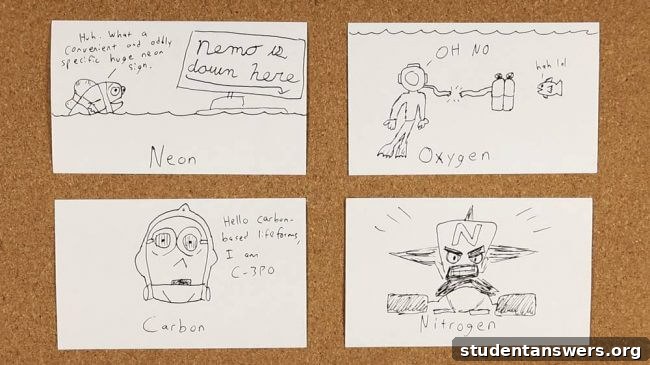
When creating flashcards, get creative with your own mnemonic images. The stranger and more absurd your associations, the better. Our brains are designed to filter out the mundane and pay attention to the unusual. For example, to remember that the chemical symbol for Nitrogen is N, you could draw a cartoon ninja with a giant “N” on his mask. The association is personal and weird, making it sticky.
- To remember that “C” is the symbol for Carbon, you could draw a Car driving on a road made of Coal.
- To remember that “O” is for Oxygen, you could draw an Octopus gasping for air.
Don’t worry if your drawings are silly or make no sense to anyone else. These cards are for you, and the personal connection is what makes the mnemonic effective.
4. The Golden Rule: One Question, One Card
This is perhaps the most critical rule for effective flashcards. It’s common to try and cram multiple related facts onto a single card. For instance, on a card about the Wright Flyer, you might list its name, the year of its first flight, and the number of flights it made on its first day. This is a recipe for disaster.
Putting multiple facts on one card creates what psychologists call an “illusion of competence.” This is the dangerous gap between what you think you know and what you actually know. It happens because our brains are far better at recognition than recall.
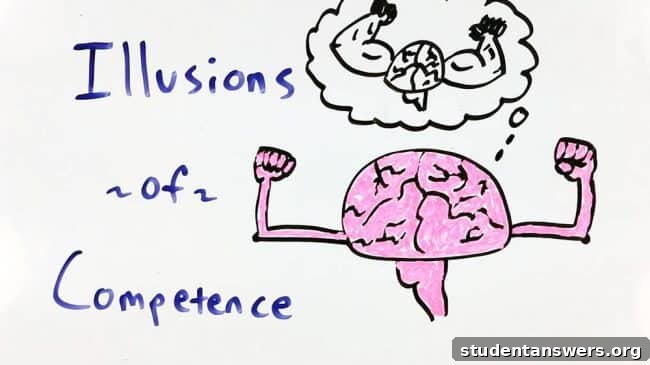
When you review that multi-fact card, you might easily recall two out of the three facts. You then flip the card, see the third fact, and think, “Oh, right, I knew that.” But you didn’t. You simply recognized it once you saw the answer. This creates a false sense of mastery, which can crumble under the pressure of an exam when the cues are gone.
By sticking to one question per card, you create a binary system of feedback. You either know the answer, or you don’t. There is no middle ground, no “I mostly knew it.” This honest self-assessment is essential for identifying your weak spots and focusing your study efforts where they’re needed most.
5. Deconstruct Complex Topics into Bite-Sized Questions
Building on the previous rule, some concepts are simply too large for a single question-and-answer format. If you’re trying to learn the different element groupings on the Periodic Table, a single card asking “What are the element groupings?” is ineffective for the same reasons mentioned above.
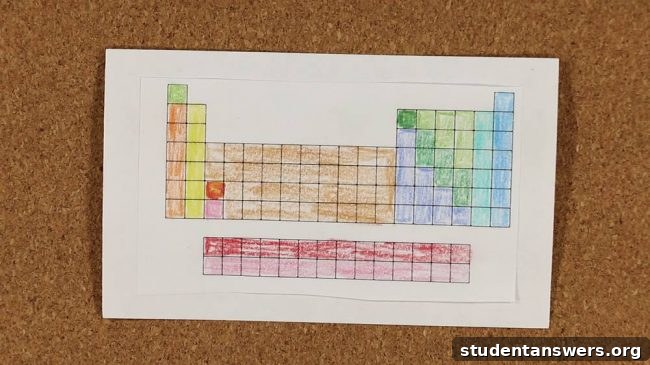
The solution is to break down, or atomize, the complex topic into a series of smaller, more manageable cards. Instead of one card with a long list on the back, create multiple cards:
- Front: What is the name for the Group 1 elements? Back: Alkali Metals
- Front: What is an example of an Alkaline Earth Metal? Back: Magnesium (Mg)
- Front: The Halogens belong to which group on the Periodic Table? Back: Group 17
This approach allows you to test your knowledge of each component individually. It makes it easier to pinpoint exactly which part of the larger concept you’re struggling with, allowing for more targeted and efficient studying.
6. Engage More Senses: Say Your Answers Out Loud
Studying with flashcards can often be a silent, internal process. However, you can significantly enhance your retention by simply saying the answer out loud before you flip the card over. This simple action has several benefits.
First, it forces you to commit to a specific answer. It’s easy to form a half-answer in your mind and then feel like you were correct when you see the actual answer. Speaking it aloud removes this ambiguity. You are forced to fully articulate your thoughts, which strengthens the memory.
Second, it engages your auditory senses. Hearing yourself say the information creates another sensory link to the memory, reinforcing the neural pathway. This is part of the “self-explanation effect,” where the act of explaining a concept (even to yourself) deepens your understanding.
7. Forge Stronger Connections by Studying in Both Directions
A common mistake is to always study flashcards in one direction. For example, when learning vocabulary, you might always look at the foreign word and try to recall the English translation. But can you do the reverse? Can you look at the English word and produce the foreign one?
To build true fluency with a concept, you must create bi-directional retrieval paths. This means you should regularly shuffle your deck and study it from both sides. One session, you might go from prompt to answer. The next session, you should look at the answer and try to recall the prompt.

Using our chemistry example, you need to be able to see the symbol “Be” and recall “Beryllium,” but you also need to be able to see the word “Beryllium” and recall the symbol “Be.” Failing to practice both ways can lead to situations where your knowledge is cue-dependent, and you’ll freeze if a question on an exam is phrased differently than how you studied.
8. Know Your Limits: When Not to Use Flashcards
Finally, it’s crucial to recognize that flashcards are a specialized tool, not a one-size-fits-all solution. They excel at helping you memorize discrete pairs of information: vocabulary words and definitions, historical dates and events, scientific symbols and names.
However, they are a poor choice for learning information that is highly contextual, procedural, or part of a larger, interconnected system. For instance:
- Mathematics: You can’t learn how to solve a complex calculus problem with flashcards. For math, the best method is working through lots of practice problems.
- History: While flashcards are great for dates, they can’t help you understand the overarching narrative or the cause-and-effect relationships between major historical events. Writing summaries or creating mind maps is more effective here.
- Complex Processes: Trying to learn a process like photosynthesis by breaking it into dozens of disconnected flashcards is inefficient. A visual diagram or flowchart that shows the connections between each step would be a far better tool.
Always choose the study tool that best fits the material. For hierarchical concepts, use mind maps. For deep understanding, use the Feynman Technique. For procedural skills, use deliberate practice. Use flashcards for what they do best: drilling the foundational facts you need to know cold.
Transform Your Study Sessions with Smarter Flashcards
Flashcards remain one of the most effective study aids available, but only when you use them strategically. By moving beyond passive review and embracing these active learning principles, you can turn your study time into a more efficient and productive experience.
To recap, always make your own cards, blend words with powerful imagery, use mnemonics to create memorable hooks, and strictly adhere to the one-concept-per-card rule. Enhance your recall by saying answers aloud, studying in both directions, and knowing when to use a different tool for the job. By implementing these techniques, you won’t just be memorizing facts; you’ll be building a deep, flexible, and lasting understanding of your subject matter.