

Five Personal Steps to Building Real Confidence

The Ultimate Guide to Building Unshakeable Self-Confidence
Are you ready to transform your life by building powerful, lasting self-confidence? Today, we will explore five highly effective strategies that can help you cultivate a strong sense of self-assurance. These methods are drawn from real-world experience and have proven instrumental in personal development and growth.
Instead of building suspense, let’s dive right into the core strategies that will form the foundation of your new confidence:
- Build Competence Through Experience: The most direct path to confidence is to become skilled in the very thing you fear. Practice is the key.
- Understand Social Dynamics: A crucial realization is that people are not thinking about you nearly as much as you believe they are. This frees you from the fear of judgment.
- Recognize the Appeal of Confidence: People are naturally drawn to confidence. It breaks the monotony of everyday life and signals strength and excitement.
- Document Your Achievements: Keep a running record of your accomplishments. This archive serves as powerful proof of your capabilities when facing new challenges.
- Shift Your Focus to Others: By concentrating on making others feel valued in conversations, you will not only be more liked but also build a deep, internal sense of confidence.
If this summary gives you the spark you need, then feel free to start applying these principles immediately. For those who want a deeper understanding, we will now explore each of these five pillars of confidence in detail, providing actionable advice and real-life examples to guide you on your journey.
Strategy 1: Build Confidence Through Competence and Experience
The fundamental truth about confidence is that it grows from competence. When you gain skills and rack up experience in any area, you naturally become more confident in your ability to perform. The secret is to view everything as a skill that can be learned and mastered, whether it’s a professional task, a creative hobby, or even social interactions like public speaking or meeting new people.
William Jennings Bryan, a renowned orator and U.S. Secretary of State, encapsulated this idea perfectly:
“The way to develop self-confidence is to do the thing you fear and get a record of successful experiences behind you.”
Bryan was a man of action. As a presidential candidate in 1896, he delivered over 500 speeches, a revolutionary approach at a time when candidates rarely campaigned so actively. While he did not win the election that year, his tireless efforts made him the youngest presidential nominee from a major party at just 36 years old.

Beyond politics, Bryan is celebrated as one of America’s greatest public speakers. His commanding presence and passionate delivery were not gifts he was born with; they were forged in the fire of hundreds upon hundreds of speeches. Each speech was a brick in the foundation of his immense confidence.
To build your own confidence, you can leverage two distinct types of experience:
- Direct Experience: This involves hands-on practice in the specific skill you want to develop. If you want to be a confident speaker, you must speak in front of people.
- Indirect Experience: This involves practicing related skills that share core qualities with your primary goal. This approach can dramatically accelerate your progress.
Recognizing the power of indirect experience is a game-changer. Almost every skill has overlapping elements with others. By practicing these related disciplines, you are essentially training for your main goal from multiple angles. Let’s look at two examples.
Example 1: How Figure Skating Improved Skiing
Skiing is an exhilarating sport, but it requires significant practice. Growing up in a flat region, my opportunities to ski were limited to a few short trips. Despite this, I was able to handle advanced double black diamond slopes. How was this possible with so little direct experience?

The answer was an unrelated activity: figure skating. I started figure skating to learn basic ice skills for hockey but quickly fell in love with the discipline itself. I dedicated myself to practicing several days a week and even hired a coach. The skills I developed—balance, edge control, and comfort with high-speed gliding—were all directly transferable to skiing.

When I returned to the ski slopes after months of figure skating, I was astonished by my improvement. The indirect experience from skating had dramatically boosted my skiing abilities, allowing me to tackle challenges that were previously beyond my reach. It proved that skills from one domain can create a powerful foundation for another.
Example 2: How Podcasting Enhanced Public Speaking
Public speaking used to terrify me. In high school, my hands would shake uncontrollably during class presentations. It was a classic case of performance anxiety. Today, I regularly speak at conferences and universities, and I genuinely enjoy it. What changed?
While direct speaking experience was vital, a significant catalyst for my growth was podcasting. In 2013, I started a podcast, which forced me to speak clearly and engagingly into a microphone while alone in my room. Initially, I was so self-conscious I could only record when my roommates were out.
However, after recording hundreds of episodes, my vocal delivery, clarity of thought, and overall confidence grew exponentially. Podcasting shares many essential qualities with public speaking: you must articulate ideas, maintain a confident tone, and structure a compelling message for an audience. Even though the audience wasn’t physically present, the practice of performing for them was invaluable. This indirect experience was a crucial stepping stone that made transitioning to a live stage feel far less daunting.
The Danger of a ‘Perfect’ Start: Why You Must Act Now
While indirect experience is a powerful tool, it comes with a warning: do not use it as an excuse to avoid direct experience. It’s easy to trick yourself into believing you’re making progress while, in reality, you’re delaying the very thing that will help you grow the most.
Think of it like playing a video game. As a child playing Pokémon, I faced a tough first gym leader. My strategy was to spend hours over-training my Pokémon in the easy starting areas. I thought I was being smart, but when I finally faced the gym leader, the victory was hollow. I had wasted countless hours on low-value training when I could have faced the challenge, perhaps failed once or twice with no real penalty, and moved on to more rewarding parts of the game much sooner.

Life works the same way. The real growth happens when you push yourself outside your comfort zone. As author Mark Victor Hansen wrote:
“Don’t wait until everything is just right. It will never be perfect. There will always be challenges, obstacles and less than perfect conditions. So what. Get started now. With each step you take, you will grow stronger and stronger, more and more skilled, more and more self-confident and more and more successful.”
Don’t linger in the practice areas for too long. Jump into the main arena before you feel ready. The stress and difficulty of that experience are precisely what will accelerate your skill and confidence.
Strategy 2: Shift Your Perspective on What Others Think
“You wouldn’t worry so much about what others think of you if you realized how seldom they do.” – Eleanor Roosevelt
One of the biggest barriers to confidence is the fear of judgment. We imagine catastrophic social scenarios: we’ll mess up a speech and the audience will hate us; we’ll ask someone out and be humiliated. Our brains are wired with a negativity bias, causing us to fixate on worst-case outcomes.
But take a moment to reflect on your own behavior. When was the last time you booed someone for a clumsy presentation or publicly shamed someone for trying to make a connection? If you’re a decent human being, the answer is likely never. And you rarely see others behaving this way either.
Here is the liberating truth: people almost never react with the negativity we fear. In most public situations, an audience has two primary states of being:
- Indifferent: They are neutral, bored, or simply wrapped up in their own thoughts.
- Dazzled: They are engaged, impressed, and entertained by what you are doing.
This realization is a game-changer. If you give a mediocre performance, the audience won’t turn on you; they will simply return to their default state of indifference. Their attention will drift back to their phones, their to-do lists, or what they’re having for dinner. They won’t remember you. And if you do nothing at all, the outcome is exactly the same—they won’t remember you.
This means you have nothing to lose by putting yourself out there. The worst-case scenario is neutrality, which is the same as the status quo. But the best-case scenario? You dazzle them. You make a connection. You leave a lasting positive impression. With this framework, the risk of trying is virtually zero, while the potential reward is immense.
Strategy 3: Understand That Confidence Is Magnetic
Once you accept that people are either indifferent or dazzled, you can take it a step further. Most people spend their days in the “indifferent” state. Life can be routine and mundane. Because of this, people actively crave being dazzled. They want novelty, excitement, and a break from the ordinary.

And who provides that excitement? Confident people. Comedians, visionary leaders, great performers, and captivating speakers all have one thing in common: they project confidence. This confidence is what allows them to break the mold and capture our attention.
This leads to a powerful conclusion: you should act confident even when you don’t feel it. People want you to succeed. They want to be entertained and inspired. By projecting confidence, you are giving them what they crave. And if you falter? No problem. They will simply return to being indifferent. It’s a win-win situation.
A personal example of this was at a Renaissance Festival. I was pulled from the audience to participate in a comedy show, which culminated in me having to put a bra on my head and deliver an evil laugh in front of a large crowd. Years ago, I would have been mortified.

But on that day, I used a simple mental trick. First, I pictured a stereotypical, unconfident person in that situation: they would be timid, speak softly, and avoid eye contact. Then, I reminded myself that if I acted that way, the audience would just feel “meh.” So, I made a conscious choice: I committed to being better than that stereotype. I embraced the absurdity, gave an over-the-top evil laugh, and had fun with it. The audience loved it, the performers were thrilled, and I walked away feeling a surge of genuine confidence.
Strategy 4: Create a Concrete Record of Your Successes
Our minds often forget past victories when faced with present challenges. This is why you need a system to remind yourself of your capabilities. The practice is simple: when you accomplish something meaningful, write it down.
There are two excellent ways to do this:
- An Accomplishment Journal: At the end of each day or week, take a few minutes to jot down what you achieved. This can be in a physical notebook or a digital app. Looking back at this log during moments of self-doubt provides tangible evidence that you are capable and have overcome obstacles before.
- An “Impossible List”: This is a more dynamic version of a bucket list. It’s an ever-evolving list of your biggest life goals. When you achieve a goal, you don’t just cross it off; you document the date of completion and then add a new, more challenging goal to iterate upon it. This creates a living document of your growth and progress over time.
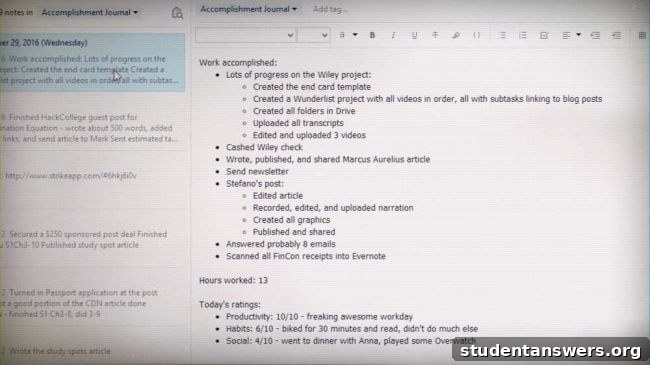
Whichever method you choose, the principle remains the same. A written record of your past accomplishments is a powerful weapon against self-doubt. It serves as undeniable proof that you have faced challenges and triumphed before, and you can absolutely do it again.
Strategy 5: Build Internal Confidence by Focusing Outward
This final strategy is beautifully counter-intuitive. To build your internal confidence, stop focusing on yourself in social interactions and instead focus on the other person. Your goal should shift from, “How can I impress them?” to, “How can I make them feel valued and understood?”
You can achieve this through simple but powerful actions:
- Listen Intently: Give the other person your full attention instead of planning what you’ll say next.
- Ask Thoughtful Follow-up Questions: Show genuine curiosity about their experiences and opinions.
- React with Enthusiasm: Laugh at their jokes, acknowledge their points, and provide positive feedback.
- Avoid One-Upmanship: Resist the urge to top their story with one of your own. Let them have the spotlight.
- Smile Genuinely and Speak Calmly: Warm and relaxed body language puts others at ease.
When you make other people feel appreciated, they will naturally like and respect you more. Psychologist William James said, “The deepest principle in human nature is the craving to be appreciated.” By fulfilling this craving in others, you will become a more charismatic and well-liked person.
The surprising byproduct of this outward focus is a profound boost in your own self-confidence. Your interactions will consistently end on a positive note, reinforcing the belief that you are a socially competent and valued individual. You will learn that you don’t need to boast or fight for attention to feel good about yourself. True confidence comes from a place of quiet strength, and that strength is built by lifting others up.
Your journey to unshakeable confidence begins today. Start with one of these strategies, apply it consistently, and watch as you transform into the most confident version of yourself.