
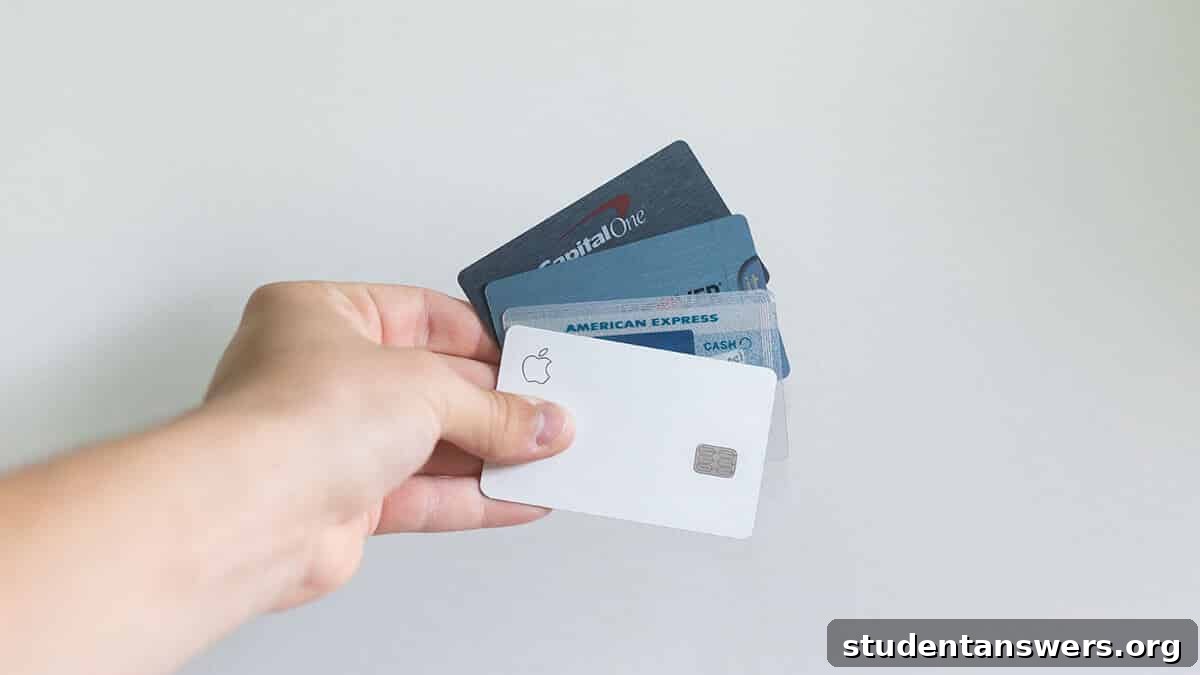
Credit cards can be a powerful financial tool. When used responsibly, they offer a fantastic way to build your credit history, provide robust fraud protection, and even earn valuable rewards like cashback or travel points. However, they come with a significant risk. The “buy now, pay later” convenience can easily lead to overwhelming debt if you’re not careful, damaging your credit score and financial well-being.
Often, credit card troubles stem from a simple misunderstanding of how they function. This comprehensive guide will demystify the world of credit cards. We will explore everything from the basic mechanics and interest calculations to the steps for obtaining and using a card wisely. By the end, you’ll be equipped to use credit cards to your advantage, turning them into an asset rather than a liability.
How Do Credit Cards Actually Work?
At its core, every purchase you make with a credit card is a small, instant loan. Instead of using your own money from a bank account, you are borrowing money from the card issuer (a bank or financial institution) with the promise to pay it back later. This system is built on a specific type of credit known as a revolving line of credit.
To fully grasp this, it’s helpful to understand the two primary types of loans: installment and revolving.
Installment Loans: Fixed and Predictable
An installment loan is likely something you’re already familiar with. Think of car loans, mortgages, or student loans. These loans are for a fixed amount of money, have a specific repayment term (e.g., 60 months for a car loan), and a set schedule of payments. The interest rate is typically fixed and lower because the terms are clearly defined upfront, making it less risky for the lender. Once you pay it off, the account is closed.
Revolving Loans: Flexible and Continuous
A credit card is a form of revolving loan, or a revolving line of credit. Instead of a one-time lump sum, you are approved for a maximum borrowing amount, known as your credit limit. You can borrow, repay, and borrow again up to that limit as many times as you want, as long as your account remains in good standing. There is no fixed repayment term. This flexibility is convenient but comes at a cost: interest rates on revolving loans are significantly higher to compensate the lender for the increased risk.
This revolving nature is what makes credit cards both powerful and perilous. The ability to borrow on demand is useful, but without discipline, it can lead to a cycle of debt that grows exponentially through compound interest.
Decoding Credit Card Interest: The Power of APR
Credit card companies make most of their money from interest charges. While they advertise convenience, understanding how they calculate interest is critical to avoiding debt. The key term you’ll encounter is APR.
What Is APR (Annual Percentage Rate)?
The Annual Percentage Rate, or APR, is the yearly interest rate applied to your card’s balance. You’ll see this number prominently displayed on every credit card offer and statement. Your APR is determined by your creditworthiness—a higher credit score generally means a lower APR. However, even the best credit card APRs are much higher than those for installment loans, often ranging from 15% to 25% or more.
The term “annual” is a bit misleading, though. Interest isn’t charged once a year. Instead, it’s typically calculated and compounded daily.
How Interest is Calculated Daily
To understand your real interest cost, you need to find your daily periodic rate. You can calculate this by dividing your APR by 365 (the number of days in a year).
- Example: If your APR is 21%, your daily rate is 21% / 365 = 0.0575%.
This tiny daily percentage is then applied to your account’s average daily balance. To find this, the card issuer adds up your balance at the end of each day in the billing cycle and then divides by the number of days in that cycle. Making payments earlier in the cycle can lower your average daily balance and, consequently, reduce your interest charges for that month.
However, there’s a way to avoid this math entirely: pay your balance in full every month. If you do, you can take advantage of the grace period and pay zero interest.
The Grace Period: Your Key to Avoiding Interest
The grace period is the window of time between the end of a billing cycle (when your statement is generated) and the date your payment is due. If you pay your entire statement balance by the due date, the credit card company will not charge you any interest on new purchases made during that cycle. If you carry even a small balance past the due date, you typically lose the grace period, and interest will start accruing on new purchases from the day you make them.
Compound Interest: The Debt Snowball
The real danger begins when you carry a balance from one month to the next. Credit card interest is compound interest, meaning you are charged interest not only on your original purchases but also on the accumulated interest. This is how a manageable balance can quickly spiral into a mountain of debt.
Imagine you have a $2,000 balance on a card with a 20% APR and you only make the minimum payment each month. It could take you over a decade to pay it off, and you would end up paying thousands of dollars in interest alone—far more than the original amount you borrowed.
Common Credit Card Fees to Avoid
Interest isn’t the only way credit cards can cost you money. Be aware of these common fees:
- Annual Fee: Some cards, particularly rewards and travel cards, charge a yearly fee for the privilege of using them. For your first card, it’s best to choose one with no annual fee.
- Late Fee: If you fail to make at least the minimum payment by the due date, you will be charged a late fee. This not only costs you money but can also be reported to credit bureaus, damaging your credit score. Always set up automatic payments for at least the minimum amount to avoid this.
- Cash Advance Fee: Using your credit card to withdraw cash from an ATM is called a cash advance. This is an extremely expensive type of loan. It comes with a high upfront fee, a much higher APR than regular purchases, and there is no grace period—interest begins accruing immediately. Avoid cash advances at all costs.
- Foreign Transaction Fee: Some cards charge a fee, typically around 3%, on any purchase made in a foreign currency. If you travel internationally, look for a card with no foreign transaction fees.
Your Credit Score: The Key to Your Financial Life
Your credit score is a three-digit number that summarizes your credit risk to lenders. A higher score indicates that you are a responsible borrower, making it easier to get approved for loans, credit cards, and even apartments, often with better interest rates. This score is calculated using information from your credit report, which is maintained by three major credit bureaus: Equifax, Experian, and TransUnion.
The most common scoring model, FICO, uses five key factors to determine your score:
1. Payment History (35% of Your Score)
This is the most important factor. It tracks whether you have paid your past credit accounts on time. A single late payment can significantly lower your score and stay on your report for up to seven years. Consistency is key. Always pay at least the minimum amount on or before the due date.
2. Amounts Owed (30% of Your Score)
This category looks at how much debt you carry. A crucial metric here is your credit utilization ratio—the percentage of your available credit that you are currently using. For example, if you have a single credit card with a $1,000 limit and a $500 balance, your utilization is 50%. It’s recommended to keep your overall utilization below 30%, and ideally below 10%, for the best impact on your score.
3. Length of Credit History (15% of Your Score)
A longer credit history generally improves your score, as it gives lenders more data to assess your reliability. This factor considers the average age of all your credit accounts and the age of your oldest account. This is why it’s a good idea to start building credit early and to keep your oldest credit card open, even if you don’t use it often.
4. New Credit (10% of Your Score)
This factor considers how many new credit accounts you’ve recently opened or applied for. Each application results in a “hard inquiry” on your credit report, which can temporarily dip your score. Opening several new accounts in a short period can be a red flag for lenders, suggesting you may be in financial distress.
5. Credit Mix (10% of Your Score)
Lenders like to see that you can responsibly manage different types of credit, such as revolving credit (credit cards) and installment loans (auto loans, mortgages). While this is the least influential factor, a healthy mix can give your score a slight boost. Don’t take out a loan just for this reason, but know that it contributes over time.
How to Get a Credit Card in 3 Simple Steps
Ready to apply for a card? Follow this straightforward process.
Step 1: Check Your Credit Score
Before you apply, you need to know where you stand. Many banks and credit card companies offer free credit score access to their customers. You can also use free services like Credit Karma to check your scores from TransUnion and Equifax. Understanding your score (e.g., Excellent, Good, Fair, Poor) will help you identify which cards you are most likely to be approved for, saving you from unnecessary hard inquiries on your report.
Step 2: Compare Cards and Find the Right Fit
Don’t just apply for the first offer you receive. Research and compare cards to find one that suits your needs. If you’re a beginner, look for a card with:
- No annual fee.
- A low APR (though you plan to never pay it).
- Attainable approval requirements for your credit score range. Student cards or secured cards are excellent starting points.
Websites like NerdWallet or CreditCards.com provide tools to compare hundreds of cards based on fees, rewards, and credit score requirements.
Step 3: Complete the Application
Once you’ve chosen a card, the application process is usually quick and can be done online. You’ll need to provide personal information, including your legal name, address, date of birth, Social Security Number, and annual income. In many cases, you’ll receive a decision within minutes. If approved, your new card will arrive in the mail in 7-10 business days.
How to Use a Credit Card Responsibly
Getting the card is the easy part. Using it wisely is what truly matters. Avoid these common mistakes:
- Never Carry a Balance. The golden rule of credit cards is to pay your statement balance in full every single month. This ensures you never pay a dime in interest and keeps your debt from accumulating. Treat your credit card like a debit card—don’t spend money you don’t have.
- Always Pay On Time. As discussed, late payments are a major blow to your credit score. Set up automatic payments to cover at least the minimum payment, or better yet, the full statement balance, so you never forget.
- Monitor Your Spending. The separation between swiping a card and seeing money leave your account can lead to overspending. Use a budgeting app or check your card’s online portal frequently to track your spending and ensure you stay within your budget.
- Don’t Close Old Accounts. Closing an old credit card can shorten your average credit history and reduce your total available credit, which can hurt your credit score. If a card has no annual fee, it’s better to keep it open, even if you only use it for a small, recurring purchase to keep it active.
What If I Can’t Get a Regular Credit Card?
If you have no credit history or a poor credit score, you might be denied a traditional “unsecured” credit card. Don’t worry; you have excellent options for building or rebuilding your credit:
Get a Secured Credit Card
A secured card works just like a regular credit card, but it requires a refundable cash security deposit to open the account. The deposit amount usually becomes your credit limit. For example, a $300 deposit will give you a $300 credit limit. Because the deposit protects the lender from losses, these cards are much easier to get approved for. Most issuers report your payment activity to the credit bureaus, making it a fantastic tool for building a positive credit history. After several months of responsible use, many issuers will upgrade you to an unsecured card and refund your deposit.
Final Thoughts: Your Credit Card is a Tool
A credit card is neither inherently good nor bad; it is simply a tool. Like any tool, its value depends entirely on the person using it. By understanding how interest works, monitoring your spending, and always paying your balance in full and on time, you can harness the power of credit cards to build a strong financial future. Use them responsibly, and they will serve you well for years to come.