
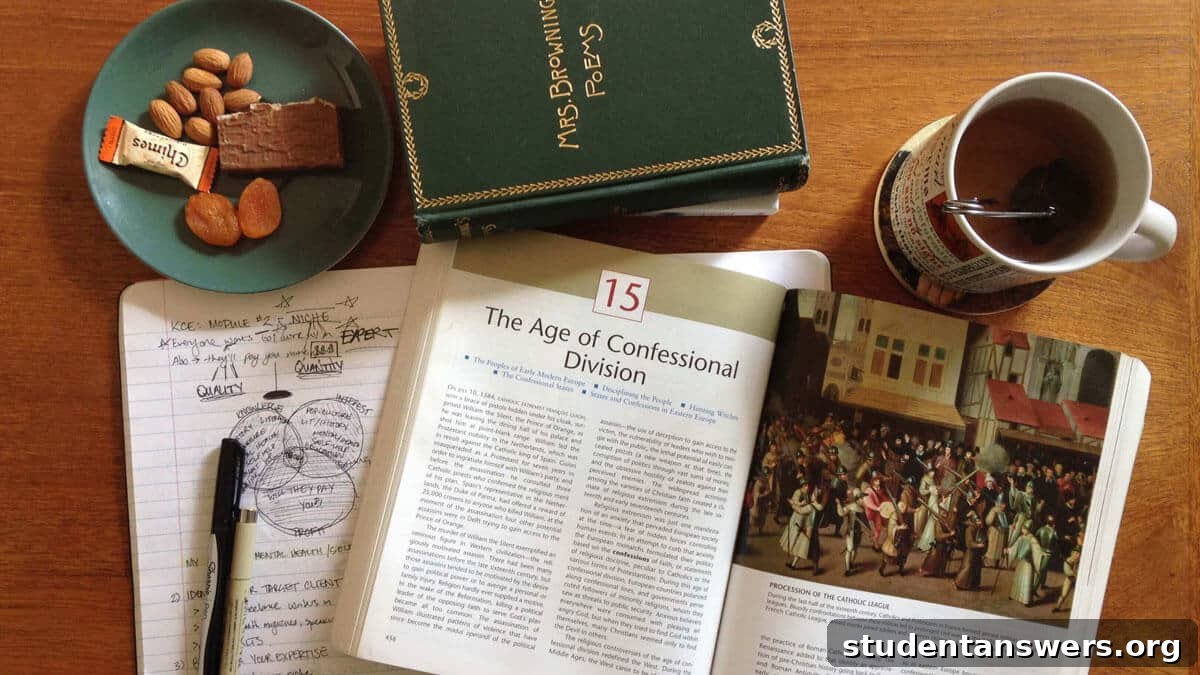
Open book exams often create a false sense of security. Students hear “open book” and imagine an easy A, a simple exercise in looking up answers. However, the reality is often closer to a high-stakes scavenger hunt where the clock is your greatest enemy. These tests are not designed to measure your ability to find information, but to test your ability to apply it.
Think of it this way: the professor knows you have the textbook and your notes. They won’t ask you to simply recall a definition or a date. Instead, they will craft questions that demand critical thinking, analysis, and the synthesis of multiple concepts. You’ll be expected to build arguments, compare theories, and solve complex problems using the resources at your disposal. This is why a solid preparation strategy is not just recommended; it’s essential for success.
So, yes, you absolutely have to study. In fact, you might need to study even more strategically than you would for a traditional closed-book exam. This comprehensive guide will walk you through everything you need to know, from initial preparation and advanced study techniques to time management strategies for the exam day itself. Let’s transform your approach and help you master the art of the open book exam.
How to Prepare Before the Test: The Foundation of Success
Effective preparation begins long before you sit down for your first study session. It starts with building a clear plan of action. This strategic foresight will save you time and reduce anxiety. To build your plan, you need to find the answers to a few critical questions.
- What is the scope of the exam? You must have absolute clarity on what material will be covered. Is it focused on specific chapters, a particular unit, or is it a cumulative final covering the entire semester? Professors often provide a study guide or outline the key topics. If they haven’t, don’t be afraid to ask for clarification. Knowing the boundaries of the test allows you to focus your energy where it matters most.
- What materials are permitted? The term “open book” can mean different things to different instructors. Can you bring your textbook? Your handwritten notes? Previous assignments and quizzes? Are you limited to a single, double-sided “cheat sheet”? Understanding these rules is crucial. Your entire organization strategy depends on knowing exactly what tools you’ll have available during the exam.
- What are the citation requirements? For exams heavy on essays and short-answer questions, especially in the humanities and social sciences, you may be required to cite your sources. Will you need in-text citations? A formal bibliography? Clarify the required format (MLA, APA, Chicago, etc.) beforehand. Preparing a list of key sources and quotes with proper citations in advance can save you a significant amount of time during the test.
Once you have this foundational information, you can move on to the core of your preparation: studying the material and organizing your resources.
Effective Study Strategies for Deeper Understanding
Your primary goal when studying for an open book exam is not memorization, but comprehension. You need to understand the material so well that your notes and textbook become a quick reference, not a crutch you lean on for every question. Here are some powerful techniques to achieve that level of mastery.
- Don’t rely on looking everything up. This is the most common mistake students make. You will not have enough time to search for every answer. Your preparation should focus on knowing the core facts, key definitions, and major concepts by heart. This frees up valuable exam time for tackling the complex questions that require analysis and application. Your goal should be to use your notes to confirm details or find a specific quote, not to learn a concept from scratch.
- Link concepts with mind maps. Open book exams often test your ability to see the bigger picture. A mind map is an excellent tool for this. Start with a central theme from the course and branch out to related ideas, theories, and examples. Visually connecting different pieces of information helps you understand their relationships. For instance, how does an economic theory from Chapter 3 relate to a historical event discussed in Chapter 7? Drawing these connections is exactly the kind of higher-level thinking you’ll need.
- Form a study group. Collaborating with classmates is one of the most effective study methods. Everyone brings a unique perspective and may have picked up on details you missed. Quiz each other, explain complex topics to one another, and compare your organized notes. Teaching a concept to someone else is a proven way to solidify your own understanding.
- Practice with potential questions. Put yourself in your professor’s shoes. What kind of questions would you ask to test understanding rather than recall? Look at your notes and the textbook’s chapter summaries for major themes. Try to formulate potential essay questions and then practice outlining the answers. This exercise prepares you for the format of the exam and forces you to think critically about the material.
With a deep understanding of the material, your next step is to organize your resources for maximum efficiency on exam day.
Organizing Your Materials for Peak Efficiency
During an open book exam, your textbook and notes are your toolkit. A disorganized toolkit will cost you precious minutes. A well-organized one will feel like a superpower. The time you invest in organization beforehand will pay off immensely.
Transforming Your Textbook
Simply bringing your textbook is not enough. You need to turn it into a quick-reference guide. An untouched textbook is almost useless under time pressure. Here’s how to prep it:
- Use tabs and sticky notes: Place tabs at the beginning of each chapter for easy navigation. On each tab, you could write the chapter title or main topic. Use smaller sticky notes to mark specific pages with important diagrams, key theories, or powerful quotes you might want to use.
- Highlight strategically: Don’t highlight everything. Be selective. Highlight only the main ideas, key definitions, and crucial supporting evidence. Use a consistent color-coding system if it helps you. For example, yellow for key terms, pink for important people or dates, and blue for core concepts.
- Create a master index: On a blank page at the front or back of the book, create your own index of the most critical topics. Next to each topic, write down the corresponding page numbers. This is much faster than relying on the book’s own, often convoluted, index during the exam.
Assembling Your Notes File
Your notes file is your personal guide to the course. It should be concise, well-structured, and easy to navigate. Avoid bringing a chaotic stack of every piece of paper from the semester. Instead, curate a streamlined binder or folder.
- Start with a table of contents: This is the single most important organizational tool. Create a one-page table of contents for your notes file and number every page. This allows you to flip to the exact information you need in seconds, rather than frantically searching through a disorganized pile.
- Create a summary sheet: Condense the most critical information onto one or two pages. This should include essential formulas, key definitions, important dates, and the main arguments of major theories. This sheet should be your first point of reference for quick-recall questions.
- Include practice exams and quizzes: If permitted, your past tests are an invaluable resource. Professors often revisit or reframe questions from earlier assessments. Reviewing them can give you insight into the types of questions that might appear.
- Organize chronologically: Arrange your class notes in chronological order. This helps you follow the narrative of the course and understand how concepts built upon each other throughout the semester.
How to Take the Open Book Exam: A Strategy for Success
You’ve done the preparation. You’ve organized your materials. Now it’s time to execute. Just like your study plan, you need a strategy for the exam itself. Time management is the name of the game.
First, ensure you are physically ready. Get a good night’s sleep, eat a healthy meal beforehand, and bring a water bottle. A tired and hungry brain cannot perform at its best, no matter how well you’ve prepared.
When the exam begins, take a moment to breathe. Then, follow this strategic approach:
- Survey the entire test: Before writing a single word, spend the first two to three minutes reading through the entire exam. Note the point value of each question. This allows you to mentally allocate your time. You don’t want to spend 20 minutes on a 5-point question and leave only 10 minutes for a 30-point essay.
- Tackle the easy questions first: Go through and answer all the questions you know immediately without needing to consult your notes. This builds momentum, boosts your confidence, and banks easy points right away.
- Outline your essays: For larger essay questions, take a minute to jot down a quick outline before you start writing. Identify your main argument and the key points you’ll use to support it, noting where you can find supporting evidence in your textbook or notes. This structure prevents rambling and ensures your answer is focused and coherent.
- Paraphrase, don’t copy: Avoid copying long passages from your textbook. It wastes time and doesn’t demonstrate understanding. Professors want to see your own analysis. Paraphrase concepts in your own words and use short, direct quotes only when necessary to support your argument. And remember to cite your sources if required!
What to Do If You Get Stuck
It’s almost inevitable that you’ll encounter a question that stumps you. The key is not to panic and not to waste time. If you don’t know the answer and can’t quickly locate it in your organized materials, mark the question and move on. Don’t let one difficult problem derail your entire exam. Often, working on other questions can jog your memory or provide context that helps you with the one you skipped. If you have time at the end, you can return to it.
Finishing the Exam with Confidence
If you manage your time well, you should have a few minutes left at the end. Use this time wisely.
- Proofread your answers: Read through your responses to catch any spelling errors, grammatical mistakes, or incomplete sentences. Make sure your essays are clear and your arguments are logical.
- Fact-check your work: Use your notes and textbook to quickly double-check any key dates, names, or formulas you used from memory. Ensure your citations are correct.
- Check for missed questions: Do a final sweep of the entire exam, including the back of every page, to make sure you haven’t accidentally skipped a question. It’s a terrible feeling to realize you missed a 10-point problem after you’ve already handed in your test.
When you’ve done all you can, hand in your exam with your head held high. You prepared diligently, you managed your time effectively, and you demonstrated your true understanding of the material. That is the key to conquering any open book exam.