The Power of Essentialism: How to Achieve More by Doing Less
In our hyper-connected, fast-paced world, the feeling of being overwhelmed has become a default state for many. We are bombarded with endless choices, opportunities, and expectations. The internet presents a constant highlight reel of what we *could* be doing: starting a side hustle, learning a new language, traveling the world, mastering a skill. While freedom of choice is a cornerstone of modern life, this infinite menu often leads to a paralyzing paradox. When you try to do everything, you often end up achieving nothing of significance. You spread yourself so thin that your impact in any single area is diluted.
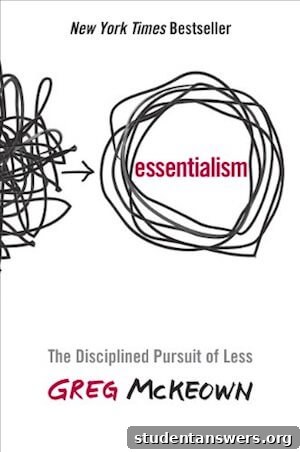
This year, I found myself caught in that very trap. After a major life change, I was faced with a blank canvas and an overwhelming number of options. I tried to pursue several paths at once, believing that more activity equaled more progress. The result wasn’t success; it was burnout and a profound sense of being stuck. It was a clear signal that I needed a fundamental reset. That’s when I revisited a book that had a major impact on me years ago: Essentialism: The Disciplined Pursuit of Less by Greg McKeown.
The lessons within its pages were just as potent and necessary now as they were back then, serving as a powerful antidote to the noise of modern life.
What is Essentialism? The Core Philosophy
At its heart, the philosophy of Essentialism can be captured in a simple yet profound mantra:
Less, but better.
This isn’t about doing less for the sake of laziness or for simply having more free time. It’s about a strategic and deliberate approach to life. It’s about making the wisest possible investment of your time and energy in order to operate at your highest point of contribution. An Essentialist doesn’t ask, “How can I do it all?” Instead, they ask, “What are the few things that truly matter?” and then channel all their energy into those vital few areas.
This approach requires us to become discerning editors of our own lives. We must learn to distinguish the trivial many from the vital few. It means trading a mile of progress in a dozen different directions for a mile of progress in the one direction that counts the most.
The Dangerous Trap of Mediocrity
The biggest danger of a non-essentialist approach isn’t catastrophic failure. If we try to juggle twenty different projects, it’s unlikely that all of them will crash and burn. The more insidious outcome is a quiet, creeping mediocrity. We make just enough progress on each thing to feel vaguely productive, but we never achieve excellence or true momentum in any of them. We find ourselves stuck in a purgatory of “good enough,” never reaching “great.”
This state is arguably worse than failure. When we fail spectacularly, the feedback is clear: something needs to change. But when we are simply floundering, making slow, incremental progress across a wide front, it’s easier to delude ourselves. We can convince ourselves we’re busy and productive, when in reality, our efforts are too scattered to create any meaningful impact.
This mindset can be perfectly summarized by the wisdom of Ron Swanson from the show *Parks and Recreation*, who famously advised: “Never half-ass two things. Whole-ass one thing.” It’s a humorous but deeply insightful take on the power of focused effort.
How to Embrace the Essentialist Mindset: A Practical Guide
Adopting Essentialism is not a one-time decision but an ongoing practice. It involves a three-step process: exploring your options, eliminating the non-essential, and executing flawlessly on what remains.
Step 1: Explore and Discern What Truly Matters
Before you can focus, you must figure out what to focus on. This requires creating space in your life to think, reflect, and evaluate opportunities. The first skill of an Essentialist is learning to filter opportunities through a strict set of criteria.
One powerful technique is the 90% Rule. As you evaluate an option, think of the most important criterion for that decision, and then score the option on a scale of 0 to 100. If you rate it any lower than 90, automatically change the score to 0 and reject it. This forces you to avoid “good” opportunities and only commit to the truly “great” ones. It turns a fuzzy “Should I do this?” into a clear “Is this a hell yes, or is it a no?” If it’s not a clear and enthusiastic yes, then it’s a clear no.
This phase is also about understanding that not all opportunities are created equal. Some activities yield exponentially more results than others. Your task is to identify these high-leverage activities and ruthlessly prioritize them.
Step 2: Eliminate the Non-Essential
This is often the hardest part. Once you’ve identified what is non-essential, you must have the courage to eliminate it. This means learning the powerful art of saying “no.” Many of us are conditioned to be people-pleasers, and saying no can feel confrontational or disappointing to others. However, as McKeown points out, every time you say “yes” to something, you are implicitly saying “no” to everything else you could have been doing with that time. A graceful “no” to a non-essential request is a powerful “yes” to what truly matters to you.
Elimination also involves overcoming the sunk cost fallacy. This is our tendency to continue investing in a project, commitment, or path simply because we’ve already invested time, money, or effort into it, even if it’s no longer the right path. As author James Clear notes, continuing down the wrong path just because you’ve been walking for a long time is “the second mistake.” The Essentialist knows how to cut their losses and redirect their energy toward more fruitful endeavors, regardless of past investment.
Step 3: Execute with Focus and Precision
After clearing the clutter, the final step is to create a system that makes execution as frictionless as possible. With fewer commitments, you can dedicate more focused energy to the ones that remain. This is where concepts like “Deep Work,” as popularized by Cal Newport, become possible. Essentialism creates the space, and Deep Work is how you capitalize on it.
Execution involves removing obstacles that might drain your energy or divert your focus. Build routines that support your essential goals. If writing a book is your priority, block out the first two hours of every morning for writing and protect that time fiercely. If improving your health is essential, prepare healthy meals in advance to remove the friction of daily cooking.
By focusing on one thing at a time and making small, consistent progress, you build momentum. This creates a virtuous cycle where success becomes easier and more natural, reinforcing your commitment to the essential few.
Essentialism in Action: Work, Life, and Digital Habits
The “less, but better” philosophy can be applied to every facet of your life.
- In Your Career: Instead of trying to be on every committee and project, identify the single most valuable contribution you can make to your organization and focus on excelling at it. Learn to decline meetings that lack a clear agenda or purpose. Focus on becoming a true expert in a niche area rather than a generalist with superficial knowledge.
- In Your Personal Life: Apply the 90% Rule to your relationships and social commitments. Nurture the deep, meaningful friendships that energize you, and politely decline the obligations that drain you. Choose hobbies that bring you genuine joy and fulfillment, rather than collecting pastimes you feel you *should* be interested in.
- In Your Digital World: Our digital lives are a primary source of distraction. Practice digital essentialism by unsubscribing from email newsletters you never read, unfollowing social media accounts that don’t add value, and turning off non-essential notifications. Be a conscious consumer of information, not a passive recipient.
Conclusion: The Path to a More Meaningful Life
Essentialism is more than a time management strategy or a productivity technique; it is a mindset. It is a disciplined, systematic approach for determining where our highest point of contribution lies, then making the execution of those things almost effortless. It is a path away from the frantic, reactive churn of modern life and toward a more deliberate, focused, and meaningful existence.
By embracing the principle of “less, but better,” you give yourself permission to stop trying to do it all. You trade the fleeting satisfaction of being busy for the deep fulfillment of making a real impact. The journey starts with a single, simple question: What is essential?