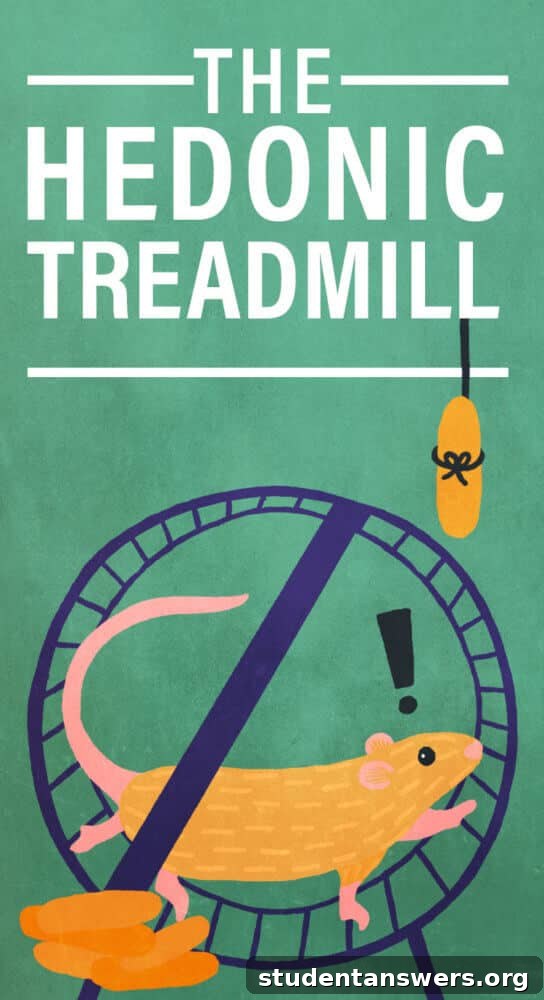
The Hedonic Treadmill: Why Lasting Happiness Feels So Elusive (And How to Find It)
Have you ever reached a major life goal—a promotion, a new car, a dream vacation—only to find the initial thrill fading much faster than you expected? You work hard, you achieve something wonderful, and for a short time, you feel on top of the world. But soon enough, that elevated feeling subsides, and you find yourself back at your usual level of day-to-day contentment. It can feel like you’re running on a treadmill, putting in endless effort just to stay in the same place emotionally.
If this sounds familiar, you’re not alone. This powerful psychological phenomenon is known as the hedonic treadmill, or hedonic adaptation. It’s a core concept in positive psychology that explains why our overall happiness tends to remain surprisingly stable over time, despite the significant positive or negative events that occur in our lives.
Understanding the hedonic treadmill is the first step to breaking free from its cycle. It’s not about giving up on goals or ambitions; it’s about fundamentally shifting how we pursue a more meaningful and enduring sense of well-being. This guide will explore what the hedonic treadmill is, why it happens, and most importantly, provide actionable strategies to step off it and cultivate genuine, lasting happiness.
What is the Hedonic Treadmill? A Deeper Dive
The term “hedonic treadmill” was coined in the 1970s by psychologists Philip Brickman and Donald T. Campbell. They observed that as a person’s income or achievements rise, their expectations and desires also rise in tandem. This continuous upward shift of expectations means that no matter how much you achieve, you never feel like you’ve truly “arrived” at a permanent state of happiness. The finish line keeps moving.
Think of it this way: when you get a significant pay raise, you’re ecstatic. You might upgrade your apartment, eat at nicer restaurants, or buy better clothes. For a while, this new lifestyle feels luxurious. However, over time, this becomes your new normal. Your brain adapts. That once-exciting lifestyle is now just your baseline, and you begin to desire the *next* level of comfort or success to feel that same initial rush of happiness again. You’re running, but your emotional scenery isn’t changing.
This adaptation works in both directions. Consider a negative event, like failing an important exam. In the immediate aftermath, you might feel devastated and believe your future is ruined. But as weeks and months pass, the emotional sting lessens. You adapt to the new reality, find alternative paths, and your happiness level gradually returns to its previous set point. While the event was painful, its long-term impact on your overall well-being is often far less than you initially feared. Our minds are incredibly resilient, constantly working to bring us back to our emotional baseline.
Why We’re Wired for Adaptation
From an evolutionary perspective, the hedonic treadmill makes perfect sense. It’s a survival mechanism. If our ancestors had remained permanently euphoric after a successful hunt, they might have become complacent and less motivated to find their next meal. Likewise, if they were permanently crippled by grief or failure, they would have been unable to recover from setbacks and face new challenges.
Hedonic adaptation serves two key functions:
- It protects us from prolonged despair: By helping us emotionally recover from trauma and loss, it allows us to move forward and continue functioning.
- It keeps us motivated: By preventing us from becoming permanently satisfied, it drives us to continue striving, innovating, and improving our circumstances.
While this trait was essential for survival in a harsh world, in our modern society of relative abundance, it can trap us in a cycle of endless seeking and fleeting satisfaction. The key isn’t to fight this natural tendency but to work with it intelligently.
How to Step Off the Treadmill: 6 Strategies for Sustainable Happiness
So, are we doomed to a life of emotional stagnation, forever chasing a feeling that won’t last? Absolutely not. Research in positive psychology has shown that while our “happiness set point” is partly determined by genetics, a significant portion is influenced by our intentional activities and mindset. By focusing on the right things, we can elevate our baseline happiness over the long term. Here’s how.
1. Invest in Experiences, Not Possessions
One of the most effective ways to counteract hedonic adaptation is to shift your spending from material goods to experiences. Why? We adapt to objects very quickly. A new phone is exciting for a week, but soon it’s just a phone. A new car becomes just your mode of transportation.
Experiences, on the other hand, provide a different kind of value. They create lasting memories that we can revisit and cherish. A trip with loved ones, learning a new skill, or attending a concert becomes part of our identity. Experiences are also less prone to social comparison. While it’s easy to compare your car to your neighbor’s, it’s much harder to compare your unique vacation memories. These memories often grow fonder over time, providing a recurring source of joy.
2. Cultivate Deep Gratitude
Gratitude is the direct antidote to the hedonic treadmill. Adaptation causes us to take our circumstances for granted. Gratitude forces us to consciously appreciate what we already have. Instead of focusing on what’s next, you focus on the good that is present right now. This simple shift in perspective can have a profound impact on your well-being.
How to practice it:
- Keep a gratitude journal: Each day, write down three to five specific things you are thankful for. Don’t just list them; reflect on why you’re grateful for them.
- Express your thanks: Make it a habit to thank people, whether it’s for a small favor or a significant contribution to your life.
- Mindful appreciation: Take a moment during the day to savor a simple pleasure—the taste of your morning coffee, the warmth of the sun, or a favorite song.
3. Nurture Your Social Connections
Countless studies have confirmed that the single greatest predictor of human happiness is the strength of our social bonds. Meaningful relationships with family, friends, and community provide a deep sense of belonging and support that material success can never replicate. The joy derived from positive social interactions is dynamic and varied, making it much more resistant to adaptation.
Prioritize time with people who lift you up. Schedule regular catch-ups, be present in your conversations, and invest energy in building and maintaining these vital connections. Volunteering or joining a group with shared interests can also be a powerful way to build a sense of community.
4. Pursue Meaningful Goals and Purpose
There is a crucial difference between the pursuit of pleasure (hedonism) and the pursuit of meaning (eudaimonia). The hedonic treadmill is fueled by the endless chase for pleasure. Lasting fulfillment, however, often comes from working toward something bigger than yourself.
Set goals that align with your core values. The happiness comes not just from achieving the goal, but from the process of striving toward it. The journey of learning an instrument, training for a marathon, mastering a craft, or contributing to a cause provides a sustained sense of purpose and accomplishment that a one-time achievement cannot match.
5. Embrace Novelty and Variety
Our brains are wired to notice what’s new and different. Routine is the fuel for hedonic adaptation. When something becomes predictable, we stop paying attention to it, and its emotional impact diminishes. By intentionally introducing variety into your life, you can keep your experiences fresh and engaging.
This doesn’t require drastic life changes. Small tweaks can make a big difference. Try a new route to work, listen to a different genre of music, explore a new restaurant in your city, or rearrange the furniture in your room. These small acts of novelty break up the monotony and help you savor everyday life more fully.
6. Practice Mindfulness and Savoring
Mindfulness is the practice of being fully present in the moment, without judgment. It’s about experiencing life as it happens, rather than living in your head, worrying about the future, or ruminating on the past. By being more present, you can fully appreciate positive experiences as they occur, extending their emotional impact.
Savoring is a related concept that involves intentionally focusing on and enjoying a positive feeling or experience. When you eat a delicious meal, don’t just rush through it. Pay attention to the flavors, textures, and aromas. When you accomplish a small task, take a moment to feel the satisfaction. Savoring slows down the process of adaptation and allows you to extract more joy from the good moments in your life.
Conclusion: Happiness as a Practice, Not a Destination
The hedonic treadmill is a fundamental part of our human psychology, but it is not a life sentence. It doesn’t mean that becoming happier is impossible. Rather, it reveals that true, lasting happiness isn’t found in a destination—a specific salary, a new house, or a particular achievement. It’s found in the way we travel.
By understanding that our minds are built to adapt, we can stop pouring all our energy into changing our external circumstances and start investing in our internal mindset and intentional habits. By focusing on experiences, gratitude, connection, purpose, and mindfulness, you can gently step off the treadmill. You can stop running in place and start walking a path toward a richer, more meaningful, and genuinely fulfilling life.