

Beyond the Stigma A New Era for Online Dating
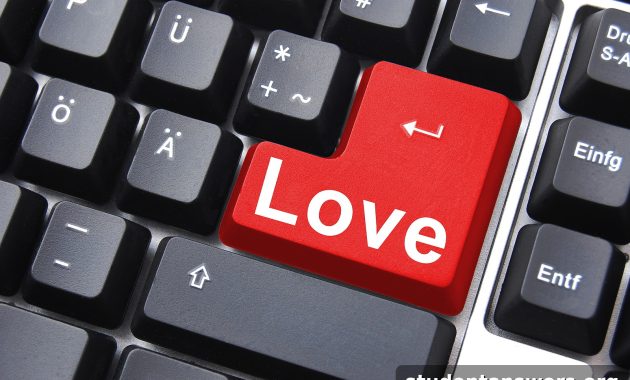
Is Online Dating Still Taboo? It’s Time to Bust the Myths and Embrace Modern Love

Online Dating: A Modern Tool for Connection, Not a Last Resort.
Not too long ago, a friend and I found ourselves on a familiar mission: convincing our other close friend to finally give online dating a try. We reminisced about our teenage years, when the very idea was a running joke—a “last resort” for those who supposedly “couldn’t get a date.” It was something you did in secret, not something you announced to your friends. But today, surrounded by countless success stories of couples who met with a swipe or a click, my curiosity has long replaced my skepticism. We’d often failed as real-life wingmen; could we find more success in the digital realm?
The landscape of online dating is vast and incredibly diverse. Giants like Match.com and eHarmony have become household names, promising sophisticated algorithms to find your perfect partner. Then there are the newer players like Bumble and Hinge, which have revolutionized the experience for a younger generation. Beyond these mainstream platforms, there’s a world of niche sites catering to every imaginable interest, from Green Singles for the eco-conscious to sites for pet lovers, fitness enthusiasts, and religious communities. Despite this proliferation, the initial hurdle for our friend—and for many others—wasn’t a lack of options. It was overcoming the lingering, outdated stigma.
For many, the idea of actively seeking a partner online feels like an admission of failure. A common sentiment I’ve heard is, “Why would you need an app? You meet people all the time—at work, through friends, at parties, on nights out.” This perspective implies that if you haven’t found someone “organically,” there must be something wrong with you. This viewpoint, though often well-intentioned, is rooted in a world that is rapidly changing. It clings to the romanticized notion of the “meet-cute,” a chance encounter worthy of a Hollywood film.
The reality, however, is that these spontaneous, magical moments don’t happen for everyone. Life isn’t a romantic comedy. As we transition from the structured social environments of school and university into the demanding world of our careers, our opportunities for spontaneous social interaction naturally shrink. The assumption that your soulmate is just waiting to bump into you at the grocery store or a coffee shop is a lovely thought, but it’s not a reliable strategy for finding a meaningful connection.
This is where the practicality of online dating becomes its greatest strength. As I explained to my hesitant friend, when you’re working a 50-hour week, commuting, and trying to maintain existing friendships and hobbies, the time and energy left for meeting new people “the old-fashioned way” is severely limited. Dating apps and websites are not a sign of desperation; they are a tool for efficiency. They allow you to connect with a wider pool of people than your daily routine would ever permit, all on your own schedule—whether that’s during your lunch break or while relaxing at home.
Of course, there are valid criticisms. One of the most common is that the process feels robotic and impersonal, like browsing a catalog. You create a profile, tick a few boxes about your preferences, and are presented with a list of potential “matches.” It can feel transactional. Does it really matter if a potential partner’s favorite sport doesn’t align with yours? In the offline world, such a small detail would likely be insignificant. Yet online, it could be the filtering criteria that prevents you from ever seeing their profile. This algorithmic approach can sometimes feel like it strips the serendipity and nuance from falling for someone.
However, it’s crucial to reframe this perspective. These filters aren’t meant to find a carbon copy of yourself. They are designed to help you find people with whom you share fundamental values and life goals, saving you the time and emotional energy of pursuing connections that are destined to fail from the start. You’re not “shopping for a person”; you’re using technology to narrow down a world of seven billion people to a manageable number of individuals who are also actively seeking a connection and with whom you might have genuine compatibility.
To sneer at online dating for not being as spontaneously romantic as a chance encounter is to ignore the evolution of human connection. Throughout history, we have always used the tools at our disposal to find partners, from village matchmakers and family introductions to personal ads in newspapers. Online dating is simply the 21st-century iteration of this age-old pursuit. And the evidence shows that it’s remarkably successful. The industry is worth billions, and studies consistently show that a significant percentage of new relationships and marriages now begin online. It has shifted from a niche, slightly embarrassing activity to a completely mainstream and accepted way of meeting people.
If we are mature enough to navigate careers, finances, and friendships, we should be mature enough to acknowledge that the “perfect” chance encounter is a beautiful but unreliable fantasy. Dating websites and apps empower you to be proactive about your romantic life. They introduce you to people outside your immediate social and professional circles, exponentially widening the pool of potential partners. If a connection doesn’t spark, you simply move on. It’s not a failure; it’s part of the process. It’s just another avenue for meeting people, much like a friend’s party or a new hobby group.
Ultimately, the biggest barrier remaining for my friend was his own mindset. It wasn’t about the technology or the people on the apps; it was about him believing in the concept enough to give it a genuine try. Interestingly, while I’ve become a staunch advocate for online dating for others, I confess I still feel a slight, perhaps hypocritical, hesitation about creating a profile for myself. But my personal reluctance doesn’t change the facts. My old view of it being a joke has been completely replaced by an appreciation for its effectiveness. You can’t honestly dismiss a method that has brought happiness and love to millions of people worldwide.
So, if you’re single and wondering if you should take the plunge, the answer is a resounding yes. It’s time to shed the old stigma and view online dating for what it is: a powerful, practical, and perfectly valid tool for finding connection in our busy, modern world. Your next great love story might just be a click away.