New vs. Used Car: The Ultimate 2024 Guide to Your First Car Purchase
The moment has finally arrived. You’ve diligently saved, and now you’re ready to buy your first car. This is a significant milestone, a passport to freedom and independence. However, before you start picturing yourself on the open road, you face a crucial decision that will shape your entire ownership experience: should you buy a brand new, a nearly new, or a used car? If your budget is extremely tight, an older used car might be your only viable path. But if you have some flexibility, understanding the distinct advantages and disadvantages of each option is essential to making a smart financial decision that you won’t regret.
The allure of a brand-new car—gleaming under the showroom lights with that unmistakable new-car smell—is powerful. Yet, a closer analysis might reveal that a nearly new or well-maintained used model offers far better value. Conversely, you might have your heart set on a specific second-hand bargain, only to discover that an attractive financing deal on a new car makes more sense in the long run. This comprehensive guide will break down everything you need to know to navigate this complex choice with confidence.
The Allure of a Brand New Car: Perfection at a Price
Buying a new car is an experience unlike any other. It’s about more than just transportation; it’s about getting exactly what you want, with the latest features and the peace of mind that comes from being the very first owner. Let’s explore the compelling reasons why drivers continue to choose new vehicles.
Pros of Buying a Brand New Car
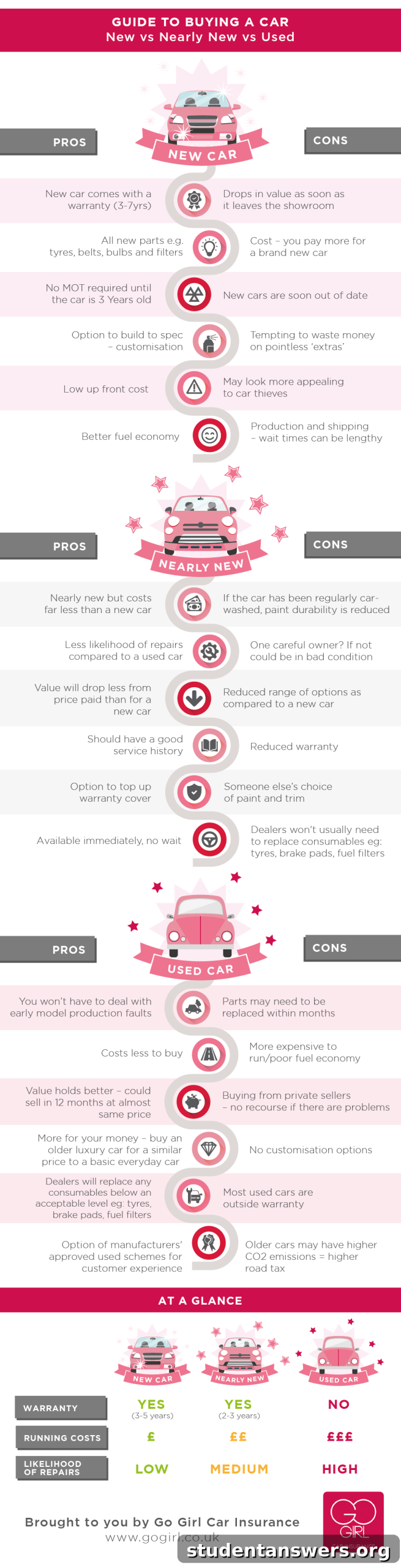
- Complete Peace of Mind with a Manufacturer’s Warranty: This is arguably the biggest advantage. A new car comes with a comprehensive manufacturer’s warranty, typically lasting for three to seven years. This bumper-to-bumper coverage means that if anything goes wrong with the engine, transmission, electronics, or other major components, the repairs are covered at no cost to you. This protection against unexpected, costly repair bills provides invaluable peace of mind.
- Latest Technology and Safety Features: The automotive industry evolves at a rapid pace. A new car gives you access to the very latest advancements in safety and technology. This includes state-of-the-art infotainment systems with Apple CarPlay and Android Auto, advanced driver-assistance systems (ADAS) like automatic emergency braking and lane-keeping assist, and superior fuel efficiency, which can save you money at the pump.
- Customization and Choice: When you order a new car, you are in complete control. You can choose the exact trim level, engine, paint color, interior upholstery, and optional extras you desire. You don’t have to compromise or settle for a combination of features that someone else chose.
- Pristine Condition and That “New Car” Feeling: A brand-new car is a blank slate. There are no mysterious scratches, no strange smells, and no hidden history of previous owners’ habits. You are the first person to drive it, which carries a unique psychological satisfaction.
Cons of Buying a Brand New Car
- Rapid Depreciation: This is the single greatest financial drawback. A new car loses a significant portion of its value the moment you drive it off the dealership lot. It’s not uncommon for a new vehicle to lose 20-30% of its value in the first year alone and up to 50% or more within the first three years. This depreciation is a hidden cost that you don’t see until you decide to sell or trade in the vehicle.
- Higher Purchase Price and Insurance: Naturally, a new car has the highest upfront cost. Even with financing, your monthly payments will be higher than for a used equivalent. Furthermore, because the car’s value is higher, insurance premiums are also typically more expensive to cover the potential cost of replacement or major repairs in an accident.
- Financing Commitments: While financing makes new cars accessible, very few people pay cash upfront. Most buyers rely on finance plans like Personal Contract Purchase (PCP) or Hire Purchase (HP). These are long-term financial commitments that require a steady income, which can be a challenge for students or those just starting their careers.
The Smart Alternative: The Value of a Used Car
For budget-conscious buyers, the used car market offers a world of opportunity. By letting the first owner absorb the steepest depreciation, you can get significantly more for your money. However, this path requires more diligence and comes with its own set of potential risks.
Pros of Buying a Used Car
- Slower Depreciation: The best reason to buy used is that you avoid the massive initial drop in value. The rate of depreciation slows down considerably after the first three years. This means the car you buy will hold its value better over the course of your ownership, leading to a smaller financial loss when you eventually sell it.
- More Car for Your Money: Your budget stretches much further in the second-hand market. For the price of a basic, entry-level new car, you could potentially afford a 3-to-5-year-old model that is larger, more powerful, more luxurious, and better equipped. Luxury vehicles, which depreciate the fastest, can often look like incredible bargains.
- Lower Insurance Costs: In general, a car with a lower replacement value will cost less to insure. This can lead to significant annual savings, especially for younger drivers who already face high premiums.
- Proven Reliability Data: Once a car model has been on the road for a few years, a wealth of information becomes available. You can research common problems, recall history, and long-term reliability ratings from other owners, helping you choose a model with a proven track record.
Cons of Buying a Used Car
- Potential for a Hidden History: This is the primary risk. A used car may have been in an undisclosed accident, poorly maintained, or have its mileage “clocked” (illegally rolled back). It’s crucial to get a comprehensive vehicle history check and, ideally, a professional pre-purchase inspection from a trusted mechanic.
- Higher Running and Maintenance Costs: As a car ages and accumulates miles, parts naturally wear out. You are more likely to face repair bills for items like brakes, tires, exhaust systems, and suspension components. Older engines may also be less fuel-efficient, leading to higher fuel costs and potentially higher road tax.
- Lack of Warranty: Most used cars are sold “as is,” meaning you are responsible for any repairs needed after the purchase. While some dealers offer limited 30 or 90-day warranties, you won’t have the comprehensive protection of a new car’s manufacturer warranty.
- Outdated Features: Depending on its age, a used car might lack the modern safety and tech features that are now standard, such as a touchscreen infotainment system, advanced driver aids, or the latest fuel-saving engine technology.
The Best of Both Worlds? Exploring the Nearly New Option
Sitting comfortably between brand new and used is the “nearly new” category. These are typically cars that are less than three years old, often ex-demonstrator models or vehicles returned at the end of a short lease. They offer a fantastic compromise, blending many of the benefits of a new car with the value of a used one.
The biggest benefit is that you’re buying a car after the steepest part of the depreciation curve has already passed. The first owner took the biggest financial hit. Yet, the car is still modern, in excellent condition, and often still has a portion of its original manufacturer’s warranty remaining. This gives you the peace of mind of a new car without the hefty price tag. You get current technology, safety standards, and fuel efficiency, but at a discounted price. The main drawback is a lack of choice; you can’t customize the car and must choose from the available stock.
Making Your Final Decision
Choosing between new, nearly new, and used is a personal decision that boils down to two key factors: your budget and your priorities.
First, analyze your total budget, not just the sticker price. Consider the Total Cost of Ownership (TCO), which includes:
- Purchase Price or Monthly Finance Payments
- Car Insurance Premiums
- Road Tax
- Estimated Annual Fuel Costs
- Potential Maintenance and Repair Fund
Second, be honest about your priorities. If having the latest safety features and a full warranty for complete peace of mind is most important, a new or nearly new car is your best bet. If your primary goal is to get the most luxurious or powerful vehicle for the lowest possible purchase price, the used market is the place to look. By carefully weighing these pros and cons against your personal circumstances, you can make an informed choice and drive away happy in your first car.