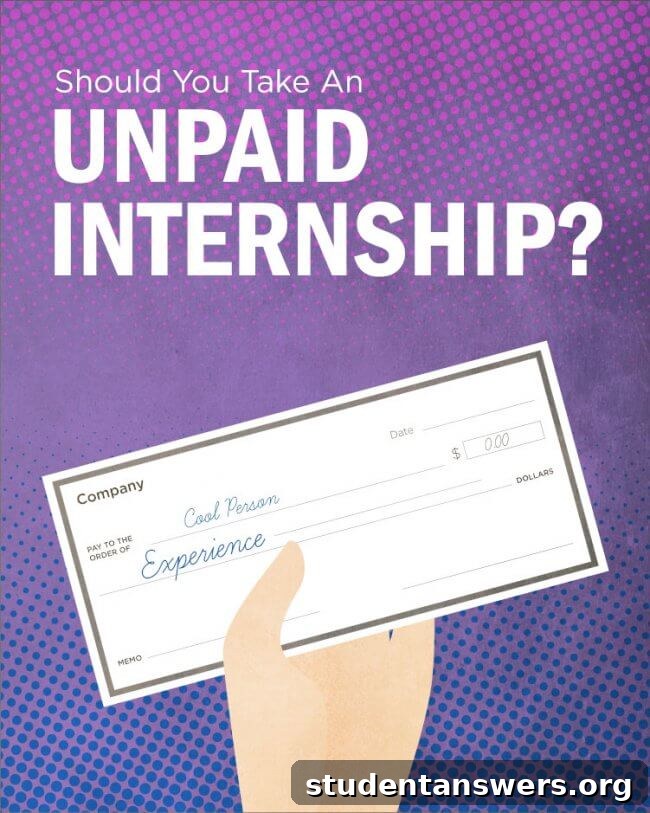
The Unpaid Internship Dilemma: Is It a Golden Opportunity or a Career Trap?
You’ve done it. After countless applications and nervous interviews, you’ve finally landed a summer job offer in your desired field. There’s just one catch: it’s an unpaid internship. This common scenario can feel like a cruel joke, a mix of excitement and disappointment. An unpaid position can be a powerful launchpad for your career, offering priceless experience and connections. However, it can also be an exploitative waste of your valuable time and energy. So, when faced with this decision, how can you tell if an unpaid internship is a strategic investment in your future or a significant misstep?
Navigating this choice requires a careful and honest assessment of the opportunity, your financial situation, and your long-term career goals. This guide will walk you through the essential factors to consider, helping you weigh the pros and cons to make an informed decision that truly benefits you.
Understanding the Real Value of an Unpaid Internship
Before dismissing an offer because it lacks a paycheck, it’s crucial to understand what you might gain instead. While money is a tangible reward, the benefits of a well-structured unpaid internship are often less immediate but can have a far greater impact on your career trajectory. These positions are not about free labor; they are about gaining a competitive edge in a crowded job market.
Gaining Invaluable, Real-World Experience
The primary benefit of any good internship is hands-on experience. Your college courses provide the theoretical foundation, but an internship is where you learn to apply that knowledge in a professional setting. You’ll be exposed to industry-standard software, participate in team meetings, contribute to real projects, and learn the unspoken rules of workplace etiquette. This practical experience is what employers look for when hiring for entry-level roles. It proves you can transition from an academic environment to a professional one, making you a much more attractive candidate than someone with a degree but no practical skills.
Building a Powerful Professional Network
The old saying, “It’s not what you know, it’s who you know,” holds a lot of truth in the professional world. An internship is an unparalleled networking opportunity. You will work alongside experienced professionals who can become mentors, offer career advice, and even serve as references for future jobs. The connections you make can lead to freelance opportunities, job alerts, and introductions to other key players in your industry. A positive impression left on your colleagues and supervisor can open doors years down the road.
Boosting Your Resume and Portfolio
In a sea of recent graduates with similar degrees, a relevant internship on your resume is a major differentiator. It signals to recruiters that you are proactive, passionate about your field, and have already taken steps to build your skills. For those in creative fields like design, writing, or marketing, an internship provides the perfect chance to create tangible work for your portfolio. A portfolio filled with professional-quality projects is far more persuasive than a list of completed courses.
When Should You Seriously Consider an Unpaid Internship?
Not all unpaid internships are created equal. Accepting one should be a strategic choice based on a clear set of criteria. Here’s a checklist to help you evaluate whether a specific offer is worth your time.
1. The Work Is Directly Aligned with Your Career Goals
The experience you gain must be highly relevant to the career you want to pursue. If you want to be a data analyst, an internship where you’re analyzing real data sets is valuable. If you’re just making coffee and running errands, you’re not learning transferable skills. Ask for a detailed description of your potential duties and responsibilities. If the role provides a clear path to learning and growth in your chosen field, it’s a strong contender.
2. The Company Has a Strong Reputation
An internship with a well-respected company or a prominent leader in your industry carries significant weight. Having a recognizable name on your resume can act as a powerful endorsement of your abilities. These companies often have structured, mentorship-focused internship programs designed to foster new talent. Research the company, read reviews from past interns, and ensure it’s an environment where you can genuinely learn.
3. The Role Offers Significant Learning and Mentorship
A quality internship is an educational experience. There should be a designated supervisor or mentor who is invested in your development. You should be receiving regular feedback, training on new tools, and the opportunity to ask questions. An internship where you are left to your own devices or given menial tasks with no guidance is a red flag. The company should be investing its time and resources in you, even if it isn’t a monetary investment.
4. The Time Commitment Is Manageable
Consider the hours required. A part-time, flexible internship that allows you to hold a paid job simultaneously is far more feasible than a full-time, 40-hour-per-week commitment. Be realistic about what you can handle financially and mentally. Burnout is real, and taking on too much can negatively impact both your internship performance and your financial stability.
The Financial Reality: What to Do If You Can’t Afford to Work for Free
Let’s be clear: the ability to accept an unpaid internship is a privilege. For many students, working without pay is simply not an option. If you find yourself in this position, don’t feel discouraged. You have several alternatives to build your resume and gain experience.
- Negotiate for a Stipend: Even if the role is advertised as “unpaid,” it doesn’t hurt to ask for a small stipend to cover transportation or lunch costs. The worst they can say is no. Frame it as a way to help you fully commit to the role without financial stress.
- Seek College Credit: Many universities offer academic credit for internships. While this doesn’t pay the bills, it can fulfill graduation requirements, potentially saving you tuition money on a future class.
- Look for University Funding: Some colleges have grants or scholarships specifically designed to support students taking on unpaid internships in certain fields, such as non-profits or public service. Check with your career services or financial aid office.
- Prioritize Paid Opportunities: There are many paid internships out there. Broaden your search and don’t limit yourself. Furthermore, any paid job can teach you valuable soft skills like time management, customer service, and responsibility. A relevant part-time job or a well-executed personal project can be just as impressive to an employer.
Red Flags: How to Spot an Exploitative Internship
It’s vital to protect yourself from positions that are simply seeking free labor under the guise of an internship. Here are some major red flags to watch out for:
- Vague Job Description: If the company can’t clearly define what you’ll be doing or what you’ll learn, it’s likely they don’t have a structured program.
- Replacing a Paid Employee: An intern’s work should supplement the work of paid staff, not replace it. If the duties sound like a full-time job that a regular employee would do, the company may be violating labor laws.
- No Dedicated Supervisor: A lack of mentorship or a clear point of contact for guidance is a sign that the company is not invested in your learning.
- Focus on Menial Tasks: If the primary responsibilities involve administrative work, coffee runs, or tasks that require no specialized skills, the internship offers little educational value.
Conclusion: A Calculated Decision for Your Future
An unpaid internship is neither inherently good nor bad; its value is determined by the context. It can be a transformative experience that accelerates your career, providing you with the skills, confidence, and connections needed to land your dream job. However, it can also be an unsustainable and unrewarding venture if not chosen carefully.
Before you accept an offer, treat it like any other major investment. Analyze the potential return—experience, networking, resume-building—against the cost—your time, labor, and financial stability. By asking the right questions and being honest about your needs, you can ensure that your decision is a strategic step forward, paving the way for a successful and fulfilling career.