Success Beyond the Degree
Beyond the Bachelor’s Degree: Exploring Top Alternatives to a Four-Year College
The traditional path to a successful career once seemed set in stone: finish high school, enroll in a four-year university, earn a bachelor’s degree, and then land a great job. For generations, this was presented as the primary, if not only, route to a stable and prosperous life. However, the modern landscape of education and employment is rapidly changing. With the staggering cost of tuition, the looming shadow of student loan debt, and a growing demand for specialized, practical skills, more people are asking a crucial question: Is a four-year college the only way?
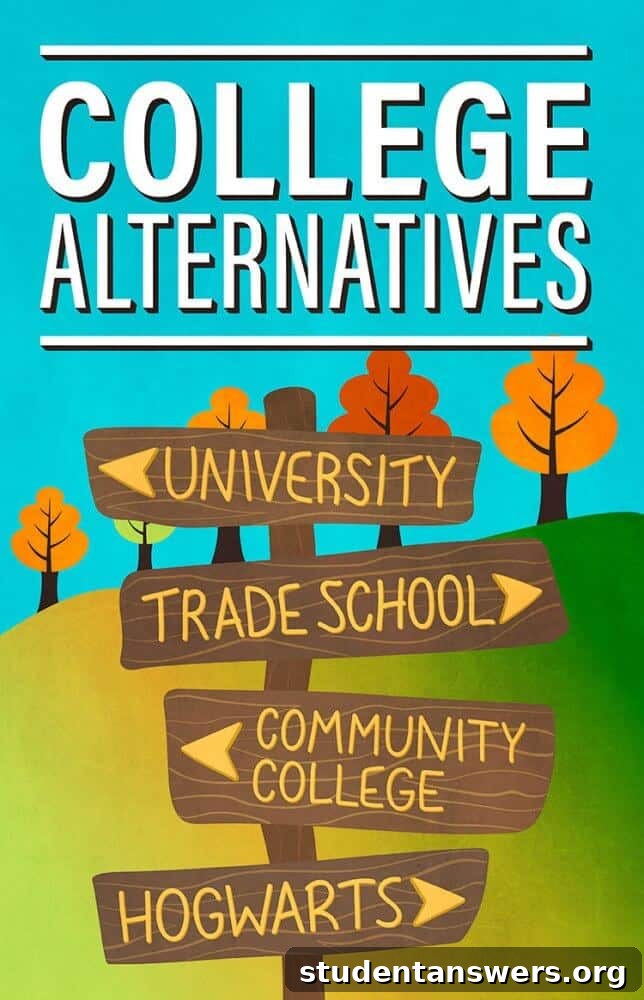
The answer is a resounding no. A prestigious university degree is still a valuable asset for many, but it is far from the only ticket to success. A diverse array of alternative paths has emerged, each offering unique advantages for different career goals, learning styles, and financial situations. These options can provide faster, more affordable, and more direct routes to fulfilling and high-paying careers.
This guide will explore some of the most compelling alternatives to the traditional four-year college experience. From community colleges and trade schools to professional certifications and coding bootcamps, we’ll delve into what each path entails, who it’s best suited for, and how it can serve as a powerful launchpad for your future. It’s time to look beyond the ivy-covered walls and discover the wealth of opportunities waiting for you.
Community College: The Smart and Affordable Stepping Stone
Often overlooked or unfairly stigmatized, community college is one of the most strategic and financially savvy options available in higher education. It offers a flexible and accessible entry point into post-secondary learning, serving a wide range of academic and professional goals.
What is Community College?
Community colleges are two-year public institutions that offer associate’s degrees, diplomas, and certificates in a variety of fields. They are designed to serve their local communities, providing open-access admission policies that make education available to everyone. Whether you’re aiming to transfer to a four-year university or gain skills for immediate employment, community college provides a solid foundation.
Key Benefits of Community College:
- Significant Cost Savings: The most apparent advantage is the price. Tuition at a community college is a fraction of what you would pay at a public or private four-year university. By completing your first two years of general education requirements at a community college, you can save tens of thousands of dollars.
- The Transfer Pathway (2+2 Programs): Many students use community college as a launchpad to a bachelor’s degree. They complete an associate’s degree (the first two years) and then transfer those credits to a four-year institution to complete their final two years. This “2+2” model allows you to earn the same bachelor’s degree at a much lower overall cost.
- Flexible Scheduling: Community colleges are built to accommodate diverse student populations, including working adults. They often offer a wide array of evening, weekend, and online classes, allowing you to balance your education with work and family commitments.
- Smaller Class Sizes: Unlike the massive lecture halls common in the first two years of a large university, community colleges typically feature smaller class sizes. This fosters a more intimate learning environment where you can receive more personalized attention from your instructors.
Trade Schools and Vocational Training: Master a Craft, Build a Career
While universities focus on theoretical knowledge and academic research, trade schools (also known as vocational or technical schools) are all about practical, hands-on training for specific, in-demand jobs. If you enjoy working with your hands and want to enter the workforce quickly, this path is worth serious consideration.
What is a Trade School?
Trade schools offer specialized programs that prepare students for careers in skilled trades and technical fields. These programs are laser-focused on the skills employers are looking for, cutting out the general education courses required by traditional colleges. Program lengths vary but are typically much shorter, ranging from a few months to two years.
In-Demand Careers You Can Pursue:
- Construction Trades: Electrician, Plumber, HVAC Technician, Welder, Carpenter.
- Healthcare: Dental Hygienist, Medical Assistant, Pharmacy Technician, Licensed Practical Nurse (LPN).
- Automotive Technology: Auto Mechanic, Diesel Technician, Collision Repair Specialist.
- Cosmetology: Hairstylist, Esthetician, Barber.
- Culinary Arts: Chef, Pastry Artist, Restaurant Manager.
As industry advocate Mike Rowe often points out, there is a significant skills gap in our economy. While many chase white-collar office jobs, there is a massive demand for skilled trades professionals. This demand often translates into excellent job security and high earning potential, frequently without the burden of massive student debt.
Professional Certifications: Validate Your Skills for the Modern Workforce
In today’s fast-paced job market, a degree is not always the most important credential. For many industries, especially in the tech sector, a professional certification can be more valuable. Certifications are industry-recognized credentials that prove your proficiency in a specific skill, tool, or methodology.
How Certifications Can Boost Your Career:
Unlike degrees, which cover a broad range of subjects, certifications are highly targeted. They demonstrate to employers that you have a specific, verifiable skill set that can be immediately applied to the job. They are an excellent way to break into a new field or advance in your current one.
Popular and Lucrative Certification Areas:
- Information Technology (IT): Certifications like CompTIA A+ for IT support, Cisco CCNA for networking, and Microsoft MCSE for systems engineering are industry standards.
- Project Management: The Project Management Professional (PMP) certification is globally recognized and highly sought after for roles in managing complex projects.
- Cloud Computing: With the rise of cloud services, certifications from Amazon (AWS Certified Solutions Architect), Google (Google Cloud Professional), and Microsoft (Azure Administrator Associate) are in extremely high demand.
- Digital Marketing: Credentials from Google Analytics, HubSpot, and Facebook Blueprint can validate your expertise in online marketing, SEO, and social media.
Many certifications can be earned through self-study and online courses, making them a flexible and cost-effective way to enhance your resume and increase your earning potential.
Coding Bootcamps: The Fast Track to a Career in Tech
The technology sector continues to boom, and the demand for skilled software developers, data scientists, and UX/UI designers is at an all-time high. Coding bootcamps have emerged as a popular and effective alternative to a four-year computer science degree, offering an intensive, accelerated path into a tech career.
What is a Coding Bootcamp?
A coding bootcamp is a short-term, immersive training program that teaches the practical, job-ready skills needed for a career in software development. These programs typically last between 12 and 26 weeks and focus entirely on the most relevant programming languages and technologies. The curriculum is project-based, designed to help students build a professional portfolio to showcase to potential employers.
The Bootcamp Advantage:
- Speed to Market: You can go from a beginner to a job-ready developer in under a year, a stark contrast to the four years required for a traditional degree.
- Industry-Relevant Curriculum: Bootcamps are agile and constantly update their curriculum to match the current demands of the tech industry. You learn the tools and technologies companies are actively using today.
- Career Support: Most reputable bootcamps, like Thinkful and App Academy, offer robust career services, including resume help, interview prep, and connections to hiring partners. Some even offer deferred tuition or income share agreements (ISAs), where you don’t pay until you land a job.
While bootcamps require a significant investment of time and money, a 2017 survey by the job site Indeed found that an overwhelming majority of employers who have hired bootcamp graduates were satisfied with their performance and would hire them again. For those who are motivated and self-driven, a bootcamp can be a transformative experience.
Conclusion: Charting Your Own Course to Success
The notion that a four-year university is the only path to a successful and fulfilling life is outdated. The world is full of diverse opportunities, and your post-high school journey should be tailored to your unique passions, strengths, and goals. Whether you choose the affordable and strategic route of community college, the hands-on expertise of a trade school, the targeted skills of a professional certification, or the immersive experience of a coding bootcamp, you are taking control of your future.
The most important step is to do your research, understand your options, and make an informed decision that aligns with the life you want to build. Success is not defined by a single path, but by the dedication, skill, and passion you bring to the path you choose.