

Should I Go to College? 4 Critical Questions to Ask Before You Decide
From a young age, the path seems set in stone. In elementary school, teachers warn us about the high standards of college professors. By middle school, conversations about majors and universities begin. In high school, the pressure intensifies: stack up on AP classes, join every club, and volunteer your weekends away—all to build the perfect college application.
This relentless push towards higher education is built on a simple assumption: college is the default next step. But what if it isn’t? The reality is, a traditional four-year university isn’t the right choice for everyone. The decision to enroll is a massive commitment of time, money, and energy, and it shouldn’t be made lightly.
If you’re questioning whether college is the right path for you, you’re not alone. Before you commit to a decision driven by expectation, take a step back. Here are four essential questions to ask yourself to determine if college truly aligns with your goals and aspirations.
1. Do You Have a Clear Career Goal That Requires a Degree?
It’s incredibly difficult to know what you want to do for the rest of your life, especially when you’re still a teenager or in your early twenties. When I was applying to colleges, I was torn between graphic design and teaching. Ultimately, my career took a completely different turn, one I never would have predicted.
This uncertainty is common, but it can be costly. A friend of mine enrolled in a marine biology program, fascinated by sea turtles. After two years and thousands of dollars in tuition, she realized it wasn’t her passion. She switched to pre-med, then to physiotherapy. Today, she’s still figuring out her path, but now she’s behind on her degree and burdened with significant student debt.
There’s nothing inherently wrong with changing your major. College is a fantastic place to explore new subjects and discover hidden passions. If you have the financial freedom to experiment with a variety of classes, it can be a wonderful journey of self-discovery.
However, for the vast majority of students who rely on loans, college is an expensive place to find yourself. There are countless ways to explore your interests and gain life experience without accumulating a mountain of debt.
The Alternative: Take a Gap Year for Exploration
“For many students, a gap year is about crystallising their decision-making; developing self-directed and self-regulation skills, broadening their competencies and self-organisation and perhaps their confidence.”
– Andrew J. Martin, published in the Journal of Higher Education
If you’re unsure about your future career or field of study, consider taking a gap year. This isn’t about taking a year “off”; it’s about taking a year “on”—on your own terms. It’s a chance to invest your time and money in real-world experiences that can shape your future. You could:
- Travel internationally and immerse yourself in a new culture.
- Volunteer for a cause you’re passionate about.
- Learn a new language through an immersion program.
- Work in different industries to see what you enjoy.
- Pursue a creative hobby like photography, music, or coding.
- Start a small online business or a YouTube channel.
These experiences can provide clarity and direction. Research from the Gap Year Association shows overwhelmingly positive results for students who take a break:
- 90% of students who took a gap year returned to college within a year.
- 96% reported that their gap year increased their self-confidence and maturity.
- 84% felt they acquired skills that would be valuable in their future career.
- 77% said their gap year significantly influenced their choice of college major.
Furthermore, another study found that students who take a gap year often achieve higher academic success than their peers who go straight from high school to university.
2. Are You Going to College Primarily to Meet Others’ Expectations?
One of the most powerful forces pushing students toward college is social pressure. My own decision was heavily influenced by the fact that everyone else was going. It felt less like a choice and more like an obligation.
Research from Degree Query reveals that 30% of students attend a four-year university simply because they believe it’s what they are supposed to do. Society ingrains in us the narrative that college is the one true path to success. Parents, grandparents, and teachers all echo the same message: get a degree, get a good job, and secure your future.
But enrolling in college is a massive, multi-year commitment that can cost tens or even hundreds of thousands of dollars. Making that commitment just to please someone else is a recipe for dissatisfaction and financial strain. A college degree is no longer a guaranteed ticket to a high-paying job. A Consumer Reports study found that 45% of graduates felt college wasn’t worth the cost, and nearly half of recent grads are underemployed, working jobs that don’t require a degree.
The Alternative: Start at a Community College
If the idea of skipping college entirely feels too daunting, consider a powerful middle ground: a local community college. This option allows you to continue your education and explore your interests with far less financial risk and commitment. You can earn an associate’s degree or complete general education requirements that often transfer to a four-year university.
The cost difference is staggering. The average yearly tuition at a public four-year university is around $10,000, while a public community college averages just $3,500. This financial breathing room allows you to test out different subjects without the fear of wasting a fortune. At the end of two years, you have choices.
If you discover a passion and want to pursue a bachelor’s degree, you can transfer, having already saved a significant amount of money. If you decide a four-year degree isn’t for you, you still walk away with an associate’s degree—a valuable credential in its own right. According to the U.S. Bureau of Labor Statistics, individuals with an associate’s degree earn more on average and have lower unemployment rates than those with only a high school diploma.
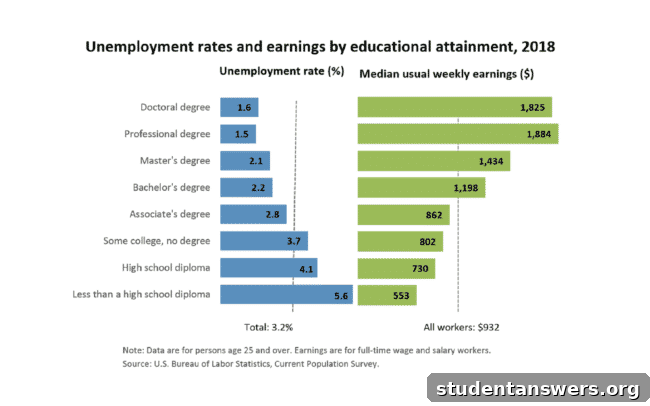
The data shows that while a bachelor’s degree leads to higher earnings, the gap in employment rates between associate’s and bachelor’s degree holders is surprisingly small. An associate’s degree can open doors to stable, well-paying careers without the immense debt of a four-year program.
3. Do You Thrive in a Traditional Academic Setting?
Let’s be honest: four more years of lectures, term papers, and late-night study sessions is a long haul. If you found high school to be a struggle or simply didn’t enjoy the classroom environment, committing to an even more intense academic experience might not be the best fit.
Our society often equates academic aptitude with overall intelligence, but that’s a narrow view. Not everyone is built to be a lawyer, a computer scientist, or a historian. Many people are brilliant hands-on learners, creative problem-solvers, and skilled technicians. Your learning style doesn’t define your intelligence or your potential for success. It simply means you might thrive on a different path.
The Alternative: Attend a Trade School
If you prefer learning by doing, a vocational or trade school could be your ideal next step. Skilled trades are currently in extremely high demand, and these careers often pay exceptionally well. Instead of studying theory, you’ll be gaining practical, job-ready skills. There are hundreds of exciting options:
- Welding or advanced manufacturing.
- Construction management or carpentry.
- Electrical work or plumbing.
- Automotive or diesel technology.
- Cosmetology or culinary arts.
- Web development or digital marketing.
- Paralegal or medical assistant training.
- Aviation mechanics or commercial piloting.
These are not just jobs; they are skilled professions that form the backbone of our economy. The financial advantage is also significant. The average cost of a trade school program is about $33,000. In contrast, the total average cost of a bachelor’s degree at a public university, including room and board, can easily exceed $100,000. Many trade programs also include paid apprenticeships, meaning you can earn money while you learn instead of going into debt.
4. Are You Willing to Put the Rest of Your Life on Hold?
While college is a time of immense personal growth, it also exists in a unique bubble. For four years, your primary focus is academics. You may be living in a dorm with strict rules, your free time consumed by studying, and your career progression largely on pause.
For some, this structured transition to adulthood is perfect. For others, it can feel like a delay. Perhaps you’re eager to gain financial independence, start your career, or build something of your own. If you feel ready to dive into the real world, you don’t have to wait.
Real-world experience is incredibly valuable. In fact, a survey of American employers revealed that when evaluating candidates, most managers value internships, work experience, and volunteerism more than a high GPA or relevant coursework. In the job market, proven experience often trumps a diploma.
The Alternative: Start a Business or Land an Internship
There has never been a better time to jump-start your career without a degree. One of the most empowering options is to start your own business. When you’re young, you often have fewer financial responsibilities and more time and energy to dedicate to a new venture. The risk is low, and the potential for learning is immense. You could launch a website, build an app, or start freelancing your skills.
If entrepreneurship isn’t your style, seek out an internship in a field that interests you. An internship is a direct pipeline to a career, offering practical skills, professional connections, and a crucial look inside an industry. Many internships are paid, and some even offer the chance to work abroad. If a formal internship isn’t available, volunteering or finding part-time work in your desired field can be just as valuable for building your resume.
Make the Choice That’s Right for You
Ultimately, the decision of whether or not to go to college belongs to you and you alone. Don’t let pressure or expectations make this choice for you. Take your time, evaluate your personal and financial situation, and explore all the available options.
Choosing a path other than a four-year university takes courage, but it can lead to a fulfilling and successful life. And going the traditional route is a fantastic choice, as long as:
- You’re academically and mentally ready for the commitment.
- You can afford it without taking on crippling debt.
- The degree you pursue offers a reasonable return on your investment.
Remember, this decision, while important, is not the final word on your future. You can always go to college later in life. You can change careers. No matter what you choose, if you make an informed decision based on your own goals and values, you’re already on the path to success.