
A Blast from the Past: Rediscovering the Charm of 90s Technology and Gaming Nostalgia
Remember the screech of a dial-up modem connecting to the internet? The satisfying click of a floppy disk sliding into a drive? Or the sheer joy of unboxing a brand-new Nintendo 64 on a birthday morning? For anyone who grew up in the 1990s, these memories are more than just recollections; they are the foundational pixels of a digital world coming into its own. The 90s was a magical, transitional era, a bridge between the analog past and the hyper-connected future we live in today. It was a time of technological marvels that now seem quaint, but their impact on our lives and the culture they created is undeniable. Let’s take a nostalgic journey back to explore the iconic technology and groundbreaking video games that defined a generation.
The Dawn of the Digital Age: Everyday Tech That Shaped the 90s
Before smartphones became our all-in-one life companions, a variety of distinct gadgets filled our homes, desks, and backpacks. Each served a specific purpose, and mastering them felt like wielding a piece of the future. This was the hardware that powered the 90s experience.
The Sound of the Internet: Dial-Up and AOL
The internet of the 90s was not an “always-on” utility; it was a destination you had to travel to. This journey began with the iconic, cacophonous symphony of a 56k modem dialing up. That series of beeps, squawks, and static was the sound of possibility, the gateway to a new world. It also meant tying up the phone line, leading to countless arguments with family members who wanted to make a call. Once connected, services like America Online (AOL) were many people’s first taste of the online world. The friendly greeting, “You’ve Got Mail!”, delivered a dopamine hit long before social media notifications. We explored chat rooms, customized our AIM (AOL Instant Messenger) profiles with angsty song lyrics, and surfed a curated version of the web that felt both vast and manageable.
Physical Media in a Digital World: Floppy Disks, CDs, and Zip Drives
Today, we save files to the cloud without a second thought. In the 90s, data was tangible. The 3.5-inch floppy disk, with its modest 1.44 MB capacity, was the undisputed king of portable storage. It was how we transported school essays, shared shareware games, and learned the universal symbol for “save.” A single high-resolution photo today wouldn’t fit, but back then, it held our digital world.
The arrival of the CD-ROM (Compact Disc Read-Only Memory) was a revolution. Holding a whopping 650 MB, these shiny discs brought multimedia to the masses. Encyclopedias like Microsoft Encarta came alive with video clips and sound, making research an adventure. Most importantly, CD-ROMs transformed PC gaming, allowing for richer graphics, full-motion video cutscenes, and CD-quality audio that was impossible on floppy disks. For those with more serious storage needs, the Iomega Zip Drive offered a “massive” 100 MB of space, becoming a staple for graphic designers and students with large projects.
Communication on the Go: Pagers and the Rise of Instant Messaging
Before text messages, there were pagers, or “beepers.” These small devices clipped to your belt and displayed a phone number, signaling you to find a payphone and call back. A sophisticated code language quickly developed: “911” for an emergency, “411” for information, and the classic “143” for “I love you.” It was asynchronous communication in its infancy. Later in the decade, as more homes got online, AOL Instant Messenger (AIM) became the definitive social network for a generation. We curated our “buddy lists,” set clever away messages, and spent hours typing back and forth with friends, accompanied by the iconic door-opening and -closing sound effects that announced their digital presence.
The Golden Age of Gaming: A Revolution in the Living Room
The 1990s is often hailed as the golden age of video games. It was a period of intense innovation, fierce competition, and the birth of legendary franchises that are still beloved today. Technology leaped from 2D sprites to immersive 3D worlds, forever changing what a video game could be.
The Console Wars: Nintendo vs. Sega
The early 90s were defined by a legendary rivalry: the 16-bit console war between the Super Nintendo Entertainment System (SNES) and the Sega Genesis. Playgrounds became battlegrounds for debating which was superior. Nintendo had the colorful, polished adventures of Super Mario World and The Legend of Zelda: A Link to the Past. Sega countered with the edgy, lightning-fast attitude of Sonic the Hedgehog. This competition pushed both companies to create some of the most refined and timeless 2D games ever made.
The Jump to 3D: PlayStation and Nintendo 64
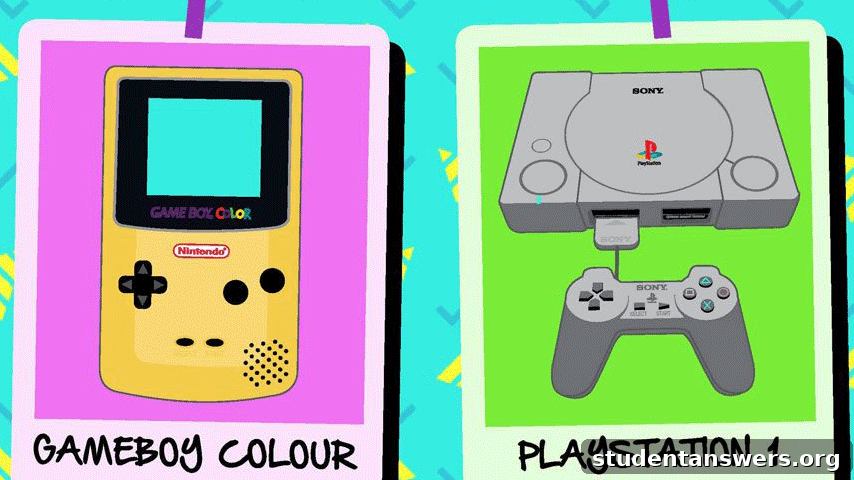
The mid-90s marked a paradigm shift with the arrival of 32-bit and 64-bit consoles. Sony entered the market with the PlayStation, a sleek, CD-based system that targeted a more mature audience with cinematic experiences like Final Fantasy VII and Metal Gear Solid. It quickly became a cultural phenomenon.
Meanwhile, Nintendo changed the game again with the Nintendo 64. Its unique controller with an analog stick and the groundbreaking launch title, Super Mario 64, gave players unprecedented freedom of movement in a 3D space. Gathering with three friends for a chaotic session of GoldenEye 007 or Mario Kart 64 became a rite of passage for an entire generation.
PC Gaming Ascends: From DOOM to Myst
The PC wasn’t left behind; in fact, it was the epicenter of some of the decade’s biggest innovations. The rise of shareware allowed players to try the first chapter of games like DOOM for free, leading to its explosive popularity and the birth of the first-person shooter genre. Games like Myst and Riven demonstrated the PC’s ability to create atmospheric, thought-provoking puzzle worlds, while strategic masterpieces like StarCraft and Age of Empires laid the groundwork for modern esports.
Why We Cherish 90s Tech Nostalgia
Why do we look back on this era with such fondness? It’s more than just a longing for youth. The technology of the 90s possessed a unique character that is largely absent today.
- Simplicity and Purpose: Each device had one job and did it well. A Walkman played tapes. A Game Boy played games. This single-minded focus created a less distracting, more immersive experience.
- A Sense of Discovery: The internet wasn’t in our pockets. Finding information or a new game required effort—reading magazines, talking to friends, or exploring BBS boards. This made every discovery feel earned and special.
- The Tangible World: We owned physical objects. Blowing dust out of a game cartridge, admiring the artwork on a CD case, and flipping through a thick instruction manual were all part of the ritual. This physical connection to our media is something largely lost in the age of digital downloads.
- Shared Experiences: Multiplayer gaming often meant being in the same room, huddled around a single television. These face-to-face interactions, full of laughter and friendly rivalry, created lasting bonds and memories that are harder to replicate through a headset.
The Enduring Legacy of the 90s
The 1990s were a pivotal decade. They laid the technological and cultural groundwork for the world we inhabit today. The dial-up modem paved the way for broadband. Instant messaging evolved into modern social media. The leap to 3D graphics in gaming created the immersive virtual worlds we now take for granted. Looking back at the blocky graphics, the slow load times, and the bulky hardware isn’t just about wistful sentimentality. It’s about appreciating the incredible journey of innovation and remembering a time when every new piece of technology felt like a genuine glimpse into a brighter, more exciting future.