

College life often feels like a balancing act between classes, homework, a social life, and maybe even a part-time job. With a schedule packed to the brim, the idea of starting another project might sound exhausting. But what if that project was the key to unlocking your future career, developing invaluable skills, and actually reducing stress? This is the power of a side project—an endeavor driven not by grades or paychecks, but by pure curiosity and passion.
In the past, a good GPA and a degree were enough to open doors. Today’s competitive job market demands more. It demands proof of your skills, your initiative, and your ability to create something real. This is where a side project becomes your secret weapon. It’s a chance to build, create, and explore on your own terms, transforming your free time into a powerful asset for your future.
This comprehensive guide will walk you through everything you need to know about starting a side project in college. We’ll explore what a side project truly is, uncover the profound benefits they offer, and provide a step-by-step plan to help you launch your very own project today.
What Exactly Is a Side Project?
Before we dive deeper, let’s clarify what a side project is—and what it isn’t. A side project is a personal endeavor you work on outside of your required coursework or job. It’s born from your own interests and intellectual curiosity, not from a professor’s syllabus or a manager’s directive.
It’s crucial to distinguish a side project from a side hustle. The primary goal of a side hustle is to make extra money. While a side project can eventually become profitable, its main purpose is learning, creating, and exploring. The motivation is intrinsic—the joy of the process, the thrill of learning a new skill, or the satisfaction of bringing an idea to life.
Think of it this way: an app you build for a computer science grade is classwork. But an app you develop in your spare time to solve a personal problem? That’s a side project. An essay you write for a history class is an assignment. But a blog you create to write about historical events that fascinate you? That’s a side project. The key differentiator is autonomy; you are the boss, the creative director, and the primary motivator.
Why Every College Student Needs a Side Project: 5 Key Benefits
Still wondering if it’s worth your time? The advantages of dedicating even a few hours a week to a personal project are immense. Here are five compelling reasons to start a side project while you’re still in college.
1. Build a Killer Resume and Impress Employers
Imagine two candidates with the same major and similar GPAs. One has only their coursework to show, while the other can present a portfolio website they built, a podcast they produce, or a research paper they wrote on a niche topic. Who do you think stands out? Companies are desperate to hire self-starters—individuals who are motivated, can solve problems independently, and show initiative beyond what’s required. A completed side project is concrete evidence that you possess all of these traits. It demonstrates passion and a genuine interest in your field that a transcript alone can never convey.
2. Gain Tangible, Real-World Skills
Classrooms are excellent for learning theory, but side projects are where you put that theory into practice. They are a sandbox for skill development. Whether you’re learning to code by building a website, mastering graphic design by creating a brand for your blog, or honing your public speaking skills by starting a YouTube channel, you are acquiring practical, job-ready skills. These projects force you to learn about project management, budgeting, marketing, and problem-solving—competencies that are valuable in any career path.
3. Explore Your Passions and Discover New Paths
College is a time for exploration, but your major doesn’t have to define your entire identity. A side project gives you the freedom to explore any interest, no matter how obscure or unrelated to your field of study. A biology major could start a nature photography blog, or an accounting student could learn to write and record music. This exploration is not just for fun; it can lead to unexpected career paths or help you discover a fulfilling, lifelong hobby. It allows you to be a more well-rounded and interesting person, which is a huge asset in both professional and personal networking.
4. Master Your Schedule and Boost Productivity
Unlike a rigid internship or a demanding part-time job, a side project is incredibly flexible. You can work on it between classes, late at night, or on weekends. This flexibility teaches you an essential skill: time management. Learning to carve out dedicated time for your project amidst your other responsibilities forces you to become more organized and intentional with your schedule. You’ll learn to prioritize tasks, set realistic goals, and build consistent habits—skills that will serve you long after you graduate.
5. De-stress and Fuel Your Creativity
The constant pressure of grades and deadlines can be mentally draining. A side project offers a refreshing escape. It’s a low-stakes environment where you can take creative risks, experiment with new ideas, and make mistakes without fear of failure impacting your GPA. This creative outlet can be a powerful form of stress relief, allowing you to recharge your mental batteries and return to your studies with renewed focus and energy. It’s a productive way to relax and a reminder that learning can and should be fun.
How to Launch Your First Side Project: A Step-by-Step Guide
Convinced and ready to start? Here’s a practical framework to take your side project from a fleeting idea to a finished product. And remember a critical point: you do not need to be a programmer. While many guides focus on tech projects, a side project can be anything. It’s for artists, writers, historians, scientists—everyone.
Step 1: Brainstorm Ideas That Genuinely Excite You
The single most important rule of a side project is that it must interest you. Don’t choose a project because you think it will look good on a resume. Choose it because you can’t stop thinking about it. Authenticity is key. When you’re passionate, you’ll be more motivated to push through challenges.
Here are some ideas to get your creativity flowing:
- For the Writer: Start a blog on a niche topic, write a collection of short stories, draft a novel, or contribute articles to an online publication.
- For the Artist: Create a photography series, start a webcomic, launch an Etsy shop for your crafts, or learn digital illustration.
- For the Techie: Build a personal portfolio website, develop a simple mobile app to solve a daily annoyance, create a video game, or build a custom PC.
- For the Communicator: Start a podcast with a friend, create a YouTube channel reviewing products or explaining concepts, or manage a social media account for a local non-profit.
- For the Researcher: Dive deep into your family history, conduct an independent study on a topic not covered in your classes, or learn a new language and document your progress.
This list is just a starting point. Let your curiosity be your guide.
Step 2: Create a Simple, Flexible Plan
The initial excitement for a new project can quickly fade when you hit your first roadblock. A simple plan can provide the structure you need to stay on track. This doesn’t need to be a 50-page business plan. Instead, set SMART goals: Specific, Measurable, Achievable, Relevant, and Time-bound. For example, instead of “start a blog,” your goal could be “write and publish one 800-word blog post every week for the next three months.” This breaks the project into manageable chunks and gives you a clear definition of progress.
Step 3: Schedule Your Work and Build a Habit
Your side project will always be the easiest thing to push aside when life gets busy. To prevent this, you must be intentional. Schedule dedicated time for your project in your calendar, just as you would for a class or a meeting. Treat this appointment with yourself as non-negotiable. Even 30-60 minutes a day, or a few hours on the weekend, can lead to incredible progress over time. Consistency is far more important than intensity. Working on your project regularly builds momentum and turns it into a sustainable habit.
Step 4: Know When It’s “Done” (For Now)
One of the hardest parts of a personal project is deciding when to stop. Some projects, like a blog or YouTube channel, can continue indefinitely. Others, like building an app or writing a novel, have a more defined endpoint. It’s important to recognize that “done” is better than “perfect.” At some point, you need to call a project complete and share it with the world or move on to the next idea. Be sure to document your work. Take photos, save your files securely, and add the project to your online portfolio or LinkedIn profile. This record is invaluable for job applications and future inspiration.
Bonus Tip: Find a Collaborator
Side projects don’t have to be solo journeys. Collaborating with a friend or classmate can be incredibly rewarding. You can combine complementary skills, hold each other accountable, and brainstorm ideas you might not have thought of alone. Unlike forced group projects in class, you get to choose your partner. Look for potential collaborators in your classes, campus clubs, or online student groups. Working with someone else teaches you teamwork and communication skills in a practical, low-pressure setting.
Inspiration: Side Projects from Our Team
To show you what’s possible, here are a few examples of side projects from members of our own team.
1. Nature Photography (Martin Boehme)
Martin is the technical wizard behind this website and co-hosts our podcast. In his spare time, however, he is a gifted photographer, capturing stunning landscapes and moments in nature. His passion for photography has become a beautiful portfolio and even a way to sell prints of his work.
2. Music Production and Songwriting (Thomas Frank)
Thomas founded this website and creates productivity videos for his popular YouTube channel. But his creative drive extends to music. He is an avid musician and producer, using his free time to write, record, and perform his own songs, sharing his work on a dedicated music channel.
3. Tech Review Videos (Tony Santos)
As the primary video editor for the Thomas Frank YouTube channel, Tony is a master of visual storytelling. He channels that expertise into his own side project: a YouTube channel dedicated to reviewing consumer technology. This allows him to explore his personal interest in tech and further sharpen his video production skills.
4. Illustrations and Hand Lettering (Ashley Diers)
Ashley is the brilliant illustrator behind many of the graphics you see on our site. Her side project is her personal art practice, where she creates beautiful illustrations and hand-lettered pieces inspired by her travels, literature, and personal interests, all showcased on her professional portfolio.
5. This Very Website
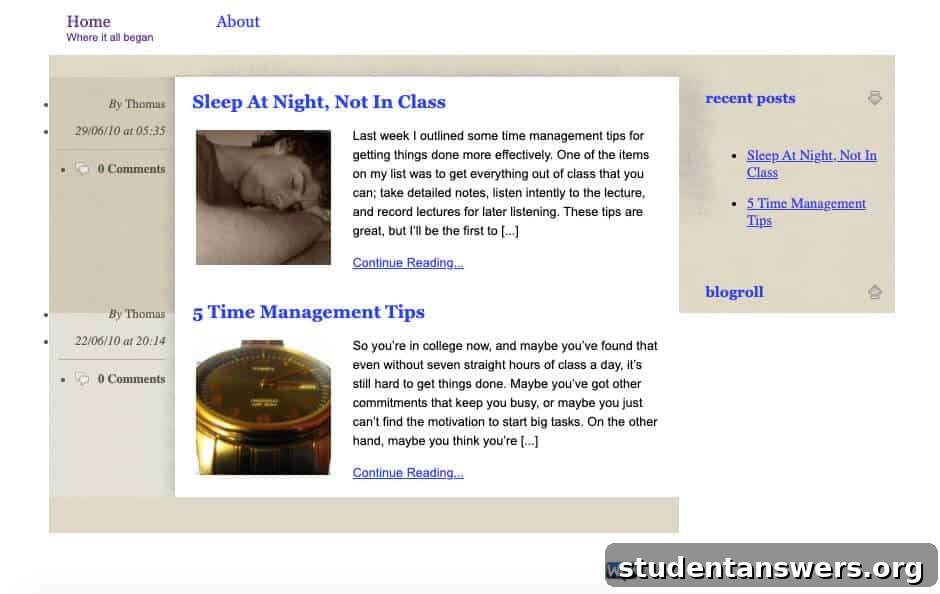
Perhaps the ultimate example is this website itself. It began in 2010 as a simple blog—a side project Thomas started in his dorm room to share study tips. Over the years, that passion project grew into a full-time business with a dedicated team, helping millions of students worldwide. It all started with one person, one idea, and the decision to create something in their spare time.
Your Journey Starts Now
A side project is more than just another item on your to-do list. It’s an investment in yourself. It’s an opportunity to learn, a platform to create, and a space to pursue what truly makes you curious. It can enhance your college experience, give you a significant edge in your job search, and perhaps even lead you down a path you never imagined.
Don’t wait for the “perfect” idea or the “right” time. The best time to start is now. Choose something that excites you, make a simple plan, and begin. You never know where it might take you.