The Ultimate Guide to Learning a Foreign Language on Your Own
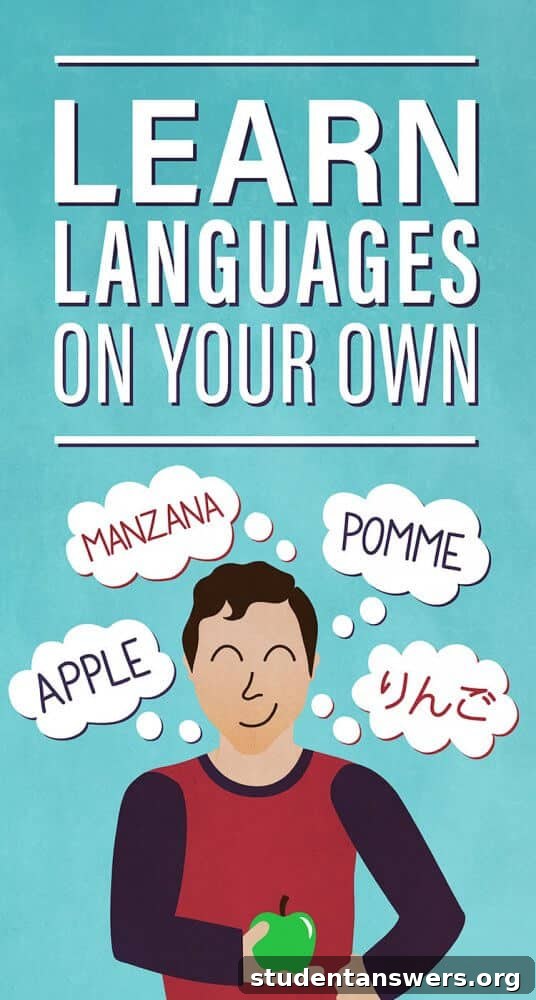
Many of us have sat in a foreign language class, dutifully conjugating verbs and memorizing vocabulary lists. Yet, for all that effort, few of us emerge fluent. Years later, we might only remember a handful of phrases. Why is it that traditional classroom learning often fails to stick? And more importantly, how can you succeed in learning a language independently in today’s digital world?
The truth is, the classroom environment has its limitations. The focus often leans heavily on reading and writing—skills that are easier to grade—at the expense of real, spontaneous conversation. You’re limited to the languages your school offers, and progress can feel so slow that it kills your motivation. But don’t be discouraged. The classroom isn’t the only path. In fact, it might not even be the best one.
Thanks to the internet, we now have access to a universe of tools and communities designed to make language learning effective, engaging, and tailored to your personal goals. This guide will walk you through a step-by-step framework to learn any language from scratch, all on your own terms. Let’s begin.
Step 1: Define Your “Why” and Set Crystal-Clear Goals
Before you download a single app or open a textbook, the most crucial step is to understand your motivation. Why do you want to learn this specific language? Your “why” is the fuel that will keep you going when you hit an inevitable plateau. Is it to:
- Connect with family members or a partner in their native tongue?
- Travel to a new country and immerse yourself in the culture?
- Advance your career or open up new job opportunities?
- Enjoy foreign films, music, and books in their original form?
Once you have a strong “why,” you can set clear, achievable goals. Instead of a vague target like “I want to be fluent in French,” use the SMART goal framework: Specific, Measurable, Achievable, Relevant, and Time-bound. A much better goal would be: “In three months, I want to be able to have a 15-minute conversation in French with a native speaker about my daily routine and hobbies.” This gives you a clear finish line to work towards and makes your progress tangible.
Step 2: Master the Sounds Before You Master the Words
One of the biggest mistakes beginners make is diving straight into vocabulary without first understanding the sounds of the language. If you can’t hear the difference between “u” and “ou” in French, or properly pronounce the rolled “rr” in Spanish, you’ll struggle with both listening comprehension and speaking. Trying to fix bad pronunciation habits later is much harder than getting it right from the start.
Focus on two things: listening and mimicking. Spend time listening to how native speakers talk. Pay close attention to the rhythm, intonation, and specific sounds that don’t exist in English. A fantastic tool for this is Forvo, a massive, crowd-sourced pronunciation dictionary where you can hear any word spoken by a native speaker. You can also use the International Phonetic Alphabet (IPA) to understand the precise mechanics of forming new sounds.
In his book Fluent Forever, Gabriel Wyner argues that mastering pronunciation first creates a solid foundation, allowing your brain to correctly “file” new words you learn later. When you can hear and produce the sounds correctly, vocabulary acquisition becomes significantly easier.
Step 3: Build a Powerful Vocabulary with Spaced Repetition
Memorizing long lists of words is inefficient and boring. The key to remembering vocabulary long-term is a scientifically proven method called Spaced Repetition System (SRS). SRS works by showing you a flashcard just before you’re about to forget it. This process strengthens the neural pathways in your brain, moving information from short-term to long-term memory.
The gold standard for SRS is a free, highly customizable application called Anki. While it has a slight learning curve, it is arguably the most powerful tool for vocabulary building. For the best results, create your own Anki cards instead of downloading pre-made decks. A great flashcard includes:
- The word in your target language.
- A picture or image representing the word (this avoids translation).
- An audio clip of a native speaker pronouncing the word (you can get this from Forvo).
- An example sentence to provide context.
By creating these rich, multi-sensory flashcards, you build stronger connections and learn much faster than simply pairing a foreign word with its English translation.
Step 4: Immerse Yourself Without Buying a Plane Ticket
Immersion is the fastest way to learn a language, but you don’t need to move abroad to do it. You can create a rich, immersive environment right from your home. The goal is to maximize your exposure to the language in a way that is enjoyable and sustainable.
Passive and Active Immersion
Change the language on your phone, computer, and social media accounts. This is a simple form of passive immersion. For more active immersion, integrate the language into your hobbies.
- Reading: Start with materials slightly above your level. Children’s books, graded readers, or even news articles on sites like Forbes can be great. As you advance, you can tackle more complex literature, like The Hitchhiker’s Guide to the Galaxy by Douglas Adams in your target language.
- Listening: Find podcasts designed for learners, like the popular LanguagePod101 series. Listen to music, watch YouTube videos (like the Japanese nature series “Mr. Ando of the Woods”), or stream movies and TV shows. Start with subtitles in English, then switch to subtitles in the target language, and finally, remove them altogether.
- Writing: Practice is essential for cementing grammar and vocabulary. A fantastic platform is Lang-8, where you write journal entries in your target language, and native speakers correct them for free. You can also try a lower-stakes approach by using Twitter to write short thoughts in your target language.
Step 5: Speak From Day One (Even If It’s Scary)
This is the step that terrifies most learners, but it’s also the most important. You cannot learn to speak a language without speaking it. Benny Lewis, author of Fluent in 3 Months, is a huge proponent of speaking from the very first day, even if you only know how to say “hello” and “my name is…”
The fear of making mistakes holds many people back, but mistakes are a necessary part of the learning process. The goal is communication, not perfection.
So, how do you find people to talk to? This is where technology truly shines. The best platform for this is iTalki. It connects language learners with teachers and tutors from around the world for one-on-one video lessons. You can hire a professional teacher for structured lessons or a community tutor for informal conversation practice, often for a very affordable price. It’s an invaluable resource for getting real-world speaking experience.
You can also find free language exchange partners on apps like WeSpeke or look for local language groups on Meetup. The key is to schedule regular speaking sessions and make it a non-negotiable part of your routine.
Your Essential Language Learning Toolkit
While there are countless apps and resources, focusing on a few high-quality ones is more effective than trying to use everything at once. Here is a curated list of the best tools to power your journey:
- For Speaking Practice: iTalki is the undisputed champion for finding affordable tutors and conversation partners.
- For Vocabulary: Anki is the most powerful SRS flashcard app for long-term memorization.
- For Pronunciation: Forvo provides native speaker audio for millions of words.
- For Writing Correction: Lang-8 connects you with native speakers to correct your writing.
- For Gamified Learning: Duolingo is a great starting point for absolute beginners to learn basic vocabulary and grammar in a fun, game-like format.
- For Structured Lessons: LanguagePod101 offers a massive library of audio and video lessons for dozens of languages.
Conclusion: The Journey to Fluency Is a Marathon
Learning a language independently is not a mystical talent reserved for a select few. It’s a skill that can be developed through a smart strategy, consistent effort, and the right tools. The path to fluency is a marathon, not a sprint, filled with challenges and rewarding breakthroughs.
Remember the core principles: find your motivation, master the sounds, build your vocabulary intelligently, immerse yourself in the culture, and most importantly, start speaking. By following these steps, you can break free from the limitations of the classroom and successfully unlock a new world of communication and connection. The journey is yours to take.