

Deep Work: How to Master Focus and Achieve Extraordinary Results in a Distracted World
This isn’t an article about a magic pill for success. You won’t find a single trick that will instantly revolutionize your study habits, land you a dream job overnight, or quadruple your productivity with one small change. This is about something far more powerful and enduring than a quick fix.
Today, we’re diving into the core principles from Cal Newport’s groundbreaking book, Deep Work: Rules for Focused Success in a Distracted World. These concepts form the foundation of a mental superpower that, with dedicated practice, can help you achieve all those ambitious goals and more. This superpower is called deep work.
“Deep Work: Professional activities performed in a state of distraction-free concentration that push your cognitive capabilities to their limit. These efforts create new value, improve your skill, and are hard to replicate.”
– Cal Newport, Deep Work
Newport argues that in our increasingly fragmented world, the ability to perform deep work is becoming both rarer and more valuable. Mastering it can be the single greatest differentiator between a mediocre career and an exceptional one, between a life of frustration and one of profound satisfaction. The journey to deep work is built on two fundamental pillars: embracing boredom and learning to do hard things. In this guide, we’ll explore what these skills are, why they are essential for modern success, and how you can begin cultivating them today.
The Forgotten Skill: Why You Must Learn to Embrace Boredom
When was the last time you were truly bored for more than a minute? If you’re like most people, it’s been a long time. In any moment of idleness—waiting in line, commuting, or even during a TV commercial—the default action is to reach for a smartphone. We’ve been conditioned to see boredom as a problem to be solved, a void to be filled immediately with content, connection, or any form of digital stimulus.
But what if boredom isn’t the enemy? What if it’s a vital, even luxurious, state of mind that we should protect and cultivate? Our culture, obsessed with constant entertainment and “busyness,” has demonized doing nothing. Social media, news feeds, and endless streaming services offer an escape from our own thoughts. This ceaseless flight from boredom, however, comes at a steep price: our ability to concentrate.
Cal Newport highlights research from Stanford professor Clifford Nass, which revealed the damaging effects of constant context switching. The findings were stark:
“People who multitask all the time can’t filter out irrelevancy. They can’t manage a working memory. They’re chronically distracted… they’re pretty much mental wrecks.”
Every time you pull out your phone to escape a moment of stillness, you are training your brain to crave distraction. You are weakening your “attention muscle.” Newport makes a powerful analogy to physical fitness:
“Much in the same way that athletes must take care of their bodies outside of their training sessions, you’ll struggle to achieve the deepest levels of concentration if you spend the rest of your time fleeing the slightest hint of boredom.”
You wouldn’t eat donuts all day and expect to run a marathon. Similarly, you cannot expect to achieve profound focus on a complex project if you spend every other waking moment in a state of fractured attention. By embracing boredom, you allow your mind to reset. It’s in these quiet moments that you process information, connect disparate ideas, and engage in self-reflection. Boredom is not an absence of activity; it is the fertile ground for creativity and deep thought.

Learning to be alone with your thoughts can be intimidating, as it forces you to confront challenges or anxieties you might be using distraction to avoid. But facing these thoughts is a crucial part of personal growth. By embracing boredom, you are not just training your ability to focus—you are learning to be more present, mindful, and at home with yourself.
The Ultimate Career Insurance: The Power of Doing Hard Things

Our culture has a complex relationship with difficulty. We glorify the idea of pushing our limits with slogans like “feel the burn,” but in practice, we often gravitate towards the path of least resistance. Why struggle to learn a new skill when you can passively consume entertainment? Why tackle a complex problem when you can complete a dozen easy, shallow tasks and feel “productive”?
This tendency to avoid difficulty is creating a massive opportunity. As Newport points out, our economy is rapidly shifting. Shallow work—tasks that are easy to do and easy to replicate, like answering routine emails or posting on social media—is being devalued. These tasks are easily automated by AI or outsourced for a low cost.
“To remain valuable in our economy, therefore, you must master the art of quickly learning complicated things. This task requires deep work. If you don’t cultivate this ability, you’re likely to fall behind as technology advances.”
The real rewards in the 21st century are reserved for those who can solve hard problems and create new value. Consider the example of Facebook: millions of people are skilled at using the platform (a shallow task), but only a small fraction can build and maintain the complex distributed systems that make it run (a deep task). The latter group possesses a rare and valuable skill set, making them indispensable.

Beyond the economic incentives, tackling difficult challenges is a core component of a fulfilling life. Psychologist Mihaly Csikszentmihalyi’s research on “flow” found that the best moments in our lives often occur when we are fully immersed in a challenging task that stretches our abilities. This is the state of being “in the zone,” where time seems to disappear and the work itself becomes its own reward.
“Human beings, it seems, are at their best when immersed deeply in something challenging.”
A day spent frantically switching between shallow tasks leads to mental exhaustion and a sense of unease. In contrast, a day with a few hours of intense, focused work on a meaningful project leaves you feeling accomplished and deeply satisfied. By learning to do hard things, you are not just future-proofing your career; you are unlocking a profound source of personal fulfillment.
A Practical Guide: How to Integrate Deep Work Into Your Life
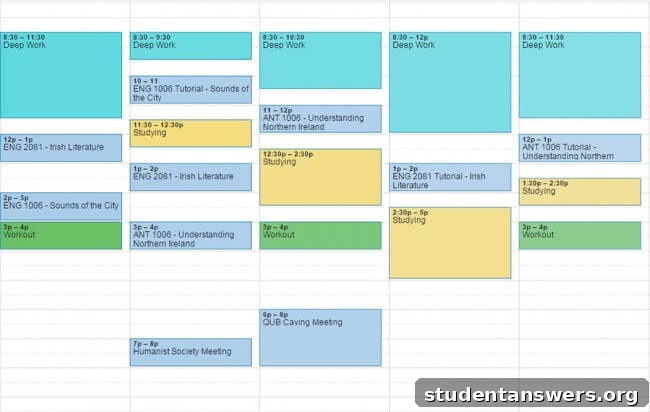
Understanding the value of deep work is the first step, but implementation is where the real challenge lies. The habit of distraction is deeply ingrained. Here are actionable strategies to start building your deep work practice.
- Schedule It Like a Critical Appointment: Don’t wait for inspiration to strike. Treat deep work with the same importance as a meeting with your boss. Block out specific, dedicated time in your calendar for focused work. For many, the early morning is ideal as it’s often free from the distractions that accumulate throughout the day. Experiment to find your own peak concentration window.
- Create a Distraction-Free Fortress: Your environment is critical. When it’s time for deep work, transform your space. This means more than just putting your phone on silent. Turn it off and put it in another room. Use tools like Freedom to block distracting websites. Close all unnecessary tabs. Wear noise-canceling headphones. Signal to colleagues or family that you are unavailable for this period.
- Develop a Pre-Work Ritual: Habits are powerful. Create a short, consistent ritual to perform before each deep work session. This could be as simple as clearing your desk, brewing a cup of tea, listening to a specific song, or a minute of deep breathing. This ritual signals to your brain that it’s time to transition into a state of intense focus.
- Set Clear Goals for Every Session: Don’t just sit down to “work.” Define a specific, challenging, and measurable goal for your deep work block. For example, “Write 500 words of the report,” “Solve three specific problems in the code,” or “Outline the complete presentation.” A clear target helps direct your focus and provides a sense of accomplishment.
Remember, building this new habit will take time. There will be days when you struggle to focus. The key is consistency. Even a short session of 30 minutes of uninterrupted focus is a victory. Start small and gradually increase the duration of your deep work blocks as your concentration muscle gets stronger.
How to Reclaim Your Attention and Get Started Today
Are you ready to cultivate deep focus and unlock your potential? The journey begins with small, intentional changes to how you manage your attention.
“The key here isn’t to avoid or even to reduce the total amount of time you spend engaging in distracting behavior, but is instead to give yourself plenty of opportunities… to resist switching to these distractions at the slightest hint of boredom.”
Here are a few simple exercises you can begin today:
- Practice Being Bored: The next time you’re waiting in line, don’t reach for your phone. Instead, just wait. Observe your surroundings. Pay attention to your breathing. Let your mind wander. It might feel uncomfortable at first, but this practice is essential for rewiring your brain to tolerate a lack of stimulus.
- Try Mindfulness Meditation: Meditation is weight training for your attention. It’s the simple practice of focusing on your breath, and when your mind inevitably wanders, gently bringing your focus back. Each time you do this, you strengthen your ability to control your attention. Even 5-10 minutes a day can have a profound impact.
- Define Your Deep Goals: You need a compelling reason to do hard things. What skills do you want to master? What complex problems do you want to solve? Write down specific, ambitious goals, such as becoming fluent in a new language or learning a programming framework. These goals will provide the motivation to push through the initial discomfort of deep work.
Above all, be patient with yourself. You are unlearning years of conditioned distraction. It’s a challenging process, but the rewards—professional success, improved skills, and a deep sense of fulfillment—are immeasurable.
Live the Focused Life
“I’ll live the focused life, because it’s the best kind there is.”
– Winifred Gallagher, qtd. in Deep Work
Embracing boredom and learning to do hard things are not just productivity hacks; they are principles for a well-lived life. In a world that prizes shallowness and distraction, choosing depth is a radical act. It may not be the easy path, but it is the one that leads to work that matters and a life of profound satisfaction. This article has only scratched the surface. For a comprehensive guide, I highly recommend reading Cal Newport’s full book.
What are your experiences with deep work? Have you found ways to fight distraction and focus more intensely? Share your strategies and thoughts in the comments below.