

My 7th-grade U.S. history teacher once shared a piece of wisdom that has stuck with me ever since:
“Your high school teachers won’t expect you to recall every single date and name from American history. They can help you with the details you forget. What they will truly expect, however, is your ability to think. They want to see that you can connect ideas and evaluate information with a critical eye.”
At the time, I didn’t fully grasp the depth of his advice. But he was perfectly describing the essence of critical thinking. Throughout high school, this message was echoed by other teachers preparing us for college: it’s not just about what you know, but how you analyze and apply that knowledge.
Now, as a college student, I hear it from my professors. They emphasize that in the professional world, the ability to navigate complex problems is far more valuable than memorizing specific content from a textbook. Despite being told about the importance of critical thinking for years, I realized I couldn’t offer a clear definition of it, let alone explain how to do it effectively. It was an abstract skill we were all expected to absorb naturally through our studies.
I believe in a more deliberate approach to learning. That’s why I decided to explore this vital skill for myself. What exactly is critical thinking? How does one practice it? Why is it so crucial for success, and how can we all get better at it? This article is my comprehensive answer to those questions, complete with seven practical strategies you can use to start thinking more critically today.
What Is Critical Thinking, Really?
“Critical thinking is the intellectually disciplined process of actively and skillfully conceptualizing, applying, analyzing, synthesizing, and/or evaluating information gathered from, or generated by, observation, experience, reflection, reasoning, or communication, as a guide to belief and action.”
– The Foundation for Critical Thinking
That definition from The Foundation for Critical Thinking is quite a mouthful. But at its core, the concept is straightforward. Critical thinking is the practice of deliberately and systematically processing information to make better decisions and achieve a deeper understanding.
Think of it as the opposite of your brain’s automatic, everyday thinking. Most of our daily thoughts happen on autopilot. It’s an efficient system that allows us to function without getting bogged down in every tiny decision. Critical thinking, however, is when you consciously step back and engage a diverse set of intellectual tools to analyze information. These tools include:
- Conceptualizing: Understanding the core idea.
- Analyzing: Breaking down information into its component parts.
- Synthesizing: Combining different ideas to create a new understanding.
- Evaluating: Judging the credibility and value of information.
This information can originate from a wide range of sources:
- Observation
- Experience
- Reflection
- Reasoning
- Communication
And the ultimate goal of this entire process is to guide your beliefs and actions toward more accurate and effective outcomes. In short, when you see a news headline and immediately accept it, that’s automatic thinking. When you pause to ask, “Who wrote this? What is their source? What evidence are they presenting? Is there another side to this story?”—that’s critical thinking.
Why Mastering Critical Thinking Is a Game-Changer

Most of our thinking is uncritical, and that’s okay. If we had to deliberately analyze every single action, from breathing to walking, we’d have no mental energy left for what truly matters. Automatic thinking is a survival mechanism.
However, relying solely on these automatic processes becomes dangerous when facing important decisions. Without critical thinking, we become vulnerable to manipulation, misinformation, and poor judgment. History is filled with tragedies fueled by a lack of critical thought, where people failed to question ideologies and authority.
Even in our daily lives, a failure to stop and think deliberately can lead to pointless arguments, foolish mistakes, and missed opportunities. For students, developing this skill is not just beneficial—it’s essential.
In his book, The Thinking Student’s Guide to College, Andrew Roberts highlights two common pitfalls that hinder students:
The “Right Answer” Trap (Ignorant Certainty)
This is the belief that every question has a single, definitive correct answer, and the goal is simply to find it in a textbook or from a professor. This mindset might work in early education, but it falls apart in college and in life, where the most important questions are complex and nuanced. To succeed in higher education, you must engage with material critically, not just search for a pre-packaged answer.
The “All Opinions Are Equal” Fallacy (Naive Relativism)
Often adopted after realizing the “Right Answer” Trap is flawed, this is the belief that there is no objective truth and all arguments are equally valid. While more open-minded, this perspective is also a dead end. The entire point of critical thinking is to sift through arguments to arrive at a better, more reasoned conclusion. It requires you to accept that some arguments are well-supported and logical, while others are weak or entirely baseless.
Beyond avoiding these traps, critical thinking matters in college because it allows you to:
- Develop your own voice: You can form unique opinions and engage with topics on a deeper level, which is crucial for writing compelling essays and participating in meaningful discussions.
- Build strong arguments: This skill is the bedrock of advanced academic work, especially if you plan to attend graduate school or pursue research.
- Improve your own work: By critically evaluating your own assignments before submitting them, you can identify weaknesses and produce higher-quality results, leading to better grades.
The value of critical thinking extends far beyond graduation. In your personal and professional life, it is even more critical:
- It fuels lifelong learning: When you encounter new information—whether it’s a new technology at work or a complex financial product—critical thinking helps you evaluate, understand, and use it effectively.
- It empowers you to make better decisions: From choosing a career path to making a major purchase, critical thinking allows you to weigh pros and cons, identify hidden options, and align your choices with your values.
- It protects you from manipulation: People will try to persuade you. Advertisements, political rhetoric, and online scams all prey on uncritical minds. By evaluating information critically, you can spot fallacies and avoid being misled.
- It makes you more valuable in the workplace: The most sought-after employees don’t just follow instructions; they solve problems. They can identify the root cause of an issue, innovate new solutions, and anticipate future challenges. Critical thinking is the engine that drives this problem-solving ability.

7 Actionable Strategies to Sharpen Your Critical Thinking Skills
So, how do we actively train our minds to think more critically? It’s a skill that, like any other, improves with practice. Here are seven concrete ways you can start today.
1. Start with the Fundamentals: Ask Basic Questions
“The world is complicated. But does every problem require a complicated solution?” – Stephen J. Dubner
Sometimes, in our quest for a solution, we get lost in complexity and forget the original question. To stay grounded, constantly return to the basics. When facing any problem or new piece of information, ask simple but powerful questions:
- What do I already know for sure?
- How do I know this information is true?
- What is my ultimate goal here? What am I trying to prove, solve, or understand?
- What important details might I be overlooking?
The most elegant solutions are often breathtakingly simple. Always look for the straightforward path first.
2. Challenge Everything: Question Core Assumptions
It’s easy to build an entire line of reasoning on an assumption that you’ve never stopped to question. The greatest innovators in history were often those who dared to ask if a universally accepted belief was wrong. From Newton questioning gravity to Einstein rethinking space and time, challenging assumptions is the birthplace of breakthroughs.
You don’t have to be a physicist to benefit from this. Question your own assumptions about your life. That dream job you think is out of reach? That skill you believe you can’t learn? That person you’re too intimidated to talk to? Critically evaluate the beliefs holding you back. Are they based on fact or on unexamined assumptions?
3. Think About Your Thinking: Recognize Cognitive Biases
Our brains use mental shortcuts, or heuristics, to make quick judgments. While efficient, these shortcuts often lead to errors in reasoning known as cognitive biases. A critical thinker is aware of these biases and actively works to counteract them.
For example, Confirmation Bias is our tendency to favor information that confirms what we already believe. The Availability Heuristic makes us overestimate the importance of information that is recent or memorable. Becoming aware of your own biases is the first, crucial step toward objective thought.
4. Flip the Script: Try Reversing the Problem
When you feel stuck on a problem, a powerful technique is to reverse it. We might assume that X causes Y, but what if Y actually causes X? The classic “chicken and egg” problem is a perfect illustration of this. Even if the reverse isn’t true, the mental exercise can shatter your fixed perspective and illuminate a new path to a solution.
Instead of asking, “How can I get a promotion?” try asking, “How can I become the kind of employee who is undeniably deserving of a promotion?” Reversing the problem shifts the focus from the outcome to the process, often revealing more actionable steps.
5. Become an Investigator: Evaluate the Existing Evidence
“If I have seen further it is by standing on the shoulders of giants.” – Isaac Newton
There’s no need to reinvent the wheel. When tackling a problem, explore the work others have already done. However, it’s vital to evaluate this evidence critically. For any source of information, ask yourself:
- Who gathered this evidence? Do they have a vested interest in the outcome?
- How did they collect it? Was their methodology sound?
- Why was this information gathered? What was the purpose?
For instance, a study touting the health benefits of a sugary cereal may seem convincing until you discover it was funded by the cereal company. This conflict of interest doesn’t automatically invalidate the results, but it demands much closer scrutiny.
6. Trust Your Own Mind: Cultivate Independent Thought
Research is essential, but don’t let it drown out your own thinking. It’s easy to get so lost in reading other people’s opinions that you forget to form your own. Albert Einstein, when developing his theory of relativity, was noted for reaching his conclusions through pure, independent thought, largely uninfluenced by the prevailing opinions of others.
Balance your research with periods of reflection. After gathering information, step away and think for yourself. What are your conclusions? What new connections can you make? Your own reasoning is your most powerful tool.
7. Embrace Imperfection: Accept That Critical Thinking Isn’t Constant
“Critical thinking of any kind is never universal in any individual; everyone is subject to episodes of undisciplined or irrational thought.” – Michael Scriven and Richard Paul
You cannot and will not think critically 100% of the time. It’s an energy-intensive tool to be deployed for important decisions and complex problems, not for deciding what to have for lunch. You will have lapses in your reasoning. What’s important is to recognize these lapses, learn from them, and strive to do better next time.
Even Isaac Newton, one of the greatest minds in history, was a devoted alchemist, a practice now considered a pseudoscience. Perfection isn’t the goal; continuous improvement is.
Conclusion
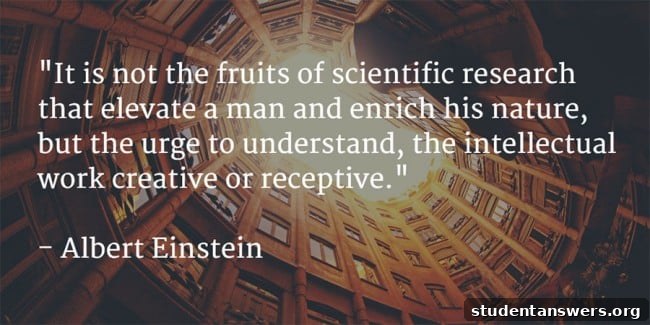
Learning to think critically is an investment that pays dividends for a lifetime. It will elevate your academic performance, enhance your career prospects, and empower you to navigate an increasingly complex world with confidence and clarity. This is not a destination but a journey of continuous learning. Start by practicing one of these seven strategies this week, and you will begin to see the world in a new, more insightful way.
Sources
- Defining Critical Thinking – The Foundation for Critical Thinking
- The Feynman Notebook Method – Cal Newport
- The Thinking Student’s Guide to College by Andrew Roberts
- What the Best College Teachers Do by Ken Bain
- A Short History of Nearly Everything by Bill Bryson
Image Credits: skyline, waterfall, vaulted ceiling, snowy road, thinker