
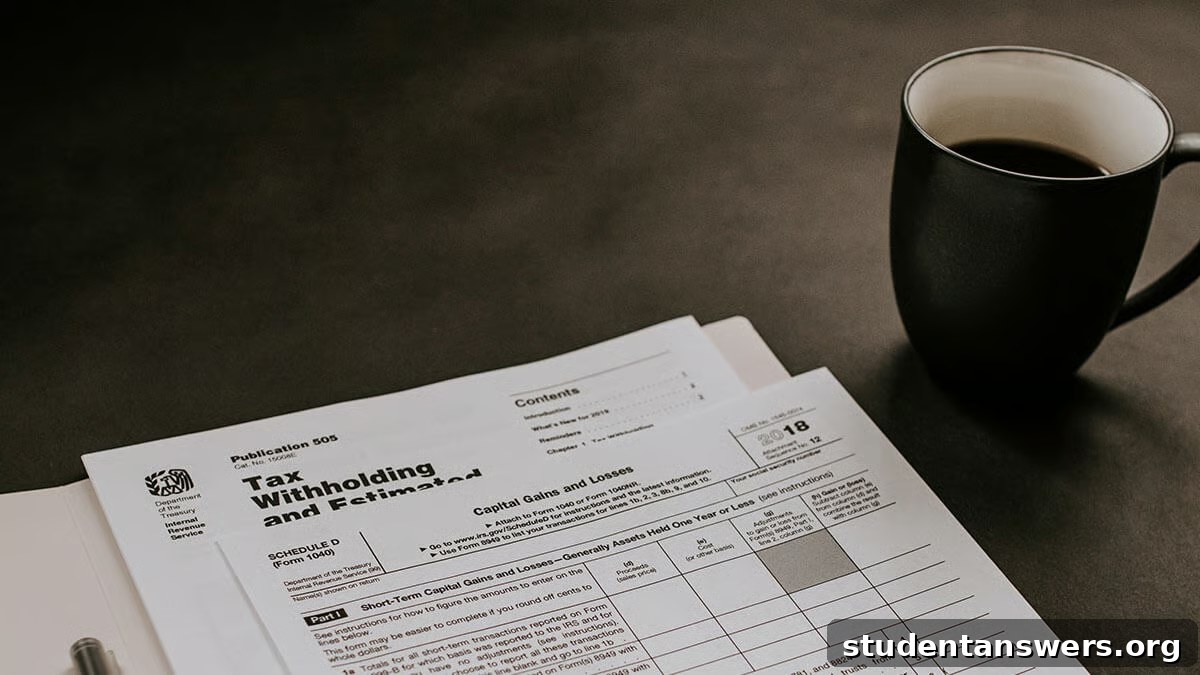
As spring approaches, bringing warmer weather and blooming flowers, it also signals that the income tax filing deadline is just around the corner. If you’re a college student, this might be the first time you’re navigating the tax process on your own. It’s a common milestone that can feel both confusing and overwhelming.
Unfortunately, financial literacy, especially regarding taxes, isn’t always a focus in our formal education. This lack of instruction can lead to significant anxiety and uncertainty when it’s time to file. The good news is that the process is more straightforward than it seems, especially for students with simple financial situations.
To help you navigate this season with confidence, we’ve created this comprehensive guide. We’ll walk you through everything you need to know about filing your income taxes as a college student, explain the fundamental concepts of how taxes work, and answer the most common questions you might have.
Disclaimer: This guide provides general information about personal income taxes in the United States. Tax laws are complex and can vary based on individual circumstances. The content here is for educational purposes only and should not be considered financial, tax, or legal advice. For personalized guidance, it is always best to consult with a qualified tax professional or accountant.
Do College Students Need to File a Tax Return?
One of the most common questions students ask is whether they even need to file taxes. The answer is usually yes, especially if you had any form of employment during the previous calendar year. The specifics depend on your income, filing status, and whether someone else can claim you as a dependent.
The clearest sign that you need to file is receiving a Form W-2, Wage and Tax Statement from an employer. Your employer is required to send you this form (either in the mail or electronically) by the end of January. The W-2 summarizes your total earnings from that job for the year and shows how much money was already withheld for federal, state, and other taxes.
Beyond traditional employment, you might also have a filing requirement if you engaged in freelance or contract work. If you earned more than $400 from self-employment activities—such as tutoring, food delivery, graphic design, or any other gig work—you are required to file a tax return to report that income and pay self-employment taxes.
Even if your income doesn’t meet these thresholds, it can still be a smart idea to file a return. If your employer withheld taxes from your paychecks (as shown on your W-2), filing a return is the only way to get that money back if you overpaid. Many students qualify for a full refund of the taxes withheld, so it’s often worth the effort.
Understanding the Basics: How Tax Filing Actually Works
At its core, the tax system is about calculating how much of your income you owe to the government. If you’re a W-2 employee, your employer estimates this amount and withholds it from each paycheck throughout the year. The purpose of filing a tax return is to reconcile what you actually owe with what you’ve already paid.
If the amount withheld from your paychecks was more than your actual tax liability, you’ll receive a tax refund. It’s crucial to understand that a refund isn’t free money from the government. Instead, it’s your own hard-earned money being returned to you because you overpaid during the year. If you paid less than you owed, you would have a tax bill to pay by the deadline.
The process can seem complicated because of two key concepts that can lower your tax bill: tax deductions and tax credits. Understanding the difference is key to maximizing your financial outcome.
Lowering Your Taxable Income with Deductions
A tax deduction is an amount that you can subtract from your total income to reduce the portion of your income that is subject to tax. By lowering your taxable income, you ultimately decrease the amount of tax you owe.
For most college students, the most important deduction is the standard deduction. This is a fixed dollar amount that the government allows you to deduct without having to itemize every single expense. The amount changes each year and varies based on your filing status (e.g., single, married filing jointly). For the vast majority of students with straightforward financial lives, taking the standard deduction is the simplest and most beneficial option.
Reducing Your Tax Bill with Credits
A tax credit is even more powerful than a deduction. While a deduction reduces your taxable income, a credit directly reduces your final tax bill on a dollar-for-dollar basis. For example, a $1,000 tax credit will cut your tax bill by exactly $1,000.
For college students, two credits are particularly important:
- The American Opportunity Tax Credit (AOTC): This credit is for qualified education expenses paid for an eligible student for the first four years of higher education. It can provide a maximum annual credit of $2,500 per eligible student. Even better, part of this credit is refundable, meaning you can get money back even if you don’t owe any tax.
- The Lifetime Learning Credit (LLC): This credit is broader than the AOTC and can be used for undergraduate, graduate, and professional degree courses—including courses taken to acquire job skills. The LLC is nonrefundable, but it can help reduce your tax liability by up to $2,000.
To claim these credits, you will need Form 1098-T, Tuition Statement, which your college or university provides. Tax preparation software will help you determine which credit you are eligible for and which one offers you the most benefit.
Step-by-Step: How to File Your Taxes in College
While you could technically print out paper forms from the IRS website and fill them out by hand, almost no one does this anymore. Modern tax preparation software makes the process far easier and more accurate.
1. Choose Your Tax Preparation Software
Dozens of tax software programs are available, but as a student, you should focus on free options. The IRS offers a program called IRS Free File, which is a partnership between the IRS and several tax software companies. If your Adjusted Gross Income (AGI) is below a certain threshold (which changes annually but covers most students), you can use top-rated software to prepare and file your federal tax return for free. You can browse all the offers on the official IRS website. Be aware that while federal filing is free, some services may charge a fee for state tax filing.
2. Gather Your Essential Documents
Before you sit down to start, having all your documents ready will make the process smooth and quick. Here’s a checklist of what you’ll likely need:
- Income Statements: This includes Form W-2 from any job and Form 1099-NEC or 1099-K if you did freelance or gig work. You might also have a 1099-INT for any interest earned in a savings account.
- Form 1098-T, Tuition Statement: Your school provides this form. It’s essential for claiming education credits like the AOTC or LLC.
- Personal Information: Your Social Security Number (or Individual Taxpayer Identification Number) and the full names and SSNs of any dependents you might claim.
- Bank Information: Your bank account and routing number. Providing this allows the IRS to send your refund via direct deposit, which is the fastest and safest way to receive it.
3. Consider VITA for Free, In-Person Help
If you prefer more personalized guidance but don’t want to pay for an accountant, check if your campus or community has a VITA program. VITA (Volunteer Income Tax Assistance) is an IRS-sponsored program that offers free basic tax return preparation to qualified individuals, generally those who make $60,000 or less, persons with disabilities, and limited English-speaking taxpayers. Most college students easily qualify based on the income requirement. VITA sites are staffed by IRS-certified volunteers who can help ensure your return is accurate. You can find a local or virtual VITA site using the IRS VITA Locator Tool.
Frequently Asked Questions About Student Taxes
Even with a guide, you might have some lingering questions. Here are answers to some of the most common ones.
Do I need to hire an accountant?
For most college students, hiring an accountant is unnecessary. Tax preparation software is designed to handle common situations like W-2 income and education credits. You should only consider an accountant if your financial situation is complex, such as owning a business with employees or having significant investment income.
What’s the difference between being a dependent and independent?
If your parents or guardians provide more than half of your financial support, they can likely claim you as a dependent on their tax return. This means they get a tax benefit, but it restricts you from claiming certain benefits, like education credits (though they may be able to claim them on your behalf). Tax software will ask you a series of questions to help you determine your dependency status correctly.
Do I have to file state taxes?
Probably. Most states have their own income tax. If you worked in a state that has an income tax, you will likely need to file a state tax return in addition to your federal return. This can get tricky if you attend college in a different state than your home state. You may have to file returns in both states. Your tax software will guide you through this process.
When is the tax deadline?
The deadline to file your federal income taxes is typically April 15. However, this date can sometimes be extended. Always check the official IRS website for the current year’s deadline. State filing deadlines usually align with the federal date but can vary.
Will I go to jail for making a mistake?
Absolutely not for an honest mistake. The IRS understands that people make errors. The severe penalties you hear about, like prison time, are reserved for cases of intentional tax evasion or fraud. If you discover a mistake after you’ve filed, you can simply file an amended return using Form 1040-X to correct it. The most common penalty for a simple error or late payment is a small fine and interest.
How can I avoid tax scams?
Tax season is a prime time for scammers. Remember that the IRS will almost always initiate contact with you through physical mail. They will never call to demand immediate payment, threaten you with arrest, ask for credit or debit card numbers over the phone, or require you to pay with gift cards or wire transfers. Be suspicious of any unsolicited email or text message claiming to be from the IRS. You can find a list of common scams on the IRS website.
Don’t Let Taxes Intimidate You
Filing taxes for the first time as a college student can feel like a major challenge, but it doesn’t have to be a source of stress. By understanding the basics, gathering your documents, and using the excellent free resources available, you can file your return accurately and confidently.
Think of it as an important life skill you’re learning. Once you’ve done it a couple of times, the process will become second nature. With this guide in hand, you are well-equipped to tackle tax season and get back to focusing on your studies.
Image Credits: tax form and coffee