
The ‘Time Is Money’ Trap: How to Reclaim Your Life in a World That Never Stops Working
We’ve all heard the old saying: “Time is money.” For generations, it has served as a powerful metaphor, a simple reminder to be efficient and mindful of the opportunities we miss when we procrastinate. It was a motto for productivity. But in today’s hyper-connected world of remote work, freelancing, and the ever-expanding gig economy, this metaphor is becoming a literal, and often suffocating, reality.
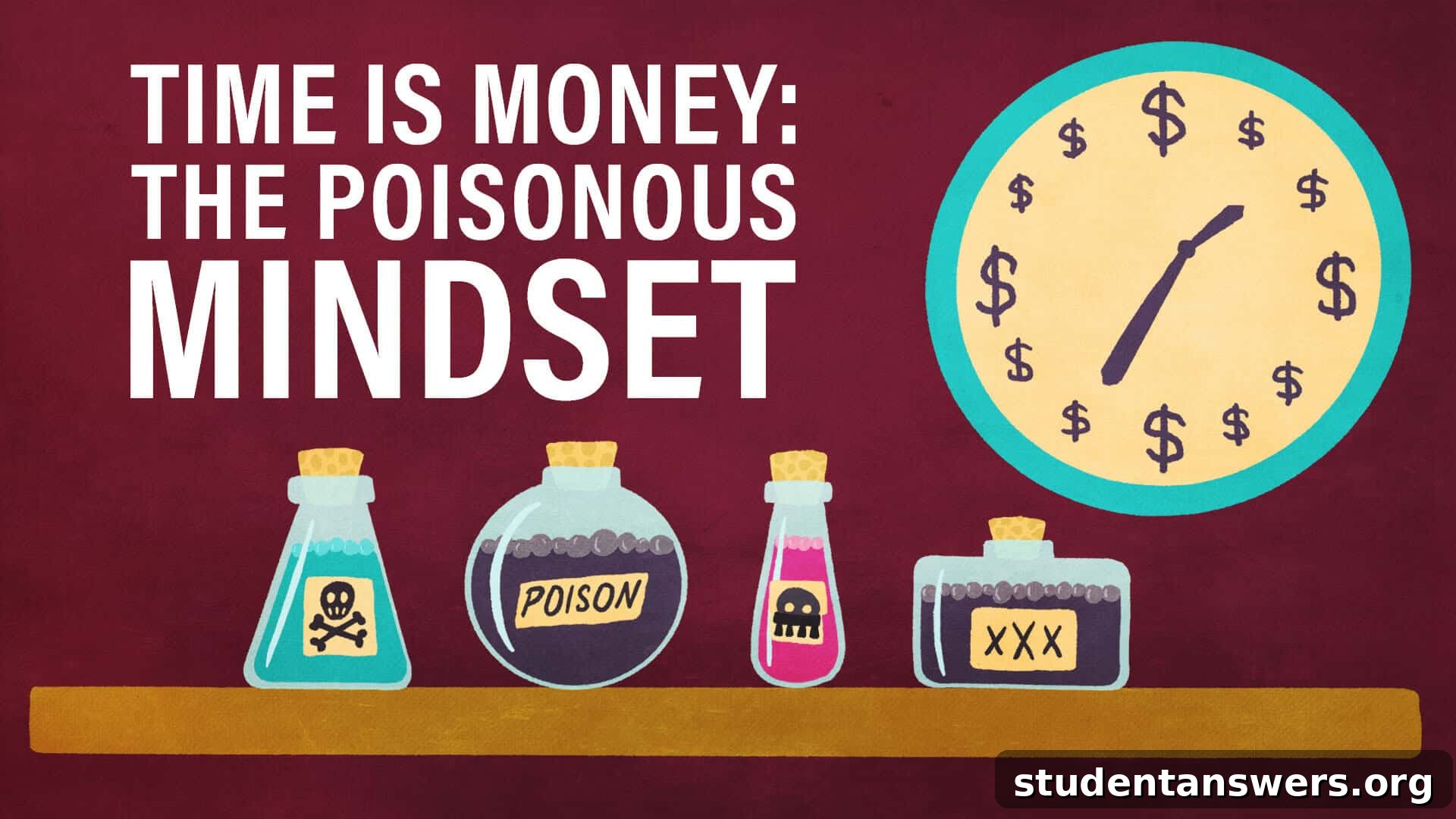
The line between our work life and personal life has never been more blurred. For many, the office is no longer a place you go to; it’s the laptop on your kitchen table, the smartphone in your pocket. The clock doesn’t stop at 5 PM. This new reality has given rise to a pervasive and anxiety-inducing mindset: if you are not actively making money or improving your ability to make money, you are wasting time. Every hour spent reading a book, watching a movie, or simply resting feels like a debit from your potential earnings, a lost opportunity that whispers of failure. This article explores the psychological toll of this modern “time is money” trap and offers actionable strategies to reclaim your time and, ultimately, your well-being.
The New Work Order: How We Became Always “On the Clock”
The shift from a metaphorical to a literal interpretation of “time is money” didn’t happen overnight. It was fueled by a perfect storm of technological advancement, economic change, and a cultural glorification of “the hustle.” Understanding these forces is the first step toward breaking free from their grip.
The freedom of remote work and freelancing comes with a hidden cost. Without the physical separation of an office, there are no clear boundaries. Your workday can easily bleed into your evening, your weekends, and even your vacations. The temptation to answer “just one more email” or finish “just one more task” is constant because the tools of your trade are always within arm’s reach. This creates a state of perpetual availability, where you’re never truly off duty.
The gig economy has amplified this pressure exponentially. For rideshare drivers, delivery workers, and freelance creatives, income is often directly proportional to the hours logged. Time not working is time not earning, a simple and brutal equation. This model fosters a mindset where personal time is not just a break, but a direct financial loss, making it incredibly difficult to justify rest or leisure without a heavy dose of guilt.
Layered on top of this is the pervasive “hustle culture” celebrated on social media. Influencers and entrepreneurs often broadcast a message that success requires relentless work, sacrificing sleep, and monetizing every hobby. This narrative suggests that if you aren’t working tirelessly toward a goal, you lack ambition. It has turned burnout into a status symbol and a healthy work-life balance into a sign of weakness, trapping millions in a cycle of overwork and insecurity.
The High Price of Monetizing Every Moment
While a strong work ethic is admirable, living as though every second has a price tag carries a significant psychological burden. Constantly running a mental calculation of opportunity cost is exhausting and ultimately detrimental to both your mental health and the quality of your work.
One of the most immediate consequences is a pervasive sense of anxiety and guilt. When you believe you *should* be working, any form of leisure feels undeserved. A walk in the park is tainted by the thought of the emails piling up. Dinner with friends is interrupted by the nagging feeling that you could be closing a deal or finishing a project. This guilt prevents you from truly recharging, meaning that even when you take a break, you’re not getting the restorative benefits. You are left in a draining limbo—not productive enough to satisfy your work ethic, and not relaxed enough to enjoy your life.
This constant mental accounting also leads to crippling decision fatigue. When every choice is weighed against its potential monetary value, simple decisions become complex calculations. Should you spend an hour exercising for your long-term health, or should you use that hour to pitch a new client? Should you read a novel to unwind, or should you read an industry publication to get ahead? This endless optimization strips the joy out of daily life and leads to mental burnout, a state of emotional, physical, and mental exhaustion caused by prolonged stress.
Ironically, this relentless focus on productivity often backfires. Creativity and innovative problem-solving do not thrive under constant pressure. Our brains require periods of unfocused thought, rest, and novel experiences to make new connections. The “aha!” moment rarely strikes when you’re staring intensely at a spreadsheet; it’s more likely to come during a shower, a long walk, or while engaged in a hobby. By eliminating this essential downtime, the “time is money” mindset can stifle the very creativity that makes our work valuable in the first place.
Finding Your “Enough”: When Time Is Worth More Than Money
The core fallacy of the modern “time is money” mindset is that it treats money as the ultimate goal. But money is not the goal; it’s a tool. It is a means to an end—the end being a safe, comfortable, and fulfilling life. At some point on the journey, the pursuit of more money yields diminishing returns on happiness. The key is to recognize that point and shift your focus toward your most truly finite resource: time.
You must consciously decide what “enough” means for you. What level of income allows you to live comfortably, save for the future, and enjoy your life? Chasing wealth without a finish line is a recipe for perpetual dissatisfaction. By defining your financial goals, you can give yourself permission to stop the endless chase and start investing your time in other areas that generate long-term fulfillment.
Think of your life as a portfolio. A good financial portfolio is diversified to mitigate risk. Similarly, a good life portfolio is diversified with investments in various assets: your health, your relationships, your skills, your memories, and your personal growth. Spending an hour at the gym is an investment in your physical health. Spending an evening with loved ones is an investment in your emotional well-being. Learning a new language or how to play an instrument is an investment in your personal development. These investments may not yield immediate financial returns, but their dividends—in the form of happiness, health, and fulfillment—are immeasurable and far more valuable than the extra cash you could have earned in that time.
Actionable Strategies to Break Free and Reclaim Your Time
Recognizing the problem is the first step, but escaping the trap requires conscious effort and strategic action. Here are practical ways to set boundaries, redefine productivity, and start valuing your time over your money.
1. Engineer Clear and Unbreakable Boundaries
If your work and home are in the same physical space, you must create artificial boundaries. Designate a specific area for work and, when you’re done for the day, physically leave it. Shut down your work computer; don’t just put it to sleep. Set firm work hours and communicate them to your clients and colleagues. Use an autoresponder to let people know you are unavailable after hours. These small rituals signal to your brain that the workday is over, allowing you to transition into personal time.
2. Schedule Your Downtime with Intention
Treat your personal time with the same respect you give your professional commitments. If it’s important, put it on your calendar. Schedule workouts, hobbies, date nights, and even blocks of “do-nothing” time. When you see “Read for 1 hour” on your calendar, you are more likely to honor that commitment to yourself. This reframes rest not as a leftover luxury, but as a non-negotiable part of your schedule.
3. Master Your Technology, Don’t Let It Master You
Your smartphone is a powerful tool, but its default settings are designed to keep you constantly engaged. Take back control. Turn off all non-essential notifications—you don’t need to know about every new email or social media “like” the second it happens. Set specific times during the day to check email and messages, rather than being in a constant state of reaction. Use apps and browser extensions that can block distracting websites during your designated work hours and, just as importantly, during your personal time.
4. Learn to Strategically Delegate and Outsource
The “time is money” equation can be used for you instead of against you. Calculate your approximate hourly rate based on your income. Now, look at the tasks in your life that you don’t enjoy or that take up significant time. Could you pay someone else to do them for less than your hourly rate? This could include anything from house cleaning and grocery delivery to virtual assistance for administrative tasks. Outsourcing these lower-value tasks frees up your time for two things: high-value work that only you can do, and precious personal time that is, in fact, priceless.
Conclusion: Your Time Is Your Life, Not Just Your Currency
The phrase “time is money” was never meant to be a literal life script. It’s a guideline for efficiency, not a command to convert every waking moment into cash. In our modern world, we must actively resist the cultural pressure that equates self-worth with productivity and financial gain.
Your time is the raw material of your life. It’s the canvas on which you build memories, nurture relationships, and experience joy. While money can be lost and earned again, time is a non-renewable resource. Once a moment is gone, it is gone forever. By setting boundaries, scheduling rest, and making conscious choices about how you spend your hours, you can escape the psychological trap of monetizing every second. You can begin to see time not as currency to be spent, but as a life to be lived.