
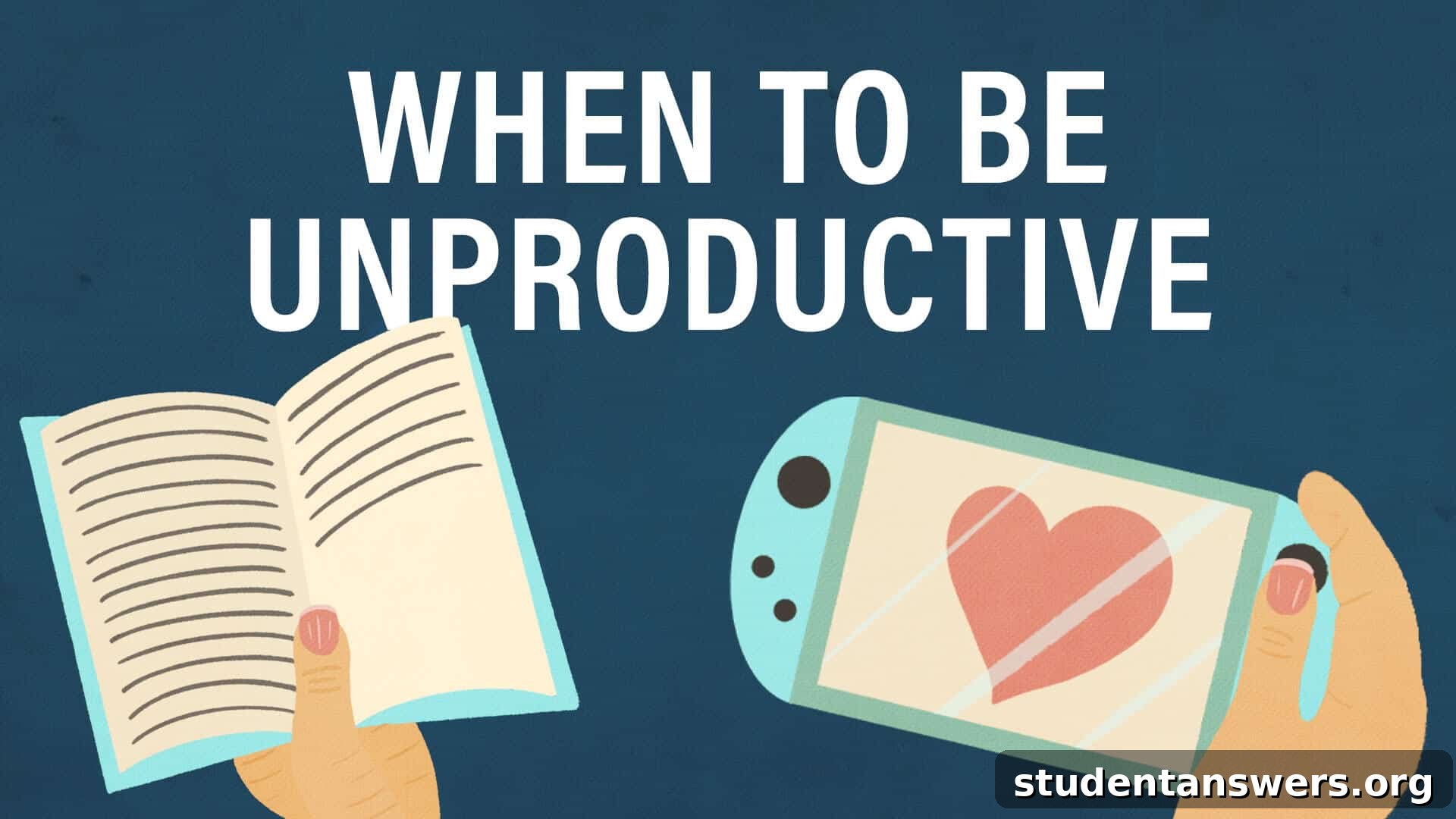
Beyond the Hustle: Why True Productivity Means Knowing When to Rest
It might sound strange, but we need to talk about a simple truth: sometimes, the most productive thing you can do is nothing at all. In a world saturated with productivity hacks, life-optimization guides, and the relentless pressure of “hustle culture,” it’s easy to forget that we are human beings, not machines. We are alive, and that simple fact is remarkable enough on its own, without a list of accomplishments to validate it. Embracing moments of stillness isn’t a sign of weakness; it’s a critical strategy for long-term success and well-being. If we ignore our need for rest, we risk burning out precisely when we need our energy the most.
The constant pursuit of “more” — more tasks completed, more goals achieved, more side hustles launched — can lead to a state of chronic exhaustion known as burnout. This isn’t just feeling tired; it’s a deep-seated emotional, physical, and mental depletion. This article will explore the dangers of non-stop hustle, redefine what genuine productivity looks like, and provide practical strategies to help you reclaim your time, protect your energy, and build a more sustainable and fulfilling life. It’s time to move beyond the hustle and discover the power of strategic rest.
The Deceptive Allure of Hustle Culture
Hustle culture is the societal belief that your ambition and success are directly proportional to the number of hours you work. It glorifies long nights, skipped lunches, and a calendar packed with back-to-back commitments. Social media amplifies this narrative with endless images of entrepreneurs rising at 4 AM and CEOs who claim to sleep only four hours a night. The message is clear: if you aren’t constantly working, you aren’t working hard enough.
The appeal is understandable. It promises a shortcut to achieving your dreams, financial independence, and a sense of purpose. However, this relentless drive comes at a significant cost. The dark side of hustle culture includes severe burnout, heightened anxiety, and a breakdown in personal relationships. When your entire identity becomes tied to your professional output, any perceived failure can feel catastrophic. Creativity plummets, strategic thinking becomes clouded by fatigue, and the very passion that fueled your ambition begins to fade. True success is not a sprint to the finish line; it’s a marathon that requires pacing, recovery, and a deep understanding of your own limits.
Redefining Productivity: Moving from Busy to Effective
One of the biggest myths perpetuated by hustle culture is that being busy is the same as being productive. In reality, they are often opposites. Productivity isn’t about how many hours you clock in; it’s about the value and impact of the work you produce during those hours. An employee who works a focused, distraction-free six hours can often achieve far more than a colleague who spends ten hours multitasking and responding to endless notifications.
Effective productivity is about working smarter, not harder. This involves several key principles:
- Prioritization: Understanding the difference between urgent tasks and important tasks. The Pareto Principle, or the 80/20 rule, suggests that 80% of your results often come from just 20% of your efforts. Identify that critical 20% and dedicate your best energy to it.
– Deep Work: Coined by author Cal Newport, “deep work” refers to the ability to focus without distraction on a cognitively demanding task. This state of high concentration is where breakthroughs happen and high-quality work is produced. Constant busyness and context-switching prevent you from ever achieving this state.
– Energy Management: Your time is finite, but your energy is renewable. True productivity involves managing your energy levels throughout the day. This means recognizing when you’re most alert and scheduling your most challenging tasks for those peak times, while saving administrative or less demanding work for periods of lower energy.
By shifting your focus from time spent to value created, you can achieve more in less time, freeing up precious hours for rest, hobbies, and the people you care about.
The Unseen Power of Rest: What Happens When You Do Nothing
Our brains are not designed to be “on” all the time. Rest is not a luxury; it is a biological necessity. When you step away from work and allow your mind to wander, a powerful neural network known as the Default Mode Network (DMN) activates. This network is crucial for creativity, self-reflection, and problem-solving. Have you ever had a brilliant idea pop into your head while you were in the shower or out for a walk? That’s your DMN at work, connecting disparate ideas in the background while your conscious mind is at rest.
Beyond fostering creativity, rest offers a host of scientifically-backed benefits:
- Memory Consolidation: During periods of rest and sleep, your brain processes and stores information learned throughout the day, solidifying memories and making learning more effective.
– Reduced Stress: Taking breaks helps lower levels of the stress hormone cortisol, which, when elevated for prolonged periods, can lead to a host of health problems.
– Improved Decision-Making: Continuous work leads to “decision fatigue,” a state where the quality of your choices deteriorates after a long session of decision-making. Stepping away restores your mental capacity for sound judgment.
– Prevents Burnout: Regular, intentional rest is the single most effective antidote to burnout. It replenishes your mental and emotional reserves, allowing you to return to your work with renewed focus and enthusiasm.
Actionable Strategies to Reclaim Your Time and Avoid Burnout
Understanding the importance of rest is the first step, but implementing it can be challenging. Here are some practical strategies to integrate healthy downtime into your life and build a sustainable work routine.
Schedule Your Breaks Like You Schedule Meetings
Don’t wait until you feel exhausted to take a break. Be proactive by scheduling downtime directly into your calendar. This could be as simple as two 15-minute walks during the day or a dedicated hour for lunch away from your desk. Treating rest as a non-negotiable appointment makes you far more likely to follow through.
Embrace Hobbies with No “Productive” Goal
In a world that encourages monetizing every skill, find a hobby that is purely for joy. Whether it’s painting, gardening, playing an instrument, or reading fiction, engage in activities where the process is the reward. This helps decouple your sense of self-worth from your output and reminds you of the simple pleasure of doing something for its own sake.
Set and Enforce Clear Boundaries
Technology has blurred the lines between work and personal life. It’s up to you to redraw them. Define your work hours and stick to them. Turn off email notifications on your phone after a certain time. Communicate your boundaries clearly and respectfully to colleagues and clients. Remember that saying “no” to a non-essential request is saying “yes” to your own well-being.
Learn to Recognize the Early Warning Signs
Burnout doesn’t happen overnight. It’s a gradual process with clear warning signs. Pay attention to your body and mind. Common early symptoms include:
- Persistent fatigue that isn’t relieved by a good night’s sleep.
- A growing sense of cynicism or detachment from your work.
- Feeling increasingly ineffective or lacking a sense of accomplishment.
- Increased irritability, anxiety, or difficulty concentrating.
If you notice these signs, don’t ignore them. See them as a signal that you need to slow down, reassess your workload, and prioritize rest immediately.
Conclusion: Your Worth Is Not Your Work
It’s time to dismantle the myth that our value is determined by our productivity. You are not a machine. You are a living, breathing human being who requires rest, joy, and connection to thrive. The relentless pursuit of the “#HustleCrushIt” lifestyle is a path to exhaustion, not fulfillment. True, sustainable success is built on a foundation of well-being.
By redefining productivity, understanding the science of rest, and intentionally building space into your life, you can achieve your goals without sacrificing your health. Give yourself permission to log off, to take that walk, to read that book, to simply be. Your future self, energized and inspired, will thank you for it.